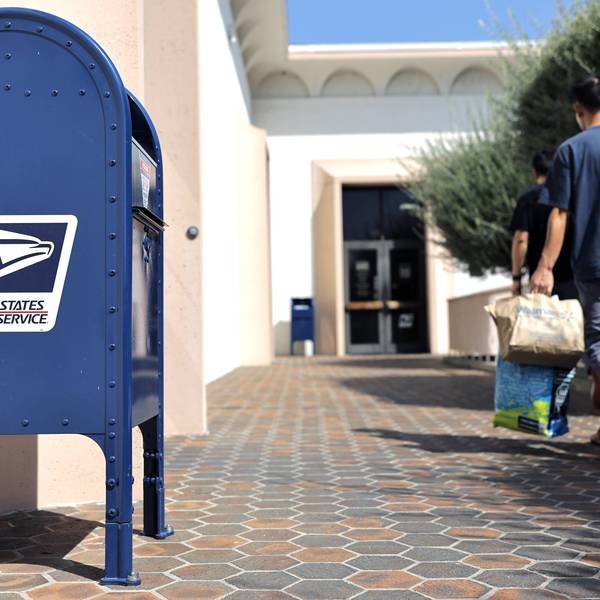


A worker examines mail-in ballot applications on September 3, 2020. (Photo: Ben Hasty/MediaNews Group/Reading Eagle via Getty Images)
'Foreseeable Train Wreck': Warnings That Ballot Technicality Could Toss Out 100,000 Pennsylvania Votes--and Throw Election to Trump
Public officials and commentators are sounding the alarm and urging Pennsylvania voters not to mail in "naked ballots," which the state Supreme Court ruled cannot be counted in November.
On the same day the Pennsylvania Supreme Court last week issued a pair of decisions that were applauded as key victories for voting rights, the panel also sided with President Donald Trump's reelection campaign in a separate ruling that could result in 100,000 ballots being tossed out on a legal technicality--an outcome critics are warning could throw the key swing state, and thus possibly the entire election, to Trump.
In late June, the Trump campaign, Republican National Committee, and state Republicans sued Pennsylvania's county election boards and secretary of state in an effort to prevent the counting of so-called "naked ballots," a term used to describe mail-in ballots sent without an accompanying secrecy envelope intended to conceal voters' identities.
After the Pennsylvania Supreme Court ruled in the Trump campaign's favor last week and declared that naked ballots must be discarded under state law, Philadelphia's top election official sounded the alarm in a letter (pdf) this week, cautioning that the decision "could set Pennsylvania up to be the subject of significant post-election legal controversy, the likes of which we have not seen since Florida in 2000."
"When you consider that the 2016 presidential election in Pennsylvania was decided by just over 44,000 votes, you can see why I am concerned."
--Lisa Deeley, Philadelphia City Commissioners
"While everyone is talking about the significance of extending the mail ballot deadline, it is the naked ballot ruling that is going to cause electoral chaos," Lisa Deeley, chair of the Philadelphia City Commissioners, wrote to the Republican leaders of the Pennsylvania legislature. "I hope you consider this letter as me being a canary in the coalmine."
Deeley estimated that if naked ballots aren't counted in November, tens of thousands of ballots could be invalidated in Philadelphia alone and 100,000 could be tossed out across the battleground state, which Trump carried by a much narrower margin than that in 2016. Given that Democrats are more likely to vote by mail than Republicans, the president could benefit substantially from the court's decision.
"When you consider that the 2016 presidential election in Pennsylvania was decided by just over 44,000 votes," wrote Deeley, "you can see why I am concerned."
The court's ruling and Deeley's subsequent letter sparked demands that both local and national media outlets launch emergency public education campaigns ahead of the election to limit the number of naked ballots cast in Pennsylvania and the 15 other states that require "secrecy sleeves."
"The silver lining of this decision from the state Supreme Court is now that we know the rules, we can educate voters about the rules," Suzanne Almeida, director of watchdog group Common Cause Pennsylvania, told the Washington Post.
As the Philadelphia Inquirer explained earlier this week, "Pennsylvania uses a two-envelope mail ballot system: A completed ballot goes into a 'secrecy envelope' that has no identifying information, and then into a larger mailing envelope that the voter signs. It's unclear how many naked ballots there will be, because this is the first year any Pennsylvania voter can vote by mail, and most counties counted them in the June primary without tracking how many there were."
In an evening segment on Tuesday, MSNBC's Chris Hayes provided a concise rundown of the mail-in voting process in Pennsylvania and emphasized the state's monumental role in the upcoming election, pointing to FiveThirtyEight projections describing it as "by far the likeliest state to provide either President Trump or Joe Biden with the decisive vote in the Electoral College."
Watch:
Warnings about the potential impact the Pennsylvania Supreme Court's ruling come as Democratic politicians and progressive commentators are increasingly urging people to vote in person--and early--if possible, given Trump and the Republican Party's ongoing assault on mail-in voting nationwide.
Voting in person in Pennsylvania and other battleground states would allow residents to avoid the numerous potential complications associated with mail-in voting, FairVote founder Steven Hill argued in an op-ed for Common Dreams on Wednesday.
"The best strategy in many of the battleground states is to put on your mask and vote in person before Election Day," Hill wrote. "Not only will it secure your vote most effectively, it will also shorten the Election Day lines for other Americans. We can best safeguard our democracy this November by utilizing early voting, and showing up to vote with our masks, in as many battleground states as possible."
We are at a crossroads
This country and this world are at a monumental crossroads. In a few short weeks, US voters will have an opportunity to beat back the forces of fascism and confront the billionaires who are rigging the economy, our media system, and our democracy, making it increasingly impossible for ordinary people to get by. We’re not just talking about the election. We’re talking about what must be done once these fascist elements are vanquished from power. We need a bolder set of solutions than what either major party has so far been willing to offer and a working-class movement ready to fight like hell for it. Trump didn't emerge from nowhere. The conditions that fueled MAGA authoritarianism were created by decades of radical neoliberal economic policies and a corrupt political system dominated by corporate interests. They slashed taxes on the super-rich, promising that the benefits would trickle down. They said giveaways to the corporate titans would make life more affordable for the rest of us. It was all bullshit. And when a bitter, betrayed populace searches for someone to blame, right-wing demagogues have little trouble finding scapegoats. People know when they're being lied to, but you won't hear any of this from the corporate media. Only independent journalism—powered and funded by people who believe in building a better world—can deliver truly trustworthy daily news. Our Fall Campaign is underway, and we need your help. To power our newsroom through the rest of the year, we need to raise $125,000 by midnight on October 31. So if you share our vision, please contribute whatever you can to sustain our work. |
On the same day the Pennsylvania Supreme Court last week issued a pair of decisions that were applauded as key victories for voting rights, the panel also sided with President Donald Trump's reelection campaign in a separate ruling that could result in 100,000 ballots being tossed out on a legal technicality--an outcome critics are warning could throw the key swing state, and thus possibly the entire election, to Trump.
In late June, the Trump campaign, Republican National Committee, and state Republicans sued Pennsylvania's county election boards and secretary of state in an effort to prevent the counting of so-called "naked ballots," a term used to describe mail-in ballots sent without an accompanying secrecy envelope intended to conceal voters' identities.
After the Pennsylvania Supreme Court ruled in the Trump campaign's favor last week and declared that naked ballots must be discarded under state law, Philadelphia's top election official sounded the alarm in a letter (pdf) this week, cautioning that the decision "could set Pennsylvania up to be the subject of significant post-election legal controversy, the likes of which we have not seen since Florida in 2000."
"When you consider that the 2016 presidential election in Pennsylvania was decided by just over 44,000 votes, you can see why I am concerned."
--Lisa Deeley, Philadelphia City Commissioners
"While everyone is talking about the significance of extending the mail ballot deadline, it is the naked ballot ruling that is going to cause electoral chaos," Lisa Deeley, chair of the Philadelphia City Commissioners, wrote to the Republican leaders of the Pennsylvania legislature. "I hope you consider this letter as me being a canary in the coalmine."
Deeley estimated that if naked ballots aren't counted in November, tens of thousands of ballots could be invalidated in Philadelphia alone and 100,000 could be tossed out across the battleground state, which Trump carried by a much narrower margin than that in 2016. Given that Democrats are more likely to vote by mail than Republicans, the president could benefit substantially from the court's decision.
"When you consider that the 2016 presidential election in Pennsylvania was decided by just over 44,000 votes," wrote Deeley, "you can see why I am concerned."
The court's ruling and Deeley's subsequent letter sparked demands that both local and national media outlets launch emergency public education campaigns ahead of the election to limit the number of naked ballots cast in Pennsylvania and the 15 other states that require "secrecy sleeves."
"The silver lining of this decision from the state Supreme Court is now that we know the rules, we can educate voters about the rules," Suzanne Almeida, director of watchdog group Common Cause Pennsylvania, told the Washington Post.
As the Philadelphia Inquirer explained earlier this week, "Pennsylvania uses a two-envelope mail ballot system: A completed ballot goes into a 'secrecy envelope' that has no identifying information, and then into a larger mailing envelope that the voter signs. It's unclear how many naked ballots there will be, because this is the first year any Pennsylvania voter can vote by mail, and most counties counted them in the June primary without tracking how many there were."
In an evening segment on Tuesday, MSNBC's Chris Hayes provided a concise rundown of the mail-in voting process in Pennsylvania and emphasized the state's monumental role in the upcoming election, pointing to FiveThirtyEight projections describing it as "by far the likeliest state to provide either President Trump or Joe Biden with the decisive vote in the Electoral College."
Watch:
Warnings about the potential impact the Pennsylvania Supreme Court's ruling come as Democratic politicians and progressive commentators are increasingly urging people to vote in person--and early--if possible, given Trump and the Republican Party's ongoing assault on mail-in voting nationwide.
Voting in person in Pennsylvania and other battleground states would allow residents to avoid the numerous potential complications associated with mail-in voting, FairVote founder Steven Hill argued in an op-ed for Common Dreams on Wednesday.
"The best strategy in many of the battleground states is to put on your mask and vote in person before Election Day," Hill wrote. "Not only will it secure your vote most effectively, it will also shorten the Election Day lines for other Americans. We can best safeguard our democracy this November by utilizing early voting, and showing up to vote with our masks, in as many battleground states as possible."
On the same day the Pennsylvania Supreme Court last week issued a pair of decisions that were applauded as key victories for voting rights, the panel also sided with President Donald Trump's reelection campaign in a separate ruling that could result in 100,000 ballots being tossed out on a legal technicality--an outcome critics are warning could throw the key swing state, and thus possibly the entire election, to Trump.
In late June, the Trump campaign, Republican National Committee, and state Republicans sued Pennsylvania's county election boards and secretary of state in an effort to prevent the counting of so-called "naked ballots," a term used to describe mail-in ballots sent without an accompanying secrecy envelope intended to conceal voters' identities.
After the Pennsylvania Supreme Court ruled in the Trump campaign's favor last week and declared that naked ballots must be discarded under state law, Philadelphia's top election official sounded the alarm in a letter (pdf) this week, cautioning that the decision "could set Pennsylvania up to be the subject of significant post-election legal controversy, the likes of which we have not seen since Florida in 2000."
"When you consider that the 2016 presidential election in Pennsylvania was decided by just over 44,000 votes, you can see why I am concerned."
--Lisa Deeley, Philadelphia City Commissioners
"While everyone is talking about the significance of extending the mail ballot deadline, it is the naked ballot ruling that is going to cause electoral chaos," Lisa Deeley, chair of the Philadelphia City Commissioners, wrote to the Republican leaders of the Pennsylvania legislature. "I hope you consider this letter as me being a canary in the coalmine."
Deeley estimated that if naked ballots aren't counted in November, tens of thousands of ballots could be invalidated in Philadelphia alone and 100,000 could be tossed out across the battleground state, which Trump carried by a much narrower margin than that in 2016. Given that Democrats are more likely to vote by mail than Republicans, the president could benefit substantially from the court's decision.
"When you consider that the 2016 presidential election in Pennsylvania was decided by just over 44,000 votes," wrote Deeley, "you can see why I am concerned."
The court's ruling and Deeley's subsequent letter sparked demands that both local and national media outlets launch emergency public education campaigns ahead of the election to limit the number of naked ballots cast in Pennsylvania and the 15 other states that require "secrecy sleeves."
"The silver lining of this decision from the state Supreme Court is now that we know the rules, we can educate voters about the rules," Suzanne Almeida, director of watchdog group Common Cause Pennsylvania, told the Washington Post.
As the Philadelphia Inquirer explained earlier this week, "Pennsylvania uses a two-envelope mail ballot system: A completed ballot goes into a 'secrecy envelope' that has no identifying information, and then into a larger mailing envelope that the voter signs. It's unclear how many naked ballots there will be, because this is the first year any Pennsylvania voter can vote by mail, and most counties counted them in the June primary without tracking how many there were."
In an evening segment on Tuesday, MSNBC's Chris Hayes provided a concise rundown of the mail-in voting process in Pennsylvania and emphasized the state's monumental role in the upcoming election, pointing to FiveThirtyEight projections describing it as "by far the likeliest state to provide either President Trump or Joe Biden with the decisive vote in the Electoral College."
Watch:
Warnings about the potential impact the Pennsylvania Supreme Court's ruling come as Democratic politicians and progressive commentators are increasingly urging people to vote in person--and early--if possible, given Trump and the Republican Party's ongoing assault on mail-in voting nationwide.
Voting in person in Pennsylvania and other battleground states would allow residents to avoid the numerous potential complications associated with mail-in voting, FairVote founder Steven Hill argued in an op-ed for Common Dreams on Wednesday.
"The best strategy in many of the battleground states is to put on your mask and vote in person before Election Day," Hill wrote. "Not only will it secure your vote most effectively, it will also shorten the Election Day lines for other Americans. We can best safeguard our democracy this November by utilizing early voting, and showing up to vote with our masks, in as many battleground states as possible."