SUBSCRIBE TO OUR FREE NEWSLETTER
Daily news & progressive opinion—funded by the people, not the corporations—delivered straight to your inbox.
5
#000000
#FFFFFF
To donate by check, phone, or other method, see our More Ways to Give page.
Daily news & progressive opinion—funded by the people, not the corporations—delivered straight to your inbox.
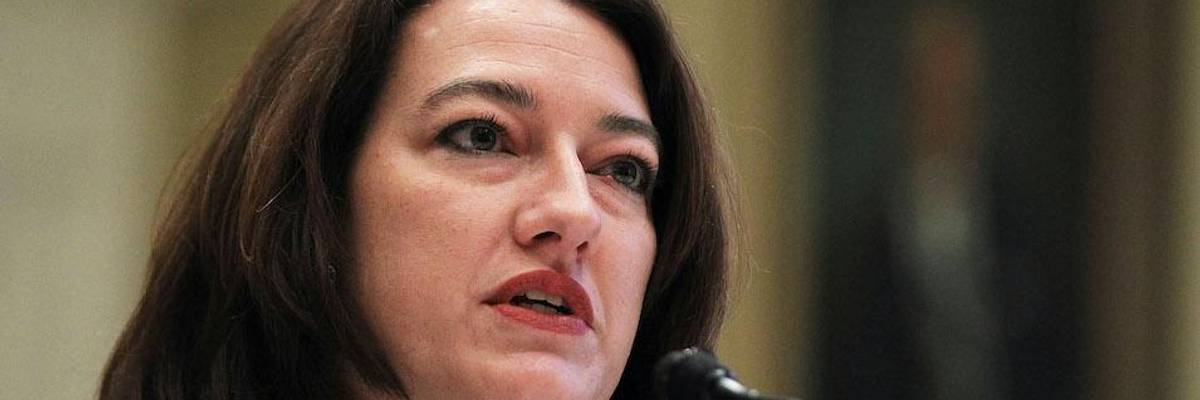
Caroline Hunter testifies during a hearing before the Elections Subcommittee of House Committee on House Administration November 3, 2011. (Photo: Alex Wong/Getty Images)
After 10 months, the Federal Elections Commission in May regained a quorum with the confirmation of Republican appointee Trey Trainor--and promptly lost it just over five weeks later on Friday when commissioner Caroline Hunter resigned to join the Koch-funded group Stand Together, leaving the regulatory body again essentially powerless as the November general election draws closer.
"The FEC's brief period of functioning appears to be over," tweeted Public Integrity reporter Carrie Levine.
Hunter's last day is July 3.
"Republican FEC commissioner leaving to joining the Koch network's dark money fundraising apparatus," tweeted Dig Left researcher Andrew Perez. "Says a lot!"
In a statement reacting to the resignation, Rep. Zoe Lofgren (D-Calif.), the chair of the Committee on House Administration, said the news "makes abundantly clear the shortsightedness of the Senate Majority's naked partisanship in abandoning a longstanding tradition of confirming bipartisan pairs of Commissioners."
"The FEC just emerged from a nine-month period without a quorum--the longest running period of the commission's history--during which it was hamstrung from doing its job," said Lofgren. "Upon commissioner Hunter's announced departure on July 3, the FEC will lose its quorum again for the third time since the commission's establishment, with just four months to go before November's general election."
The news comes after a year of missed opportunities to keep the lights on at the organization for more than a few weeks at a time. As Common Dreams reported in August 2019, the resignation of vice chairman Matthew Petersen left the panel unable to effectively function; by January elections advocates were clamoring for a full slate of commissioners to be appointed ahead of the general election.
Friday's news prompted more criticism of the body.
"A huge majority of voters are concerned about the enforcement of our campaign finance laws," Campaign Legal Center (CLC) president Trevor Potter said in a statement, "and Hunter's resignation leaves their democratic elections with significantly less government oversight."
As Politico explained, the departure of Hunter leaves the panel again unable to enforce rules or take action:
Without four commissioners, the FEC, which is supposed to have six commissioners, is functionally unable to address complaints alleging campaign finance law violations. That meant that at the end of March, there were more than 300 pending cases that hadn't been addressed, including about three dozen that alleged foreign interference.
News of Hunter's resignation was met with frustration and disappointment by elections advocates who decried the lack of urgency in ensuring the board operates as the 2020 contest heats up.
"It is deeply disheartening and concerning that the FEC will again be missing in action," Meredith McGehee, Issue One executive director, told The Fulcrum. "The American people need a watchdog devoted to enforcing the anti-corruption laws on the books and ensuring transparency of the billions of dollars being spent to influence their votes."
CLC's Potter agreed.
"Americans understand that the campaign finance system correlates directly to their families' quality of life," said Potter. "The corruption of our democracy by unprecedented amounts of money in our elections from wealthy special interests diminishes the voices of average citizens."
"A strong and functional FEC is vital to protecting our democracy, fighting corruption, and holding politicians accountable for the campaign money they receive," he added.
The White House annnounced in response to Hunter's departure that President Donald Trump will appoint Allen Dickerson, legal director at the Institute for Free Speech, a right-wing think tank devoted to removing barriers to unlimited campaign spending by outside groups and dark money organizations.
Dear Common Dreams reader, It’s been nearly 30 years since I co-founded Common Dreams with my late wife, Lina Newhouser. We had the radical notion that journalism should serve the public good, not corporate profits. It was clear to us from the outset what it would take to build such a project. No paid advertisements. No corporate sponsors. No millionaire publisher telling us what to think or do. Many people said we wouldn't last a year, but we proved those doubters wrong. Together with a tremendous team of journalists and dedicated staff, we built an independent media outlet free from the constraints of profits and corporate control. Our mission has always been simple: To inform. To inspire. To ignite change for the common good. Building Common Dreams was not easy. Our survival was never guaranteed. When you take on the most powerful forces—Wall Street greed, fossil fuel industry destruction, Big Tech lobbyists, and uber-rich oligarchs who have spent billions upon billions rigging the economy and democracy in their favor—the only bulwark you have is supporters who believe in your work. But here’s the urgent message from me today. It's never been this bad out there. And it's never been this hard to keep us going. At the very moment Common Dreams is most needed, the threats we face are intensifying. We need your support now more than ever. We don't accept corporate advertising and never will. We don't have a paywall because we don't think people should be blocked from critical news based on their ability to pay. Everything we do is funded by the donations of readers like you. When everyone does the little they can afford, we are strong. But if that support retreats or dries up, so do we. Will you donate now to make sure Common Dreams not only survives but thrives? —Craig Brown, Co-founder |
After 10 months, the Federal Elections Commission in May regained a quorum with the confirmation of Republican appointee Trey Trainor--and promptly lost it just over five weeks later on Friday when commissioner Caroline Hunter resigned to join the Koch-funded group Stand Together, leaving the regulatory body again essentially powerless as the November general election draws closer.
"The FEC's brief period of functioning appears to be over," tweeted Public Integrity reporter Carrie Levine.
Hunter's last day is July 3.
"Republican FEC commissioner leaving to joining the Koch network's dark money fundraising apparatus," tweeted Dig Left researcher Andrew Perez. "Says a lot!"
In a statement reacting to the resignation, Rep. Zoe Lofgren (D-Calif.), the chair of the Committee on House Administration, said the news "makes abundantly clear the shortsightedness of the Senate Majority's naked partisanship in abandoning a longstanding tradition of confirming bipartisan pairs of Commissioners."
"The FEC just emerged from a nine-month period without a quorum--the longest running period of the commission's history--during which it was hamstrung from doing its job," said Lofgren. "Upon commissioner Hunter's announced departure on July 3, the FEC will lose its quorum again for the third time since the commission's establishment, with just four months to go before November's general election."
The news comes after a year of missed opportunities to keep the lights on at the organization for more than a few weeks at a time. As Common Dreams reported in August 2019, the resignation of vice chairman Matthew Petersen left the panel unable to effectively function; by January elections advocates were clamoring for a full slate of commissioners to be appointed ahead of the general election.
Friday's news prompted more criticism of the body.
"A huge majority of voters are concerned about the enforcement of our campaign finance laws," Campaign Legal Center (CLC) president Trevor Potter said in a statement, "and Hunter's resignation leaves their democratic elections with significantly less government oversight."
As Politico explained, the departure of Hunter leaves the panel again unable to enforce rules or take action:
Without four commissioners, the FEC, which is supposed to have six commissioners, is functionally unable to address complaints alleging campaign finance law violations. That meant that at the end of March, there were more than 300 pending cases that hadn't been addressed, including about three dozen that alleged foreign interference.
News of Hunter's resignation was met with frustration and disappointment by elections advocates who decried the lack of urgency in ensuring the board operates as the 2020 contest heats up.
"It is deeply disheartening and concerning that the FEC will again be missing in action," Meredith McGehee, Issue One executive director, told The Fulcrum. "The American people need a watchdog devoted to enforcing the anti-corruption laws on the books and ensuring transparency of the billions of dollars being spent to influence their votes."
CLC's Potter agreed.
"Americans understand that the campaign finance system correlates directly to their families' quality of life," said Potter. "The corruption of our democracy by unprecedented amounts of money in our elections from wealthy special interests diminishes the voices of average citizens."
"A strong and functional FEC is vital to protecting our democracy, fighting corruption, and holding politicians accountable for the campaign money they receive," he added.
The White House annnounced in response to Hunter's departure that President Donald Trump will appoint Allen Dickerson, legal director at the Institute for Free Speech, a right-wing think tank devoted to removing barriers to unlimited campaign spending by outside groups and dark money organizations.
After 10 months, the Federal Elections Commission in May regained a quorum with the confirmation of Republican appointee Trey Trainor--and promptly lost it just over five weeks later on Friday when commissioner Caroline Hunter resigned to join the Koch-funded group Stand Together, leaving the regulatory body again essentially powerless as the November general election draws closer.
"The FEC's brief period of functioning appears to be over," tweeted Public Integrity reporter Carrie Levine.
Hunter's last day is July 3.
"Republican FEC commissioner leaving to joining the Koch network's dark money fundraising apparatus," tweeted Dig Left researcher Andrew Perez. "Says a lot!"
In a statement reacting to the resignation, Rep. Zoe Lofgren (D-Calif.), the chair of the Committee on House Administration, said the news "makes abundantly clear the shortsightedness of the Senate Majority's naked partisanship in abandoning a longstanding tradition of confirming bipartisan pairs of Commissioners."
"The FEC just emerged from a nine-month period without a quorum--the longest running period of the commission's history--during which it was hamstrung from doing its job," said Lofgren. "Upon commissioner Hunter's announced departure on July 3, the FEC will lose its quorum again for the third time since the commission's establishment, with just four months to go before November's general election."
The news comes after a year of missed opportunities to keep the lights on at the organization for more than a few weeks at a time. As Common Dreams reported in August 2019, the resignation of vice chairman Matthew Petersen left the panel unable to effectively function; by January elections advocates were clamoring for a full slate of commissioners to be appointed ahead of the general election.
Friday's news prompted more criticism of the body.
"A huge majority of voters are concerned about the enforcement of our campaign finance laws," Campaign Legal Center (CLC) president Trevor Potter said in a statement, "and Hunter's resignation leaves their democratic elections with significantly less government oversight."
As Politico explained, the departure of Hunter leaves the panel again unable to enforce rules or take action:
Without four commissioners, the FEC, which is supposed to have six commissioners, is functionally unable to address complaints alleging campaign finance law violations. That meant that at the end of March, there were more than 300 pending cases that hadn't been addressed, including about three dozen that alleged foreign interference.
News of Hunter's resignation was met with frustration and disappointment by elections advocates who decried the lack of urgency in ensuring the board operates as the 2020 contest heats up.
"It is deeply disheartening and concerning that the FEC will again be missing in action," Meredith McGehee, Issue One executive director, told The Fulcrum. "The American people need a watchdog devoted to enforcing the anti-corruption laws on the books and ensuring transparency of the billions of dollars being spent to influence their votes."
CLC's Potter agreed.
"Americans understand that the campaign finance system correlates directly to their families' quality of life," said Potter. "The corruption of our democracy by unprecedented amounts of money in our elections from wealthy special interests diminishes the voices of average citizens."
"A strong and functional FEC is vital to protecting our democracy, fighting corruption, and holding politicians accountable for the campaign money they receive," he added.
The White House annnounced in response to Hunter's departure that President Donald Trump will appoint Allen Dickerson, legal director at the Institute for Free Speech, a right-wing think tank devoted to removing barriers to unlimited campaign spending by outside groups and dark money organizations.