

SUBSCRIBE TO OUR FREE NEWSLETTER
Daily news & progressive opinion—funded by the people, not the corporations—delivered straight to your inbox.
5
#000000
#FFFFFF
To donate by check, phone, or other method, see our More Ways to Give page.
Daily news & progressive opinion—funded by the people, not the corporations—delivered straight to your inbox.
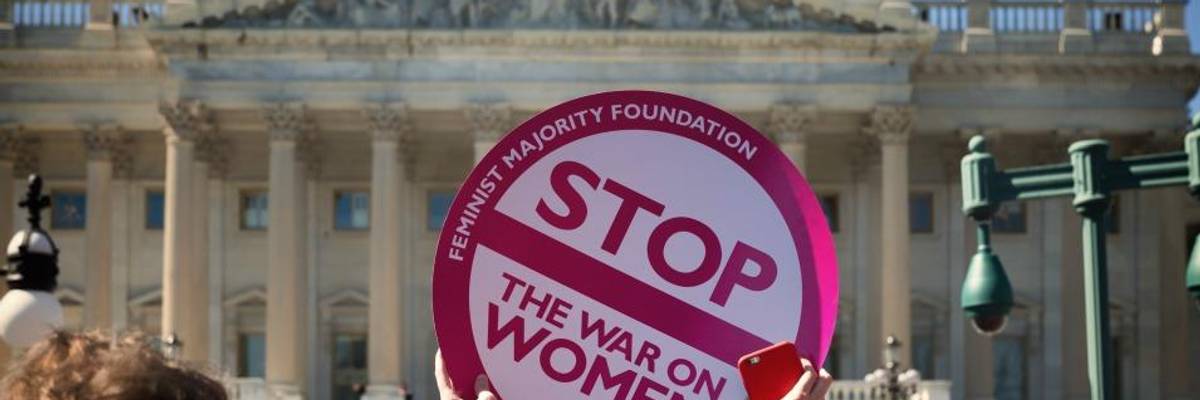
A judge in Alabama rejected a woman's "Stand Your Ground" defense regarding the shooting of her alleged rapist. (Photo: Lori Shaull/Flickr/cc)
A woman in Alabama could face life in prison after losing her "Stand Your Ground" hearing in spite of testifying she shot a man in her home in January 2018 because he raped her and attacked her brother.
Brittany Smith was charged with first-degree murder after killing Todd Smith, her acquaintance, but sought immunity from prosecution citing Alabama's Stand Your Ground law. The state is one of 25 with laws that ostensibly permit the use of deadly force in the case of self-defense in the case of a burglary or the threat of violence.
Despite testimony from Brittany about the night of her alleged rape, the testimony of a rape crisis center nurse who examined Brittany, and photos of 33 wounds on her body, Jackson County Circuit Court Judge Jenifer Holt rejected Brittany's claim that she had acted in self-defense.
"This case is so obviously, objectively outrageous that one's outrage implodes into a sort of numbness and disbelief. Women are not permitted to defend themselves; it is really that simple."
--Jessica Winter, The New YorkerBrittany's mother, Ramona McCallie, expressed disappointment but not surprise at the ruling in a Facebook post.
"We all know that the Stand Your Ground Law was not created for women," McCallie wrote.
In Brittany's hearing, she testified that Todd raped her when she allowed him to stay overnight at her home after he called her to say he was stranded nearby. Brittany's brother Chris McCallie found out later that night, arrived at the house to help Brittany, and was in a physical altercation with Todd when she fired the gun, killing Todd. Brittany said Todd was choking her brother and that she gave him a warning before shooting the gun.
The nurse who testified at the hearing said Brittany's 33 wounds were "consistent with having been bitten, strangled with two hands around her neck, and assaulted with 'a lot of force,'" according to The New Yorker.
Yet in her ruling, Holt determined Brittany "did not credibly demonstrate that she reasonably believed it was necessary for her to use deadly force in this situation."
The judge cited the fact that Todd was staying at Brittany's house "by permission" and "inconsistencies" in accounts of the night of the attack.
According to The New Yorker, one inconsistency was due to the fact that Brittany and her brother "originally told police that McCallie had shot Todd; both believed that a woman would not get a fair trial in Jackson County, a place where advocates say that women's complaints of violence are often ignored by police."
Brittany's lawyers plan to appeal the decision.
"She saw the pictures of me; he almost beat me to death, he did rape me, and he tried to kill my brother, so how can she say this?" Brittany told The New Yorker after Holt handed down the ruling Monday.
On social media, a number of observers echoed Brittany's mother's assessment.
"Because stand your ground laws don't protect women like Brittany Smith from men who rape them," tweeted attorney Rebecca Kavanagh. "They protect white men who kill black children, like George Zimmerman killed Trayvon Martin."
"This case is so obviously, objectively outrageous that one's outrage implodes into a sort of numbness and disbelief," wrote Jessica Winter, executive editor of NewYorker.com. "Women are not permitted to defend themselves; it is really that simple."
Dear Common Dreams reader, It’s been nearly 30 years since I co-founded Common Dreams with my late wife, Lina Newhouser. We had the radical notion that journalism should serve the public good, not corporate profits. It was clear to us from the outset what it would take to build such a project. No paid advertisements. No corporate sponsors. No millionaire publisher telling us what to think or do. Many people said we wouldn't last a year, but we proved those doubters wrong. Together with a tremendous team of journalists and dedicated staff, we built an independent media outlet free from the constraints of profits and corporate control. Our mission has always been simple: To inform. To inspire. To ignite change for the common good. Building Common Dreams was not easy. Our survival was never guaranteed. When you take on the most powerful forces—Wall Street greed, fossil fuel industry destruction, Big Tech lobbyists, and uber-rich oligarchs who have spent billions upon billions rigging the economy and democracy in their favor—the only bulwark you have is supporters who believe in your work. But here’s the urgent message from me today. It's never been this bad out there. And it's never been this hard to keep us going. At the very moment Common Dreams is most needed, the threats we face are intensifying. We need your support now more than ever. We don't accept corporate advertising and never will. We don't have a paywall because we don't think people should be blocked from critical news based on their ability to pay. Everything we do is funded by the donations of readers like you. When everyone does the little they can afford, we are strong. But if that support retreats or dries up, so do we. Will you donate now to make sure Common Dreams not only survives but thrives? —Craig Brown, Co-founder |
A woman in Alabama could face life in prison after losing her "Stand Your Ground" hearing in spite of testifying she shot a man in her home in January 2018 because he raped her and attacked her brother.
Brittany Smith was charged with first-degree murder after killing Todd Smith, her acquaintance, but sought immunity from prosecution citing Alabama's Stand Your Ground law. The state is one of 25 with laws that ostensibly permit the use of deadly force in the case of self-defense in the case of a burglary or the threat of violence.
Despite testimony from Brittany about the night of her alleged rape, the testimony of a rape crisis center nurse who examined Brittany, and photos of 33 wounds on her body, Jackson County Circuit Court Judge Jenifer Holt rejected Brittany's claim that she had acted in self-defense.
"This case is so obviously, objectively outrageous that one's outrage implodes into a sort of numbness and disbelief. Women are not permitted to defend themselves; it is really that simple."
--Jessica Winter, The New YorkerBrittany's mother, Ramona McCallie, expressed disappointment but not surprise at the ruling in a Facebook post.
"We all know that the Stand Your Ground Law was not created for women," McCallie wrote.
In Brittany's hearing, she testified that Todd raped her when she allowed him to stay overnight at her home after he called her to say he was stranded nearby. Brittany's brother Chris McCallie found out later that night, arrived at the house to help Brittany, and was in a physical altercation with Todd when she fired the gun, killing Todd. Brittany said Todd was choking her brother and that she gave him a warning before shooting the gun.
The nurse who testified at the hearing said Brittany's 33 wounds were "consistent with having been bitten, strangled with two hands around her neck, and assaulted with 'a lot of force,'" according to The New Yorker.
Yet in her ruling, Holt determined Brittany "did not credibly demonstrate that she reasonably believed it was necessary for her to use deadly force in this situation."
The judge cited the fact that Todd was staying at Brittany's house "by permission" and "inconsistencies" in accounts of the night of the attack.
According to The New Yorker, one inconsistency was due to the fact that Brittany and her brother "originally told police that McCallie had shot Todd; both believed that a woman would not get a fair trial in Jackson County, a place where advocates say that women's complaints of violence are often ignored by police."
Brittany's lawyers plan to appeal the decision.
"She saw the pictures of me; he almost beat me to death, he did rape me, and he tried to kill my brother, so how can she say this?" Brittany told The New Yorker after Holt handed down the ruling Monday.
On social media, a number of observers echoed Brittany's mother's assessment.
"Because stand your ground laws don't protect women like Brittany Smith from men who rape them," tweeted attorney Rebecca Kavanagh. "They protect white men who kill black children, like George Zimmerman killed Trayvon Martin."
"This case is so obviously, objectively outrageous that one's outrage implodes into a sort of numbness and disbelief," wrote Jessica Winter, executive editor of NewYorker.com. "Women are not permitted to defend themselves; it is really that simple."
A woman in Alabama could face life in prison after losing her "Stand Your Ground" hearing in spite of testifying she shot a man in her home in January 2018 because he raped her and attacked her brother.
Brittany Smith was charged with first-degree murder after killing Todd Smith, her acquaintance, but sought immunity from prosecution citing Alabama's Stand Your Ground law. The state is one of 25 with laws that ostensibly permit the use of deadly force in the case of self-defense in the case of a burglary or the threat of violence.
Despite testimony from Brittany about the night of her alleged rape, the testimony of a rape crisis center nurse who examined Brittany, and photos of 33 wounds on her body, Jackson County Circuit Court Judge Jenifer Holt rejected Brittany's claim that she had acted in self-defense.
"This case is so obviously, objectively outrageous that one's outrage implodes into a sort of numbness and disbelief. Women are not permitted to defend themselves; it is really that simple."
--Jessica Winter, The New YorkerBrittany's mother, Ramona McCallie, expressed disappointment but not surprise at the ruling in a Facebook post.
"We all know that the Stand Your Ground Law was not created for women," McCallie wrote.
In Brittany's hearing, she testified that Todd raped her when she allowed him to stay overnight at her home after he called her to say he was stranded nearby. Brittany's brother Chris McCallie found out later that night, arrived at the house to help Brittany, and was in a physical altercation with Todd when she fired the gun, killing Todd. Brittany said Todd was choking her brother and that she gave him a warning before shooting the gun.
The nurse who testified at the hearing said Brittany's 33 wounds were "consistent with having been bitten, strangled with two hands around her neck, and assaulted with 'a lot of force,'" according to The New Yorker.
Yet in her ruling, Holt determined Brittany "did not credibly demonstrate that she reasonably believed it was necessary for her to use deadly force in this situation."
The judge cited the fact that Todd was staying at Brittany's house "by permission" and "inconsistencies" in accounts of the night of the attack.
According to The New Yorker, one inconsistency was due to the fact that Brittany and her brother "originally told police that McCallie had shot Todd; both believed that a woman would not get a fair trial in Jackson County, a place where advocates say that women's complaints of violence are often ignored by police."
Brittany's lawyers plan to appeal the decision.
"She saw the pictures of me; he almost beat me to death, he did rape me, and he tried to kill my brother, so how can she say this?" Brittany told The New Yorker after Holt handed down the ruling Monday.
On social media, a number of observers echoed Brittany's mother's assessment.
"Because stand your ground laws don't protect women like Brittany Smith from men who rape them," tweeted attorney Rebecca Kavanagh. "They protect white men who kill black children, like George Zimmerman killed Trayvon Martin."
"This case is so obviously, objectively outrageous that one's outrage implodes into a sort of numbness and disbelief," wrote Jessica Winter, executive editor of NewYorker.com. "Women are not permitted to defend themselves; it is really that simple."

