SUBSCRIBE TO OUR FREE NEWSLETTER
Daily news & progressive opinion—funded by the people, not the corporations—delivered straight to your inbox.
5
#000000
#FFFFFF
To donate by check, phone, or other method, see our More Ways to Give page.
Daily news & progressive opinion—funded by the people, not the corporations—delivered straight to your inbox.
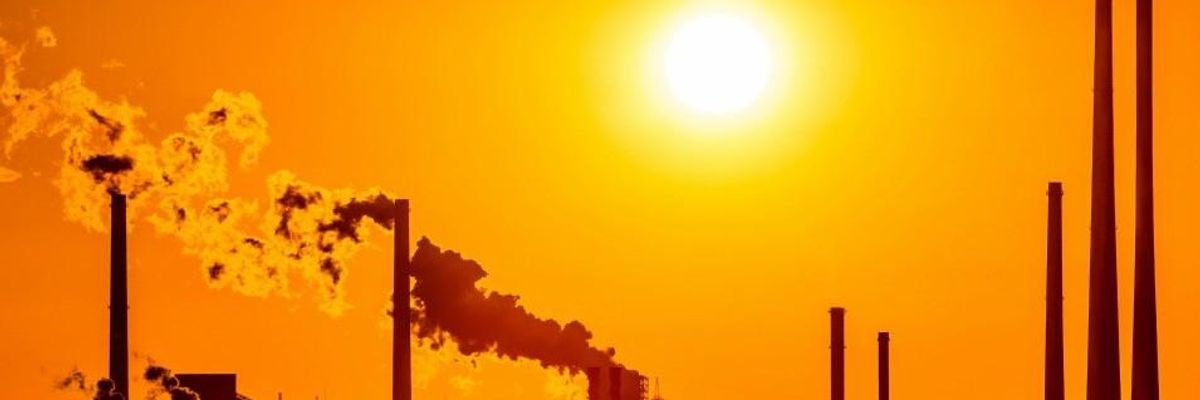
"There is evidence that the amount of carbon dioxide in the earth's atmosphere is increasing rapidly as a result of the combustion of fossil fuels," coal researcher James R. Garvey wrote in 1966. (Photo: Marcel Kusch/picture alliance via Getty Images)
A new report shows conclusively that the coal industry was aware of the climate impacts of burning fossil fuels as far back as 1966--and, like other sectors of the fossil fuel industry with knowledge of the consequences of their business model, did next to nothing about it.
The revelation was published in an article by Elan Young at HuffPost Friday.
"It wasn't just big oil that knew about climate change decades ago," tweeted HuffPost editor Kate Sheppard.
The story uses a discovery by Chris Cherry, professor of civil engineering at the University of Tennessee, Knoxville, to show industry foreknowledge of the ramifications of extractive technologies over 50 years ago. Cherry found the evidence in a 1966 copy of the Mining Congress Journal he was given by his father-in-law.
In the journal, James R. Garvey, president of now-defunct research firm Bituminous Coal Research Inc., describes the future consequences of coal.
"There is evidence that the amount of carbon dioxide in the earth's atmosphere is increasing rapidly as a result of the combustion of fossil fuels," Garvey wrote. "If the future rate of increase continues as it is at the present, it has been predicted that, because the CO2 envelope reduces radiation, the temperature of the earth's atmosphere will increase and that vast changes in the climates of the earth will result."
Garvey added that the result of the changes in climate could include melting icecaps and rising seas.
"Such changes in temperature will cause melting of the polar icecaps, which, in turn, would result in the inundation of many coastal cities, including New York and London," wrote Garvey.
"This is astonishing," tweeted historian Brad Simpson.
The article sent shockwaves across the environmental movement.
"The entire fossil fuel industry knew about the risks of climate change and covered it up for decades all to make a buck," said Earther reporter Brian Kahn.
As Young writes in her article, though, it's difficult to know what the revelations in her reporting will result in as far as damages or accountability.
"Even as the Trump administration has promised a coal resurgence and rolled back Obama-era regulations, the industry's profitability continues to experience a downward slide," writes Young. "If the slogan 'Coal Knew' ever does take off, it's unclear who'll be left to sue."
Dear Common Dreams reader, It’s been nearly 30 years since I co-founded Common Dreams with my late wife, Lina Newhouser. We had the radical notion that journalism should serve the public good, not corporate profits. It was clear to us from the outset what it would take to build such a project. No paid advertisements. No corporate sponsors. No millionaire publisher telling us what to think or do. Many people said we wouldn't last a year, but we proved those doubters wrong. Together with a tremendous team of journalists and dedicated staff, we built an independent media outlet free from the constraints of profits and corporate control. Our mission has always been simple: To inform. To inspire. To ignite change for the common good. Building Common Dreams was not easy. Our survival was never guaranteed. When you take on the most powerful forces—Wall Street greed, fossil fuel industry destruction, Big Tech lobbyists, and uber-rich oligarchs who have spent billions upon billions rigging the economy and democracy in their favor—the only bulwark you have is supporters who believe in your work. But here’s the urgent message from me today. It's never been this bad out there. And it's never been this hard to keep us going. At the very moment Common Dreams is most needed, the threats we face are intensifying. We need your support now more than ever. We don't accept corporate advertising and never will. We don't have a paywall because we don't think people should be blocked from critical news based on their ability to pay. Everything we do is funded by the donations of readers like you. When everyone does the little they can afford, we are strong. But if that support retreats or dries up, so do we. Will you donate now to make sure Common Dreams not only survives but thrives? —Craig Brown, Co-founder |
A new report shows conclusively that the coal industry was aware of the climate impacts of burning fossil fuels as far back as 1966--and, like other sectors of the fossil fuel industry with knowledge of the consequences of their business model, did next to nothing about it.
The revelation was published in an article by Elan Young at HuffPost Friday.
"It wasn't just big oil that knew about climate change decades ago," tweeted HuffPost editor Kate Sheppard.
The story uses a discovery by Chris Cherry, professor of civil engineering at the University of Tennessee, Knoxville, to show industry foreknowledge of the ramifications of extractive technologies over 50 years ago. Cherry found the evidence in a 1966 copy of the Mining Congress Journal he was given by his father-in-law.
In the journal, James R. Garvey, president of now-defunct research firm Bituminous Coal Research Inc., describes the future consequences of coal.
"There is evidence that the amount of carbon dioxide in the earth's atmosphere is increasing rapidly as a result of the combustion of fossil fuels," Garvey wrote. "If the future rate of increase continues as it is at the present, it has been predicted that, because the CO2 envelope reduces radiation, the temperature of the earth's atmosphere will increase and that vast changes in the climates of the earth will result."
Garvey added that the result of the changes in climate could include melting icecaps and rising seas.
"Such changes in temperature will cause melting of the polar icecaps, which, in turn, would result in the inundation of many coastal cities, including New York and London," wrote Garvey.
"This is astonishing," tweeted historian Brad Simpson.
The article sent shockwaves across the environmental movement.
"The entire fossil fuel industry knew about the risks of climate change and covered it up for decades all to make a buck," said Earther reporter Brian Kahn.
As Young writes in her article, though, it's difficult to know what the revelations in her reporting will result in as far as damages or accountability.
"Even as the Trump administration has promised a coal resurgence and rolled back Obama-era regulations, the industry's profitability continues to experience a downward slide," writes Young. "If the slogan 'Coal Knew' ever does take off, it's unclear who'll be left to sue."
A new report shows conclusively that the coal industry was aware of the climate impacts of burning fossil fuels as far back as 1966--and, like other sectors of the fossil fuel industry with knowledge of the consequences of their business model, did next to nothing about it.
The revelation was published in an article by Elan Young at HuffPost Friday.
"It wasn't just big oil that knew about climate change decades ago," tweeted HuffPost editor Kate Sheppard.
The story uses a discovery by Chris Cherry, professor of civil engineering at the University of Tennessee, Knoxville, to show industry foreknowledge of the ramifications of extractive technologies over 50 years ago. Cherry found the evidence in a 1966 copy of the Mining Congress Journal he was given by his father-in-law.
In the journal, James R. Garvey, president of now-defunct research firm Bituminous Coal Research Inc., describes the future consequences of coal.
"There is evidence that the amount of carbon dioxide in the earth's atmosphere is increasing rapidly as a result of the combustion of fossil fuels," Garvey wrote. "If the future rate of increase continues as it is at the present, it has been predicted that, because the CO2 envelope reduces radiation, the temperature of the earth's atmosphere will increase and that vast changes in the climates of the earth will result."
Garvey added that the result of the changes in climate could include melting icecaps and rising seas.
"Such changes in temperature will cause melting of the polar icecaps, which, in turn, would result in the inundation of many coastal cities, including New York and London," wrote Garvey.
"This is astonishing," tweeted historian Brad Simpson.
The article sent shockwaves across the environmental movement.
"The entire fossil fuel industry knew about the risks of climate change and covered it up for decades all to make a buck," said Earther reporter Brian Kahn.
As Young writes in her article, though, it's difficult to know what the revelations in her reporting will result in as far as damages or accountability.
"Even as the Trump administration has promised a coal resurgence and rolled back Obama-era regulations, the industry's profitability continues to experience a downward slide," writes Young. "If the slogan 'Coal Knew' ever does take off, it's unclear who'll be left to sue."