SUBSCRIBE TO OUR FREE NEWSLETTER
Daily news & progressive opinion—funded by the people, not the corporations—delivered straight to your inbox.
5
#000000
#FFFFFF
To donate by check, phone, or other method, see our More Ways to Give page.
Daily news & progressive opinion—funded by the people, not the corporations—delivered straight to your inbox.
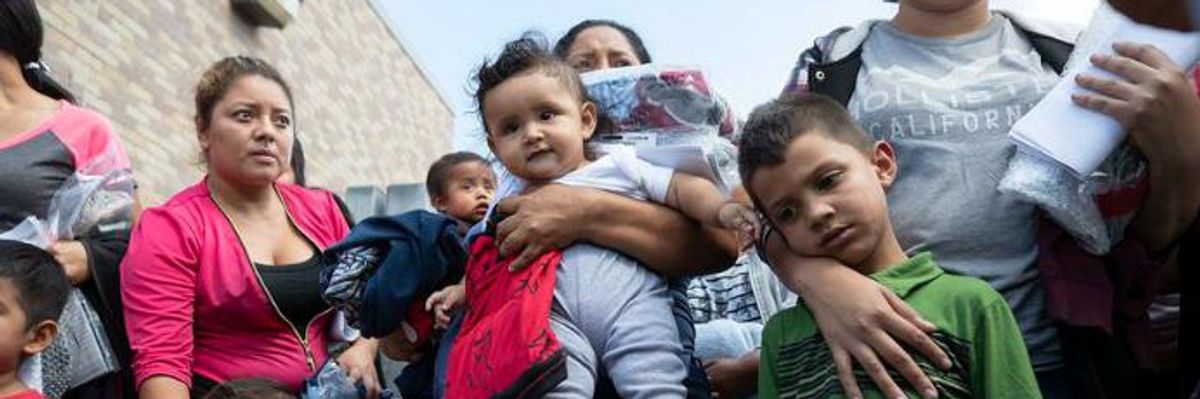
Immigrant mothers and their children at the McAllen bus station in Texas on June 22, 2018. (Photo: Bob Daemmrich/Texas Tribune)
A federal judge on Thursday gave the Trump administration six months to identify potentially thousands of immigrant children it ripped from their families under the so-called "zero tolerance" border policy.
The Trump administration previously said it could take two years to identify the separated children, but U.S. District Court Judge Dana Sabraw sided with the ACLU, which sought the six-month deadline.
"This order shows that the court continues to recognize the gravity of this situation," Lee Gelernt, deputy director of the ACLU's Immigrants' Rights Project, said in a statement.
The immigrant rights coalition Families Belong Together applauded the judge's decision as "good news" and vowed to work to ensure the White House meets the October 25 deadline.
"The administration has failed to identify children and reunite families over and over again," Families Belong Together tweeted. "Our coalition will be holding Trump officials accountable to this new timeline."
The total number of children separated from their families under the Trump administration's "zero tolerance" policy is unknown, but it is estimated to be in the thousands.
As the Guardian reported, the Trump admininstration "will review about 47,000 cases of unaccompanied children in custody between July 1, 2017 and June 25, 2018--the day before Sabraw halted the general practice of separating families and ordered that children under government care at the time be reunited in 30 days. More than 2,700 children had been separated when Sabraw issued his June order."
The ACLU's Gelernt said earlier this month that the Trump White House's request for two years to identify all of the children it separated "reflects the administration's continuing refusal to treat these separations with the urgency they deserve."
"We are talking about the lives of children, potentially thousands of them," said Gelernt. "The government was able to quickly gather resources to tear these children away from their families and now they need to gather the resources to fix the damage."
Dear Common Dreams reader, It’s been nearly 30 years since I co-founded Common Dreams with my late wife, Lina Newhouser. We had the radical notion that journalism should serve the public good, not corporate profits. It was clear to us from the outset what it would take to build such a project. No paid advertisements. No corporate sponsors. No millionaire publisher telling us what to think or do. Many people said we wouldn't last a year, but we proved those doubters wrong. Together with a tremendous team of journalists and dedicated staff, we built an independent media outlet free from the constraints of profits and corporate control. Our mission has always been simple: To inform. To inspire. To ignite change for the common good. Building Common Dreams was not easy. Our survival was never guaranteed. When you take on the most powerful forces—Wall Street greed, fossil fuel industry destruction, Big Tech lobbyists, and uber-rich oligarchs who have spent billions upon billions rigging the economy and democracy in their favor—the only bulwark you have is supporters who believe in your work. But here’s the urgent message from me today. It's never been this bad out there. And it's never been this hard to keep us going. At the very moment Common Dreams is most needed, the threats we face are intensifying. We need your support now more than ever. We don't accept corporate advertising and never will. We don't have a paywall because we don't think people should be blocked from critical news based on their ability to pay. Everything we do is funded by the donations of readers like you. When everyone does the little they can afford, we are strong. But if that support retreats or dries up, so do we. Will you donate now to make sure Common Dreams not only survives but thrives? —Craig Brown, Co-founder |
A federal judge on Thursday gave the Trump administration six months to identify potentially thousands of immigrant children it ripped from their families under the so-called "zero tolerance" border policy.
The Trump administration previously said it could take two years to identify the separated children, but U.S. District Court Judge Dana Sabraw sided with the ACLU, which sought the six-month deadline.
"This order shows that the court continues to recognize the gravity of this situation," Lee Gelernt, deputy director of the ACLU's Immigrants' Rights Project, said in a statement.
The immigrant rights coalition Families Belong Together applauded the judge's decision as "good news" and vowed to work to ensure the White House meets the October 25 deadline.
"The administration has failed to identify children and reunite families over and over again," Families Belong Together tweeted. "Our coalition will be holding Trump officials accountable to this new timeline."
The total number of children separated from their families under the Trump administration's "zero tolerance" policy is unknown, but it is estimated to be in the thousands.
As the Guardian reported, the Trump admininstration "will review about 47,000 cases of unaccompanied children in custody between July 1, 2017 and June 25, 2018--the day before Sabraw halted the general practice of separating families and ordered that children under government care at the time be reunited in 30 days. More than 2,700 children had been separated when Sabraw issued his June order."
The ACLU's Gelernt said earlier this month that the Trump White House's request for two years to identify all of the children it separated "reflects the administration's continuing refusal to treat these separations with the urgency they deserve."
"We are talking about the lives of children, potentially thousands of them," said Gelernt. "The government was able to quickly gather resources to tear these children away from their families and now they need to gather the resources to fix the damage."
A federal judge on Thursday gave the Trump administration six months to identify potentially thousands of immigrant children it ripped from their families under the so-called "zero tolerance" border policy.
The Trump administration previously said it could take two years to identify the separated children, but U.S. District Court Judge Dana Sabraw sided with the ACLU, which sought the six-month deadline.
"This order shows that the court continues to recognize the gravity of this situation," Lee Gelernt, deputy director of the ACLU's Immigrants' Rights Project, said in a statement.
The immigrant rights coalition Families Belong Together applauded the judge's decision as "good news" and vowed to work to ensure the White House meets the October 25 deadline.
"The administration has failed to identify children and reunite families over and over again," Families Belong Together tweeted. "Our coalition will be holding Trump officials accountable to this new timeline."
The total number of children separated from their families under the Trump administration's "zero tolerance" policy is unknown, but it is estimated to be in the thousands.
As the Guardian reported, the Trump admininstration "will review about 47,000 cases of unaccompanied children in custody between July 1, 2017 and June 25, 2018--the day before Sabraw halted the general practice of separating families and ordered that children under government care at the time be reunited in 30 days. More than 2,700 children had been separated when Sabraw issued his June order."
The ACLU's Gelernt said earlier this month that the Trump White House's request for two years to identify all of the children it separated "reflects the administration's continuing refusal to treat these separations with the urgency they deserve."
"We are talking about the lives of children, potentially thousands of them," said Gelernt. "The government was able to quickly gather resources to tear these children away from their families and now they need to gather the resources to fix the damage."