SUBSCRIBE TO OUR FREE NEWSLETTER
Daily news & progressive opinion—funded by the people, not the corporations—delivered straight to your inbox.
5
#000000
#FFFFFF
To donate by check, phone, or other method, see our More Ways to Give page.
Daily news & progressive opinion—funded by the people, not the corporations—delivered straight to your inbox.
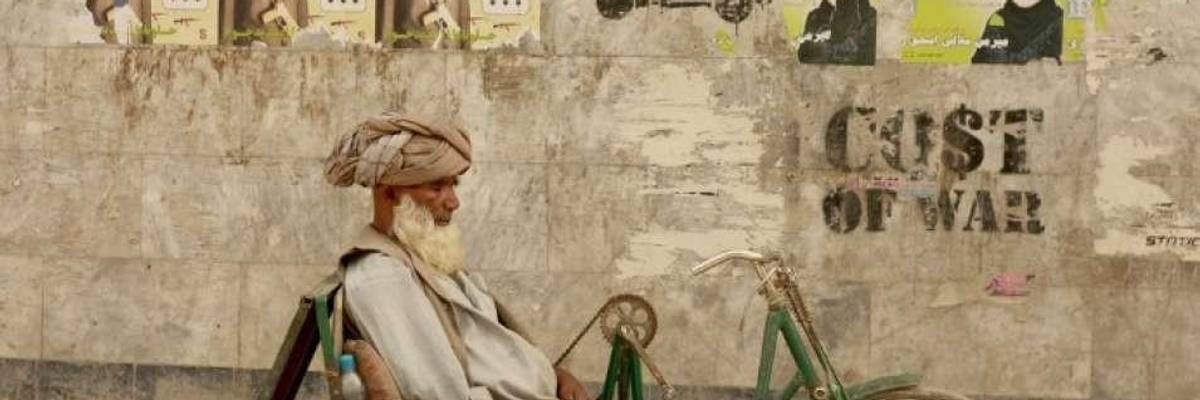
The U.S.-led coalition's bombing of Afghanistan is blamed for 632 civilian casualties, which includes 393 deaths and 239 injured, according to new U.N. data. (Photo: Carpetblogger/flickr/cc)
U.S. airstrikes contributed to a somber milestone in 2018: the highest number of civilians were killed in the war since records began a decade ago.
"The best way to halt the killings and maiming of civilians is to stop the fighting. That is why there is all the more need now to use all our efforts to bring about peace."
--Tadamichi Yamamoto, UNAccording to the data released Sunday by the United Nations, there were 3,804 civilian deaths last year, which marks an 11 percent increase compared to 2017.
Among those thousands were 927 children--a figure U.N. High Commissioner for Human Rights Michelle Bachelet called "particularly shocking." The U.N. also said it was the highest child death toll recorded during a single year. Women and children together represented 38 per cent of all the civilian casualties.
"The report's rigorously researched findings show that the level of harm and suffering inflicted on civilians in Afghanistan is deeply disturbing and wholly unacceptable," said Tadamichi Yamamoto, the U.N. secretary-general's Special Representative for Afghanistan. "All parties need to take immediate and additional concrete steps to stop a further escalation in the number of civilians harmed and lives destroyed."
Revealing the scope of "human misery and tragedy," Yamamoto added that 32,000 civilians were killed over the last decade.
The U.N. attributed the casualties to "anti-government elements" including the Taliban and Daesh (also known as the Islamic State) as well as pro-government forces including the Afghan national security forces and the U.S.-led international military coalition. These pro-government forces are blamed for 24 percent of the total civilian casualties.
Among the grim records in the report:
For the first time since 2009 when it began systematically documenting civilian casualty figures, UNAMA recorded more than 1,000 civilian casualties from aerial operations. 2018 also witnessed more than 500 civilians killed by aerial operations for the first time on record. UNAMA documented 1,015 civilian casualties (536 deaths and 479 injured) from aerial operations. Of these, UNAMA attributed responsibility to international military forces for 632 civilian casualties (393 deaths and 239 injured), to the Afghan Air Force for 304 civilian casualties (118 deaths and 186 injured), and the remaining casualties to unidentified pro-government forces.
"We are seeing a backwards deadly trend in Afghanistan with a growing neglect of civilian lives in pursuit of military wins. The increased bombing is not expediting a peace process, it is in the most brutal way possible to undermine it while costing tens of millions of dollars and hundreds of civilian lives," said Jan Egeland, the secretary general for the Norwegian Refugee Council (NRC). Egeland also noted that strikes by international military forces and the Afghan Air Forces have risen for the fourth year in a row--an increase of 82 percent since 2017.
"The best way to halt the killings and maiming of civilians is to stop the fighting. That is why there is all the more need now to use all our efforts to bring about peace," said the U.N's Yamamoto.
NRC's Egeland, for his part, added, "International actors, who on the one hand are talking more of a negotiated end to the fighting continue to drop more and more bombs in Afghanistan--destroying the lives, homes and livelihoods of many Afghan civilians in the process."
"If actors are truly committed to peace they must take the necessary steps to prevent civilians becoming casualties of war."
Dear Common Dreams reader, It’s been nearly 30 years since I co-founded Common Dreams with my late wife, Lina Newhouser. We had the radical notion that journalism should serve the public good, not corporate profits. It was clear to us from the outset what it would take to build such a project. No paid advertisements. No corporate sponsors. No millionaire publisher telling us what to think or do. Many people said we wouldn't last a year, but we proved those doubters wrong. Together with a tremendous team of journalists and dedicated staff, we built an independent media outlet free from the constraints of profits and corporate control. Our mission has always been simple: To inform. To inspire. To ignite change for the common good. Building Common Dreams was not easy. Our survival was never guaranteed. When you take on the most powerful forces—Wall Street greed, fossil fuel industry destruction, Big Tech lobbyists, and uber-rich oligarchs who have spent billions upon billions rigging the economy and democracy in their favor—the only bulwark you have is supporters who believe in your work. But here’s the urgent message from me today. It's never been this bad out there. And it's never been this hard to keep us going. At the very moment Common Dreams is most needed, the threats we face are intensifying. We need your support now more than ever. We don't accept corporate advertising and never will. We don't have a paywall because we don't think people should be blocked from critical news based on their ability to pay. Everything we do is funded by the donations of readers like you. When everyone does the little they can afford, we are strong. But if that support retreats or dries up, so do we. Will you donate now to make sure Common Dreams not only survives but thrives? —Craig Brown, Co-founder |
U.S. airstrikes contributed to a somber milestone in 2018: the highest number of civilians were killed in the war since records began a decade ago.
"The best way to halt the killings and maiming of civilians is to stop the fighting. That is why there is all the more need now to use all our efforts to bring about peace."
--Tadamichi Yamamoto, UNAccording to the data released Sunday by the United Nations, there were 3,804 civilian deaths last year, which marks an 11 percent increase compared to 2017.
Among those thousands were 927 children--a figure U.N. High Commissioner for Human Rights Michelle Bachelet called "particularly shocking." The U.N. also said it was the highest child death toll recorded during a single year. Women and children together represented 38 per cent of all the civilian casualties.
"The report's rigorously researched findings show that the level of harm and suffering inflicted on civilians in Afghanistan is deeply disturbing and wholly unacceptable," said Tadamichi Yamamoto, the U.N. secretary-general's Special Representative for Afghanistan. "All parties need to take immediate and additional concrete steps to stop a further escalation in the number of civilians harmed and lives destroyed."
Revealing the scope of "human misery and tragedy," Yamamoto added that 32,000 civilians were killed over the last decade.
The U.N. attributed the casualties to "anti-government elements" including the Taliban and Daesh (also known as the Islamic State) as well as pro-government forces including the Afghan national security forces and the U.S.-led international military coalition. These pro-government forces are blamed for 24 percent of the total civilian casualties.
Among the grim records in the report:
For the first time since 2009 when it began systematically documenting civilian casualty figures, UNAMA recorded more than 1,000 civilian casualties from aerial operations. 2018 also witnessed more than 500 civilians killed by aerial operations for the first time on record. UNAMA documented 1,015 civilian casualties (536 deaths and 479 injured) from aerial operations. Of these, UNAMA attributed responsibility to international military forces for 632 civilian casualties (393 deaths and 239 injured), to the Afghan Air Force for 304 civilian casualties (118 deaths and 186 injured), and the remaining casualties to unidentified pro-government forces.
"We are seeing a backwards deadly trend in Afghanistan with a growing neglect of civilian lives in pursuit of military wins. The increased bombing is not expediting a peace process, it is in the most brutal way possible to undermine it while costing tens of millions of dollars and hundreds of civilian lives," said Jan Egeland, the secretary general for the Norwegian Refugee Council (NRC). Egeland also noted that strikes by international military forces and the Afghan Air Forces have risen for the fourth year in a row--an increase of 82 percent since 2017.
"The best way to halt the killings and maiming of civilians is to stop the fighting. That is why there is all the more need now to use all our efforts to bring about peace," said the U.N's Yamamoto.
NRC's Egeland, for his part, added, "International actors, who on the one hand are talking more of a negotiated end to the fighting continue to drop more and more bombs in Afghanistan--destroying the lives, homes and livelihoods of many Afghan civilians in the process."
"If actors are truly committed to peace they must take the necessary steps to prevent civilians becoming casualties of war."
U.S. airstrikes contributed to a somber milestone in 2018: the highest number of civilians were killed in the war since records began a decade ago.
"The best way to halt the killings and maiming of civilians is to stop the fighting. That is why there is all the more need now to use all our efforts to bring about peace."
--Tadamichi Yamamoto, UNAccording to the data released Sunday by the United Nations, there were 3,804 civilian deaths last year, which marks an 11 percent increase compared to 2017.
Among those thousands were 927 children--a figure U.N. High Commissioner for Human Rights Michelle Bachelet called "particularly shocking." The U.N. also said it was the highest child death toll recorded during a single year. Women and children together represented 38 per cent of all the civilian casualties.
"The report's rigorously researched findings show that the level of harm and suffering inflicted on civilians in Afghanistan is deeply disturbing and wholly unacceptable," said Tadamichi Yamamoto, the U.N. secretary-general's Special Representative for Afghanistan. "All parties need to take immediate and additional concrete steps to stop a further escalation in the number of civilians harmed and lives destroyed."
Revealing the scope of "human misery and tragedy," Yamamoto added that 32,000 civilians were killed over the last decade.
The U.N. attributed the casualties to "anti-government elements" including the Taliban and Daesh (also known as the Islamic State) as well as pro-government forces including the Afghan national security forces and the U.S.-led international military coalition. These pro-government forces are blamed for 24 percent of the total civilian casualties.
Among the grim records in the report:
For the first time since 2009 when it began systematically documenting civilian casualty figures, UNAMA recorded more than 1,000 civilian casualties from aerial operations. 2018 also witnessed more than 500 civilians killed by aerial operations for the first time on record. UNAMA documented 1,015 civilian casualties (536 deaths and 479 injured) from aerial operations. Of these, UNAMA attributed responsibility to international military forces for 632 civilian casualties (393 deaths and 239 injured), to the Afghan Air Force for 304 civilian casualties (118 deaths and 186 injured), and the remaining casualties to unidentified pro-government forces.
"We are seeing a backwards deadly trend in Afghanistan with a growing neglect of civilian lives in pursuit of military wins. The increased bombing is not expediting a peace process, it is in the most brutal way possible to undermine it while costing tens of millions of dollars and hundreds of civilian lives," said Jan Egeland, the secretary general for the Norwegian Refugee Council (NRC). Egeland also noted that strikes by international military forces and the Afghan Air Forces have risen for the fourth year in a row--an increase of 82 percent since 2017.
"The best way to halt the killings and maiming of civilians is to stop the fighting. That is why there is all the more need now to use all our efforts to bring about peace," said the U.N's Yamamoto.
NRC's Egeland, for his part, added, "International actors, who on the one hand are talking more of a negotiated end to the fighting continue to drop more and more bombs in Afghanistan--destroying the lives, homes and livelihoods of many Afghan civilians in the process."
"If actors are truly committed to peace they must take the necessary steps to prevent civilians becoming casualties of war."