SUBSCRIBE TO OUR FREE NEWSLETTER
Daily news & progressive opinion—funded by the people, not the corporations—delivered straight to your inbox.
5
#000000
#FFFFFF
To donate by check, phone, or other method, see our More Ways to Give page.
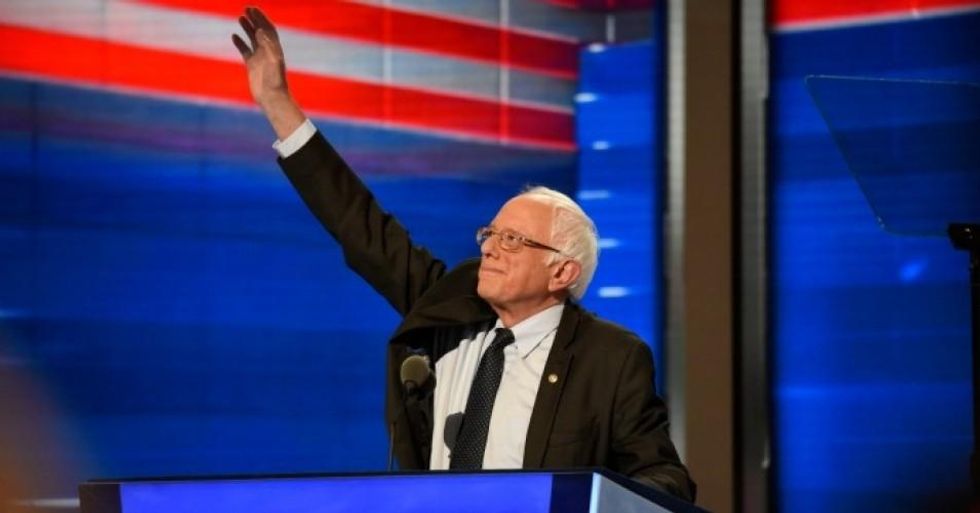
While his defeat by Hillary Clinton in the Democratic Party's 2016 primary was the driving trigger behind the fight that ensued over the way the party's establishment appeared to exploit the power of superdelegates to tip the scales for leadership's favored candidate (here, here, here), Sen. Bernie Sanders (I-Vt.) on Saturday congratulated the DNC for approving a measure that will greatly curtail that influence going forward.
In a vote by party delegates at a meeting in Chicago that was described as a victory for progressive reformers and a major advance for party unity ahead of mid-terms and the 2020 presidential election, the Democratic National Committee approved a series of reforms, including new rules that govern superdelegates. In the future, superdelegates will no longer be allowed to vote for their preferred candidate during the first ballot at the party's national convention--a restriction that will greatly, if not fully, reduce their influence on the outcome until all primary voters have had their say.
In a statement, Sanders called the vote "an important step forward in making the Democratic Party more open, democratic and responsive to the input of ordinary Americans."
Sanders' congratulatory and optimistic statement was backed by his longtime ally and aide Larry Cohen, now board chair of Our Revolution, which champions Bernie-style candidates in federal and state races nationwide.
Greatly reducing the power of the superdelegates, Cohen said, "will give the power to decide our next democratic nominee to the millions of voters participating in primaries and caucuses and make our party truly democratic."
As noted by Our Revolution--which backs Bernie-style progressive candidates in federal, state, and local races nationwide--the other reforms passed by the DNC delegates on Saturday included:
Take together, he said, these reforms are "a huge step forward."
While his defeat by Hillary Clinton in the Democratic Party's 2016 primary was the driving trigger behind the fight that ensued over the way the party's establishment appeared to exploit the power of superdelegates to tip the scales for leadership's favored candidate (here, here, here), Sen. Bernie Sanders (I-Vt.) on Saturday congratulated the DNC for approving a measure that will greatly curtail that influence going forward.
In a vote by party delegates at a meeting in Chicago that was described as a victory for progressive reformers and a major advance for party unity ahead of mid-terms and the 2020 presidential election, the Democratic National Committee approved a series of reforms, including new rules that govern superdelegates. In the future, superdelegates will no longer be allowed to vote for their preferred candidate during the first ballot at the party's national convention--a restriction that will greatly, if not fully, reduce their influence on the outcome until all primary voters have had their say.
In a statement, Sanders called the vote "an important step forward in making the Democratic Party more open, democratic and responsive to the input of ordinary Americans."
Sanders' congratulatory and optimistic statement was backed by his longtime ally and aide Larry Cohen, now board chair of Our Revolution, which champions Bernie-style candidates in federal and state races nationwide.
Greatly reducing the power of the superdelegates, Cohen said, "will give the power to decide our next democratic nominee to the millions of voters participating in primaries and caucuses and make our party truly democratic."
As noted by Our Revolution--which backs Bernie-style progressive candidates in federal, state, and local races nationwide--the other reforms passed by the DNC delegates on Saturday included:
Take together, he said, these reforms are "a huge step forward."
While his defeat by Hillary Clinton in the Democratic Party's 2016 primary was the driving trigger behind the fight that ensued over the way the party's establishment appeared to exploit the power of superdelegates to tip the scales for leadership's favored candidate (here, here, here), Sen. Bernie Sanders (I-Vt.) on Saturday congratulated the DNC for approving a measure that will greatly curtail that influence going forward.
In a vote by party delegates at a meeting in Chicago that was described as a victory for progressive reformers and a major advance for party unity ahead of mid-terms and the 2020 presidential election, the Democratic National Committee approved a series of reforms, including new rules that govern superdelegates. In the future, superdelegates will no longer be allowed to vote for their preferred candidate during the first ballot at the party's national convention--a restriction that will greatly, if not fully, reduce their influence on the outcome until all primary voters have had their say.
In a statement, Sanders called the vote "an important step forward in making the Democratic Party more open, democratic and responsive to the input of ordinary Americans."
Sanders' congratulatory and optimistic statement was backed by his longtime ally and aide Larry Cohen, now board chair of Our Revolution, which champions Bernie-style candidates in federal and state races nationwide.
Greatly reducing the power of the superdelegates, Cohen said, "will give the power to decide our next democratic nominee to the millions of voters participating in primaries and caucuses and make our party truly democratic."
As noted by Our Revolution--which backs Bernie-style progressive candidates in federal, state, and local races nationwide--the other reforms passed by the DNC delegates on Saturday included:
Take together, he said, these reforms are "a huge step forward."