SUBSCRIBE TO OUR FREE NEWSLETTER
Daily news & progressive opinion—funded by the people, not the corporations—delivered straight to your inbox.
5
#000000
#FFFFFF
To donate by check, phone, or other method, see our More Ways to Give page.
Daily news & progressive opinion—funded by the people, not the corporations—delivered straight to your inbox.

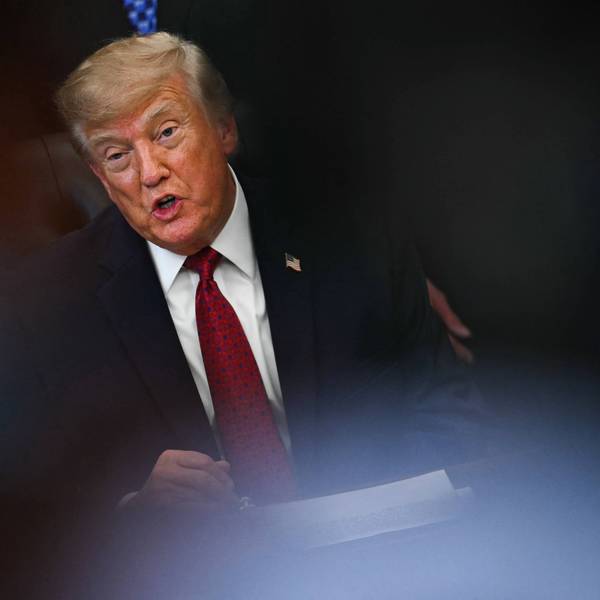
"Trump would be wise to sideline Bolton and his favored 'Libya model' and opt for a more reciprocal approach to diplomacy," argued Gabe Murphy of Peace Action. (Photo: Mandel Ngan/AFP/Getty Images)
Specifically targeting U.S. President Donald Trump's warmongering, anti-diplomacy national security adviser as the primary reason it has threatened to cancel a planned summit with the United States, North Korea's vice minister of foreign affairs Kim Kye Gwan issued a scathing statement on Tuesday making clear that Pyongyang will not be silent about its "feeling of repugnance towards" John Bolton.
"Many have rightly voiced fears that the administration's plan may be to come to the table with North Korea with unrealistic, maximalist demands so that it can claim that it tried diplomacy and diplomacy failed, making it easier to build a case for war."
--Gabe Murphy, Peace ActionWhile Bolton has made countless statements in support of regime change and reckless foreign policy adventures as both a "free agent" and an official in the Bush administration--statements that earned him the nicknames "bloodsucker" and "human scum" in Pyongyang--North Korea was particularly angered by the national security adviser's recent invocation of Libya as the "model" the U.S. should follow in nuclear negotiations with North Korea.
In 2003 and 2004, former Libyan leader Moammar Gadhafi agreed to abandon its nuclear weapons program in exchange for sanctions relief. But in 2011, the U.S.--with the enthusiastic backing of then-Secretary of State Hillary Clinton--helped topple and kill Gadhafi and turn Libya into a "terrorist haven."
North Korean officials believe Bolton, who has called for regime change in Pyongyang, desires the same fate for their nation.
"High-ranking officials of the White House and the Department of State including Bolton, White House national security adviser, are letting loose the assertions of a so-called Libya model of nuclear abandonment," Kim said. "This is not an expression of intention to address the issue through dialogue. It is essentially a manifestation of awfully sinister move to impose on our dignified state the destiny of Libya or Iraq which had been collapsed due to yielding the whole of their countries to big powers."
"We are no longer interested in a negotiation that will be all about driving us into a corner and making a one-sided demand for us to give up our nukes and this would force us to reconsider whether we would accept the North Korea-U.S. summit meeting," Kim concluded.
But as Gabe Murphy, communications associate at Peace Action, argues in an op-ed for Common Dreams on Wednesday, the one-sidedness Pyongyang is denouncing "may be the whole point" behind the Trump administration's approach to nuclear negotiations, particularly with Bolton at the helm.
"Many have rightly voiced fears that the administration's plan may be to come to the table with North Korea with unrealistic, maximalist demands so that it can claim that it tried diplomacy and diplomacy failed, making it easier to build a case for war," Murphy writes.
In an email on Wednesday reacting to the specific comments about Bolton, Murphy told Common Dreams that given his past calls for the U.S. to launch a first-strike attack on Pyongyang--which he laid out in a Wall Street Journal op-ed just months before he took over as Trump's top foreign policy adviser--North Korea likely sees the prospect of Bolton "driving negotiations as a real threat, realizing his main goal may be driving them into the ground."
"North Korea singling out Bolton like this may be a tactical move to try to put distance between Bolton and Trump," Murphy noted. "Trump would be wise to sideline Bolton and his favored 'Libya model' and opt for a more reciprocal approach to diplomacy."
Dear Common Dreams reader, It’s been nearly 30 years since I co-founded Common Dreams with my late wife, Lina Newhouser. We had the radical notion that journalism should serve the public good, not corporate profits. It was clear to us from the outset what it would take to build such a project. No paid advertisements. No corporate sponsors. No millionaire publisher telling us what to think or do. Many people said we wouldn't last a year, but we proved those doubters wrong. Together with a tremendous team of journalists and dedicated staff, we built an independent media outlet free from the constraints of profits and corporate control. Our mission has always been simple: To inform. To inspire. To ignite change for the common good. Building Common Dreams was not easy. Our survival was never guaranteed. When you take on the most powerful forces—Wall Street greed, fossil fuel industry destruction, Big Tech lobbyists, and uber-rich oligarchs who have spent billions upon billions rigging the economy and democracy in their favor—the only bulwark you have is supporters who believe in your work. But here’s the urgent message from me today. It's never been this bad out there. And it's never been this hard to keep us going. At the very moment Common Dreams is most needed, the threats we face are intensifying. We need your support now more than ever. We don't accept corporate advertising and never will. We don't have a paywall because we don't think people should be blocked from critical news based on their ability to pay. Everything we do is funded by the donations of readers like you. When everyone does the little they can afford, we are strong. But if that support retreats or dries up, so do we. Will you donate now to make sure Common Dreams not only survives but thrives? —Craig Brown, Co-founder |
Specifically targeting U.S. President Donald Trump's warmongering, anti-diplomacy national security adviser as the primary reason it has threatened to cancel a planned summit with the United States, North Korea's vice minister of foreign affairs Kim Kye Gwan issued a scathing statement on Tuesday making clear that Pyongyang will not be silent about its "feeling of repugnance towards" John Bolton.
"Many have rightly voiced fears that the administration's plan may be to come to the table with North Korea with unrealistic, maximalist demands so that it can claim that it tried diplomacy and diplomacy failed, making it easier to build a case for war."
--Gabe Murphy, Peace ActionWhile Bolton has made countless statements in support of regime change and reckless foreign policy adventures as both a "free agent" and an official in the Bush administration--statements that earned him the nicknames "bloodsucker" and "human scum" in Pyongyang--North Korea was particularly angered by the national security adviser's recent invocation of Libya as the "model" the U.S. should follow in nuclear negotiations with North Korea.
In 2003 and 2004, former Libyan leader Moammar Gadhafi agreed to abandon its nuclear weapons program in exchange for sanctions relief. But in 2011, the U.S.--with the enthusiastic backing of then-Secretary of State Hillary Clinton--helped topple and kill Gadhafi and turn Libya into a "terrorist haven."
North Korean officials believe Bolton, who has called for regime change in Pyongyang, desires the same fate for their nation.
"High-ranking officials of the White House and the Department of State including Bolton, White House national security adviser, are letting loose the assertions of a so-called Libya model of nuclear abandonment," Kim said. "This is not an expression of intention to address the issue through dialogue. It is essentially a manifestation of awfully sinister move to impose on our dignified state the destiny of Libya or Iraq which had been collapsed due to yielding the whole of their countries to big powers."
"We are no longer interested in a negotiation that will be all about driving us into a corner and making a one-sided demand for us to give up our nukes and this would force us to reconsider whether we would accept the North Korea-U.S. summit meeting," Kim concluded.
But as Gabe Murphy, communications associate at Peace Action, argues in an op-ed for Common Dreams on Wednesday, the one-sidedness Pyongyang is denouncing "may be the whole point" behind the Trump administration's approach to nuclear negotiations, particularly with Bolton at the helm.
"Many have rightly voiced fears that the administration's plan may be to come to the table with North Korea with unrealistic, maximalist demands so that it can claim that it tried diplomacy and diplomacy failed, making it easier to build a case for war," Murphy writes.
In an email on Wednesday reacting to the specific comments about Bolton, Murphy told Common Dreams that given his past calls for the U.S. to launch a first-strike attack on Pyongyang--which he laid out in a Wall Street Journal op-ed just months before he took over as Trump's top foreign policy adviser--North Korea likely sees the prospect of Bolton "driving negotiations as a real threat, realizing his main goal may be driving them into the ground."
"North Korea singling out Bolton like this may be a tactical move to try to put distance between Bolton and Trump," Murphy noted. "Trump would be wise to sideline Bolton and his favored 'Libya model' and opt for a more reciprocal approach to diplomacy."
Specifically targeting U.S. President Donald Trump's warmongering, anti-diplomacy national security adviser as the primary reason it has threatened to cancel a planned summit with the United States, North Korea's vice minister of foreign affairs Kim Kye Gwan issued a scathing statement on Tuesday making clear that Pyongyang will not be silent about its "feeling of repugnance towards" John Bolton.
"Many have rightly voiced fears that the administration's plan may be to come to the table with North Korea with unrealistic, maximalist demands so that it can claim that it tried diplomacy and diplomacy failed, making it easier to build a case for war."
--Gabe Murphy, Peace ActionWhile Bolton has made countless statements in support of regime change and reckless foreign policy adventures as both a "free agent" and an official in the Bush administration--statements that earned him the nicknames "bloodsucker" and "human scum" in Pyongyang--North Korea was particularly angered by the national security adviser's recent invocation of Libya as the "model" the U.S. should follow in nuclear negotiations with North Korea.
In 2003 and 2004, former Libyan leader Moammar Gadhafi agreed to abandon its nuclear weapons program in exchange for sanctions relief. But in 2011, the U.S.--with the enthusiastic backing of then-Secretary of State Hillary Clinton--helped topple and kill Gadhafi and turn Libya into a "terrorist haven."
North Korean officials believe Bolton, who has called for regime change in Pyongyang, desires the same fate for their nation.
"High-ranking officials of the White House and the Department of State including Bolton, White House national security adviser, are letting loose the assertions of a so-called Libya model of nuclear abandonment," Kim said. "This is not an expression of intention to address the issue through dialogue. It is essentially a manifestation of awfully sinister move to impose on our dignified state the destiny of Libya or Iraq which had been collapsed due to yielding the whole of their countries to big powers."
"We are no longer interested in a negotiation that will be all about driving us into a corner and making a one-sided demand for us to give up our nukes and this would force us to reconsider whether we would accept the North Korea-U.S. summit meeting," Kim concluded.
But as Gabe Murphy, communications associate at Peace Action, argues in an op-ed for Common Dreams on Wednesday, the one-sidedness Pyongyang is denouncing "may be the whole point" behind the Trump administration's approach to nuclear negotiations, particularly with Bolton at the helm.
"Many have rightly voiced fears that the administration's plan may be to come to the table with North Korea with unrealistic, maximalist demands so that it can claim that it tried diplomacy and diplomacy failed, making it easier to build a case for war," Murphy writes.
In an email on Wednesday reacting to the specific comments about Bolton, Murphy told Common Dreams that given his past calls for the U.S. to launch a first-strike attack on Pyongyang--which he laid out in a Wall Street Journal op-ed just months before he took over as Trump's top foreign policy adviser--North Korea likely sees the prospect of Bolton "driving negotiations as a real threat, realizing his main goal may be driving them into the ground."
"North Korea singling out Bolton like this may be a tactical move to try to put distance between Bolton and Trump," Murphy noted. "Trump would be wise to sideline Bolton and his favored 'Libya model' and opt for a more reciprocal approach to diplomacy."