
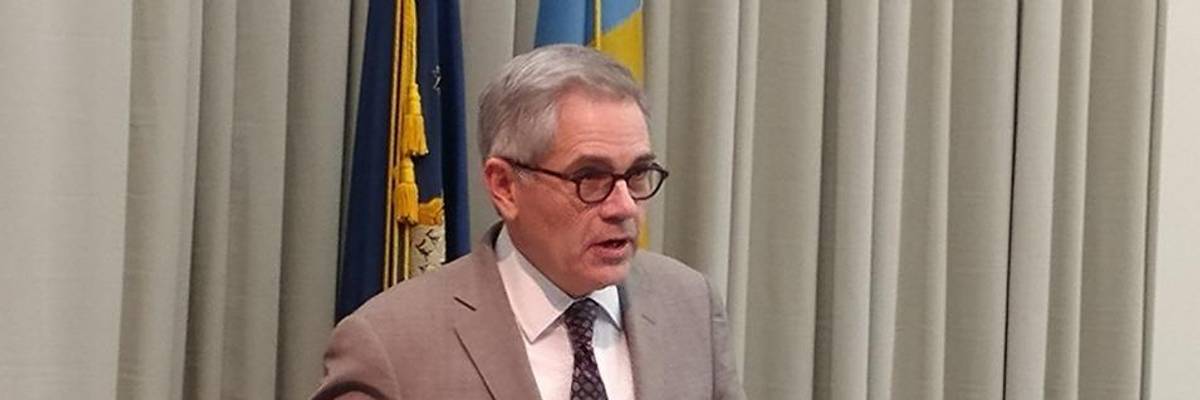
Philadelphia District Attorney said Thursday he would dismiss all criminal charges related solely to marijuana possession, marking a shift toward the type of policy that has been introduced in Seattle and San Francisco in recent days. (Photo: @MacDonaldWHYY/Twitter)
Joining Nationwide Shift, Philadelphia's Progressive DA Drops Dozens of Marijuana Possession Charges
The city became the third in recent weeks to announce reforms to its marijuana policy, with DA Larry Krasner saying the change will free up resources to target serious violent crimes
Joining a number of other major cities, Philadelphia has dropped criminal charges against dozens of residents for marijuana possession, with District Attorney Larry Krasner outlining a new policy for the drug on Thursday.
The charges against 51 people were dropped last week, Krasner announced.
"We are going to tell them, yes, drop any cases that are simply marijuana possession," Krasner said of the new drug policy directive for the city.
Watch:
The cleared charges did not apply to people who were accused of having an intent to deliver or sell marijuana.
Krasner's move is the latest marijuana policy reform to reach a major city. Last week, Seattle vacated hundreds of pot possession convictions and cleared charges that had been filed before marijuana was legalized in the city in 2012.
Last month, San Francisco did the same for all marijuana convictions dating back to 1975, and in San Diego County, nearly 700 marijuana felony convictions have been reduced to misdemeanors since January.
Although Philadelphia introduced a new policy in 2014 that made possession of up to 30 grams of pot punishable by a $25 fine, Krasner said some people have still been arrested and charged with a misdemeanor if they're caught with the substance.
"What we're talking about is the 10 percent or so that are being charged as they used to be, as misdemeanors in court," said Krasner, who campaigned on criminal justice reform and who has represented Black Lives Matter activists.
Progressives, who applauded Krasner's election in November, praised the district attorney for introducing the reforms, which he noted would allow the city to direct more resources to fighting violent crimes.
"I did it because I felt it was the right thing to do," Krasner said of the decision. "We could use those resources to solve homicides."
An Urgent Message From Our Co-Founder
Dear Common Dreams reader, It’s been nearly 30 years since I co-founded Common Dreams with my late wife, Lina Newhouser. We had the radical notion that journalism should serve the public good, not corporate profits. It was clear to us from the outset what it would take to build such a project. No paid advertisements. No corporate sponsors. No millionaire publisher telling us what to think or do. Many people said we wouldn't last a year, but we proved those doubters wrong. Together with a tremendous team of journalists and dedicated staff, we built an independent media outlet free from the constraints of profits and corporate control. Our mission has always been simple: To inform. To inspire. To ignite change for the common good. Building Common Dreams was not easy. Our survival was never guaranteed. When you take on the most powerful forces—Wall Street greed, fossil fuel industry destruction, Big Tech lobbyists, and uber-rich oligarchs who have spent billions upon billions rigging the economy and democracy in their favor—the only bulwark you have is supporters who believe in your work. But here’s the urgent message from me today. It's never been this bad out there. And it's never been this hard to keep us going. At the very moment Common Dreams is most needed, the threats we face are intensifying. We need your support now more than ever. We don't accept corporate advertising and never will. We don't have a paywall because we don't think people should be blocked from critical news based on their ability to pay. Everything we do is funded by the donations of readers like you. When everyone does the little they can afford, we are strong. But if that support retreats or dries up, so do we. Will you donate now to make sure Common Dreams not only survives but thrives? —Craig Brown, Co-founder |
Joining a number of other major cities, Philadelphia has dropped criminal charges against dozens of residents for marijuana possession, with District Attorney Larry Krasner outlining a new policy for the drug on Thursday.
The charges against 51 people were dropped last week, Krasner announced.
"We are going to tell them, yes, drop any cases that are simply marijuana possession," Krasner said of the new drug policy directive for the city.
Watch:
The cleared charges did not apply to people who were accused of having an intent to deliver or sell marijuana.
Krasner's move is the latest marijuana policy reform to reach a major city. Last week, Seattle vacated hundreds of pot possession convictions and cleared charges that had been filed before marijuana was legalized in the city in 2012.
Last month, San Francisco did the same for all marijuana convictions dating back to 1975, and in San Diego County, nearly 700 marijuana felony convictions have been reduced to misdemeanors since January.
Although Philadelphia introduced a new policy in 2014 that made possession of up to 30 grams of pot punishable by a $25 fine, Krasner said some people have still been arrested and charged with a misdemeanor if they're caught with the substance.
"What we're talking about is the 10 percent or so that are being charged as they used to be, as misdemeanors in court," said Krasner, who campaigned on criminal justice reform and who has represented Black Lives Matter activists.
Progressives, who applauded Krasner's election in November, praised the district attorney for introducing the reforms, which he noted would allow the city to direct more resources to fighting violent crimes.
"I did it because I felt it was the right thing to do," Krasner said of the decision. "We could use those resources to solve homicides."
Joining a number of other major cities, Philadelphia has dropped criminal charges against dozens of residents for marijuana possession, with District Attorney Larry Krasner outlining a new policy for the drug on Thursday.
The charges against 51 people were dropped last week, Krasner announced.
"We are going to tell them, yes, drop any cases that are simply marijuana possession," Krasner said of the new drug policy directive for the city.
Watch:
The cleared charges did not apply to people who were accused of having an intent to deliver or sell marijuana.
Krasner's move is the latest marijuana policy reform to reach a major city. Last week, Seattle vacated hundreds of pot possession convictions and cleared charges that had been filed before marijuana was legalized in the city in 2012.
Last month, San Francisco did the same for all marijuana convictions dating back to 1975, and in San Diego County, nearly 700 marijuana felony convictions have been reduced to misdemeanors since January.
Although Philadelphia introduced a new policy in 2014 that made possession of up to 30 grams of pot punishable by a $25 fine, Krasner said some people have still been arrested and charged with a misdemeanor if they're caught with the substance.
"What we're talking about is the 10 percent or so that are being charged as they used to be, as misdemeanors in court," said Krasner, who campaigned on criminal justice reform and who has represented Black Lives Matter activists.
Progressives, who applauded Krasner's election in November, praised the district attorney for introducing the reforms, which he noted would allow the city to direct more resources to fighting violent crimes.
"I did it because I felt it was the right thing to do," Krasner said of the decision. "We could use those resources to solve homicides."