SUBSCRIBE TO OUR FREE NEWSLETTER
Daily news & progressive opinion—funded by the people, not the corporations—delivered straight to your inbox.
5
#000000
#FFFFFF
To donate by check, phone, or other method, see our More Ways to Give page.
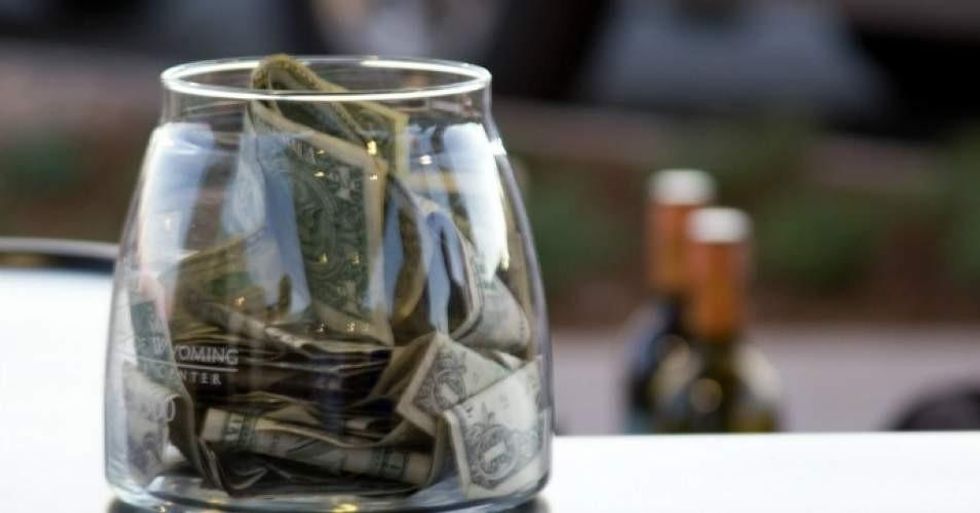
President Donald Trump's war on workers has spawned a number of disastrous policy moves, from cuts to federal employees' pay increases to directives making it harder for workers to unionize. But one of the "nastiest" policy shifts Trump is pursuing is a rule that would allow companies to steal their employees' tips--which, according to a new report, would cost workers $5.8 billion a year.
Published by the Economic Policy Institute (EPI) on Wednesday, the analysis also details the disproportionate impact the proposed rule would have on women, whose tips would account for nearly 80 percent--$4.6 billion--of the total stolen by employers.
By contrast, the "tip stealing" rule--introduced by the Department of Labor in December--"would be a windfall to restaurant owners and other employers," who would essentially have total control over workers' tips, as long as they pay the minimum wage, EPI finds.
While EPI notes that employers would have the option to redistribute the tips to "'back of the house' workers like dishwashers and cooks," they would not be required to do so.
"Employers would be no more likely to share tips with back-of-the-house workers than they would be to make any other choice about what to do with a business windfall, including using the money to make capital improvements to their establishments, to increase executive pay, or to line their own pockets," EPI's report notes.
"Instead of giving workers a badly needed boost to their paycheck, the Trump administration is actively making it legal to steal tips from working people," Heidi Shierholz, EPI's director of policy, concluded in a statement on Wednesday.
With the rule's public comment period ending in just over two weeks, activists urged Americans to flood the Department of Labor with outrage that could help set the stage for future lawsuits.
President Donald Trump's war on workers has spawned a number of disastrous policy moves, from cuts to federal employees' pay increases to directives making it harder for workers to unionize. But one of the "nastiest" policy shifts Trump is pursuing is a rule that would allow companies to steal their employees' tips--which, according to a new report, would cost workers $5.8 billion a year.
Published by the Economic Policy Institute (EPI) on Wednesday, the analysis also details the disproportionate impact the proposed rule would have on women, whose tips would account for nearly 80 percent--$4.6 billion--of the total stolen by employers.
By contrast, the "tip stealing" rule--introduced by the Department of Labor in December--"would be a windfall to restaurant owners and other employers," who would essentially have total control over workers' tips, as long as they pay the minimum wage, EPI finds.
While EPI notes that employers would have the option to redistribute the tips to "'back of the house' workers like dishwashers and cooks," they would not be required to do so.
"Employers would be no more likely to share tips with back-of-the-house workers than they would be to make any other choice about what to do with a business windfall, including using the money to make capital improvements to their establishments, to increase executive pay, or to line their own pockets," EPI's report notes.
"Instead of giving workers a badly needed boost to their paycheck, the Trump administration is actively making it legal to steal tips from working people," Heidi Shierholz, EPI's director of policy, concluded in a statement on Wednesday.
With the rule's public comment period ending in just over two weeks, activists urged Americans to flood the Department of Labor with outrage that could help set the stage for future lawsuits.
President Donald Trump's war on workers has spawned a number of disastrous policy moves, from cuts to federal employees' pay increases to directives making it harder for workers to unionize. But one of the "nastiest" policy shifts Trump is pursuing is a rule that would allow companies to steal their employees' tips--which, according to a new report, would cost workers $5.8 billion a year.
Published by the Economic Policy Institute (EPI) on Wednesday, the analysis also details the disproportionate impact the proposed rule would have on women, whose tips would account for nearly 80 percent--$4.6 billion--of the total stolen by employers.
By contrast, the "tip stealing" rule--introduced by the Department of Labor in December--"would be a windfall to restaurant owners and other employers," who would essentially have total control over workers' tips, as long as they pay the minimum wage, EPI finds.
While EPI notes that employers would have the option to redistribute the tips to "'back of the house' workers like dishwashers and cooks," they would not be required to do so.
"Employers would be no more likely to share tips with back-of-the-house workers than they would be to make any other choice about what to do with a business windfall, including using the money to make capital improvements to their establishments, to increase executive pay, or to line their own pockets," EPI's report notes.
"Instead of giving workers a badly needed boost to their paycheck, the Trump administration is actively making it legal to steal tips from working people," Heidi Shierholz, EPI's director of policy, concluded in a statement on Wednesday.
With the rule's public comment period ending in just over two weeks, activists urged Americans to flood the Department of Labor with outrage that could help set the stage for future lawsuits.