SUBSCRIBE TO OUR FREE NEWSLETTER
Daily news & progressive opinion—funded by the people, not the corporations—delivered straight to your inbox.
5
#000000
#FFFFFF
To donate by check, phone, or other method, see our More Ways to Give page.
Daily news & progressive opinion—funded by the people, not the corporations—delivered straight to your inbox.
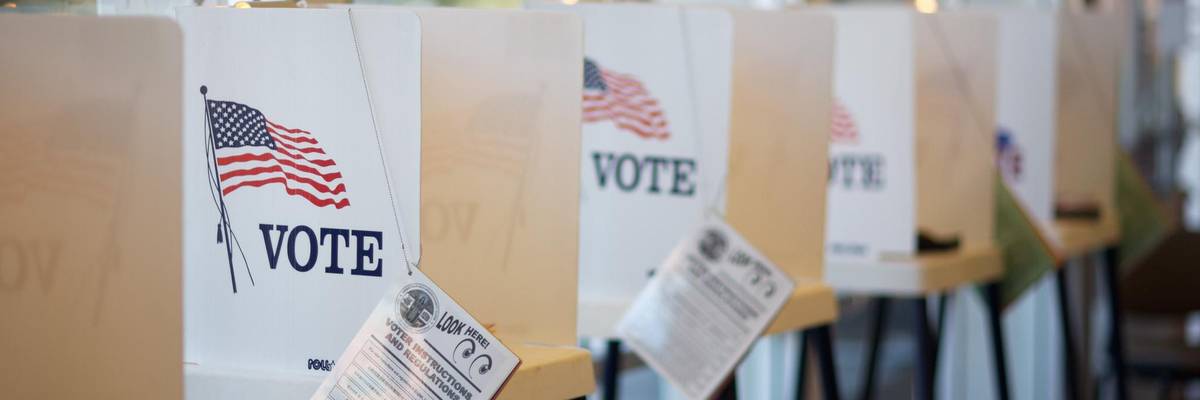
Critics of President Trump's so-called Election Integrity Commission argued it was aimed at suppressing the vote, especially for minority voters. (Photo: Penn State/Flickr/cc)
Civil liberties groups applauded the disbanding of the Trump administration's so-called "Election Integrity Commission," tasked with proving the president right in his baseless claim that millions of people cast fraudulent votes in the 2016 election, costing him the popular vote.
"This commission started as a tragedy and ended as a farce," said Michael Waldman, president of the Brennan Center for Justice, in a statement. "It failed to find any evidence of the millions of illegal voters claimed by President Trump. But this should be more than just a somewhat-comic ending to a misguided effort. The claim of widespread voter fraud in the United States is in fact, fraud. The demise of this commission should put this issue to rest."
President Donald Trump formed the panel last spring, naming Vice President Mike Pence and Kansas Secretary of State Kris Kobach, who has spent much of his career pushing a false narrative regarding rampant "voter fraud" and voter suppression efforts, to head the commission.
The formation of the committee provoked widespread outrage among voting rights advocates who argued the administration was honing in on the practically non-existent issue of fraudulent voting by individual citizens in order to gain support for stringent voter ID laws, which have been found to keep minority voters away from the polls.
"We have real problems when it comes to elections: low voter turnout, unnecessary barriers to participation, outdated and insecure machines, and possible foreign interference," said Dale Ho of the American Civil Liberties Union (ACLU) in a statement. "But rather than address these real threats to election integrity, the commission engaged in a wild-goose chase for voter fraud, demonizing the very American voters whom we should all be helping to participate--with the not-so-secret goal of making voting harder with unnecessary barriers."
Trump tweeted about the demise of the panel, blaming states that refused to cooperate with Pence and Kobach's request that states hand over personal data for all registered voters.
Forty-five states declined to pass along the information to the panel, with a number of state officials arguing that the commission itself was based on a lie and raising concerns that the request had provoked citizens to cancel their voter registrations.
Democratic lawmakers and voting rights advocates cheered the dissolution of the commission on social media, but some warned that vigilant protection of voting rights is still needed, as Trump now plans to ask the Department of Homeland Security to examine so-called "voter fraud."
"Good riddance," said Vanita Gupta, president of The Leadership Conference on Civil and Human Rights, of the voting commission's demise as she called for the strengthening of voting rights protections going forward.
"Instead of restricting access to the ballot box, we should be looking for ways to strengthen that fundamental right," Gupta added. "Congress and the states must make voting easier and expand citizen participation. Rather than appointing a voter suppression dream team of individuals who have made wildly inflated claims about voter fraud, the president should instead be addressing the very serious problems this country has in its elections, including voter suppression."
Dear Common Dreams reader, It’s been nearly 30 years since I co-founded Common Dreams with my late wife, Lina Newhouser. We had the radical notion that journalism should serve the public good, not corporate profits. It was clear to us from the outset what it would take to build such a project. No paid advertisements. No corporate sponsors. No millionaire publisher telling us what to think or do. Many people said we wouldn't last a year, but we proved those doubters wrong. Together with a tremendous team of journalists and dedicated staff, we built an independent media outlet free from the constraints of profits and corporate control. Our mission has always been simple: To inform. To inspire. To ignite change for the common good. Building Common Dreams was not easy. Our survival was never guaranteed. When you take on the most powerful forces—Wall Street greed, fossil fuel industry destruction, Big Tech lobbyists, and uber-rich oligarchs who have spent billions upon billions rigging the economy and democracy in their favor—the only bulwark you have is supporters who believe in your work. But here’s the urgent message from me today. It's never been this bad out there. And it's never been this hard to keep us going. At the very moment Common Dreams is most needed, the threats we face are intensifying. We need your support now more than ever. We don't accept corporate advertising and never will. We don't have a paywall because we don't think people should be blocked from critical news based on their ability to pay. Everything we do is funded by the donations of readers like you. When everyone does the little they can afford, we are strong. But if that support retreats or dries up, so do we. Will you donate now to make sure Common Dreams not only survives but thrives? —Craig Brown, Co-founder |
Civil liberties groups applauded the disbanding of the Trump administration's so-called "Election Integrity Commission," tasked with proving the president right in his baseless claim that millions of people cast fraudulent votes in the 2016 election, costing him the popular vote.
"This commission started as a tragedy and ended as a farce," said Michael Waldman, president of the Brennan Center for Justice, in a statement. "It failed to find any evidence of the millions of illegal voters claimed by President Trump. But this should be more than just a somewhat-comic ending to a misguided effort. The claim of widespread voter fraud in the United States is in fact, fraud. The demise of this commission should put this issue to rest."
President Donald Trump formed the panel last spring, naming Vice President Mike Pence and Kansas Secretary of State Kris Kobach, who has spent much of his career pushing a false narrative regarding rampant "voter fraud" and voter suppression efforts, to head the commission.
The formation of the committee provoked widespread outrage among voting rights advocates who argued the administration was honing in on the practically non-existent issue of fraudulent voting by individual citizens in order to gain support for stringent voter ID laws, which have been found to keep minority voters away from the polls.
"We have real problems when it comes to elections: low voter turnout, unnecessary barriers to participation, outdated and insecure machines, and possible foreign interference," said Dale Ho of the American Civil Liberties Union (ACLU) in a statement. "But rather than address these real threats to election integrity, the commission engaged in a wild-goose chase for voter fraud, demonizing the very American voters whom we should all be helping to participate--with the not-so-secret goal of making voting harder with unnecessary barriers."
Trump tweeted about the demise of the panel, blaming states that refused to cooperate with Pence and Kobach's request that states hand over personal data for all registered voters.
Forty-five states declined to pass along the information to the panel, with a number of state officials arguing that the commission itself was based on a lie and raising concerns that the request had provoked citizens to cancel their voter registrations.
Democratic lawmakers and voting rights advocates cheered the dissolution of the commission on social media, but some warned that vigilant protection of voting rights is still needed, as Trump now plans to ask the Department of Homeland Security to examine so-called "voter fraud."
"Good riddance," said Vanita Gupta, president of The Leadership Conference on Civil and Human Rights, of the voting commission's demise as she called for the strengthening of voting rights protections going forward.
"Instead of restricting access to the ballot box, we should be looking for ways to strengthen that fundamental right," Gupta added. "Congress and the states must make voting easier and expand citizen participation. Rather than appointing a voter suppression dream team of individuals who have made wildly inflated claims about voter fraud, the president should instead be addressing the very serious problems this country has in its elections, including voter suppression."
Civil liberties groups applauded the disbanding of the Trump administration's so-called "Election Integrity Commission," tasked with proving the president right in his baseless claim that millions of people cast fraudulent votes in the 2016 election, costing him the popular vote.
"This commission started as a tragedy and ended as a farce," said Michael Waldman, president of the Brennan Center for Justice, in a statement. "It failed to find any evidence of the millions of illegal voters claimed by President Trump. But this should be more than just a somewhat-comic ending to a misguided effort. The claim of widespread voter fraud in the United States is in fact, fraud. The demise of this commission should put this issue to rest."
President Donald Trump formed the panel last spring, naming Vice President Mike Pence and Kansas Secretary of State Kris Kobach, who has spent much of his career pushing a false narrative regarding rampant "voter fraud" and voter suppression efforts, to head the commission.
The formation of the committee provoked widespread outrage among voting rights advocates who argued the administration was honing in on the practically non-existent issue of fraudulent voting by individual citizens in order to gain support for stringent voter ID laws, which have been found to keep minority voters away from the polls.
"We have real problems when it comes to elections: low voter turnout, unnecessary barriers to participation, outdated and insecure machines, and possible foreign interference," said Dale Ho of the American Civil Liberties Union (ACLU) in a statement. "But rather than address these real threats to election integrity, the commission engaged in a wild-goose chase for voter fraud, demonizing the very American voters whom we should all be helping to participate--with the not-so-secret goal of making voting harder with unnecessary barriers."
Trump tweeted about the demise of the panel, blaming states that refused to cooperate with Pence and Kobach's request that states hand over personal data for all registered voters.
Forty-five states declined to pass along the information to the panel, with a number of state officials arguing that the commission itself was based on a lie and raising concerns that the request had provoked citizens to cancel their voter registrations.
Democratic lawmakers and voting rights advocates cheered the dissolution of the commission on social media, but some warned that vigilant protection of voting rights is still needed, as Trump now plans to ask the Department of Homeland Security to examine so-called "voter fraud."
"Good riddance," said Vanita Gupta, president of The Leadership Conference on Civil and Human Rights, of the voting commission's demise as she called for the strengthening of voting rights protections going forward.
"Instead of restricting access to the ballot box, we should be looking for ways to strengthen that fundamental right," Gupta added. "Congress and the states must make voting easier and expand citizen participation. Rather than appointing a voter suppression dream team of individuals who have made wildly inflated claims about voter fraud, the president should instead be addressing the very serious problems this country has in its elections, including voter suppression."