SUBSCRIBE TO OUR FREE NEWSLETTER
Daily news & progressive opinion—funded by the people, not the corporations—delivered straight to your inbox.
5
#000000
#FFFFFF
To donate by check, phone, or other method, see our More Ways to Give page.
Daily news & progressive opinion—funded by the people, not the corporations—delivered straight to your inbox.

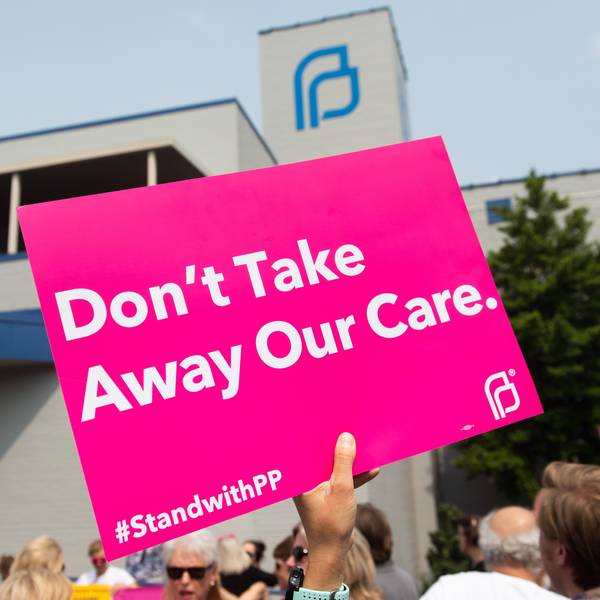
The Senate is set to vote next week on a healthcare plan, crafted by Republicans, that opponents warn would restrict women's access to necessary healthcare. (Photo: Mark Dixon/Flickr/cc)
As Senate Republicans scramble to pass legislation that experts say is their "most radical" and damaging healthcare repeal yet--gutting Medicaid and leaving millions uninsured--reproductive rights advocates warn the new bill would be especially damaging for women.
The bill, coauthored by Sens. Lindsey Graham (R-S.C.) and Bill Cassidy (R-La.), would eliminate Affordable Care Act (ACA) mandates requiring all Americans to have health insurance or pay a tax penalty, and all large employers to offer insurance plans. It would also end cost-sharing subsidies for insurers and tax credits that help Americans afford coverage.
Further, the plan would halt Medicaid expansion, and restructure the distribution of federal funding so that states receive block grants, or lump sums to allocate as they see fit. As Anna North at Vox notes, "its program of block grants would create new ways for the federal government to restrict abortion coverage."
As North explains:
Many states already have restrictions on insurance coverage for abortion. But Graham-Cassidy would require all states to ban abortion coverage in any program that gets federal block grant money. If it took money to offer subsidies for individual coverage or otherwise bolster the individual market, then it would have to restrict abortion coverage on that market. If it used federal funds to offer subsidies to employers, the ban on abortion coverage would affect the employer market too.
Essentially, the federal government would have the states over a barrel--if they wanted money to help keep their residents covered, they'd have to sacrifice abortion coverage to get it.
The bill would also limit access to Planned Parenthood and allow states to apply for waivers to scrap rules that mandate coverage for essential health benefits such as maternity care.
While an estimated 13 million women would lose access to maternal care under Graham-Cassidy, others would be forced to pay higher premiums. A Center for American Progress analysis estimated that insurance providers would charge upwards of $17,000 more in premiums for pregnancy.
Ending Medicaid expansion would significantly affect millions of women of color and those with low incomes. According to the Guttmacher Institute, Medicaid covers 20 percent of American women aged 15-44, and in 2015, provided coverage for 48 percent of women whose incomes were below the federal poverty line.
Andy Slavitt, who ran the Centers for Medicare and Medicaid Services under former President Barack Obama, shared a bulleted list detailing the ways in which Graham-Cassidy would impact women.
Sen. Bernie Sanders (I-Vt.) shared a similar list based on a Senate Budget Committee analysis, and also tweeted an image illustrating the bill's proposed restrictions on abortions.
Comparing the bill to previous proposals, Vox's Sarah Kliff writes: "While other Republican plans essentially create a poorly funded version of the Affordable Care Act, Graham-Cassidy blows it up."
A spokesperson for Senate Majority Leader Mitch McConnell (R-Ky.) confirmed Wednesday that Republicans intend to bring the bill to the floor for a vote next week, ahead of the September 30 deadline to pass the measure with a simple majority.
Several national progressive groups, lawmakers, and others have mobilized to defeat Graham-Cassidy through protests in Washington and online campaigns to raise awareness about the bill's consequences and urge voters to contact their senators:
Dear Common Dreams reader, It’s been nearly 30 years since I co-founded Common Dreams with my late wife, Lina Newhouser. We had the radical notion that journalism should serve the public good, not corporate profits. It was clear to us from the outset what it would take to build such a project. No paid advertisements. No corporate sponsors. No millionaire publisher telling us what to think or do. Many people said we wouldn't last a year, but we proved those doubters wrong. Together with a tremendous team of journalists and dedicated staff, we built an independent media outlet free from the constraints of profits and corporate control. Our mission has always been simple: To inform. To inspire. To ignite change for the common good. Building Common Dreams was not easy. Our survival was never guaranteed. When you take on the most powerful forces—Wall Street greed, fossil fuel industry destruction, Big Tech lobbyists, and uber-rich oligarchs who have spent billions upon billions rigging the economy and democracy in their favor—the only bulwark you have is supporters who believe in your work. But here’s the urgent message from me today. It's never been this bad out there. And it's never been this hard to keep us going. At the very moment Common Dreams is most needed, the threats we face are intensifying. We need your support now more than ever. We don't accept corporate advertising and never will. We don't have a paywall because we don't think people should be blocked from critical news based on their ability to pay. Everything we do is funded by the donations of readers like you. When everyone does the little they can afford, we are strong. But if that support retreats or dries up, so do we. Will you donate now to make sure Common Dreams not only survives but thrives? —Craig Brown, Co-founder |
As Senate Republicans scramble to pass legislation that experts say is their "most radical" and damaging healthcare repeal yet--gutting Medicaid and leaving millions uninsured--reproductive rights advocates warn the new bill would be especially damaging for women.
The bill, coauthored by Sens. Lindsey Graham (R-S.C.) and Bill Cassidy (R-La.), would eliminate Affordable Care Act (ACA) mandates requiring all Americans to have health insurance or pay a tax penalty, and all large employers to offer insurance plans. It would also end cost-sharing subsidies for insurers and tax credits that help Americans afford coverage.
Further, the plan would halt Medicaid expansion, and restructure the distribution of federal funding so that states receive block grants, or lump sums to allocate as they see fit. As Anna North at Vox notes, "its program of block grants would create new ways for the federal government to restrict abortion coverage."
As North explains:
Many states already have restrictions on insurance coverage for abortion. But Graham-Cassidy would require all states to ban abortion coverage in any program that gets federal block grant money. If it took money to offer subsidies for individual coverage or otherwise bolster the individual market, then it would have to restrict abortion coverage on that market. If it used federal funds to offer subsidies to employers, the ban on abortion coverage would affect the employer market too.
Essentially, the federal government would have the states over a barrel--if they wanted money to help keep their residents covered, they'd have to sacrifice abortion coverage to get it.
The bill would also limit access to Planned Parenthood and allow states to apply for waivers to scrap rules that mandate coverage for essential health benefits such as maternity care.
While an estimated 13 million women would lose access to maternal care under Graham-Cassidy, others would be forced to pay higher premiums. A Center for American Progress analysis estimated that insurance providers would charge upwards of $17,000 more in premiums for pregnancy.
Ending Medicaid expansion would significantly affect millions of women of color and those with low incomes. According to the Guttmacher Institute, Medicaid covers 20 percent of American women aged 15-44, and in 2015, provided coverage for 48 percent of women whose incomes were below the federal poverty line.
Andy Slavitt, who ran the Centers for Medicare and Medicaid Services under former President Barack Obama, shared a bulleted list detailing the ways in which Graham-Cassidy would impact women.
Sen. Bernie Sanders (I-Vt.) shared a similar list based on a Senate Budget Committee analysis, and also tweeted an image illustrating the bill's proposed restrictions on abortions.
Comparing the bill to previous proposals, Vox's Sarah Kliff writes: "While other Republican plans essentially create a poorly funded version of the Affordable Care Act, Graham-Cassidy blows it up."
A spokesperson for Senate Majority Leader Mitch McConnell (R-Ky.) confirmed Wednesday that Republicans intend to bring the bill to the floor for a vote next week, ahead of the September 30 deadline to pass the measure with a simple majority.
Several national progressive groups, lawmakers, and others have mobilized to defeat Graham-Cassidy through protests in Washington and online campaigns to raise awareness about the bill's consequences and urge voters to contact their senators:
As Senate Republicans scramble to pass legislation that experts say is their "most radical" and damaging healthcare repeal yet--gutting Medicaid and leaving millions uninsured--reproductive rights advocates warn the new bill would be especially damaging for women.
The bill, coauthored by Sens. Lindsey Graham (R-S.C.) and Bill Cassidy (R-La.), would eliminate Affordable Care Act (ACA) mandates requiring all Americans to have health insurance or pay a tax penalty, and all large employers to offer insurance plans. It would also end cost-sharing subsidies for insurers and tax credits that help Americans afford coverage.
Further, the plan would halt Medicaid expansion, and restructure the distribution of federal funding so that states receive block grants, or lump sums to allocate as they see fit. As Anna North at Vox notes, "its program of block grants would create new ways for the federal government to restrict abortion coverage."
As North explains:
Many states already have restrictions on insurance coverage for abortion. But Graham-Cassidy would require all states to ban abortion coverage in any program that gets federal block grant money. If it took money to offer subsidies for individual coverage or otherwise bolster the individual market, then it would have to restrict abortion coverage on that market. If it used federal funds to offer subsidies to employers, the ban on abortion coverage would affect the employer market too.
Essentially, the federal government would have the states over a barrel--if they wanted money to help keep their residents covered, they'd have to sacrifice abortion coverage to get it.
The bill would also limit access to Planned Parenthood and allow states to apply for waivers to scrap rules that mandate coverage for essential health benefits such as maternity care.
While an estimated 13 million women would lose access to maternal care under Graham-Cassidy, others would be forced to pay higher premiums. A Center for American Progress analysis estimated that insurance providers would charge upwards of $17,000 more in premiums for pregnancy.
Ending Medicaid expansion would significantly affect millions of women of color and those with low incomes. According to the Guttmacher Institute, Medicaid covers 20 percent of American women aged 15-44, and in 2015, provided coverage for 48 percent of women whose incomes were below the federal poverty line.
Andy Slavitt, who ran the Centers for Medicare and Medicaid Services under former President Barack Obama, shared a bulleted list detailing the ways in which Graham-Cassidy would impact women.
Sen. Bernie Sanders (I-Vt.) shared a similar list based on a Senate Budget Committee analysis, and also tweeted an image illustrating the bill's proposed restrictions on abortions.
Comparing the bill to previous proposals, Vox's Sarah Kliff writes: "While other Republican plans essentially create a poorly funded version of the Affordable Care Act, Graham-Cassidy blows it up."
A spokesperson for Senate Majority Leader Mitch McConnell (R-Ky.) confirmed Wednesday that Republicans intend to bring the bill to the floor for a vote next week, ahead of the September 30 deadline to pass the measure with a simple majority.
Several national progressive groups, lawmakers, and others have mobilized to defeat Graham-Cassidy through protests in Washington and online campaigns to raise awareness about the bill's consequences and urge voters to contact their senators: