SUBSCRIBE TO OUR FREE NEWSLETTER
Daily news & progressive opinion—funded by the people, not the corporations—delivered straight to your inbox.
5
#000000
#FFFFFF
To donate by check, phone, or other method, see our More Ways to Give page.
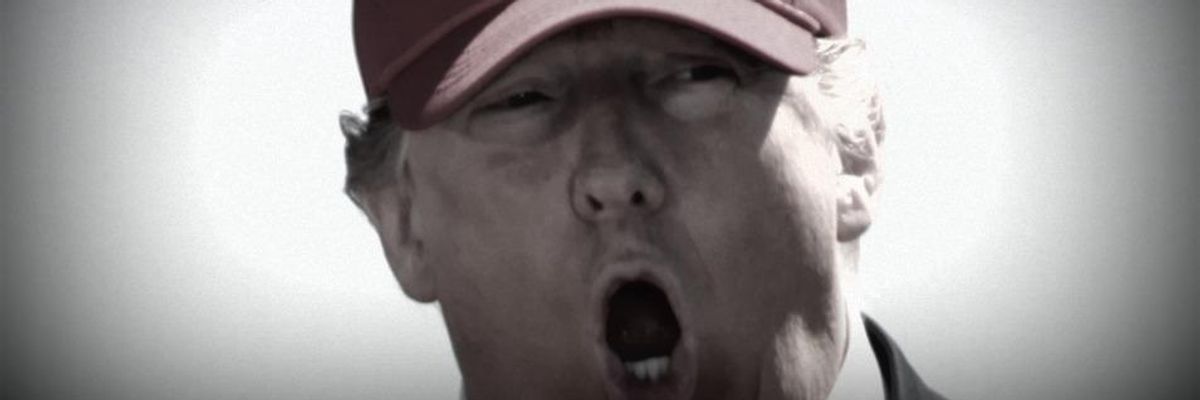
Late Monday night, just hours after (finally) delivering his "too little, too late" condemnation of "racism...white supremacists...and hate groups"--which critics noted appeared dispassionate and forced--President Donald Trump re-tweeted a message from Jack Posobiec, a well-known right-wing racist and conspiracy theorist, who raised objections to the media's focus on the rampage in Charlottesville, Virginia on Saturday by an alleged neo-Nazi member who killed one person and injured dozens of others.
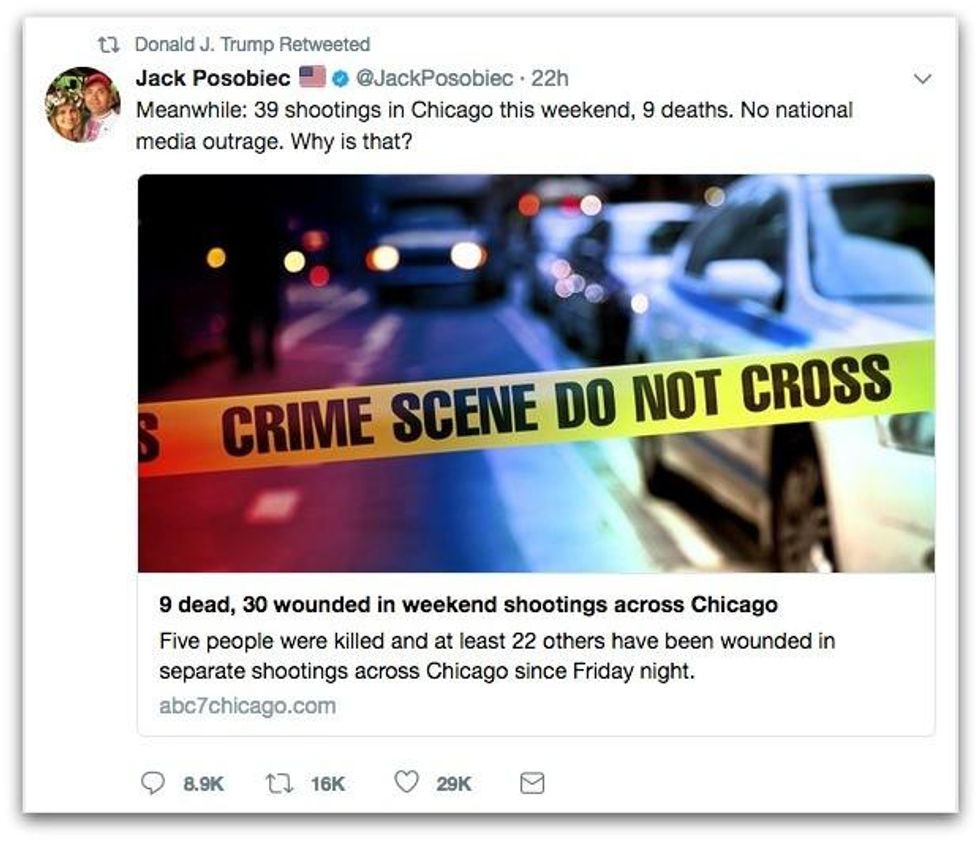
According to the Los Angeles Times, "Posobiec is well-known in alt-right circles. He was a vocal believer that top Democrats were involved in a child sex trafficking ring at a Washington, D.C., pizza parlor, and that the Democratic National Committee was behind the death of former staffer Seth Rich." NewsWeek reports that Posobiec is "currently helping organize multiple alt-right rallies similar to the one in Charlottesville in cities throughout the U.S. this coming weekend" and "has in the past defended white supremacist Richard Spencer."
As documented by the Huffington Post's Ed Mazza reports, the choice to re-tweet Posobiec was immediately seen by critics as a move "to deflect attention from his belated response to white supremacist violence, but also as an implicit effort to draw attention to crime within the African-American community."
In a column for CNN, Stephen Collinson detailed how the president's "spontaneous moments on race tell us more than the scripted ones." Collinson reports:
Some Trump critics believe that his linguistic contortions are a direct result of a desire to avoid alienating extremists who are sympathetic to his brand of economic nationalism and tough immigration policy while convincing other Americans he decries racism and bigotry.
"He wanted to have his hate cake and eat it," said Cornell William Brooks, former president of the NAACP, on "The Situation Room."
Though Brooks described the speech Monday as a "good first step," he warned it needs to be followed up by policy changes, calling on Trump to stop "signaling and engaging in messaging, racial dog whistles with the Alt-right."
"The fact of the matter is the whistles he blew during the campaign were answered in Charlottesville, and someone lost her life."
Late Monday night, just hours after (finally) delivering his "too little, too late" condemnation of "racism...white supremacists...and hate groups"--which critics noted appeared dispassionate and forced--President Donald Trump re-tweeted a message from Jack Posobiec, a well-known right-wing racist and conspiracy theorist, who raised objections to the media's focus on the rampage in Charlottesville, Virginia on Saturday by an alleged neo-Nazi member who killed one person and injured dozens of others.
According to the Los Angeles Times, "Posobiec is well-known in alt-right circles. He was a vocal believer that top Democrats were involved in a child sex trafficking ring at a Washington, D.C., pizza parlor, and that the Democratic National Committee was behind the death of former staffer Seth Rich." NewsWeek reports that Posobiec is "currently helping organize multiple alt-right rallies similar to the one in Charlottesville in cities throughout the U.S. this coming weekend" and "has in the past defended white supremacist Richard Spencer."
As documented by the Huffington Post's Ed Mazza reports, the choice to re-tweet Posobiec was immediately seen by critics as a move "to deflect attention from his belated response to white supremacist violence, but also as an implicit effort to draw attention to crime within the African-American community."
In a column for CNN, Stephen Collinson detailed how the president's "spontaneous moments on race tell us more than the scripted ones." Collinson reports:
Some Trump critics believe that his linguistic contortions are a direct result of a desire to avoid alienating extremists who are sympathetic to his brand of economic nationalism and tough immigration policy while convincing other Americans he decries racism and bigotry.
"He wanted to have his hate cake and eat it," said Cornell William Brooks, former president of the NAACP, on "The Situation Room."
Though Brooks described the speech Monday as a "good first step," he warned it needs to be followed up by policy changes, calling on Trump to stop "signaling and engaging in messaging, racial dog whistles with the Alt-right."
"The fact of the matter is the whistles he blew during the campaign were answered in Charlottesville, and someone lost her life."
Late Monday night, just hours after (finally) delivering his "too little, too late" condemnation of "racism...white supremacists...and hate groups"--which critics noted appeared dispassionate and forced--President Donald Trump re-tweeted a message from Jack Posobiec, a well-known right-wing racist and conspiracy theorist, who raised objections to the media's focus on the rampage in Charlottesville, Virginia on Saturday by an alleged neo-Nazi member who killed one person and injured dozens of others.
According to the Los Angeles Times, "Posobiec is well-known in alt-right circles. He was a vocal believer that top Democrats were involved in a child sex trafficking ring at a Washington, D.C., pizza parlor, and that the Democratic National Committee was behind the death of former staffer Seth Rich." NewsWeek reports that Posobiec is "currently helping organize multiple alt-right rallies similar to the one in Charlottesville in cities throughout the U.S. this coming weekend" and "has in the past defended white supremacist Richard Spencer."
As documented by the Huffington Post's Ed Mazza reports, the choice to re-tweet Posobiec was immediately seen by critics as a move "to deflect attention from his belated response to white supremacist violence, but also as an implicit effort to draw attention to crime within the African-American community."
In a column for CNN, Stephen Collinson detailed how the president's "spontaneous moments on race tell us more than the scripted ones." Collinson reports:
Some Trump critics believe that his linguistic contortions are a direct result of a desire to avoid alienating extremists who are sympathetic to his brand of economic nationalism and tough immigration policy while convincing other Americans he decries racism and bigotry.
"He wanted to have his hate cake and eat it," said Cornell William Brooks, former president of the NAACP, on "The Situation Room."
Though Brooks described the speech Monday as a "good first step," he warned it needs to be followed up by policy changes, calling on Trump to stop "signaling and engaging in messaging, racial dog whistles with the Alt-right."
"The fact of the matter is the whistles he blew during the campaign were answered in Charlottesville, and someone lost her life."