SUBSCRIBE TO OUR FREE NEWSLETTER
Daily news & progressive opinion—funded by the people, not the corporations—delivered straight to your inbox.
5
#000000
#FFFFFF
To donate by check, phone, or other method, see our More Ways to Give page.
Daily news & progressive opinion—funded by the people, not the corporations—delivered straight to your inbox.
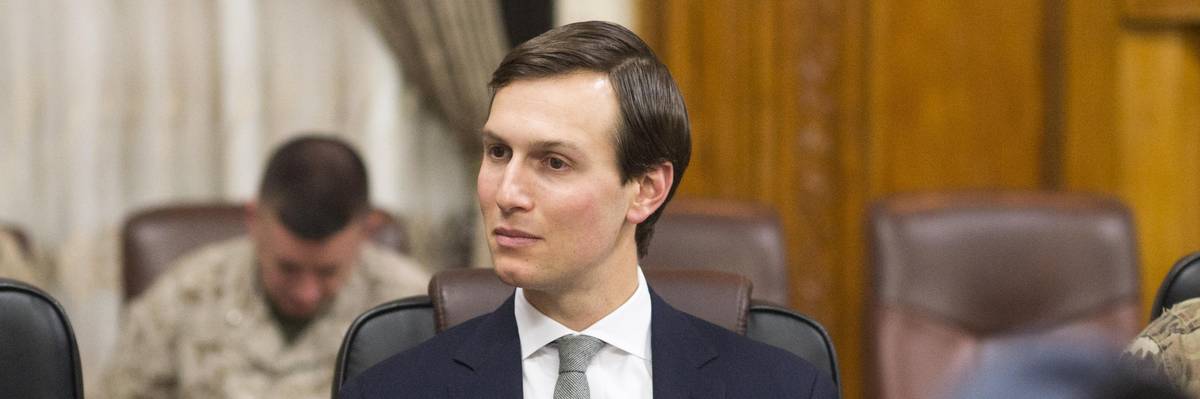
Jared Kushner spoke in a closed-door session with the Senate Intelligence Committee Monday regarding his contacts with Russians during the 2016 campaign. (Photo: Chairman of the Joint Chiefs of Staff/Flickr/cc)
Critics of Kushner are raising doubts about his explanation of his meetings with Russians during the 2016 campaign. In a prepared statement released ahead of his meeting with lawmakers Monday, President Donald Trump's son-in-law and senior advisor denied colluding with Russia during Trump's presidential campaign and suggested his lack of political experience was to blame for any meetings that were improper.
Following closed-door testimony to the Senate Intelligence Committee, Kushner appeared outside the White House and made the following statement:
Kushner will speak to a House panel Tuesday; as with his Senate testimony, that questioning will not be under oath. In his written statement Kushner, whose official title is Director of Innovations and who Trump has put in charge of the White House's Middle East policy, characterized himself as inexperienced and overwhelmed during the campaign, resulting in his failure to disclose details about his contacts with Russian officials. "My experience was in business, not politics," prior to his work with Trump's campaign, he wrote at the beginning of the statement. He became involved in communications and foreign relations for the team, but notes, "All of these were tasks that I had never performed on a campaign previously."
He also said in his statement that his actions on the campaign "should be viewed through the lens of a fast-paced campaign with thousands of meetings and interactions."
Susan Hennessey of Lawfare spoke on CNN about Kushner's high-level post in the Trump White House versus his alleged inexperience.
"We've been told that Jared Kushner is going to solve Middle East peace, he is going to run the U.S. government's China policy, he is actually going to restructure the entire U.S. federal government-- when it comes to the ability to fill out forms, keep track of meetings, exercise good judgment in whether or not he should be meeting with these types of officials during the transition period, it's all of a sudden 'aww shucks, I'm brand new to politics.' That's the message that comes through loud and clear, him saying I didn't know what I was doing. Anything that was untoward it was just an innocent mistake."
In his prepared statement, Kushner described his meetings with Russians including Ambassador Sergey Kislyak during the campaign as brief and insignificant. He denied having two phone calls with Kislyak during the election, as reported by Reuters. Of a meeting with Russian banker Sergey Gorkov, who was said to have "a direct line to President Putin" in December 2016, Kushner wrote that the banker simply made general statements about "hopes for a better relationship" between Russia and the U.S. in the future and that no business interests were discussed.
Kushner also offered an explanation for his failure to disclose all of his contacts with Russian officials on his SF-86 form, used to apply for security clearance--pinning the responsibility on his assistant. He noted that the form was completed "amid the scramble of finalizing the unwinding of my involvement from my company, moving my family to Washington," and filing other paperwork, and that an aide mistakenly submitted the form before all of Kushner's contacts with Russians had been added.
On Twitter, journalists and Washington insiders raised doubts about Kushner's account of the events, and about his supposed naivete.
Former Obama aide Alyssa Mastromonaco questioned Kushner's version of the events regarding the SF-86 form.
Benjamin Wittes of the Brookings Institution also disputed the possibility that an issue as important as relations with foreign officials could be disclosed incorrectly simply because of a clerical error.
Following Kushner's testimony Monday, Sen. Ron Wyden (D-Ore.), who serves on the Senate Intelligence Committee, said the meeting "raises far more questions than it answers."
"Kushner has repeatedly concealed information about his personal finances and meetings with foreign officials" Wyden said. "There should be no presumption that he is telling the whole truth in this statement...It is imperative that the public hear Jared Kushner testify in an open session of the Senate Intelligence Committee, under oath, and support his claims with full transparency in the form of emails, documents and financial records."
Dear Common Dreams reader, It’s been nearly 30 years since I co-founded Common Dreams with my late wife, Lina Newhouser. We had the radical notion that journalism should serve the public good, not corporate profits. It was clear to us from the outset what it would take to build such a project. No paid advertisements. No corporate sponsors. No millionaire publisher telling us what to think or do. Many people said we wouldn't last a year, but we proved those doubters wrong. Together with a tremendous team of journalists and dedicated staff, we built an independent media outlet free from the constraints of profits and corporate control. Our mission has always been simple: To inform. To inspire. To ignite change for the common good. Building Common Dreams was not easy. Our survival was never guaranteed. When you take on the most powerful forces—Wall Street greed, fossil fuel industry destruction, Big Tech lobbyists, and uber-rich oligarchs who have spent billions upon billions rigging the economy and democracy in their favor—the only bulwark you have is supporters who believe in your work. But here’s the urgent message from me today. It's never been this bad out there. And it's never been this hard to keep us going. At the very moment Common Dreams is most needed, the threats we face are intensifying. We need your support now more than ever. We don't accept corporate advertising and never will. We don't have a paywall because we don't think people should be blocked from critical news based on their ability to pay. Everything we do is funded by the donations of readers like you. When everyone does the little they can afford, we are strong. But if that support retreats or dries up, so do we. Will you donate now to make sure Common Dreams not only survives but thrives? —Craig Brown, Co-founder |
Critics of Kushner are raising doubts about his explanation of his meetings with Russians during the 2016 campaign. In a prepared statement released ahead of his meeting with lawmakers Monday, President Donald Trump's son-in-law and senior advisor denied colluding with Russia during Trump's presidential campaign and suggested his lack of political experience was to blame for any meetings that were improper.
Following closed-door testimony to the Senate Intelligence Committee, Kushner appeared outside the White House and made the following statement:
Kushner will speak to a House panel Tuesday; as with his Senate testimony, that questioning will not be under oath. In his written statement Kushner, whose official title is Director of Innovations and who Trump has put in charge of the White House's Middle East policy, characterized himself as inexperienced and overwhelmed during the campaign, resulting in his failure to disclose details about his contacts with Russian officials. "My experience was in business, not politics," prior to his work with Trump's campaign, he wrote at the beginning of the statement. He became involved in communications and foreign relations for the team, but notes, "All of these were tasks that I had never performed on a campaign previously."
He also said in his statement that his actions on the campaign "should be viewed through the lens of a fast-paced campaign with thousands of meetings and interactions."
Susan Hennessey of Lawfare spoke on CNN about Kushner's high-level post in the Trump White House versus his alleged inexperience.
"We've been told that Jared Kushner is going to solve Middle East peace, he is going to run the U.S. government's China policy, he is actually going to restructure the entire U.S. federal government-- when it comes to the ability to fill out forms, keep track of meetings, exercise good judgment in whether or not he should be meeting with these types of officials during the transition period, it's all of a sudden 'aww shucks, I'm brand new to politics.' That's the message that comes through loud and clear, him saying I didn't know what I was doing. Anything that was untoward it was just an innocent mistake."
In his prepared statement, Kushner described his meetings with Russians including Ambassador Sergey Kislyak during the campaign as brief and insignificant. He denied having two phone calls with Kislyak during the election, as reported by Reuters. Of a meeting with Russian banker Sergey Gorkov, who was said to have "a direct line to President Putin" in December 2016, Kushner wrote that the banker simply made general statements about "hopes for a better relationship" between Russia and the U.S. in the future and that no business interests were discussed.
Kushner also offered an explanation for his failure to disclose all of his contacts with Russian officials on his SF-86 form, used to apply for security clearance--pinning the responsibility on his assistant. He noted that the form was completed "amid the scramble of finalizing the unwinding of my involvement from my company, moving my family to Washington," and filing other paperwork, and that an aide mistakenly submitted the form before all of Kushner's contacts with Russians had been added.
On Twitter, journalists and Washington insiders raised doubts about Kushner's account of the events, and about his supposed naivete.
Former Obama aide Alyssa Mastromonaco questioned Kushner's version of the events regarding the SF-86 form.
Benjamin Wittes of the Brookings Institution also disputed the possibility that an issue as important as relations with foreign officials could be disclosed incorrectly simply because of a clerical error.
Following Kushner's testimony Monday, Sen. Ron Wyden (D-Ore.), who serves on the Senate Intelligence Committee, said the meeting "raises far more questions than it answers."
"Kushner has repeatedly concealed information about his personal finances and meetings with foreign officials" Wyden said. "There should be no presumption that he is telling the whole truth in this statement...It is imperative that the public hear Jared Kushner testify in an open session of the Senate Intelligence Committee, under oath, and support his claims with full transparency in the form of emails, documents and financial records."
Critics of Kushner are raising doubts about his explanation of his meetings with Russians during the 2016 campaign. In a prepared statement released ahead of his meeting with lawmakers Monday, President Donald Trump's son-in-law and senior advisor denied colluding with Russia during Trump's presidential campaign and suggested his lack of political experience was to blame for any meetings that were improper.
Following closed-door testimony to the Senate Intelligence Committee, Kushner appeared outside the White House and made the following statement:
Kushner will speak to a House panel Tuesday; as with his Senate testimony, that questioning will not be under oath. In his written statement Kushner, whose official title is Director of Innovations and who Trump has put in charge of the White House's Middle East policy, characterized himself as inexperienced and overwhelmed during the campaign, resulting in his failure to disclose details about his contacts with Russian officials. "My experience was in business, not politics," prior to his work with Trump's campaign, he wrote at the beginning of the statement. He became involved in communications and foreign relations for the team, but notes, "All of these were tasks that I had never performed on a campaign previously."
He also said in his statement that his actions on the campaign "should be viewed through the lens of a fast-paced campaign with thousands of meetings and interactions."
Susan Hennessey of Lawfare spoke on CNN about Kushner's high-level post in the Trump White House versus his alleged inexperience.
"We've been told that Jared Kushner is going to solve Middle East peace, he is going to run the U.S. government's China policy, he is actually going to restructure the entire U.S. federal government-- when it comes to the ability to fill out forms, keep track of meetings, exercise good judgment in whether or not he should be meeting with these types of officials during the transition period, it's all of a sudden 'aww shucks, I'm brand new to politics.' That's the message that comes through loud and clear, him saying I didn't know what I was doing. Anything that was untoward it was just an innocent mistake."
In his prepared statement, Kushner described his meetings with Russians including Ambassador Sergey Kislyak during the campaign as brief and insignificant. He denied having two phone calls with Kislyak during the election, as reported by Reuters. Of a meeting with Russian banker Sergey Gorkov, who was said to have "a direct line to President Putin" in December 2016, Kushner wrote that the banker simply made general statements about "hopes for a better relationship" between Russia and the U.S. in the future and that no business interests were discussed.
Kushner also offered an explanation for his failure to disclose all of his contacts with Russian officials on his SF-86 form, used to apply for security clearance--pinning the responsibility on his assistant. He noted that the form was completed "amid the scramble of finalizing the unwinding of my involvement from my company, moving my family to Washington," and filing other paperwork, and that an aide mistakenly submitted the form before all of Kushner's contacts with Russians had been added.
On Twitter, journalists and Washington insiders raised doubts about Kushner's account of the events, and about his supposed naivete.
Former Obama aide Alyssa Mastromonaco questioned Kushner's version of the events regarding the SF-86 form.
Benjamin Wittes of the Brookings Institution also disputed the possibility that an issue as important as relations with foreign officials could be disclosed incorrectly simply because of a clerical error.
Following Kushner's testimony Monday, Sen. Ron Wyden (D-Ore.), who serves on the Senate Intelligence Committee, said the meeting "raises far more questions than it answers."
"Kushner has repeatedly concealed information about his personal finances and meetings with foreign officials" Wyden said. "There should be no presumption that he is telling the whole truth in this statement...It is imperative that the public hear Jared Kushner testify in an open session of the Senate Intelligence Committee, under oath, and support his claims with full transparency in the form of emails, documents and financial records."