'Release the Tapes!': Demand for Transparency Grows in Charlotte and Beyond
"The public owns this video."
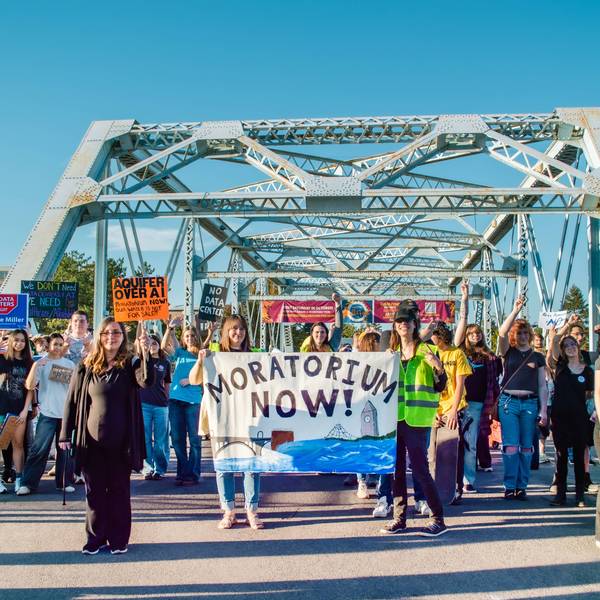
As protests in Charlotte continued peacefully for a third night on Thursday, the call for the city government and police to release the footage of Keith Lamont Scott being shot has reached fever pitch.
Despite a midnight curfew, hundreds took the streets again, this time marching to the police station where they rallied and demanded the release of the police tapes.
On Thursday, Charlotte Police Chief Kerr Putney said officials had no plans to release existing video footage of the shooting, despite conflicting claims about whether Scott was armed and posed any threat to the officers. His family has said that he did not possess a gun.
One of the family's attorneys, Justin Bamberg, who viewed the footage along with the family, told Reuters Friday that, "There's nothing in that video that shows him acting aggressively, threatening or maybe dangerous," adding that it is "impossible to discern" what, if anything, he is holding in his hand.
The Scott family said they have "more questions than answers" after viewing the tapes and joined others demanding their public release.
Both the American Civil Liberties Union (ACLU) and the NAACP have asked for the footage to be made public.
Rev. Dr. William Barber, president of the North Carolina NAACP and leader of the Moral Mondays movement, told Democracy Now! on Friday that Gov. Pat McCrory "wants to suppress the public's video," adding, "The public owns this video."
Corine Mack, president of the NAACP Charlotte-Mecklenburg branch, said that it is particularly important in this climate of heightened racial tensions for police and other city officials to remain transparent.
"I think it's important, because of the climate we're in, the distrust of the police department and law enforcement, that that video or those videos be shown to the entire citizenry of Charlotte-Mecklenburg," Mack said Thursday.
Moreover, she noted that North Carolina "spent millions of dollars to ensure that each police officer had on a body cam, and there were several cops on the day of this incident who did not. And this is not something that has happened once or twice; it's happened far too often. Either they don't have on a body cam, or they cut off their body cam. That's a problem for us."
Jay Stanley, senior policy analyst for the ACLU's Speech, Privacy, and Technology Project, explained in a column why the public release of police videos is such a "crucial" component of transparency.
"Police today often complain that a pall of suspicion has fallen upon their whole profession," Stanley notes. "But all too often it looks like 'the fix is in'--that the problems are cultural or systemic, that the police get special treatment with regards to justice, that the police cannot police themselves, and that nobody else is doing so."
He continues:
It is within this frame that people are likely to view police refusal to release video of a critical incident. Are police and prosecutors playing it straight, ready to let the chips fall where they may when it comes to investigating a potentially criminal police action and bringing justice? Or are they circling the wagons to protect one of their own? When Americans suspect they're seeing the latter, that's when they're likely to hit the streets.
Many observers are comparing the Charlotte police department's refusal to release its footage to the case in Tulsa, Oklahoma, where Terence Crutcher was shot and killed by police in recent days.
There, the police department did release the disturbing footage and on Thursday the city's District Attorneys office filed charges against the shooting officer.
"By contrast," wrote the New York Times editorial board on Thursday, "the Police Department in Charlotte, N.C., has responded in exactly the wrong way to a police officer's killing on Tuesday of another black man, Keith Scott. It has opted for stonewalling."
Stanley, the ACLU of North Carolina, and the Times editorial board all noted that the lack of transparency in North Carolina has been buoyed by McCrory and the state's Republican-led legislature, which recently passed a "disgraceful" law that prevents law enforcement agencies from releasing body camera footage without a court order. That law takes effect on October 1.
We are at a crossroads
This country and this world are at a monumental crossroads. In a few short weeks, US voters will have an opportunity to beat back the forces of fascism and confront the billionaires who are rigging the economy, our media system, and our democracy, making it increasingly impossible for ordinary people to get by. We’re not just talking about the election. We’re talking about what must be done once these fascist elements are vanquished from power. We need a bolder set of solutions than what either major party has so far been willing to offer and a working-class movement ready to fight like hell for it. Trump didn't emerge from nowhere. The conditions that fueled MAGA authoritarianism were created by decades of radical neoliberal economic policies and a corrupt political system dominated by corporate interests. They slashed taxes on the super-rich, promising that the benefits would trickle down. They said giveaways to the corporate titans would make life more affordable for the rest of us. It was all bullshit. And when a bitter, betrayed populace searches for someone to blame, right-wing demagogues have little trouble finding scapegoats. People know when they're being lied to, but you won't hear any of this from the corporate media. Only independent journalism—powered and funded by people who believe in building a better world—can deliver truly trustworthy daily news. Our Fall Campaign is underway, and we need your help. To power our newsroom through the rest of the year, we need to raise $125,000 by midnight on October 31. So if you share our vision, please contribute whatever you can to sustain our work. |
As protests in Charlotte continued peacefully for a third night on Thursday, the call for the city government and police to release the footage of Keith Lamont Scott being shot has reached fever pitch.
Despite a midnight curfew, hundreds took the streets again, this time marching to the police station where they rallied and demanded the release of the police tapes.
On Thursday, Charlotte Police Chief Kerr Putney said officials had no plans to release existing video footage of the shooting, despite conflicting claims about whether Scott was armed and posed any threat to the officers. His family has said that he did not possess a gun.
One of the family's attorneys, Justin Bamberg, who viewed the footage along with the family, told Reuters Friday that, "There's nothing in that video that shows him acting aggressively, threatening or maybe dangerous," adding that it is "impossible to discern" what, if anything, he is holding in his hand.
The Scott family said they have "more questions than answers" after viewing the tapes and joined others demanding their public release.
Both the American Civil Liberties Union (ACLU) and the NAACP have asked for the footage to be made public.
Rev. Dr. William Barber, president of the North Carolina NAACP and leader of the Moral Mondays movement, told Democracy Now! on Friday that Gov. Pat McCrory "wants to suppress the public's video," adding, "The public owns this video."
Corine Mack, president of the NAACP Charlotte-Mecklenburg branch, said that it is particularly important in this climate of heightened racial tensions for police and other city officials to remain transparent.
"I think it's important, because of the climate we're in, the distrust of the police department and law enforcement, that that video or those videos be shown to the entire citizenry of Charlotte-Mecklenburg," Mack said Thursday.
Moreover, she noted that North Carolina "spent millions of dollars to ensure that each police officer had on a body cam, and there were several cops on the day of this incident who did not. And this is not something that has happened once or twice; it's happened far too often. Either they don't have on a body cam, or they cut off their body cam. That's a problem for us."
Jay Stanley, senior policy analyst for the ACLU's Speech, Privacy, and Technology Project, explained in a column why the public release of police videos is such a "crucial" component of transparency.
"Police today often complain that a pall of suspicion has fallen upon their whole profession," Stanley notes. "But all too often it looks like 'the fix is in'--that the problems are cultural or systemic, that the police get special treatment with regards to justice, that the police cannot police themselves, and that nobody else is doing so."
He continues:
It is within this frame that people are likely to view police refusal to release video of a critical incident. Are police and prosecutors playing it straight, ready to let the chips fall where they may when it comes to investigating a potentially criminal police action and bringing justice? Or are they circling the wagons to protect one of their own? When Americans suspect they're seeing the latter, that's when they're likely to hit the streets.
Many observers are comparing the Charlotte police department's refusal to release its footage to the case in Tulsa, Oklahoma, where Terence Crutcher was shot and killed by police in recent days.
There, the police department did release the disturbing footage and on Thursday the city's District Attorneys office filed charges against the shooting officer.
"By contrast," wrote the New York Times editorial board on Thursday, "the Police Department in Charlotte, N.C., has responded in exactly the wrong way to a police officer's killing on Tuesday of another black man, Keith Scott. It has opted for stonewalling."
Stanley, the ACLU of North Carolina, and the Times editorial board all noted that the lack of transparency in North Carolina has been buoyed by McCrory and the state's Republican-led legislature, which recently passed a "disgraceful" law that prevents law enforcement agencies from releasing body camera footage without a court order. That law takes effect on October 1.
As protests in Charlotte continued peacefully for a third night on Thursday, the call for the city government and police to release the footage of Keith Lamont Scott being shot has reached fever pitch.
Despite a midnight curfew, hundreds took the streets again, this time marching to the police station where they rallied and demanded the release of the police tapes.
On Thursday, Charlotte Police Chief Kerr Putney said officials had no plans to release existing video footage of the shooting, despite conflicting claims about whether Scott was armed and posed any threat to the officers. His family has said that he did not possess a gun.
One of the family's attorneys, Justin Bamberg, who viewed the footage along with the family, told Reuters Friday that, "There's nothing in that video that shows him acting aggressively, threatening or maybe dangerous," adding that it is "impossible to discern" what, if anything, he is holding in his hand.
The Scott family said they have "more questions than answers" after viewing the tapes and joined others demanding their public release.
Both the American Civil Liberties Union (ACLU) and the NAACP have asked for the footage to be made public.
Rev. Dr. William Barber, president of the North Carolina NAACP and leader of the Moral Mondays movement, told Democracy Now! on Friday that Gov. Pat McCrory "wants to suppress the public's video," adding, "The public owns this video."
Corine Mack, president of the NAACP Charlotte-Mecklenburg branch, said that it is particularly important in this climate of heightened racial tensions for police and other city officials to remain transparent.
"I think it's important, because of the climate we're in, the distrust of the police department and law enforcement, that that video or those videos be shown to the entire citizenry of Charlotte-Mecklenburg," Mack said Thursday.
Moreover, she noted that North Carolina "spent millions of dollars to ensure that each police officer had on a body cam, and there were several cops on the day of this incident who did not. And this is not something that has happened once or twice; it's happened far too often. Either they don't have on a body cam, or they cut off their body cam. That's a problem for us."
Jay Stanley, senior policy analyst for the ACLU's Speech, Privacy, and Technology Project, explained in a column why the public release of police videos is such a "crucial" component of transparency.
"Police today often complain that a pall of suspicion has fallen upon their whole profession," Stanley notes. "But all too often it looks like 'the fix is in'--that the problems are cultural or systemic, that the police get special treatment with regards to justice, that the police cannot police themselves, and that nobody else is doing so."
He continues:
It is within this frame that people are likely to view police refusal to release video of a critical incident. Are police and prosecutors playing it straight, ready to let the chips fall where they may when it comes to investigating a potentially criminal police action and bringing justice? Or are they circling the wagons to protect one of their own? When Americans suspect they're seeing the latter, that's when they're likely to hit the streets.
Many observers are comparing the Charlotte police department's refusal to release its footage to the case in Tulsa, Oklahoma, where Terence Crutcher was shot and killed by police in recent days.
There, the police department did release the disturbing footage and on Thursday the city's District Attorneys office filed charges against the shooting officer.
"By contrast," wrote the New York Times editorial board on Thursday, "the Police Department in Charlotte, N.C., has responded in exactly the wrong way to a police officer's killing on Tuesday of another black man, Keith Scott. It has opted for stonewalling."
Stanley, the ACLU of North Carolina, and the Times editorial board all noted that the lack of transparency in North Carolina has been buoyed by McCrory and the state's Republican-led legislature, which recently passed a "disgraceful" law that prevents law enforcement agencies from releasing body camera footage without a court order. That law takes effect on October 1.