

SUBSCRIBE TO OUR FREE NEWSLETTER
Daily news & progressive opinion—funded by the people, not the corporations—delivered straight to your inbox.
5
#000000
#FFFFFF
To donate by check, phone, or other method, see our More Ways to Give page.


Daily news & progressive opinion—funded by the people, not the corporations—delivered straight to your inbox.
Following a months-long campaign by consumer advocacy groups that pushed for strict protection of the internet, Federal Communications Commissioner Tom Wheeler appears to be ready to introduce some of the strongest regulations possible on Thursday ahead of the FCC's final net neutrality vote on February 26, according to reports.
Those regulations include redefining broadband as a public utility under Title II of the Communications Act, a policy change that has been touted by internet watchdog groups as one of the most important net neutrality protections available.
Once a lobbyist for the cable and telecommunications industries, Wheeler initially supported lax regulations that critics said would open the door to controversial paid-prioritization policies, known as "fast lanes," allowing internet service providers to charge higher fees for speedier website loading times.
According to reporting by Politico on Monday, "interviews with FCC officials, industry executives and representatives of public interest groups reveal the origins of his dramatic pivot on this issue: an intense and relatively brief grass-roots lobbying campaign that targeted two people -- him and President Barack Obama."
Pressure from digital rights groups like the Electronic Frontier Foundation and Free Press, which galvanized support from consumers and progressive media figures, saw Wheeler steadily backpedaling on his initiatives last year. His shift appeared near-complete after President Barack Obama spoke out in favor of strict net neutrality regulations on November 10.
Wheeler proposed in April new rules that would allow ISPs to create fast lane deals with internet companies as long as they were "commercially reasonable."
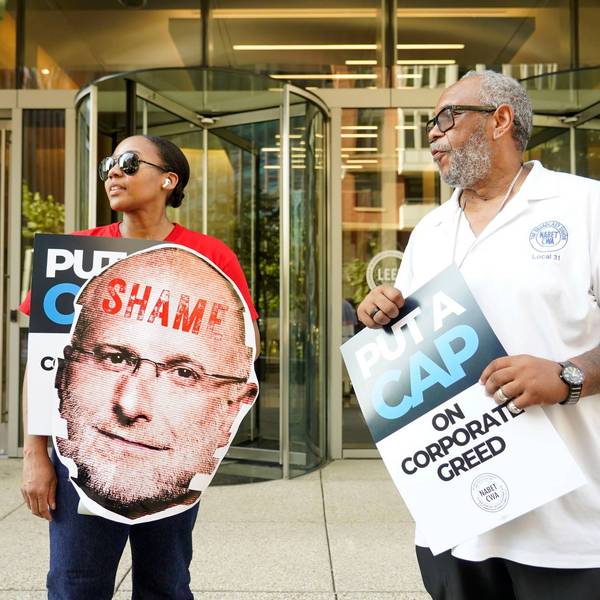
In response, a coalition of internet watchdogs and consumer advocacy groups launched a months-long series of campaigns against the chairman's proposals, while protesters camped out in front of FCC headquarters. On June 1, Last Week Tonight host John Oliver ridiculed Wheeler and his proposed rules in a segment that quickly went viral, sending hundreds of thousands of consumers to the FCC website to comment in favor of stronger net neutrality regulations. Within months, four million emails and comments had come in, breaking FCC records.
Wheeler then moved towards a hybrid proposal that would impose Title II rules on parts of the internet, but not all of it. That, too, was met with disapproval by watchdogs and tech companies alike.
Meanwhile, Obama had also been under pressure from internet advocacy groups, who urged him to speak out in favor of stricter regulations. On November 10, he did just that, issuing a statement that called for using a Title II reclassification to safeguard the internet, "one of the most significant democratizing influences the world has ever known."
Earlier this month, Wheeler indicated support for reclassification of the internet as a public utility under Title II, bringing praise from Free Press president and CEO Craig Aaron who said, "Chairman Wheeler appears to have heard the demands of the millions of Internet users who have called for real net neutrality protections."

Dear Common Dreams reader, It’s been nearly 30 years since I co-founded Common Dreams with my late wife, Lina Newhouser. We had the radical notion that journalism should serve the public good, not corporate profits. It was clear to us from the outset what it would take to build such a project. No paid advertisements. No corporate sponsors. No millionaire publisher telling us what to think or do. Many people said we wouldn't last a year, but we proved those doubters wrong. Together with a tremendous team of journalists and dedicated staff, we built an independent media outlet free from the constraints of profits and corporate control. Our mission has always been simple: To inform. To inspire. To ignite change for the common good. Building Common Dreams was not easy. Our survival was never guaranteed. When you take on the most powerful forces—Wall Street greed, fossil fuel industry destruction, Big Tech lobbyists, and uber-rich oligarchs who have spent billions upon billions rigging the economy and democracy in their favor—the only bulwark you have is supporters who believe in your work. But here’s the urgent message from me today. It's never been this bad out there. And it's never been this hard to keep us going. At the very moment Common Dreams is most needed, the threats we face are intensifying. We need your support now more than ever. We don't accept corporate advertising and never will. We don't have a paywall because we don't think people should be blocked from critical news based on their ability to pay. Everything we do is funded by the donations of readers like you. When everyone does the little they can afford, we are strong. But if that support retreats or dries up, so do we. Will you donate now to make sure Common Dreams not only survives but thrives? —Craig Brown, Co-founder |
Following a months-long campaign by consumer advocacy groups that pushed for strict protection of the internet, Federal Communications Commissioner Tom Wheeler appears to be ready to introduce some of the strongest regulations possible on Thursday ahead of the FCC's final net neutrality vote on February 26, according to reports.
Those regulations include redefining broadband as a public utility under Title II of the Communications Act, a policy change that has been touted by internet watchdog groups as one of the most important net neutrality protections available.
Once a lobbyist for the cable and telecommunications industries, Wheeler initially supported lax regulations that critics said would open the door to controversial paid-prioritization policies, known as "fast lanes," allowing internet service providers to charge higher fees for speedier website loading times.
According to reporting by Politico on Monday, "interviews with FCC officials, industry executives and representatives of public interest groups reveal the origins of his dramatic pivot on this issue: an intense and relatively brief grass-roots lobbying campaign that targeted two people -- him and President Barack Obama."
Pressure from digital rights groups like the Electronic Frontier Foundation and Free Press, which galvanized support from consumers and progressive media figures, saw Wheeler steadily backpedaling on his initiatives last year. His shift appeared near-complete after President Barack Obama spoke out in favor of strict net neutrality regulations on November 10.
Wheeler proposed in April new rules that would allow ISPs to create fast lane deals with internet companies as long as they were "commercially reasonable."
In response, a coalition of internet watchdogs and consumer advocacy groups launched a months-long series of campaigns against the chairman's proposals, while protesters camped out in front of FCC headquarters. On June 1, Last Week Tonight host John Oliver ridiculed Wheeler and his proposed rules in a segment that quickly went viral, sending hundreds of thousands of consumers to the FCC website to comment in favor of stronger net neutrality regulations. Within months, four million emails and comments had come in, breaking FCC records.
Wheeler then moved towards a hybrid proposal that would impose Title II rules on parts of the internet, but not all of it. That, too, was met with disapproval by watchdogs and tech companies alike.
Meanwhile, Obama had also been under pressure from internet advocacy groups, who urged him to speak out in favor of stricter regulations. On November 10, he did just that, issuing a statement that called for using a Title II reclassification to safeguard the internet, "one of the most significant democratizing influences the world has ever known."
Earlier this month, Wheeler indicated support for reclassification of the internet as a public utility under Title II, bringing praise from Free Press president and CEO Craig Aaron who said, "Chairman Wheeler appears to have heard the demands of the millions of Internet users who have called for real net neutrality protections."
Following a months-long campaign by consumer advocacy groups that pushed for strict protection of the internet, Federal Communications Commissioner Tom Wheeler appears to be ready to introduce some of the strongest regulations possible on Thursday ahead of the FCC's final net neutrality vote on February 26, according to reports.
Those regulations include redefining broadband as a public utility under Title II of the Communications Act, a policy change that has been touted by internet watchdog groups as one of the most important net neutrality protections available.
Once a lobbyist for the cable and telecommunications industries, Wheeler initially supported lax regulations that critics said would open the door to controversial paid-prioritization policies, known as "fast lanes," allowing internet service providers to charge higher fees for speedier website loading times.
According to reporting by Politico on Monday, "interviews with FCC officials, industry executives and representatives of public interest groups reveal the origins of his dramatic pivot on this issue: an intense and relatively brief grass-roots lobbying campaign that targeted two people -- him and President Barack Obama."
Pressure from digital rights groups like the Electronic Frontier Foundation and Free Press, which galvanized support from consumers and progressive media figures, saw Wheeler steadily backpedaling on his initiatives last year. His shift appeared near-complete after President Barack Obama spoke out in favor of strict net neutrality regulations on November 10.
Wheeler proposed in April new rules that would allow ISPs to create fast lane deals with internet companies as long as they were "commercially reasonable."
In response, a coalition of internet watchdogs and consumer advocacy groups launched a months-long series of campaigns against the chairman's proposals, while protesters camped out in front of FCC headquarters. On June 1, Last Week Tonight host John Oliver ridiculed Wheeler and his proposed rules in a segment that quickly went viral, sending hundreds of thousands of consumers to the FCC website to comment in favor of stronger net neutrality regulations. Within months, four million emails and comments had come in, breaking FCC records.
Wheeler then moved towards a hybrid proposal that would impose Title II rules on parts of the internet, but not all of it. That, too, was met with disapproval by watchdogs and tech companies alike.
Meanwhile, Obama had also been under pressure from internet advocacy groups, who urged him to speak out in favor of stricter regulations. On November 10, he did just that, issuing a statement that called for using a Title II reclassification to safeguard the internet, "one of the most significant democratizing influences the world has ever known."
Earlier this month, Wheeler indicated support for reclassification of the internet as a public utility under Title II, bringing praise from Free Press president and CEO Craig Aaron who said, "Chairman Wheeler appears to have heard the demands of the millions of Internet users who have called for real net neutrality protections."
