SUBSCRIBE TO OUR FREE NEWSLETTER
Daily news & progressive opinion—funded by the people, not the corporations—delivered straight to your inbox.
5
#000000
#FFFFFF
To donate by check, phone, or other method, see our More Ways to Give page.
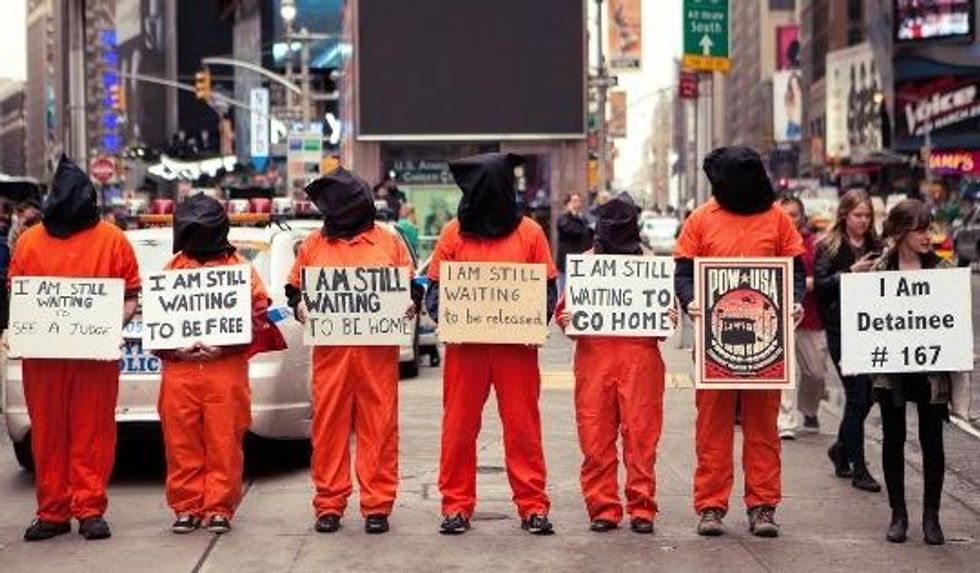
Emad Hassan, who is severely ill and suffers from serious internal injuries -- which his lawyers at the human rights group Reprieve say are the direct result of force-feeding-- has been held without charge since 2002 despite having been cleared for release since 2009.
Hassan has been force-fed 5000 times since 2007 "as part of the military's efforts to break his hunger strike," said Reprieve.
"All I want is what President Obama promised - my liberty, and fair treatment for others," stated Hassan. "I have been cleared for five years, and I have been force-fed for seven years. This is not a life worth living, it is a life of constant pain and suffering."
"While I do not want to die," he continued, "it is surely my right to protest peacefully without being degraded and abused every day."
The case, Imad Abdullah Hasan v Barack Obama, is the first of its kind and follows a ruling last month in which a U.S. federal court said prisoners at the military prison can now sue over force-feeding, a practice considered by international human rights organizations to be a form of torture.
According to Reprieve, Hassan's case "highlights the increasing brutality of the Guantanamo Bay force-feeding process, which the military has amended step-by-step to make it so painful that only the most courageous peaceful protester can continue."
It will be the first case in history to require a U.S. judge to review a Guantanamo prisoner's detailed testimony "and will force the military to respond," said Reprieve.
"This is the first time that any court will compare what the prisoners are saying about the torturous methods with what the military is saying," said Clive Stafford Smith, director of Reprieve and the legal counsel in the case, who gave a detailed account of Hassan's ordeal at Guantanamo in his court filing (pdf), which outlines the "sadistic" practices of the force-feeding nurses.
"This case marks an historic step in the long battle to bring basic rights to the legal black hole at Guantanamo Bay," stated Chair of Reprieve U.S. Eric Lewis. "For over a decade, abused prisoners at the US military base have been denied any effective legal mechanism to challenge their treatment. This case calls upon U.S. judges to restore the most basic rights, medical standards and human dignity to these men at Guantanamo Bay."
Following last month's ruling the U.S. could now be subject to cases brought by the remaining 155 Guantanamo inmates. According to lawyers for the inmates, at least 34 inmates are still on hunger strike, and half of those continue to be force-fed.
______________________
Emad Hassan, who is severely ill and suffers from serious internal injuries -- which his lawyers at the human rights group Reprieve say are the direct result of force-feeding-- has been held without charge since 2002 despite having been cleared for release since 2009.
Hassan has been force-fed 5000 times since 2007 "as part of the military's efforts to break his hunger strike," said Reprieve.
"All I want is what President Obama promised - my liberty, and fair treatment for others," stated Hassan. "I have been cleared for five years, and I have been force-fed for seven years. This is not a life worth living, it is a life of constant pain and suffering."
"While I do not want to die," he continued, "it is surely my right to protest peacefully without being degraded and abused every day."
The case, Imad Abdullah Hasan v Barack Obama, is the first of its kind and follows a ruling last month in which a U.S. federal court said prisoners at the military prison can now sue over force-feeding, a practice considered by international human rights organizations to be a form of torture.
According to Reprieve, Hassan's case "highlights the increasing brutality of the Guantanamo Bay force-feeding process, which the military has amended step-by-step to make it so painful that only the most courageous peaceful protester can continue."
It will be the first case in history to require a U.S. judge to review a Guantanamo prisoner's detailed testimony "and will force the military to respond," said Reprieve.
"This is the first time that any court will compare what the prisoners are saying about the torturous methods with what the military is saying," said Clive Stafford Smith, director of Reprieve and the legal counsel in the case, who gave a detailed account of Hassan's ordeal at Guantanamo in his court filing (pdf), which outlines the "sadistic" practices of the force-feeding nurses.
"This case marks an historic step in the long battle to bring basic rights to the legal black hole at Guantanamo Bay," stated Chair of Reprieve U.S. Eric Lewis. "For over a decade, abused prisoners at the US military base have been denied any effective legal mechanism to challenge their treatment. This case calls upon U.S. judges to restore the most basic rights, medical standards and human dignity to these men at Guantanamo Bay."
Following last month's ruling the U.S. could now be subject to cases brought by the remaining 155 Guantanamo inmates. According to lawyers for the inmates, at least 34 inmates are still on hunger strike, and half of those continue to be force-fed.
______________________
Emad Hassan, who is severely ill and suffers from serious internal injuries -- which his lawyers at the human rights group Reprieve say are the direct result of force-feeding-- has been held without charge since 2002 despite having been cleared for release since 2009.
Hassan has been force-fed 5000 times since 2007 "as part of the military's efforts to break his hunger strike," said Reprieve.
"All I want is what President Obama promised - my liberty, and fair treatment for others," stated Hassan. "I have been cleared for five years, and I have been force-fed for seven years. This is not a life worth living, it is a life of constant pain and suffering."
"While I do not want to die," he continued, "it is surely my right to protest peacefully without being degraded and abused every day."
The case, Imad Abdullah Hasan v Barack Obama, is the first of its kind and follows a ruling last month in which a U.S. federal court said prisoners at the military prison can now sue over force-feeding, a practice considered by international human rights organizations to be a form of torture.
According to Reprieve, Hassan's case "highlights the increasing brutality of the Guantanamo Bay force-feeding process, which the military has amended step-by-step to make it so painful that only the most courageous peaceful protester can continue."
It will be the first case in history to require a U.S. judge to review a Guantanamo prisoner's detailed testimony "and will force the military to respond," said Reprieve.
"This is the first time that any court will compare what the prisoners are saying about the torturous methods with what the military is saying," said Clive Stafford Smith, director of Reprieve and the legal counsel in the case, who gave a detailed account of Hassan's ordeal at Guantanamo in his court filing (pdf), which outlines the "sadistic" practices of the force-feeding nurses.
"This case marks an historic step in the long battle to bring basic rights to the legal black hole at Guantanamo Bay," stated Chair of Reprieve U.S. Eric Lewis. "For over a decade, abused prisoners at the US military base have been denied any effective legal mechanism to challenge their treatment. This case calls upon U.S. judges to restore the most basic rights, medical standards and human dignity to these men at Guantanamo Bay."
Following last month's ruling the U.S. could now be subject to cases brought by the remaining 155 Guantanamo inmates. According to lawyers for the inmates, at least 34 inmates are still on hunger strike, and half of those continue to be force-fed.
______________________