
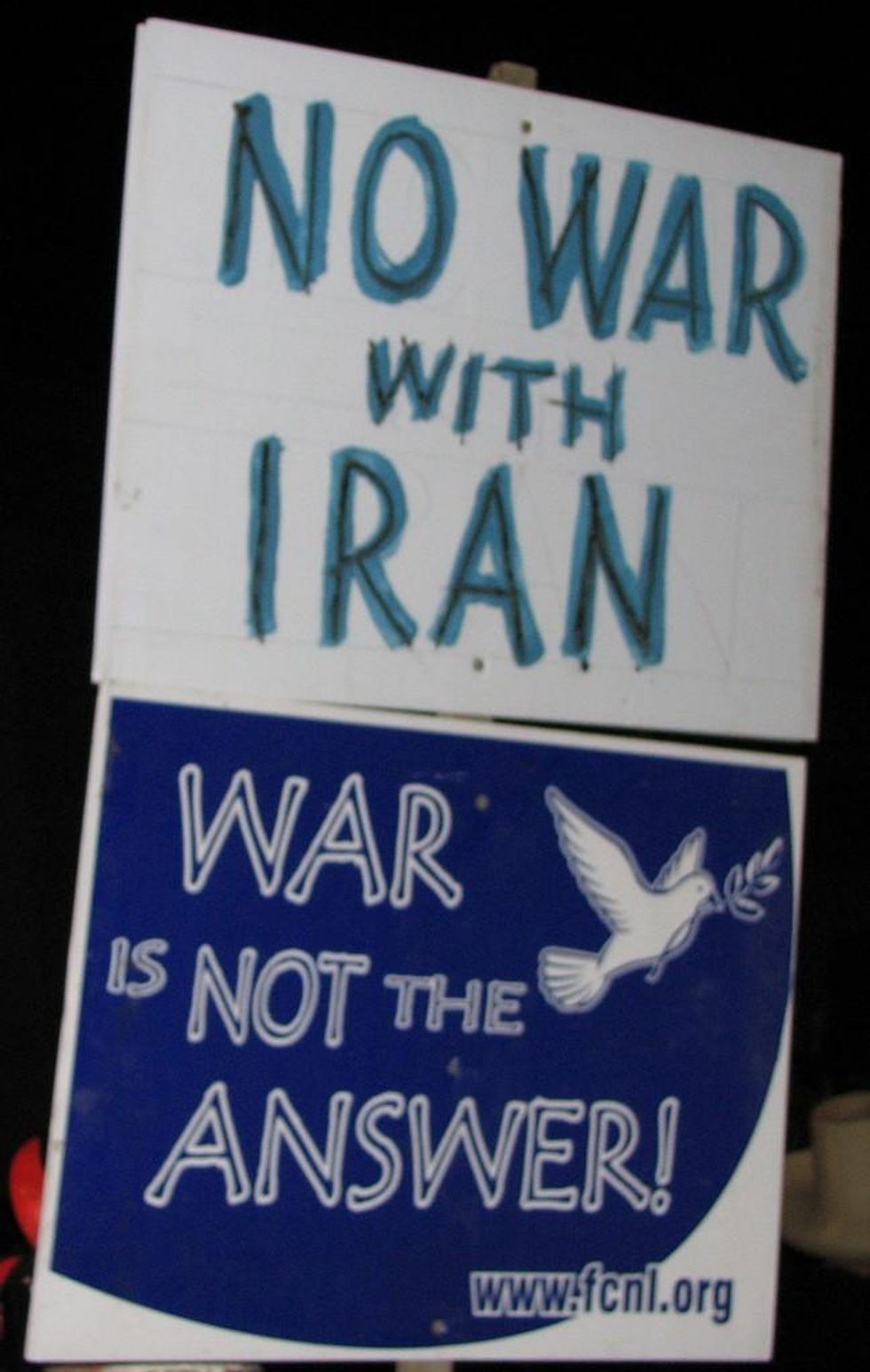
A majority of Senate Democrats are refusing to reveal where they stand on a bipartisan Iran sanctions bill that experts warn risks a catastrophic war with Iran.
According to the latest count, 59 senators publicly support the Iran Nuclear Weapon Free Act of 2013 (S. 1881) -- 16 of the Democrats. Ten Democratic committee chairs have come out as opposed to the bill, and Harry Reid is said to be against it too. That leaves the positions of almost 30 Democratic Senators unknown, according to the count of Greg Sargent writing for the Washington Post.
The bill would advance further sanctions on Iran and impose near-impossible conditions on a final agreement. It stands in direct violation of an interim agreement reached in late November in Geneva that the U.S. will "refrain from imposing new nuclear-related sanctions" during the six-month period the agreement is in effect, and critics charge it amounts to a call for war.
Introduced by Chairman of the Foreign Affairs Committee, Robert Menendez (D-N.J.), Sen. Chuck Schumer (D-N.Y.) and Sen. Mark Kirk (R-Ill.), the bill is strongly backed by the American Israeli Public Affairs Committee and is opposed by the Obama administration.
Meanwhile, a rift in the Democratic party appears to be deepening. Last week, Bernadette Meehan, National Security Council spokeswoman, urged Democratic backers of the bill to admit their support is tantamount to a call for for war. "If certain members of Congress want the United States to take military action, they should be up front with the American public and say so," she stated. "Otherwise, it's not clear why any member of Congress would support a bill that possibly closes the door on diplomacy and makes it more likely that the United States will have to choose between military options or allowing Iran's nuclear program to proceed."
Also last week, Foreign Policy Initiative (FPI)--which Jim Lobe of Inter Press Service refers to as "the neocons who brought you the Iraq war"--issued an open letter urging congressional leaders to line up behind the bill.
Opponents of war with Iran say now is a critical time to contact senators and urge them to take a stand against the bill.
"If the bill passes and goes into law, I think this will be read not just by Iran but also the U.S.'s partners, as violation of the interim agreement," said Abdi. "It's going to convey to the world that the U.S. actually dropped the ball on diplomacy. That will render the diplomatic process terminated."
He added, "Any way you slice it, this bill undermines peaceful resolution and makes any peaceful resolution of nuclear standoff impossible."
_____________________
A majority of Senate Democrats are refusing to reveal where they stand on a bipartisan Iran sanctions bill that experts warn risks a catastrophic war with Iran.
According to the latest count, 59 senators publicly support the Iran Nuclear Weapon Free Act of 2013 (S. 1881) -- 16 of the Democrats. Ten Democratic committee chairs have come out as opposed to the bill, and Harry Reid is said to be against it too. That leaves the positions of almost 30 Democratic Senators unknown, according to the count of Greg Sargent writing for the Washington Post.
The bill would advance further sanctions on Iran and impose near-impossible conditions on a final agreement. It stands in direct violation of an interim agreement reached in late November in Geneva that the U.S. will "refrain from imposing new nuclear-related sanctions" during the six-month period the agreement is in effect, and critics charge it amounts to a call for war.
Introduced by Chairman of the Foreign Affairs Committee, Robert Menendez (D-N.J.), Sen. Chuck Schumer (D-N.Y.) and Sen. Mark Kirk (R-Ill.), the bill is strongly backed by the American Israeli Public Affairs Committee and is opposed by the Obama administration.
Meanwhile, a rift in the Democratic party appears to be deepening. Last week, Bernadette Meehan, National Security Council spokeswoman, urged Democratic backers of the bill to admit their support is tantamount to a call for for war. "If certain members of Congress want the United States to take military action, they should be up front with the American public and say so," she stated. "Otherwise, it's not clear why any member of Congress would support a bill that possibly closes the door on diplomacy and makes it more likely that the United States will have to choose between military options or allowing Iran's nuclear program to proceed."
Also last week, Foreign Policy Initiative (FPI)--which Jim Lobe of Inter Press Service refers to as "the neocons who brought you the Iraq war"--issued an open letter urging congressional leaders to line up behind the bill.
Opponents of war with Iran say now is a critical time to contact senators and urge them to take a stand against the bill.
"If the bill passes and goes into law, I think this will be read not just by Iran but also the U.S.'s partners, as violation of the interim agreement," said Abdi. "It's going to convey to the world that the U.S. actually dropped the ball on diplomacy. That will render the diplomatic process terminated."
He added, "Any way you slice it, this bill undermines peaceful resolution and makes any peaceful resolution of nuclear standoff impossible."
_____________________
A majority of Senate Democrats are refusing to reveal where they stand on a bipartisan Iran sanctions bill that experts warn risks a catastrophic war with Iran.
According to the latest count, 59 senators publicly support the Iran Nuclear Weapon Free Act of 2013 (S. 1881) -- 16 of the Democrats. Ten Democratic committee chairs have come out as opposed to the bill, and Harry Reid is said to be against it too. That leaves the positions of almost 30 Democratic Senators unknown, according to the count of Greg Sargent writing for the Washington Post.
The bill would advance further sanctions on Iran and impose near-impossible conditions on a final agreement. It stands in direct violation of an interim agreement reached in late November in Geneva that the U.S. will "refrain from imposing new nuclear-related sanctions" during the six-month period the agreement is in effect, and critics charge it amounts to a call for war.
Introduced by Chairman of the Foreign Affairs Committee, Robert Menendez (D-N.J.), Sen. Chuck Schumer (D-N.Y.) and Sen. Mark Kirk (R-Ill.), the bill is strongly backed by the American Israeli Public Affairs Committee and is opposed by the Obama administration.
Meanwhile, a rift in the Democratic party appears to be deepening. Last week, Bernadette Meehan, National Security Council spokeswoman, urged Democratic backers of the bill to admit their support is tantamount to a call for for war. "If certain members of Congress want the United States to take military action, they should be up front with the American public and say so," she stated. "Otherwise, it's not clear why any member of Congress would support a bill that possibly closes the door on diplomacy and makes it more likely that the United States will have to choose between military options or allowing Iran's nuclear program to proceed."
Also last week, Foreign Policy Initiative (FPI)--which Jim Lobe of Inter Press Service refers to as "the neocons who brought you the Iraq war"--issued an open letter urging congressional leaders to line up behind the bill.
Opponents of war with Iran say now is a critical time to contact senators and urge them to take a stand against the bill.
"If the bill passes and goes into law, I think this will be read not just by Iran but also the U.S.'s partners, as violation of the interim agreement," said Abdi. "It's going to convey to the world that the U.S. actually dropped the ball on diplomacy. That will render the diplomatic process terminated."
He added, "Any way you slice it, this bill undermines peaceful resolution and makes any peaceful resolution of nuclear standoff impossible."
_____________________