SUBSCRIBE TO OUR FREE NEWSLETTER
Daily news & progressive opinion—funded by the people, not the corporations—delivered straight to your inbox.
5
#000000
#FFFFFF
To donate by check, phone, or other method, see our More Ways to Give page.
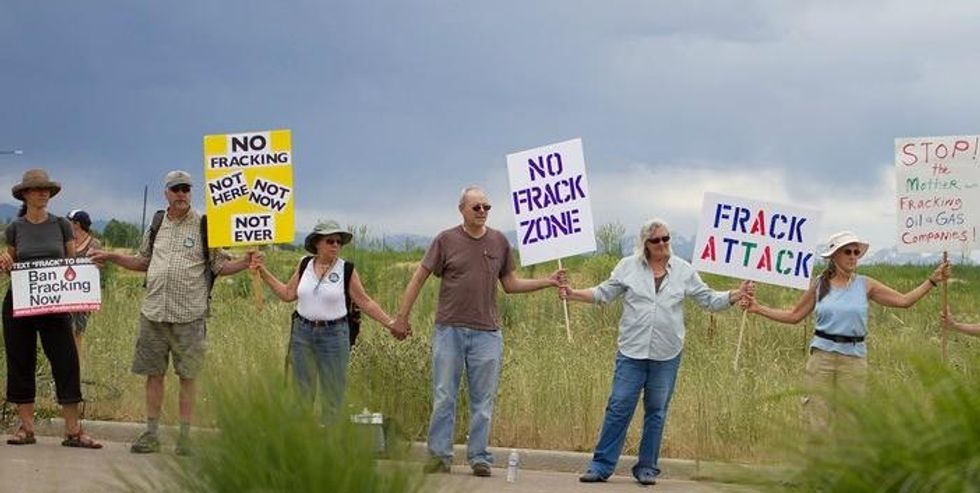
The amendment, the Right to Local Self-Government Act, would give local municipalities state-recognized authority to restrict or ban such businesses from operating within their communities, even if it is technically permitted by state law, if business practices "pose a threat to the health and safety of residents," Al Jazeera America reports.
The law, proposed by the recently formed Colorado Community Rights Network (CCRN), would be the first of its kind on a statewide level if passed.
According to the law, local government should have the authority to remove the "rights, powers, and duties of for-profit business entities, operating or seeking to operate in the community, to prevent such rights and powers from usurping or otherwise conflicting with the fundamental rights of people, their communities and the natural environment."
The language of the amendment will be submitted within a week to the secretary of state for approval. CCRN organizers will then have to collect at least 86,105 signatures to get the measure on the ballot for next fall.
"The measure would address any type of corporate project that a local community would deem to be a threat," organizer Cliff Willmeng told the Daily Camera. According to Willmeng, such threats could include hydraulic fracturing, planting of genetically modified crops, cyanide use in gold mining and dam construction.
The amendment comes on the heals of several legal battles currently being fought in Colorado over such town-wide bans on fracking.
The cities of Lafayette, Fort Collins, Broomfield, and Boulder all voted to ban fracking in the polls last November. However, fossil fuel industry players have initiated legal battles that could potentially see those voter-approved referendums overturned.
The Colorado Oil and Gas Association (COGA) filed a lawsuit last month against the towns of Lafayette and Fort Collins for their bans. Broomfield, which narrowly passed its referendum in a ballot recount, is facing a separate lawsuit by Broomfield Balanced Energy Coalition (BBE), which charges city officials of mishandling the ballot counting.
CCRN's amendment could see those towns and others who pursue industry regulations in the future safeguarded against industry backlash.
"The oil and gas industry have said they are going to use the state legislature and courts to get what they want, and they've been catered to pretty well. The people are pushing back," said Ben Price, project director at CCRN.
"The idea of consent of the governed says the people directly affected should make that decision," he said. "We're not saying people should have a voice -- we're saying people should have the authority to decide."
_______________________
The amendment, the Right to Local Self-Government Act, would give local municipalities state-recognized authority to restrict or ban such businesses from operating within their communities, even if it is technically permitted by state law, if business practices "pose a threat to the health and safety of residents," Al Jazeera America reports.
The law, proposed by the recently formed Colorado Community Rights Network (CCRN), would be the first of its kind on a statewide level if passed.
According to the law, local government should have the authority to remove the "rights, powers, and duties of for-profit business entities, operating or seeking to operate in the community, to prevent such rights and powers from usurping or otherwise conflicting with the fundamental rights of people, their communities and the natural environment."
The language of the amendment will be submitted within a week to the secretary of state for approval. CCRN organizers will then have to collect at least 86,105 signatures to get the measure on the ballot for next fall.
"The measure would address any type of corporate project that a local community would deem to be a threat," organizer Cliff Willmeng told the Daily Camera. According to Willmeng, such threats could include hydraulic fracturing, planting of genetically modified crops, cyanide use in gold mining and dam construction.
The amendment comes on the heals of several legal battles currently being fought in Colorado over such town-wide bans on fracking.
The cities of Lafayette, Fort Collins, Broomfield, and Boulder all voted to ban fracking in the polls last November. However, fossil fuel industry players have initiated legal battles that could potentially see those voter-approved referendums overturned.
The Colorado Oil and Gas Association (COGA) filed a lawsuit last month against the towns of Lafayette and Fort Collins for their bans. Broomfield, which narrowly passed its referendum in a ballot recount, is facing a separate lawsuit by Broomfield Balanced Energy Coalition (BBE), which charges city officials of mishandling the ballot counting.
CCRN's amendment could see those towns and others who pursue industry regulations in the future safeguarded against industry backlash.
"The oil and gas industry have said they are going to use the state legislature and courts to get what they want, and they've been catered to pretty well. The people are pushing back," said Ben Price, project director at CCRN.
"The idea of consent of the governed says the people directly affected should make that decision," he said. "We're not saying people should have a voice -- we're saying people should have the authority to decide."
_______________________
The amendment, the Right to Local Self-Government Act, would give local municipalities state-recognized authority to restrict or ban such businesses from operating within their communities, even if it is technically permitted by state law, if business practices "pose a threat to the health and safety of residents," Al Jazeera America reports.
The law, proposed by the recently formed Colorado Community Rights Network (CCRN), would be the first of its kind on a statewide level if passed.
According to the law, local government should have the authority to remove the "rights, powers, and duties of for-profit business entities, operating or seeking to operate in the community, to prevent such rights and powers from usurping or otherwise conflicting with the fundamental rights of people, their communities and the natural environment."
The language of the amendment will be submitted within a week to the secretary of state for approval. CCRN organizers will then have to collect at least 86,105 signatures to get the measure on the ballot for next fall.
"The measure would address any type of corporate project that a local community would deem to be a threat," organizer Cliff Willmeng told the Daily Camera. According to Willmeng, such threats could include hydraulic fracturing, planting of genetically modified crops, cyanide use in gold mining and dam construction.
The amendment comes on the heals of several legal battles currently being fought in Colorado over such town-wide bans on fracking.
The cities of Lafayette, Fort Collins, Broomfield, and Boulder all voted to ban fracking in the polls last November. However, fossil fuel industry players have initiated legal battles that could potentially see those voter-approved referendums overturned.
The Colorado Oil and Gas Association (COGA) filed a lawsuit last month against the towns of Lafayette and Fort Collins for their bans. Broomfield, which narrowly passed its referendum in a ballot recount, is facing a separate lawsuit by Broomfield Balanced Energy Coalition (BBE), which charges city officials of mishandling the ballot counting.
CCRN's amendment could see those towns and others who pursue industry regulations in the future safeguarded against industry backlash.
"The oil and gas industry have said they are going to use the state legislature and courts to get what they want, and they've been catered to pretty well. The people are pushing back," said Ben Price, project director at CCRN.
"The idea of consent of the governed says the people directly affected should make that decision," he said. "We're not saying people should have a voice -- we're saying people should have the authority to decide."
_______________________