SUBSCRIBE TO OUR FREE NEWSLETTER
Daily news & progressive opinion—funded by the people, not the corporations—delivered straight to your inbox.
5
#000000
#FFFFFF
To donate by check, phone, or other method, see our More Ways to Give page.
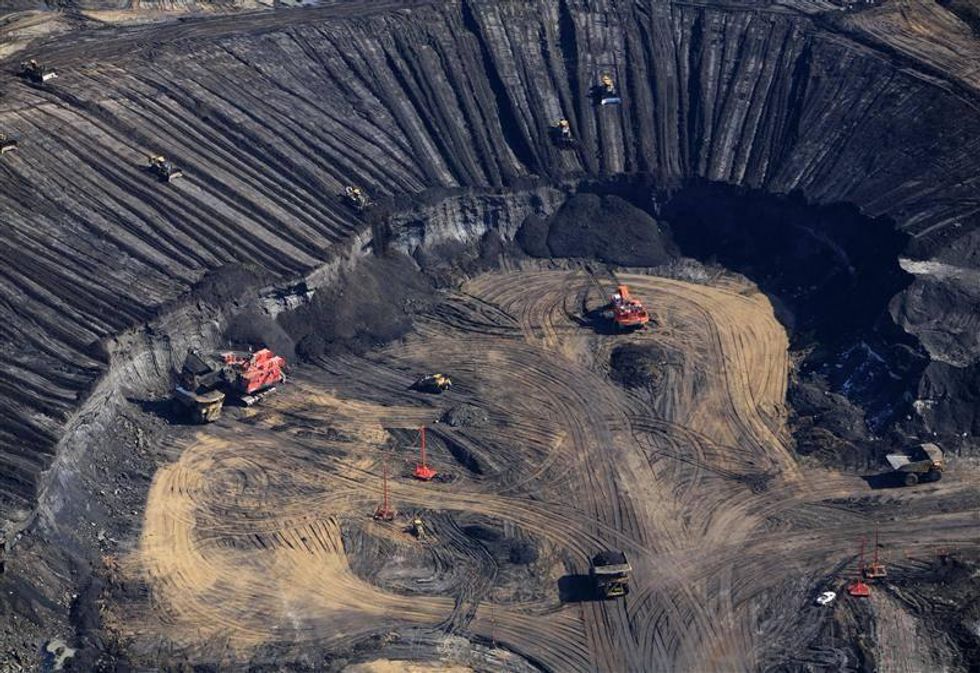
Only this one is funded entirely by the fossil fuel industry, the Edmonton Journal reports Monday.
Roughly 150 publicly funded environment department staff including fish and wildlife officers, forestry officers, biologists, rangers and others who watch over the oil industry's activities in the province are expected to move over to the new, industry-funded, Alberta Energy Regulator--a shift initiated by the government's environmental department as it shuts down its Energy Resources Conservation Board.
Al Jazeera America reports:
Oil and gas permits used to be doled out by two regulators, including the Energy Resources Conservation Board. That board, which was funded partially by taxpayers and partially by the industry, is now being phased out thanks to a law passed last spring meant to streamline industry regulation.
The new organization will get all of its funding from levying fees on oil and gas companies.
While it will be staffed by many regulators formerly paid by the state, environmentalists are voicing concern that the new body could be too close to the industry it is meant to oversee.
The Edmonton Journal adds that the provincial energy department also began handing over thousands of oil industry-related files last month to the industry-funded body.
Meanwhile, Gerry Protti, who helped found the Canadian Association of Petroleum Producers, an oil industry lobby group, has been chosen as chairman of the board of the new industry-funded regulator.
And chief executive Jim Ellis, a former deputy minister of environment, also brings with him a 'troubling' record, Rachel Notley for the New Democrat Party told the Edmonton Journal. According to Notley, Ellis has criticized environmental groups for publishing "negative media on the oil sands" and also attempted to bar environmental groups from taking part at a recent tar sands hearing.
Alberta Energy Regulator will now be in charge of administering the Water Act, Public Lands Act, and the Environmental Protection and Enhancement Act as they apply to oil spills and energy companies.
"How unbiased can this be, just in perception," when employees' salaries are paid by the industry they are monitoring, said Mike Dempsey, a vice-president of the Alberta Union of Provincial Employees--the union which members were forced to give up in order to make the transition to the privately funded department.
"This is just another step going down this road -- we now have a regulator whose prime mandate in legislation is to promote economic development and it is now also the prime environmental enforcer in the oilpatch," said Notley.
_______________________
Only this one is funded entirely by the fossil fuel industry, the Edmonton Journal reports Monday.
Roughly 150 publicly funded environment department staff including fish and wildlife officers, forestry officers, biologists, rangers and others who watch over the oil industry's activities in the province are expected to move over to the new, industry-funded, Alberta Energy Regulator--a shift initiated by the government's environmental department as it shuts down its Energy Resources Conservation Board.
Al Jazeera America reports:
Oil and gas permits used to be doled out by two regulators, including the Energy Resources Conservation Board. That board, which was funded partially by taxpayers and partially by the industry, is now being phased out thanks to a law passed last spring meant to streamline industry regulation.
The new organization will get all of its funding from levying fees on oil and gas companies.
While it will be staffed by many regulators formerly paid by the state, environmentalists are voicing concern that the new body could be too close to the industry it is meant to oversee.
The Edmonton Journal adds that the provincial energy department also began handing over thousands of oil industry-related files last month to the industry-funded body.
Meanwhile, Gerry Protti, who helped found the Canadian Association of Petroleum Producers, an oil industry lobby group, has been chosen as chairman of the board of the new industry-funded regulator.
And chief executive Jim Ellis, a former deputy minister of environment, also brings with him a 'troubling' record, Rachel Notley for the New Democrat Party told the Edmonton Journal. According to Notley, Ellis has criticized environmental groups for publishing "negative media on the oil sands" and also attempted to bar environmental groups from taking part at a recent tar sands hearing.
Alberta Energy Regulator will now be in charge of administering the Water Act, Public Lands Act, and the Environmental Protection and Enhancement Act as they apply to oil spills and energy companies.
"How unbiased can this be, just in perception," when employees' salaries are paid by the industry they are monitoring, said Mike Dempsey, a vice-president of the Alberta Union of Provincial Employees--the union which members were forced to give up in order to make the transition to the privately funded department.
"This is just another step going down this road -- we now have a regulator whose prime mandate in legislation is to promote economic development and it is now also the prime environmental enforcer in the oilpatch," said Notley.
_______________________
Only this one is funded entirely by the fossil fuel industry, the Edmonton Journal reports Monday.
Roughly 150 publicly funded environment department staff including fish and wildlife officers, forestry officers, biologists, rangers and others who watch over the oil industry's activities in the province are expected to move over to the new, industry-funded, Alberta Energy Regulator--a shift initiated by the government's environmental department as it shuts down its Energy Resources Conservation Board.
Al Jazeera America reports:
Oil and gas permits used to be doled out by two regulators, including the Energy Resources Conservation Board. That board, which was funded partially by taxpayers and partially by the industry, is now being phased out thanks to a law passed last spring meant to streamline industry regulation.
The new organization will get all of its funding from levying fees on oil and gas companies.
While it will be staffed by many regulators formerly paid by the state, environmentalists are voicing concern that the new body could be too close to the industry it is meant to oversee.
The Edmonton Journal adds that the provincial energy department also began handing over thousands of oil industry-related files last month to the industry-funded body.
Meanwhile, Gerry Protti, who helped found the Canadian Association of Petroleum Producers, an oil industry lobby group, has been chosen as chairman of the board of the new industry-funded regulator.
And chief executive Jim Ellis, a former deputy minister of environment, also brings with him a 'troubling' record, Rachel Notley for the New Democrat Party told the Edmonton Journal. According to Notley, Ellis has criticized environmental groups for publishing "negative media on the oil sands" and also attempted to bar environmental groups from taking part at a recent tar sands hearing.
Alberta Energy Regulator will now be in charge of administering the Water Act, Public Lands Act, and the Environmental Protection and Enhancement Act as they apply to oil spills and energy companies.
"How unbiased can this be, just in perception," when employees' salaries are paid by the industry they are monitoring, said Mike Dempsey, a vice-president of the Alberta Union of Provincial Employees--the union which members were forced to give up in order to make the transition to the privately funded department.
"This is just another step going down this road -- we now have a regulator whose prime mandate in legislation is to promote economic development and it is now also the prime environmental enforcer in the oilpatch," said Notley.
_______________________