SUBSCRIBE TO OUR FREE NEWSLETTER
Daily news & progressive opinion—funded by the people, not the corporations—delivered straight to your inbox.
5
#000000
#FFFFFF
To donate by check, phone, or other method, see our More Ways to Give page.
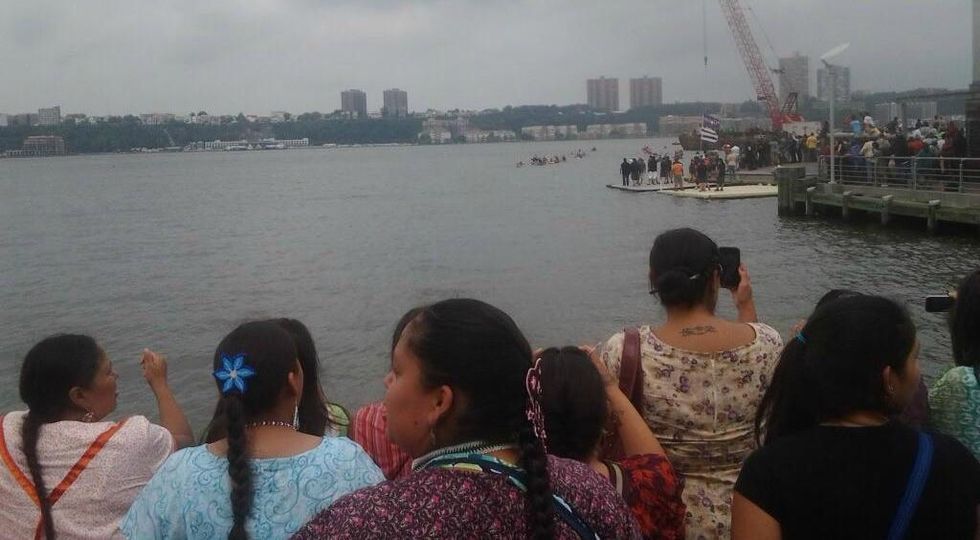
After landing, the group made their way to United Nations headquarters where they were to meet with officials on what is known globally as International Day of the World's Indigenous Peoples.
The group of paddlers, which has included more than 500 people at various stages, are both members and friends of the Onondaga Nation and other tribes and have been traveling across upstate New York in recent weeks as part of the The Two Row Wampum Renewal Campaign.
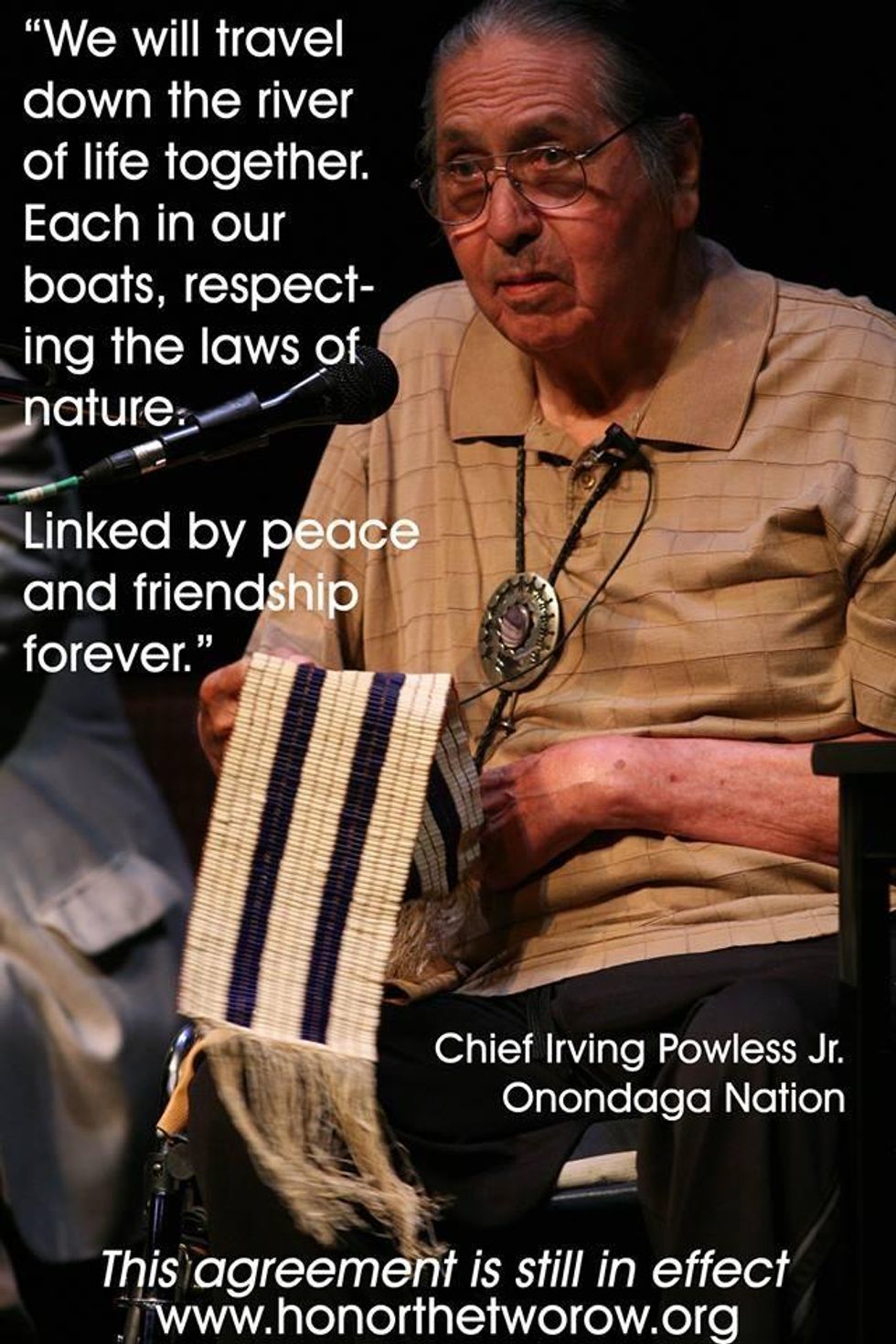
The name is a reference to the Two Row Wampum agreement between the Dutch and the Iroquois Two Row Wampum which formed the basis of all diplomacy between the Haudenosaunee and the Dutch, French, English, the United States and Canada, and is still in effect to this day. That agreement is symbolized by a beaded belt, which represents the indigenous people in one row, traveling side-by-side in parallel with the European visitors as they became their new settlement of the land.
"Each line of the wampum belt represents each of our laws, governments, languages, cultures, our ways of life," explained Jake Edwards of the Onondaga Nation Council of Chiefs. "It is agreed that we will travel together, side by each, on the river of life... linked by peace, friendship, forever. We will not try to steer each others' vessels."
"The Two Row is the oldest and is the grandfather of all subsequent treaties," said Oren Lyons, Faithkeeper of the Onondaga Nation's Turtle Clan who has represented the Haudenosaunee in world councils at the United Nations and elsewhere. "The words 'as long as the sun shines, as long as the waters flow downhill, and as long as the grass grows green' can be found in many treaties after the 1613 treaty," Lyons said. "It set a relationship of equity and peace. This campaign is to remind people of the importance of the agreements."
Speaking separately with Democracy Now!'s Amy Goodman on Friday, Lyons explained that the Two Row campaign has the goal of environmental protection and respect for Mother Earth at its center.
"We're concerned about the future, we're concerned about the Earth -- seven generations hence -- and the conduct of people," Lyons said. "We wonder, how do you instruct seven billion people as to the relationship to the Earth? Because unless they understand that, and relate the way they should be, the future is pretty dim for the human species."
According to the local New York newspaper The Villager, the campaign's goalis to spread peace, friendship and togetherness, as well as to re-establish the importance of an oral treaty made between the Haudenosaunee and the Dutch colonists exactly 400 years ago. The Wampum rowers also stress respect for the environment, encouraging sustainability and opposing hydrofracking.
Emily Bishop, an organizer of the campaign, said, "Our initiative is to honor Native American treaties and renew a respect toward the earth. To survive on this earth, we have to be peaceful and sustainable. We over all just want to educate people, and spread our message on what it means to be sustainable.
"The campaign is pretty epic," Bishop added. "Any message that must be conveyed has to be done in a big way -- and we have 500 people paddling down the Hudson River. It's kind of a big deal."
Watch the Democracy Now! discussion that includes Oren Lyons, legendary folksinger and activist Pete Seeger, and Andy Mager, a project coordinator for the Two Row Wampum Renewal campaign and a member of Neighbors of the Onondaga Nation:
____________________________________________________
After landing, the group made their way to United Nations headquarters where they were to meet with officials on what is known globally as International Day of the World's Indigenous Peoples.
The group of paddlers, which has included more than 500 people at various stages, are both members and friends of the Onondaga Nation and other tribes and have been traveling across upstate New York in recent weeks as part of the The Two Row Wampum Renewal Campaign.
The name is a reference to the Two Row Wampum agreement between the Dutch and the Iroquois Two Row Wampum which formed the basis of all diplomacy between the Haudenosaunee and the Dutch, French, English, the United States and Canada, and is still in effect to this day. That agreement is symbolized by a beaded belt, which represents the indigenous people in one row, traveling side-by-side in parallel with the European visitors as they became their new settlement of the land.
"Each line of the wampum belt represents each of our laws, governments, languages, cultures, our ways of life," explained Jake Edwards of the Onondaga Nation Council of Chiefs. "It is agreed that we will travel together, side by each, on the river of life... linked by peace, friendship, forever. We will not try to steer each others' vessels."
"The Two Row is the oldest and is the grandfather of all subsequent treaties," said Oren Lyons, Faithkeeper of the Onondaga Nation's Turtle Clan who has represented the Haudenosaunee in world councils at the United Nations and elsewhere. "The words 'as long as the sun shines, as long as the waters flow downhill, and as long as the grass grows green' can be found in many treaties after the 1613 treaty," Lyons said. "It set a relationship of equity and peace. This campaign is to remind people of the importance of the agreements."
Speaking separately with Democracy Now!'s Amy Goodman on Friday, Lyons explained that the Two Row campaign has the goal of environmental protection and respect for Mother Earth at its center.
"We're concerned about the future, we're concerned about the Earth -- seven generations hence -- and the conduct of people," Lyons said. "We wonder, how do you instruct seven billion people as to the relationship to the Earth? Because unless they understand that, and relate the way they should be, the future is pretty dim for the human species."
According to the local New York newspaper The Villager, the campaign's goalis to spread peace, friendship and togetherness, as well as to re-establish the importance of an oral treaty made between the Haudenosaunee and the Dutch colonists exactly 400 years ago. The Wampum rowers also stress respect for the environment, encouraging sustainability and opposing hydrofracking.
Emily Bishop, an organizer of the campaign, said, "Our initiative is to honor Native American treaties and renew a respect toward the earth. To survive on this earth, we have to be peaceful and sustainable. We over all just want to educate people, and spread our message on what it means to be sustainable.
"The campaign is pretty epic," Bishop added. "Any message that must be conveyed has to be done in a big way -- and we have 500 people paddling down the Hudson River. It's kind of a big deal."
Watch the Democracy Now! discussion that includes Oren Lyons, legendary folksinger and activist Pete Seeger, and Andy Mager, a project coordinator for the Two Row Wampum Renewal campaign and a member of Neighbors of the Onondaga Nation:
____________________________________________________
After landing, the group made their way to United Nations headquarters where they were to meet with officials on what is known globally as International Day of the World's Indigenous Peoples.
The group of paddlers, which has included more than 500 people at various stages, are both members and friends of the Onondaga Nation and other tribes and have been traveling across upstate New York in recent weeks as part of the The Two Row Wampum Renewal Campaign.
The name is a reference to the Two Row Wampum agreement between the Dutch and the Iroquois Two Row Wampum which formed the basis of all diplomacy between the Haudenosaunee and the Dutch, French, English, the United States and Canada, and is still in effect to this day. That agreement is symbolized by a beaded belt, which represents the indigenous people in one row, traveling side-by-side in parallel with the European visitors as they became their new settlement of the land.
"Each line of the wampum belt represents each of our laws, governments, languages, cultures, our ways of life," explained Jake Edwards of the Onondaga Nation Council of Chiefs. "It is agreed that we will travel together, side by each, on the river of life... linked by peace, friendship, forever. We will not try to steer each others' vessels."
"The Two Row is the oldest and is the grandfather of all subsequent treaties," said Oren Lyons, Faithkeeper of the Onondaga Nation's Turtle Clan who has represented the Haudenosaunee in world councils at the United Nations and elsewhere. "The words 'as long as the sun shines, as long as the waters flow downhill, and as long as the grass grows green' can be found in many treaties after the 1613 treaty," Lyons said. "It set a relationship of equity and peace. This campaign is to remind people of the importance of the agreements."
Speaking separately with Democracy Now!'s Amy Goodman on Friday, Lyons explained that the Two Row campaign has the goal of environmental protection and respect for Mother Earth at its center.
"We're concerned about the future, we're concerned about the Earth -- seven generations hence -- and the conduct of people," Lyons said. "We wonder, how do you instruct seven billion people as to the relationship to the Earth? Because unless they understand that, and relate the way they should be, the future is pretty dim for the human species."
According to the local New York newspaper The Villager, the campaign's goalis to spread peace, friendship and togetherness, as well as to re-establish the importance of an oral treaty made between the Haudenosaunee and the Dutch colonists exactly 400 years ago. The Wampum rowers also stress respect for the environment, encouraging sustainability and opposing hydrofracking.
Emily Bishop, an organizer of the campaign, said, "Our initiative is to honor Native American treaties and renew a respect toward the earth. To survive on this earth, we have to be peaceful and sustainable. We over all just want to educate people, and spread our message on what it means to be sustainable.
"The campaign is pretty epic," Bishop added. "Any message that must be conveyed has to be done in a big way -- and we have 500 people paddling down the Hudson River. It's kind of a big deal."
Watch the Democracy Now! discussion that includes Oren Lyons, legendary folksinger and activist Pete Seeger, and Andy Mager, a project coordinator for the Two Row Wampum Renewal campaign and a member of Neighbors of the Onondaga Nation:
____________________________________________________