SUBSCRIBE TO OUR FREE NEWSLETTER
Daily news & progressive opinion—funded by the people, not the corporations—delivered straight to your inbox.
5
#000000
#FFFFFF
To donate by check, phone, or other method, see our More Ways to Give page.
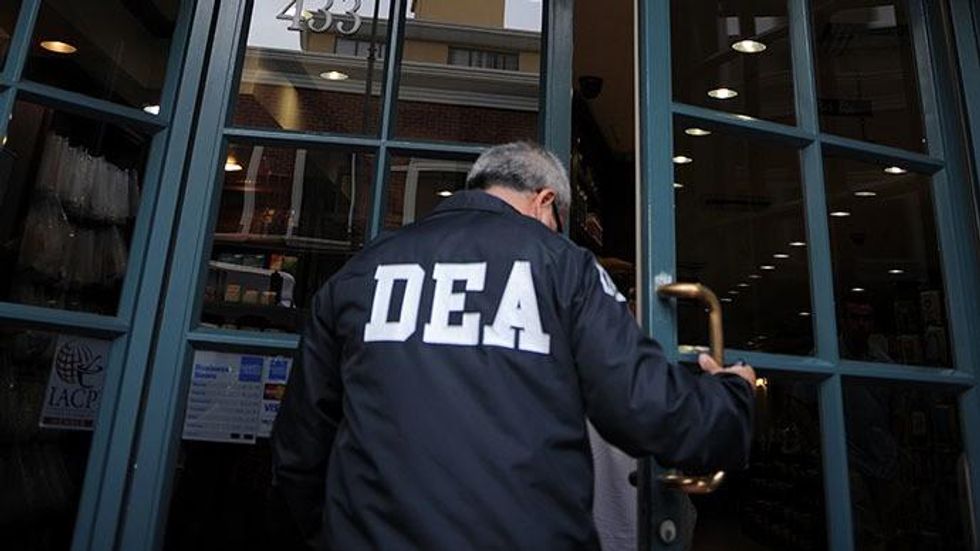
What's troubling in both cases, according to legal experts, is the manner in which the agencies hide the true source of an investigation's starting point--never revealing the use of the highly classified sources involved--and then "recreate" a parallel investigation to justify criminal findings.
Additionally troubling is that the IRS and the DEA are only two of the more than twenty federal agencies that work in tandem with the SOD, leading to speculation that the practice of utilizing than hiding surveillance techniques that have not been properly documented or approved could be far-reaching.
From Rueters:
Details of a U.S. Drug Enforcement Administration program that feeds tips to federal agents and then instructs them to alter the investigative trail were published in a manual used by agents of the Internal Revenue Service for two years.
The practice of recreating the investigative trail, highly criticized by former prosecutors and defense lawyers after Reuters reported it this week, is now under review by the Justice Department. Two high-profile Republicans have also raised questions about the procedure.
A 350-word entry in the Internal Revenue Manual instructed agents of the U.S. tax agency to omit any reference to tips supplied by the DEA's Special Operations Division, especially from affidavits, court proceedings or investigative files. The entry was published and posted online in 2005 and 2006, and was removed in early 2007. The IRS is among two dozen arms of the government working with the Special Operations Division, including the Federal Bureau of Investigation, the National Security Agency and the Central Intelligence Agency.
The IRS would not respond for comment on the Reuters investigation.
According to the IRS document obtained which explains the program:
Special Operations Division has the ability to collect, collate, analyze, evaluate, and disseminate information and intelligence derived from worldwide multi-agency sources, including classified projects.[...] SOD converts extremely sensitive information into usable leads and tips which are then passed to the field offices for real-time enforcement activity against major international drug trafficking organizations.
While the documents stipulates that such procedures should only be used for "drug trafficking" investigations, DEA agents told Reuters that the practice has now been used for "organized crime and drug trafficking."
And that's the problem, say critics, who note that surveillance operations like those developed by the NSA and the DEA are first said to only be used for counterterrorism, but then the public finds out they're also being used for narcotics investigations. Next, new disclosures surface that criminal gangs are being targeted. Next, financial criminals. It appears a classic slippery slope.
Responding to the Reuters reporting from earlier in the week on the SOD program, former litigator and now journalist Glenn Greenwald told Amy Goodman's Democracy Now!:
What this secret agency is doing, according to Reuters, it is circumventing that process by gathering all kinds of information without any court supervision, without any oversight at all, using surveillance technologies and other forms of domestic spying. And then, when it gets this information that it believes it can be used in a criminal prosecution, it knows that that information can't be used in a criminal prosecution because it's been acquired outside of the legal and constitutional process, so they cover up how they really got it, and they pretend--they make it seem as though they really got it through legal and normal means, by then going back and retracing the investigation, once they already have it, and re-acquiring it so that it looks to defense counsel and even to judges and prosecutors like it really was done in the constitutionally permissible way. So they're prosecuting people and putting people in prison for using evidence that they've acquired illegally, which they're then covering up and lying about and deceiving courts into believing was actually acquired constitutionally. It's a full-frontal assault on the Fourth, Fifth and Sixth Amendments and on the integrity of the judicial process, because they're deceiving everyone involved in criminal prosecutions about how this information has been obtained.
Goodman also interview the Reuters reporter John Shiffman, who led the investigation. That entire conversation can be seen here:
__________________________________