

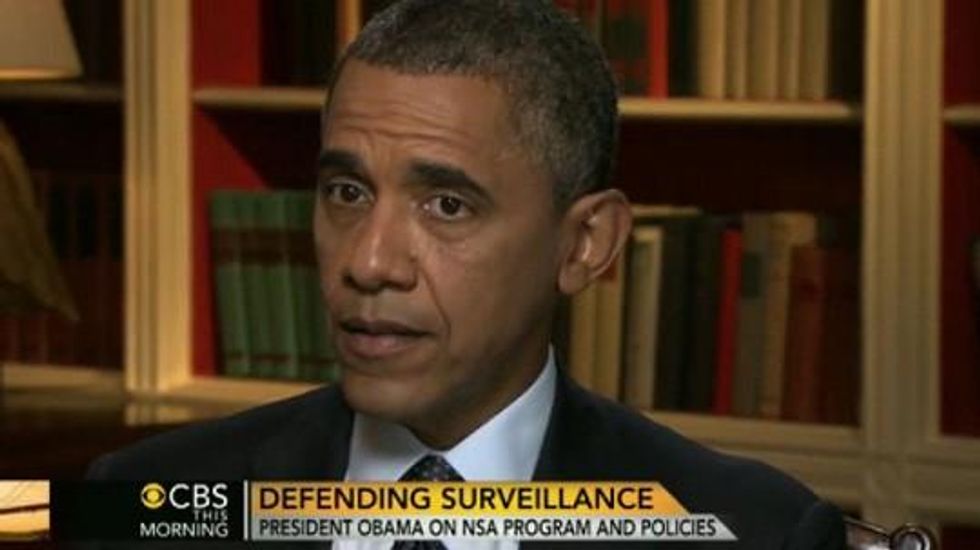
Following recent claims by President Obama and NSA chief Keith Alexander that the National Security Agency does not monitor the communications of US citizens without a warrant, the Guardian published a new set of top secret documents on Thursday exposing the illegitimacy of those claims.
The published documents include two sets of NSA rules that had been approved through the secretive Foreign Intelligence Surveillance Court (FISA court), signed by Attorney General Eric Holder and stamped on July 29, 2009.
The rules outline "broad orders" that allow the NSA to use information "inadvertently" collected from US citizens who partake in cross-border communications. This information can include email and phone call content and be obtained without a warrant, as long as the citizen is engaging in foreign correspondence.
The orders mandate that "even under authorities governing the collection of foreign intelligence from foreign targets, US communications can still be collected, retained and used," even if a warrant has never been issued for the domestic communications, Guardian reporters Glenn Greenwald and James Ball write.
Following the court orders, domestic US communications that have been scooped up within the vast foreign intelligence dragnet surveillance programs--exposed by NSA whistleblower Edward Snowden this month--can be kept by the NSA for up to five years and used "if they contain usable intelligence, information on criminal activity, threat of harm to people or property, are encrypted, or are believed to contain any information relevant to cybersecurity."
In addition, the NSA can collect and hold "foreign intelligence information" contained within attorney-client communications in the US.
The NSA can also access the content of communications gathered from "US based machine[s]" or phone numbers "in order to establish if targets are located in the US, for the purposes of ceasing further surveillance."
Additionally, as the Guardian reports, the documents show that the decision over whose communications to rifle through, "lies directly with its own analysts, without recourse to courts or superiors - though a percentage of targeting decisions are reviewed by internal audit teams on a regular basis."
As Greenwald and Ball report, much of these rules are partially the result of the following conundrum: NSA "minimization procedures" signed by Holder in 2009 that were allegedly designed to minimize the targeting of people within the US "do not apply to large-scale data where the NSA claims it is unable to filter US communications from non-US ones."
Other details revealed in the new documents include:
- Warrants that are actually required of the NSA when it specifically targets US-based communications are brief and require little detail, "legal rulings or explanations."
- When the NSA has no specific information on a person's location, such as an IP address or "statements made by the potential target" analysts are "free to presume they are overseas," and thus do not require a warrant. However, "If it later appears that a target is in fact located in the US," the Guardian reports, "analysts are permitted to look at the content of messages, or listen to phone calls, to establish if this is indeed the case."
- NSA analysts can monitor telephone call content if it is suspected "that a foreign target has entered or intends to enter the United States. Such content analysis will be conducted according to analytic and intelligence requirements and priorities."
"In practice, much of the decision-making appears to lie with NSA analysts, rather than the FISA court or senior officials," Greenwald and Ball summarize.
Overall, the documents appear to show that President Obama and senior intelligence officials, who continue to claim that the NSA could not access Americans' phone or email information without warrants, are not telling the truth.
As Greenwald and Ball conclude:
The broad nature of the court's oversight role, and the discretion given to NSA analysts, sheds light on responses from the administration and internet companies to the Guardian's disclosure of the PRISM program. They have stated that the content of online communications is turned over to the NSA only pursuant to a court order. But except when a US citizen is specifically targeted, the court orders used by the NSA to obtain that information as part of Prism are these general FAA orders, not individualized warrants specific to any individual.
Once armed with these general orders, the NSA is empowered to compel telephone and internet companies to turn over to it the communications of any individual identified by the NSA. The Fisa court plays no role in the selection of those individuals, nor does it monitor who is selected by the NSA.
_______________________
Following recent claims by President Obama and NSA chief Keith Alexander that the National Security Agency does not monitor the communications of US citizens without a warrant, the Guardian published a new set of top secret documents on Thursday exposing the illegitimacy of those claims.
The published documents include two sets of NSA rules that had been approved through the secretive Foreign Intelligence Surveillance Court (FISA court), signed by Attorney General Eric Holder and stamped on July 29, 2009.
The rules outline "broad orders" that allow the NSA to use information "inadvertently" collected from US citizens who partake in cross-border communications. This information can include email and phone call content and be obtained without a warrant, as long as the citizen is engaging in foreign correspondence.
The orders mandate that "even under authorities governing the collection of foreign intelligence from foreign targets, US communications can still be collected, retained and used," even if a warrant has never been issued for the domestic communications, Guardian reporters Glenn Greenwald and James Ball write.
Following the court orders, domestic US communications that have been scooped up within the vast foreign intelligence dragnet surveillance programs--exposed by NSA whistleblower Edward Snowden this month--can be kept by the NSA for up to five years and used "if they contain usable intelligence, information on criminal activity, threat of harm to people or property, are encrypted, or are believed to contain any information relevant to cybersecurity."
In addition, the NSA can collect and hold "foreign intelligence information" contained within attorney-client communications in the US.
The NSA can also access the content of communications gathered from "US based machine[s]" or phone numbers "in order to establish if targets are located in the US, for the purposes of ceasing further surveillance."
Additionally, as the Guardian reports, the documents show that the decision over whose communications to rifle through, "lies directly with its own analysts, without recourse to courts or superiors - though a percentage of targeting decisions are reviewed by internal audit teams on a regular basis."
As Greenwald and Ball report, much of these rules are partially the result of the following conundrum: NSA "minimization procedures" signed by Holder in 2009 that were allegedly designed to minimize the targeting of people within the US "do not apply to large-scale data where the NSA claims it is unable to filter US communications from non-US ones."
Other details revealed in the new documents include:
- Warrants that are actually required of the NSA when it specifically targets US-based communications are brief and require little detail, "legal rulings or explanations."
- When the NSA has no specific information on a person's location, such as an IP address or "statements made by the potential target" analysts are "free to presume they are overseas," and thus do not require a warrant. However, "If it later appears that a target is in fact located in the US," the Guardian reports, "analysts are permitted to look at the content of messages, or listen to phone calls, to establish if this is indeed the case."
- NSA analysts can monitor telephone call content if it is suspected "that a foreign target has entered or intends to enter the United States. Such content analysis will be conducted according to analytic and intelligence requirements and priorities."
"In practice, much of the decision-making appears to lie with NSA analysts, rather than the FISA court or senior officials," Greenwald and Ball summarize.
Overall, the documents appear to show that President Obama and senior intelligence officials, who continue to claim that the NSA could not access Americans' phone or email information without warrants, are not telling the truth.
As Greenwald and Ball conclude:
The broad nature of the court's oversight role, and the discretion given to NSA analysts, sheds light on responses from the administration and internet companies to the Guardian's disclosure of the PRISM program. They have stated that the content of online communications is turned over to the NSA only pursuant to a court order. But except when a US citizen is specifically targeted, the court orders used by the NSA to obtain that information as part of Prism are these general FAA orders, not individualized warrants specific to any individual.
Once armed with these general orders, the NSA is empowered to compel telephone and internet companies to turn over to it the communications of any individual identified by the NSA. The Fisa court plays no role in the selection of those individuals, nor does it monitor who is selected by the NSA.
_______________________
Following recent claims by President Obama and NSA chief Keith Alexander that the National Security Agency does not monitor the communications of US citizens without a warrant, the Guardian published a new set of top secret documents on Thursday exposing the illegitimacy of those claims.
The published documents include two sets of NSA rules that had been approved through the secretive Foreign Intelligence Surveillance Court (FISA court), signed by Attorney General Eric Holder and stamped on July 29, 2009.
The rules outline "broad orders" that allow the NSA to use information "inadvertently" collected from US citizens who partake in cross-border communications. This information can include email and phone call content and be obtained without a warrant, as long as the citizen is engaging in foreign correspondence.
The orders mandate that "even under authorities governing the collection of foreign intelligence from foreign targets, US communications can still be collected, retained and used," even if a warrant has never been issued for the domestic communications, Guardian reporters Glenn Greenwald and James Ball write.
Following the court orders, domestic US communications that have been scooped up within the vast foreign intelligence dragnet surveillance programs--exposed by NSA whistleblower Edward Snowden this month--can be kept by the NSA for up to five years and used "if they contain usable intelligence, information on criminal activity, threat of harm to people or property, are encrypted, or are believed to contain any information relevant to cybersecurity."
In addition, the NSA can collect and hold "foreign intelligence information" contained within attorney-client communications in the US.
The NSA can also access the content of communications gathered from "US based machine[s]" or phone numbers "in order to establish if targets are located in the US, for the purposes of ceasing further surveillance."
Additionally, as the Guardian reports, the documents show that the decision over whose communications to rifle through, "lies directly with its own analysts, without recourse to courts or superiors - though a percentage of targeting decisions are reviewed by internal audit teams on a regular basis."
As Greenwald and Ball report, much of these rules are partially the result of the following conundrum: NSA "minimization procedures" signed by Holder in 2009 that were allegedly designed to minimize the targeting of people within the US "do not apply to large-scale data where the NSA claims it is unable to filter US communications from non-US ones."
Other details revealed in the new documents include:
- Warrants that are actually required of the NSA when it specifically targets US-based communications are brief and require little detail, "legal rulings or explanations."
- When the NSA has no specific information on a person's location, such as an IP address or "statements made by the potential target" analysts are "free to presume they are overseas," and thus do not require a warrant. However, "If it later appears that a target is in fact located in the US," the Guardian reports, "analysts are permitted to look at the content of messages, or listen to phone calls, to establish if this is indeed the case."
- NSA analysts can monitor telephone call content if it is suspected "that a foreign target has entered or intends to enter the United States. Such content analysis will be conducted according to analytic and intelligence requirements and priorities."
"In practice, much of the decision-making appears to lie with NSA analysts, rather than the FISA court or senior officials," Greenwald and Ball summarize.
Overall, the documents appear to show that President Obama and senior intelligence officials, who continue to claim that the NSA could not access Americans' phone or email information without warrants, are not telling the truth.
As Greenwald and Ball conclude:
The broad nature of the court's oversight role, and the discretion given to NSA analysts, sheds light on responses from the administration and internet companies to the Guardian's disclosure of the PRISM program. They have stated that the content of online communications is turned over to the NSA only pursuant to a court order. But except when a US citizen is specifically targeted, the court orders used by the NSA to obtain that information as part of Prism are these general FAA orders, not individualized warrants specific to any individual.
Once armed with these general orders, the NSA is empowered to compel telephone and internet companies to turn over to it the communications of any individual identified by the NSA. The Fisa court plays no role in the selection of those individuals, nor does it monitor who is selected by the NSA.
_______________________