SUBSCRIBE TO OUR FREE NEWSLETTER
Daily news & progressive opinion—funded by the people, not the corporations—delivered straight to your inbox.
5
#000000
#FFFFFF
To donate by check, phone, or other method, see our More Ways to Give page.
According to lawyers representing eight of the detainees, a number of the men have been held for up to 14 months without charge or any indication of a trial date, and many others have not yet been allowed to consult a lawyer after months spent in prison.
"Our client has been held at Camp Bastion since August 2012. He has not been charged with any crime and has had no access to a lawyer so he can receive legal advice about his ongoing detention," said Rosa Curling, a lawyer with the firm Leigh Day, which is representing one 20-year-old detainee.
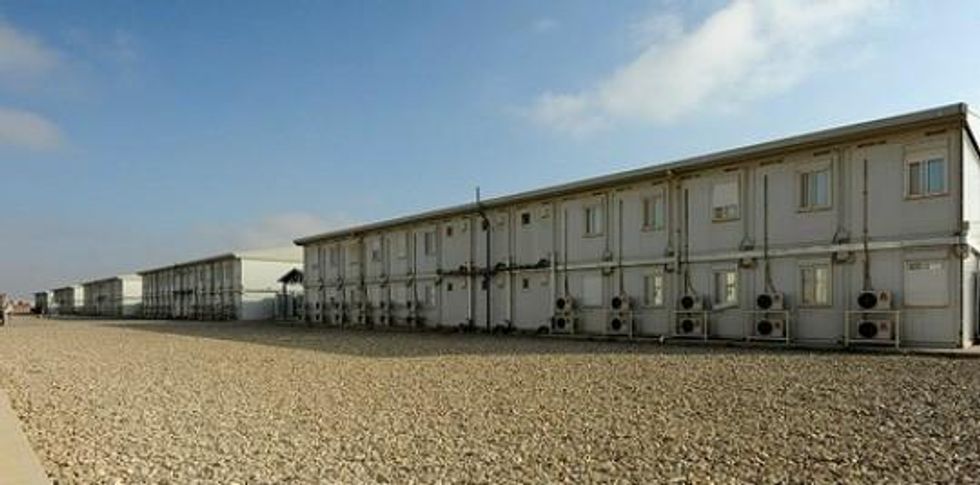
Camp Bastion is located in Afghanistan's Helmand province and is the largest British military base in the country, housing nearly 30,000 servicemen and women. According to the attorneys, the detainees were arrested by British soldiers during village raids in Helmand and Kandahar provinces.
According to rules of the International Security Assistance Force (ISAF), within which the British forces in Afghanistan are operating, suspects can be legally detained for 96 hours except in "exceptional circumstances," during which they can be held for longer periods.
BBC News reports that legal documents seen by the news outlet suggest that the Afghans are being held at the base in a temporary holding facility, despite previous claims by the UK's Ministry of Defense that ISAF has "neither the power nor the facilities to intern detainees in Afghanistan."
"This is a secret facility that's been used to unlawfully detain or intern up to 85 Afghans that they've kept secret, that Parliament doesn't know about, that courts previously when they have interrogated issues like detention and internment in Afghanistan have never been told about - completely off the radar," said attorney Phil Shiner.
"It is reminiscent of the public's awakening that there was a Guantanamo Bay," he continued. "And people will be wondering if these detainees are being treated humanely and in accordance with international law."
Saying this treatment amounts to "unlawful detention and internment," the attorneys have launched a habeas corpus application demanding that a court determine whether the prisoners' detainment is illegal.
The BBC report continues:
The families of two of the men who appear to have been held the longest said they were arrested in spring last year and interrogated in the weeks that followed.
But legal papers state their interrogation ended "many months ago".
Last week, the two were allowed access to lawyers but they have still not been told why they are being held and they have not been charged with any crime.
The families only established where the men were being held with the help of the International Committee of the Red Cross.
One, a teenager, has been held for 14 months, while the other, a 20-year-old father, has been held for 12 months.
In legal papers Dan Squires, a barrister for the 20-year-old, told the High Court: "He has not been granted access to lawyer nor brought before a court.
"He does not know how long he is to remain detained or for what purpose. He has asked whether he will be transferred to Afghan authorities but had been told they do not consider that he has committed any criminal offense and so do not want to receive him."
Responding to the news, General Zahir Azimi, a spokesman for the Afghan Ministry of Defense, said that the detentions were illegal and "inhuman."
"The prisoners must be handed over to the Afghan authorities," he said. "After their handover to us, they will be dealt with according to our judicial laws, and the agreements reached with the international community."
Mohammad Daud Yaar, Afghanistan ambassador to the UK, added that the secret detention violated "the principle of national sovereignty."
Following the disclosure and uproar, Hammond said that the UK government has been working with its Afghan counterparts to find a "safe way to resume transfers of detainees to the Afghan judicial system." In November, Hammond had imposed a ban on the handing over of suspects to Afghan forces because of allegations of abuse.
_____________________
According to lawyers representing eight of the detainees, a number of the men have been held for up to 14 months without charge or any indication of a trial date, and many others have not yet been allowed to consult a lawyer after months spent in prison.
"Our client has been held at Camp Bastion since August 2012. He has not been charged with any crime and has had no access to a lawyer so he can receive legal advice about his ongoing detention," said Rosa Curling, a lawyer with the firm Leigh Day, which is representing one 20-year-old detainee.
Camp Bastion is located in Afghanistan's Helmand province and is the largest British military base in the country, housing nearly 30,000 servicemen and women. According to the attorneys, the detainees were arrested by British soldiers during village raids in Helmand and Kandahar provinces.
According to rules of the International Security Assistance Force (ISAF), within which the British forces in Afghanistan are operating, suspects can be legally detained for 96 hours except in "exceptional circumstances," during which they can be held for longer periods.
BBC News reports that legal documents seen by the news outlet suggest that the Afghans are being held at the base in a temporary holding facility, despite previous claims by the UK's Ministry of Defense that ISAF has "neither the power nor the facilities to intern detainees in Afghanistan."
"This is a secret facility that's been used to unlawfully detain or intern up to 85 Afghans that they've kept secret, that Parliament doesn't know about, that courts previously when they have interrogated issues like detention and internment in Afghanistan have never been told about - completely off the radar," said attorney Phil Shiner.
"It is reminiscent of the public's awakening that there was a Guantanamo Bay," he continued. "And people will be wondering if these detainees are being treated humanely and in accordance with international law."
Saying this treatment amounts to "unlawful detention and internment," the attorneys have launched a habeas corpus application demanding that a court determine whether the prisoners' detainment is illegal.
The BBC report continues:
The families of two of the men who appear to have been held the longest said they were arrested in spring last year and interrogated in the weeks that followed.
But legal papers state their interrogation ended "many months ago".
Last week, the two were allowed access to lawyers but they have still not been told why they are being held and they have not been charged with any crime.
The families only established where the men were being held with the help of the International Committee of the Red Cross.
One, a teenager, has been held for 14 months, while the other, a 20-year-old father, has been held for 12 months.
In legal papers Dan Squires, a barrister for the 20-year-old, told the High Court: "He has not been granted access to lawyer nor brought before a court.
"He does not know how long he is to remain detained or for what purpose. He has asked whether he will be transferred to Afghan authorities but had been told they do not consider that he has committed any criminal offense and so do not want to receive him."
Responding to the news, General Zahir Azimi, a spokesman for the Afghan Ministry of Defense, said that the detentions were illegal and "inhuman."
"The prisoners must be handed over to the Afghan authorities," he said. "After their handover to us, they will be dealt with according to our judicial laws, and the agreements reached with the international community."
Mohammad Daud Yaar, Afghanistan ambassador to the UK, added that the secret detention violated "the principle of national sovereignty."
Following the disclosure and uproar, Hammond said that the UK government has been working with its Afghan counterparts to find a "safe way to resume transfers of detainees to the Afghan judicial system." In November, Hammond had imposed a ban on the handing over of suspects to Afghan forces because of allegations of abuse.
_____________________
According to lawyers representing eight of the detainees, a number of the men have been held for up to 14 months without charge or any indication of a trial date, and many others have not yet been allowed to consult a lawyer after months spent in prison.
"Our client has been held at Camp Bastion since August 2012. He has not been charged with any crime and has had no access to a lawyer so he can receive legal advice about his ongoing detention," said Rosa Curling, a lawyer with the firm Leigh Day, which is representing one 20-year-old detainee.
Camp Bastion is located in Afghanistan's Helmand province and is the largest British military base in the country, housing nearly 30,000 servicemen and women. According to the attorneys, the detainees were arrested by British soldiers during village raids in Helmand and Kandahar provinces.
According to rules of the International Security Assistance Force (ISAF), within which the British forces in Afghanistan are operating, suspects can be legally detained for 96 hours except in "exceptional circumstances," during which they can be held for longer periods.
BBC News reports that legal documents seen by the news outlet suggest that the Afghans are being held at the base in a temporary holding facility, despite previous claims by the UK's Ministry of Defense that ISAF has "neither the power nor the facilities to intern detainees in Afghanistan."
"This is a secret facility that's been used to unlawfully detain or intern up to 85 Afghans that they've kept secret, that Parliament doesn't know about, that courts previously when they have interrogated issues like detention and internment in Afghanistan have never been told about - completely off the radar," said attorney Phil Shiner.
"It is reminiscent of the public's awakening that there was a Guantanamo Bay," he continued. "And people will be wondering if these detainees are being treated humanely and in accordance with international law."
Saying this treatment amounts to "unlawful detention and internment," the attorneys have launched a habeas corpus application demanding that a court determine whether the prisoners' detainment is illegal.
The BBC report continues:
The families of two of the men who appear to have been held the longest said they were arrested in spring last year and interrogated in the weeks that followed.
But legal papers state their interrogation ended "many months ago".
Last week, the two were allowed access to lawyers but they have still not been told why they are being held and they have not been charged with any crime.
The families only established where the men were being held with the help of the International Committee of the Red Cross.
One, a teenager, has been held for 14 months, while the other, a 20-year-old father, has been held for 12 months.
In legal papers Dan Squires, a barrister for the 20-year-old, told the High Court: "He has not been granted access to lawyer nor brought before a court.
"He does not know how long he is to remain detained or for what purpose. He has asked whether he will be transferred to Afghan authorities but had been told they do not consider that he has committed any criminal offense and so do not want to receive him."
Responding to the news, General Zahir Azimi, a spokesman for the Afghan Ministry of Defense, said that the detentions were illegal and "inhuman."
"The prisoners must be handed over to the Afghan authorities," he said. "After their handover to us, they will be dealt with according to our judicial laws, and the agreements reached with the international community."
Mohammad Daud Yaar, Afghanistan ambassador to the UK, added that the secret detention violated "the principle of national sovereignty."
Following the disclosure and uproar, Hammond said that the UK government has been working with its Afghan counterparts to find a "safe way to resume transfers of detainees to the Afghan judicial system." In November, Hammond had imposed a ban on the handing over of suspects to Afghan forces because of allegations of abuse.
_____________________