

SUBSCRIBE TO OUR FREE NEWSLETTER
Daily news & progressive opinion—funded by the people, not the corporations—delivered straight to your inbox.
5
#000000
#FFFFFF
To donate by check, phone, or other method, see our More Ways to Give page.
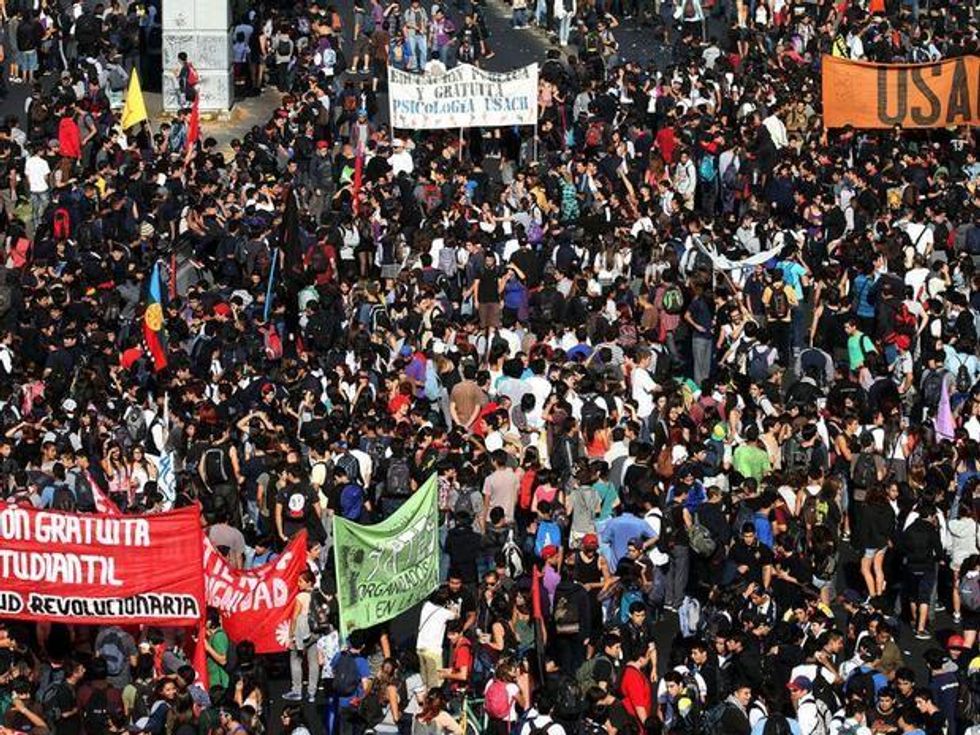
Thousands of Chilean students took the streets of Santiago on Thursday to say, "we believe that education is a social right, not a commodity," in a call for greater access to affordable university education, reprising the protests which swept the nation in 2011-2012.
"Today we are marching because we believe that there is a root to the problem here, it's a structural problem in the system," said Elosia Gonzalez, spokesperson for the Coordinating Assembly of Secondary Students (ACES), in a statement reported by Press TV. The protests target Chile's education system which is viewed as "profoundly unfair."
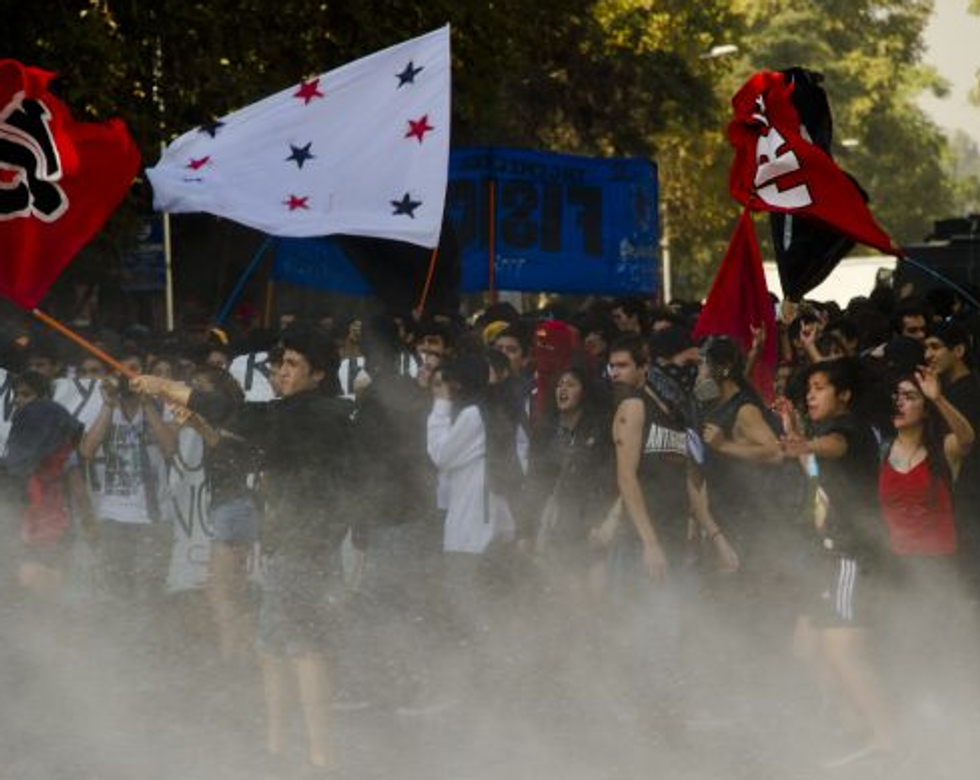
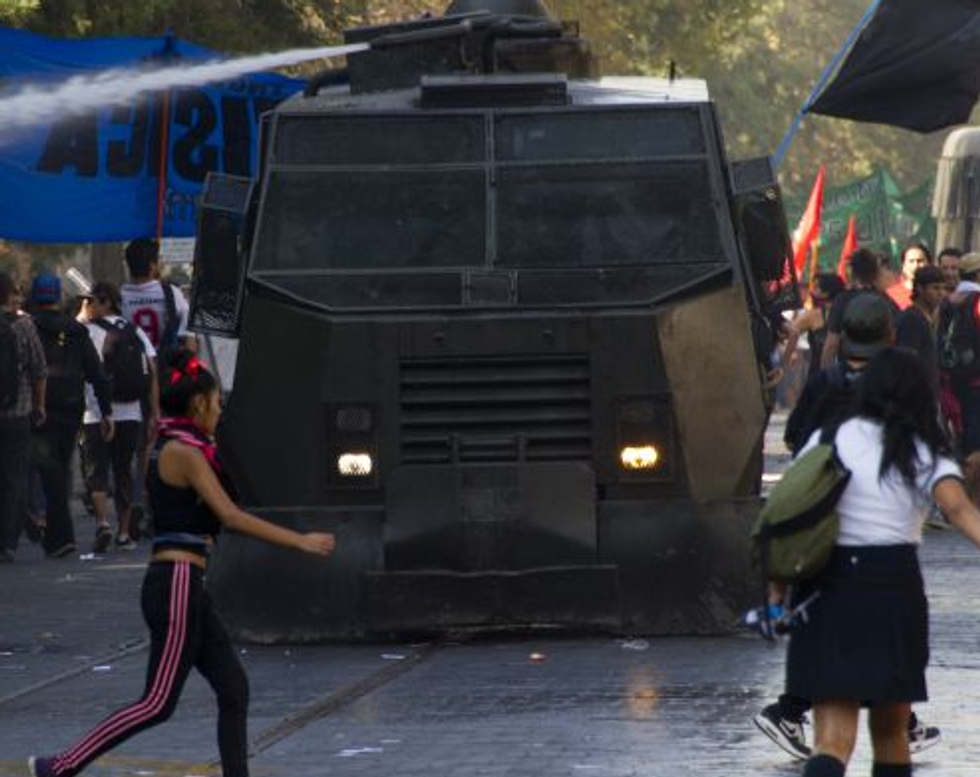
Reports say that Special Forces units hammered the students with tear gas, water cannons and dogs after a dispute between organizers and authorities over the marchers' proposed route. Students allegedly responded by throwing rocks and other projectiles. According to BBC, a total of 60 people were arrested.
The event marked the first such demonstration of 2013, following a wave of mass demonstrations beginning with the Chilean Winter of 2011, which sparked 12 months of widespread actions calling for high-quality and free education in the country.
"We understand that the changes we are looking for won't happen in one day, that this is a long-term fight," Diego Vela, president of the Student Federation of the Universidad Catolica (FEUC), told The Santiago Times. "But we are hoping that this year, especially with the elections, we will be able to see some big changes to the education system."
Student representatives estimate that some 25,000 protesters marched in Thursday's rally.
Thursday's demonstration also marked the first march organized both by private university students along with ACES and other public school organizations, reports People's Daily Online.
According to a representative from the Student Movement of Private Higher Education (Mesup), the private school students wanted to speak out against the gross 'profiteering' of the country's private education system which they say has driven many of their families into deep debt.
"We obviously stick to the call of traditional universities to put an end to profit, but we also want nationalization of private institutions, to really get private out of education," said Mesup spokesperson Felipe Munoz. "We believe that education is a social right, not a commodity."
Thursday's march is considered a lead up to a mass demonstration scheduled for April 11.
_____________________
Thousands of Chilean students took the streets of Santiago on Thursday to say, "we believe that education is a social right, not a commodity," in a call for greater access to affordable university education, reprising the protests which swept the nation in 2011-2012.
"Today we are marching because we believe that there is a root to the problem here, it's a structural problem in the system," said Elosia Gonzalez, spokesperson for the Coordinating Assembly of Secondary Students (ACES), in a statement reported by Press TV. The protests target Chile's education system which is viewed as "profoundly unfair."
Reports say that Special Forces units hammered the students with tear gas, water cannons and dogs after a dispute between organizers and authorities over the marchers' proposed route. Students allegedly responded by throwing rocks and other projectiles. According to BBC, a total of 60 people were arrested.
The event marked the first such demonstration of 2013, following a wave of mass demonstrations beginning with the Chilean Winter of 2011, which sparked 12 months of widespread actions calling for high-quality and free education in the country.
"We understand that the changes we are looking for won't happen in one day, that this is a long-term fight," Diego Vela, president of the Student Federation of the Universidad Catolica (FEUC), told The Santiago Times. "But we are hoping that this year, especially with the elections, we will be able to see some big changes to the education system."
Student representatives estimate that some 25,000 protesters marched in Thursday's rally.
Thursday's demonstration also marked the first march organized both by private university students along with ACES and other public school organizations, reports People's Daily Online.
According to a representative from the Student Movement of Private Higher Education (Mesup), the private school students wanted to speak out against the gross 'profiteering' of the country's private education system which they say has driven many of their families into deep debt.
"We obviously stick to the call of traditional universities to put an end to profit, but we also want nationalization of private institutions, to really get private out of education," said Mesup spokesperson Felipe Munoz. "We believe that education is a social right, not a commodity."
Thursday's march is considered a lead up to a mass demonstration scheduled for April 11.
_____________________
Thousands of Chilean students took the streets of Santiago on Thursday to say, "we believe that education is a social right, not a commodity," in a call for greater access to affordable university education, reprising the protests which swept the nation in 2011-2012.
"Today we are marching because we believe that there is a root to the problem here, it's a structural problem in the system," said Elosia Gonzalez, spokesperson for the Coordinating Assembly of Secondary Students (ACES), in a statement reported by Press TV. The protests target Chile's education system which is viewed as "profoundly unfair."
Reports say that Special Forces units hammered the students with tear gas, water cannons and dogs after a dispute between organizers and authorities over the marchers' proposed route. Students allegedly responded by throwing rocks and other projectiles. According to BBC, a total of 60 people were arrested.
The event marked the first such demonstration of 2013, following a wave of mass demonstrations beginning with the Chilean Winter of 2011, which sparked 12 months of widespread actions calling for high-quality and free education in the country.
"We understand that the changes we are looking for won't happen in one day, that this is a long-term fight," Diego Vela, president of the Student Federation of the Universidad Catolica (FEUC), told The Santiago Times. "But we are hoping that this year, especially with the elections, we will be able to see some big changes to the education system."
Student representatives estimate that some 25,000 protesters marched in Thursday's rally.
Thursday's demonstration also marked the first march organized both by private university students along with ACES and other public school organizations, reports People's Daily Online.
According to a representative from the Student Movement of Private Higher Education (Mesup), the private school students wanted to speak out against the gross 'profiteering' of the country's private education system which they say has driven many of their families into deep debt.
"We obviously stick to the call of traditional universities to put an end to profit, but we also want nationalization of private institutions, to really get private out of education," said Mesup spokesperson Felipe Munoz. "We believe that education is a social right, not a commodity."
Thursday's march is considered a lead up to a mass demonstration scheduled for April 11.
_____________________

