SUBSCRIBE TO OUR FREE NEWSLETTER
Daily news & progressive opinion—funded by the people, not the corporations—delivered straight to your inbox.
5
#000000
#FFFFFF
To donate by check, phone, or other method, see our More Ways to Give page.
Daily news & progressive opinion—funded by the people, not the corporations—delivered straight to your inbox.
Four landmark Baghdad hotels were heavily damaged by car bombs this afternoon in the fourth co-ordinated attack on prominent targets as Iraq readies for an increasingly fraught election.
Security officials said at least 36 people were killed and more than 80 injured by attackers including suicide bombers and gunmen.
The blasts took place around the same time as the execution of one of Saddam Hussein's most infamous henchman, Ali Hassan al-Majid, otherwise known as Chemical Ali. The timing raised fresh fears that former Ba'athists had launched the campaign in an attempt to destabilise the government before the poll.
The first bomb was detonated between the Sheraton and Palestine hotels in the centre of the capital, causing massive damage to both well-known structures. Around three minutes later, the Babylon hotel on the banks of the Tigris river, just south of the US embassy, was hit by a suicide bomber driving a car past the perimeter barriers. Damage was also reported to be severe.
The final - and most audacious - attack came just two minutes later when gunmen opened fire on guards manning the gates to the Hamra hotel, which had been home to many foreign reporters since early 2005. In the ensuing firefight, Kurdish peshmerga soldiers, guarding the border of the presidential neighbourhood directly across the street, engaged with an unknown number of insurgents. Guards from the Hamra, employed by a British security firm, also opened fire. As they took defensive positions behind blast walls further inside the Hamra perimeter, a white van with a flashing red light to resemble an emergency vehicle broke through the hotel's security barriers and exploded inside the compound.
"It was racing at incredible speed," said Australian reporter Paul McGeough, who witnessed the Hamra attack from his eighth-floor balcony. "I noticed that it had a red flashing light on its roof and as it detonated, I dropped behind my balcony."
The lower levels of the Hamra were destroyed, with the blast taking place about 30 metres from the lobby.
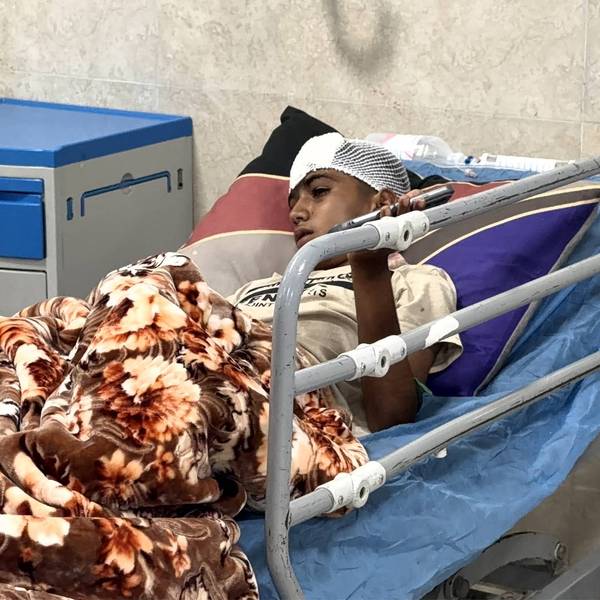
The Hamra compound, which houses reporters from the Washington Post, the Los Angeles Times, the Times and US National Public Radio, was littered with body parts and charred splinters of the bomb vehicle. Wounded people were walking amongst the ruins wrapped in bandages, and damage in the densely populated apartment buildings nearby was reported to be extensive.
The attacks were highly co-ordinated, mirroring three earlier spectacular assaults on government ministries and court houses in August, October and December.
Again, the car bombs would have certainly passed the highly contentious British-made explosive detection wands which have been labelled fraudulent by the US military. The British government imposed an export ban on the detectors on Friday after Cambridge University scientists proved the wands - which are used at most checkpoints throughout Baghdad - contained nothing more than a chip used to detect theft from stores.
The death toll from today's attacks is significantly lower than those from the three previous blasts, which saw a total of more than 450 killed and up to 2,000 wounded.
But the symbolism is just as stark. Taking place eight weeks before the planned 7 March general election, they underscore yet again that Baghdad's prime targets remain highly accessible to terrorists and will make it increasingly difficult for the government to claim it has increased security in the capital.
Dear Common Dreams reader, It’s been nearly 30 years since I co-founded Common Dreams with my late wife, Lina Newhouser. We had the radical notion that journalism should serve the public good, not corporate profits. It was clear to us from the outset what it would take to build such a project. No paid advertisements. No corporate sponsors. No millionaire publisher telling us what to think or do. Many people said we wouldn't last a year, but we proved those doubters wrong. Together with a tremendous team of journalists and dedicated staff, we built an independent media outlet free from the constraints of profits and corporate control. Our mission has always been simple: To inform. To inspire. To ignite change for the common good. Building Common Dreams was not easy. Our survival was never guaranteed. When you take on the most powerful forces—Wall Street greed, fossil fuel industry destruction, Big Tech lobbyists, and uber-rich oligarchs who have spent billions upon billions rigging the economy and democracy in their favor—the only bulwark you have is supporters who believe in your work. But here’s the urgent message from me today. It's never been this bad out there. And it's never been this hard to keep us going. At the very moment Common Dreams is most needed, the threats we face are intensifying. We need your support now more than ever. We don't accept corporate advertising and never will. We don't have a paywall because we don't think people should be blocked from critical news based on their ability to pay. Everything we do is funded by the donations of readers like you. When everyone does the little they can afford, we are strong. But if that support retreats or dries up, so do we. Will you donate now to make sure Common Dreams not only survives but thrives? —Craig Brown, Co-founder |
Four landmark Baghdad hotels were heavily damaged by car bombs this afternoon in the fourth co-ordinated attack on prominent targets as Iraq readies for an increasingly fraught election.
Security officials said at least 36 people were killed and more than 80 injured by attackers including suicide bombers and gunmen.
The blasts took place around the same time as the execution of one of Saddam Hussein's most infamous henchman, Ali Hassan al-Majid, otherwise known as Chemical Ali. The timing raised fresh fears that former Ba'athists had launched the campaign in an attempt to destabilise the government before the poll.
The first bomb was detonated between the Sheraton and Palestine hotels in the centre of the capital, causing massive damage to both well-known structures. Around three minutes later, the Babylon hotel on the banks of the Tigris river, just south of the US embassy, was hit by a suicide bomber driving a car past the perimeter barriers. Damage was also reported to be severe.
The final - and most audacious - attack came just two minutes later when gunmen opened fire on guards manning the gates to the Hamra hotel, which had been home to many foreign reporters since early 2005. In the ensuing firefight, Kurdish peshmerga soldiers, guarding the border of the presidential neighbourhood directly across the street, engaged with an unknown number of insurgents. Guards from the Hamra, employed by a British security firm, also opened fire. As they took defensive positions behind blast walls further inside the Hamra perimeter, a white van with a flashing red light to resemble an emergency vehicle broke through the hotel's security barriers and exploded inside the compound.
"It was racing at incredible speed," said Australian reporter Paul McGeough, who witnessed the Hamra attack from his eighth-floor balcony. "I noticed that it had a red flashing light on its roof and as it detonated, I dropped behind my balcony."
The lower levels of the Hamra were destroyed, with the blast taking place about 30 metres from the lobby.
The Hamra compound, which houses reporters from the Washington Post, the Los Angeles Times, the Times and US National Public Radio, was littered with body parts and charred splinters of the bomb vehicle. Wounded people were walking amongst the ruins wrapped in bandages, and damage in the densely populated apartment buildings nearby was reported to be extensive.
The attacks were highly co-ordinated, mirroring three earlier spectacular assaults on government ministries and court houses in August, October and December.
Again, the car bombs would have certainly passed the highly contentious British-made explosive detection wands which have been labelled fraudulent by the US military. The British government imposed an export ban on the detectors on Friday after Cambridge University scientists proved the wands - which are used at most checkpoints throughout Baghdad - contained nothing more than a chip used to detect theft from stores.
The death toll from today's attacks is significantly lower than those from the three previous blasts, which saw a total of more than 450 killed and up to 2,000 wounded.
But the symbolism is just as stark. Taking place eight weeks before the planned 7 March general election, they underscore yet again that Baghdad's prime targets remain highly accessible to terrorists and will make it increasingly difficult for the government to claim it has increased security in the capital.
Four landmark Baghdad hotels were heavily damaged by car bombs this afternoon in the fourth co-ordinated attack on prominent targets as Iraq readies for an increasingly fraught election.
Security officials said at least 36 people were killed and more than 80 injured by attackers including suicide bombers and gunmen.
The blasts took place around the same time as the execution of one of Saddam Hussein's most infamous henchman, Ali Hassan al-Majid, otherwise known as Chemical Ali. The timing raised fresh fears that former Ba'athists had launched the campaign in an attempt to destabilise the government before the poll.
The first bomb was detonated between the Sheraton and Palestine hotels in the centre of the capital, causing massive damage to both well-known structures. Around three minutes later, the Babylon hotel on the banks of the Tigris river, just south of the US embassy, was hit by a suicide bomber driving a car past the perimeter barriers. Damage was also reported to be severe.
The final - and most audacious - attack came just two minutes later when gunmen opened fire on guards manning the gates to the Hamra hotel, which had been home to many foreign reporters since early 2005. In the ensuing firefight, Kurdish peshmerga soldiers, guarding the border of the presidential neighbourhood directly across the street, engaged with an unknown number of insurgents. Guards from the Hamra, employed by a British security firm, also opened fire. As they took defensive positions behind blast walls further inside the Hamra perimeter, a white van with a flashing red light to resemble an emergency vehicle broke through the hotel's security barriers and exploded inside the compound.
"It was racing at incredible speed," said Australian reporter Paul McGeough, who witnessed the Hamra attack from his eighth-floor balcony. "I noticed that it had a red flashing light on its roof and as it detonated, I dropped behind my balcony."
The lower levels of the Hamra were destroyed, with the blast taking place about 30 metres from the lobby.
The Hamra compound, which houses reporters from the Washington Post, the Los Angeles Times, the Times and US National Public Radio, was littered with body parts and charred splinters of the bomb vehicle. Wounded people were walking amongst the ruins wrapped in bandages, and damage in the densely populated apartment buildings nearby was reported to be extensive.
The attacks were highly co-ordinated, mirroring three earlier spectacular assaults on government ministries and court houses in August, October and December.
Again, the car bombs would have certainly passed the highly contentious British-made explosive detection wands which have been labelled fraudulent by the US military. The British government imposed an export ban on the detectors on Friday after Cambridge University scientists proved the wands - which are used at most checkpoints throughout Baghdad - contained nothing more than a chip used to detect theft from stores.
The death toll from today's attacks is significantly lower than those from the three previous blasts, which saw a total of more than 450 killed and up to 2,000 wounded.
But the symbolism is just as stark. Taking place eight weeks before the planned 7 March general election, they underscore yet again that Baghdad's prime targets remain highly accessible to terrorists and will make it increasingly difficult for the government to claim it has increased security in the capital.