SUBSCRIBE TO OUR FREE NEWSLETTER
Daily news & progressive opinion—funded by the people, not the corporations—delivered straight to your inbox.
5
#000000
#FFFFFF
To donate by check, phone, or other method, see our More Ways to Give page.
Daily news & progressive opinion—funded by the people, not the corporations—delivered straight to your inbox.
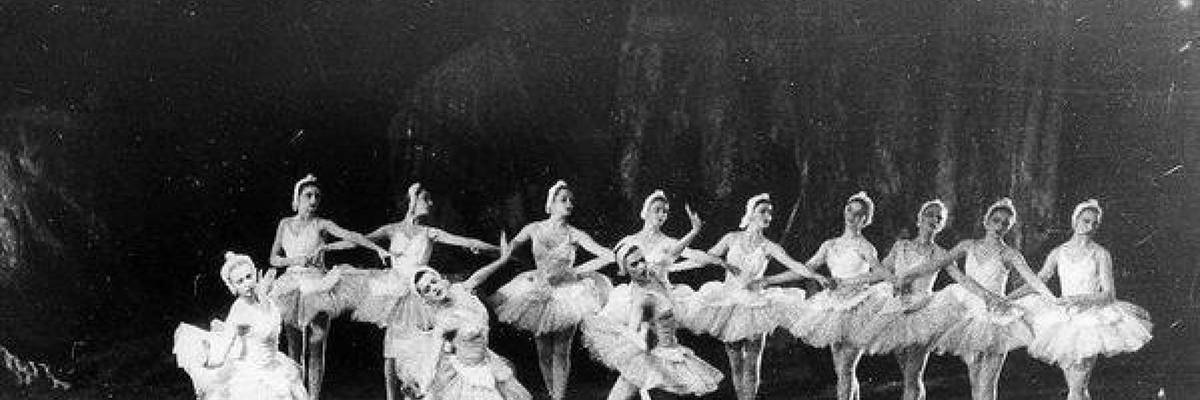
Russian performance of Swan Lake, a story of the (albeit tragic) triumph of love over evil. Archival photo.
Pulling their shroud of paranoia and repression ever tighter, Russian authorities shut down the country's last independent media outlet, TV Rain, after it flouted Putin's Stalin-esque "special operation" moniker for his invasion of Ukraine and called it a "war" - under a draconian new law, a crime punishable by up to 15 years in prison. Ending their final newscast, the defiant staff declared "No to war" before walking out en masse; in a pointed protest, the studio then put on Swan Lake, the dark, good-vs-evil classic that has long symbolized Russia's oft-tortuous political upheavals.
Even as global media outlets halt broadcasts across Russia in response to Putin's increasingly dystopian censorship efforts, Russian authorities pulled their shroud of paranoia and repression ever tighter by shutting down what is reportedly the country's last independent media outlet, the youth-focused TV Rain. State officials announced the suspension after TV Rain reporters flouted Putin's Stalin-esque "special operation" moniker for his savage invasion of Ukraine by speaking truth to power and calling it what it obviously is, a "war." The country's Orwellian censors surreally turned that act, in other parts of the world deemed doing their job, into the "purposeful and systematic" posting of "information calling for extremist and violent acts."
Russia's telecommunications regulator also charged TV Rain was "inciting extremism, abusing Russian citizens, causing mass disruption of public calm and safety, and encouraging protests." Just to be clear about its harsh disapproval, the country's Duma then passed a draconian new law virtually criminalizing free speech; it renders any journalist who shares "fake news" - aka accurate reporting - about the "special operation" - aka war - in Ukraine liable to a prison sentence of up to 15 years. Officials also added the radio station Echo of Moscow to the ban; both outlets "violated the law," they argued, and thus "the right of the prosecutor general's office to take appropriate measures was used."
After the suspension was announced, TV Rain did one last newscast, an eight-hour live stream, before telling viewers they would be taken off the air. On cue its staff, many young, gathered around the news desk with grim smiles. "No to war," declared the anchors. Then, amidst reports special forces were about to storm the building, they all silently streamed out. The image of an empty studio was replaced by a logo, and then by an evocative protest - a classic clip from that "portentous composition," Tchaikovsky's Swan Lake. Having premiered exactly 145 years before, on March 4, 1877, the dark, good-vs-evil ballet has long been a symbol of Russia's often-tortuous political upheavals; in 1991, when tanks rolled into Moscow during the turmoil of the USSR's collapse, panicked stations played footage of the ballet on a loop for days.
Outside, the staff, many tearful, pondered the uncertain future. They cited a recently banned movie about their fight to keep TV Rain going through years of ever-spiraling censorship: "This is a film about (how) we managed, in these dark times, to preserve something of ourselves that was real." "So they've blocked TV Rain and they've blocked the movie about TV Rain," said one. "If there were a movie about the movie about TV Rain, they would have blocked that, too." They plan to work remotely, appeal the suspension and try to "understand how we can work from here"; most have now left the country. The day they went off the air, Putin told Russians a brave officer "blew himself up" while fighting, and the "mission" against "Ukrainian Nazis" - led by a Jew whose family was decimated in the Holocaust - is going well.
Post-script: On Saturday, Ukraine's President Zelensky did a Zoom call with U.S. members of Congress to ask for more help; lawmakers were specifically told, in the name of safety, not to post any information or images from the call. Little Marco, an ignorant fool who deserves his own special operation, did anyway.
Dear Common Dreams reader, It’s been nearly 30 years since I co-founded Common Dreams with my late wife, Lina Newhouser. We had the radical notion that journalism should serve the public good, not corporate profits. It was clear to us from the outset what it would take to build such a project. No paid advertisements. No corporate sponsors. No millionaire publisher telling us what to think or do. Many people said we wouldn't last a year, but we proved those doubters wrong. Together with a tremendous team of journalists and dedicated staff, we built an independent media outlet free from the constraints of profits and corporate control. Our mission has always been simple: To inform. To inspire. To ignite change for the common good. Building Common Dreams was not easy. Our survival was never guaranteed. When you take on the most powerful forces—Wall Street greed, fossil fuel industry destruction, Big Tech lobbyists, and uber-rich oligarchs who have spent billions upon billions rigging the economy and democracy in their favor—the only bulwark you have is supporters who believe in your work. But here’s the urgent message from me today. It's never been this bad out there. And it's never been this hard to keep us going. At the very moment Common Dreams is most needed, the threats we face are intensifying. We need your support now more than ever. We don't accept corporate advertising and never will. We don't have a paywall because we don't think people should be blocked from critical news based on their ability to pay. Everything we do is funded by the donations of readers like you. When everyone does the little they can afford, we are strong. But if that support retreats or dries up, so do we. Will you donate now to make sure Common Dreams not only survives but thrives? —Craig Brown, Co-founder |
Even as global media outlets halt broadcasts across Russia in response to Putin's increasingly dystopian censorship efforts, Russian authorities pulled their shroud of paranoia and repression ever tighter by shutting down what is reportedly the country's last independent media outlet, the youth-focused TV Rain. State officials announced the suspension after TV Rain reporters flouted Putin's Stalin-esque "special operation" moniker for his savage invasion of Ukraine by speaking truth to power and calling it what it obviously is, a "war." The country's Orwellian censors surreally turned that act, in other parts of the world deemed doing their job, into the "purposeful and systematic" posting of "information calling for extremist and violent acts."
Russia's telecommunications regulator also charged TV Rain was "inciting extremism, abusing Russian citizens, causing mass disruption of public calm and safety, and encouraging protests." Just to be clear about its harsh disapproval, the country's Duma then passed a draconian new law virtually criminalizing free speech; it renders any journalist who shares "fake news" - aka accurate reporting - about the "special operation" - aka war - in Ukraine liable to a prison sentence of up to 15 years. Officials also added the radio station Echo of Moscow to the ban; both outlets "violated the law," they argued, and thus "the right of the prosecutor general's office to take appropriate measures was used."
After the suspension was announced, TV Rain did one last newscast, an eight-hour live stream, before telling viewers they would be taken off the air. On cue its staff, many young, gathered around the news desk with grim smiles. "No to war," declared the anchors. Then, amidst reports special forces were about to storm the building, they all silently streamed out. The image of an empty studio was replaced by a logo, and then by an evocative protest - a classic clip from that "portentous composition," Tchaikovsky's Swan Lake. Having premiered exactly 145 years before, on March 4, 1877, the dark, good-vs-evil ballet has long been a symbol of Russia's often-tortuous political upheavals; in 1991, when tanks rolled into Moscow during the turmoil of the USSR's collapse, panicked stations played footage of the ballet on a loop for days.
Outside, the staff, many tearful, pondered the uncertain future. They cited a recently banned movie about their fight to keep TV Rain going through years of ever-spiraling censorship: "This is a film about (how) we managed, in these dark times, to preserve something of ourselves that was real." "So they've blocked TV Rain and they've blocked the movie about TV Rain," said one. "If there were a movie about the movie about TV Rain, they would have blocked that, too." They plan to work remotely, appeal the suspension and try to "understand how we can work from here"; most have now left the country. The day they went off the air, Putin told Russians a brave officer "blew himself up" while fighting, and the "mission" against "Ukrainian Nazis" - led by a Jew whose family was decimated in the Holocaust - is going well.
Post-script: On Saturday, Ukraine's President Zelensky did a Zoom call with U.S. members of Congress to ask for more help; lawmakers were specifically told, in the name of safety, not to post any information or images from the call. Little Marco, an ignorant fool who deserves his own special operation, did anyway.
Even as global media outlets halt broadcasts across Russia in response to Putin's increasingly dystopian censorship efforts, Russian authorities pulled their shroud of paranoia and repression ever tighter by shutting down what is reportedly the country's last independent media outlet, the youth-focused TV Rain. State officials announced the suspension after TV Rain reporters flouted Putin's Stalin-esque "special operation" moniker for his savage invasion of Ukraine by speaking truth to power and calling it what it obviously is, a "war." The country's Orwellian censors surreally turned that act, in other parts of the world deemed doing their job, into the "purposeful and systematic" posting of "information calling for extremist and violent acts."
Russia's telecommunications regulator also charged TV Rain was "inciting extremism, abusing Russian citizens, causing mass disruption of public calm and safety, and encouraging protests." Just to be clear about its harsh disapproval, the country's Duma then passed a draconian new law virtually criminalizing free speech; it renders any journalist who shares "fake news" - aka accurate reporting - about the "special operation" - aka war - in Ukraine liable to a prison sentence of up to 15 years. Officials also added the radio station Echo of Moscow to the ban; both outlets "violated the law," they argued, and thus "the right of the prosecutor general's office to take appropriate measures was used."
After the suspension was announced, TV Rain did one last newscast, an eight-hour live stream, before telling viewers they would be taken off the air. On cue its staff, many young, gathered around the news desk with grim smiles. "No to war," declared the anchors. Then, amidst reports special forces were about to storm the building, they all silently streamed out. The image of an empty studio was replaced by a logo, and then by an evocative protest - a classic clip from that "portentous composition," Tchaikovsky's Swan Lake. Having premiered exactly 145 years before, on March 4, 1877, the dark, good-vs-evil ballet has long been a symbol of Russia's often-tortuous political upheavals; in 1991, when tanks rolled into Moscow during the turmoil of the USSR's collapse, panicked stations played footage of the ballet on a loop for days.
Outside, the staff, many tearful, pondered the uncertain future. They cited a recently banned movie about their fight to keep TV Rain going through years of ever-spiraling censorship: "This is a film about (how) we managed, in these dark times, to preserve something of ourselves that was real." "So they've blocked TV Rain and they've blocked the movie about TV Rain," said one. "If there were a movie about the movie about TV Rain, they would have blocked that, too." They plan to work remotely, appeal the suspension and try to "understand how we can work from here"; most have now left the country. The day they went off the air, Putin told Russians a brave officer "blew himself up" while fighting, and the "mission" against "Ukrainian Nazis" - led by a Jew whose family was decimated in the Holocaust - is going well.
Post-script: On Saturday, Ukraine's President Zelensky did a Zoom call with U.S. members of Congress to ask for more help; lawmakers were specifically told, in the name of safety, not to post any information or images from the call. Little Marco, an ignorant fool who deserves his own special operation, did anyway.