

SUBSCRIBE TO OUR FREE NEWSLETTER
Daily news & progressive opinion—funded by the people, not the corporations—delivered straight to your inbox.
5
#000000
#FFFFFF
To donate by check, phone, or other method, see our More Ways to Give page.
Daily news & progressive opinion—funded by the people, not the corporations—delivered straight to your inbox.
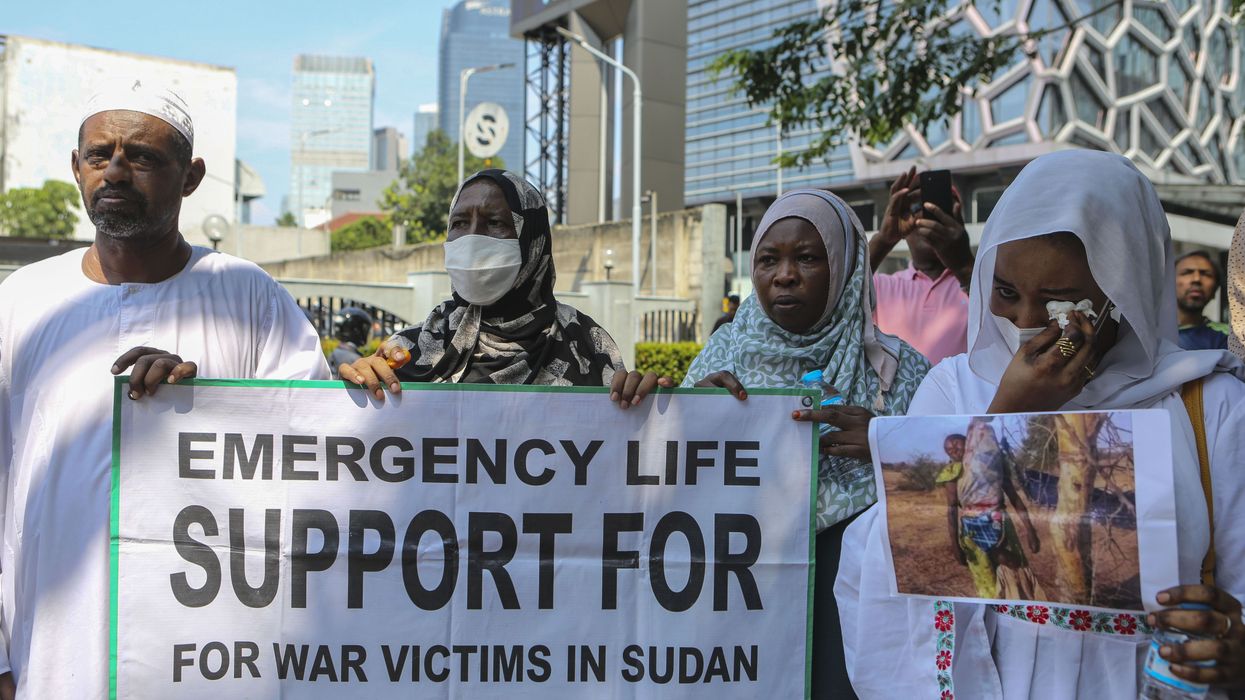
"The New World Disorder is here," said the head of the International Rescue Committee. "The question is whether to respond with vision, an opportunity for reinvention—or with further retreat," said the head of the International Rescue Committee.
The International Rescue Committee on Tuesday released its annual humanitarian crisis forecast, along with a stark warning that civilians in the countries on its watchlist "are on the front lines of a disintegrating international order and global action is needed to reverse course."
Sudan, Palestine, and South Sudan topped IRC's Emergency Watchlist for 2026, followed by Ethiopia, Haiti, Myanmar, Democratic Republic of Congo (DRC), Mali, Burkina Faso, and Lebanon. Afghanistan, Cameroon, Chad, Colombia, Niger, Nigeria, Somalia, Syria, Ukraine, and Yemen also made the list.
People in some of those countries—including Sudan, Palestine, and Myanmar—are enduring genocidal violence and privation, while nearly all of the other nations on the list are experiencing war or other unrest. Some are also ravaged by climate-driven extreme weather, hunger, and other crises.
"This year’s watchlist identifies a dangerous divergence: surging crises and shrinking support," IRC said on Tuesday. "Home to just 12% of the global population, watchlist countries account for 89% of those in humanitarian need and are projected to host more than half of the world’s extreme poor by 2029."
IRC noted that "117 million people are forcibly displaced" and "nearly 40 million people are facing such severe hunger" in the watchlist countries.
"While crises grow, global humanitarian funding has shrunk by 50%," the group said. "What remains is a humanitarian system underfunded, undercut, and unprepared to meet unprecedented humanitarian crises in 2026."
The world has retreated from humanitarian aid—but violence, hunger and climate threats haven't slowed down. We must not forget about the people for whom crisis is a daily reality. This is our 2026 Emergency Watchlist: www.rescue.org/watchlist2026
[image or embed]
— International Rescue Committee (@rescue.org) December 16, 2025 at 6:28 AM
IRC continued:
This “New World Disorder” is replacing the post-WWII international system once grounded in rules and rights. Defined by intensifying geopolitical rivalries, shifting alliances, and transactional deal-making, this disorder is driving a cascade of crises and eroding global support for the world’s most vulnerable. Global cooperation is unraveling; together with major aid cuts, the [United Nations] Security Council has seen a surge in vetoes, stalling responses to atrocities in Sudan, Syria, and the occupied Palestinian territory. Conflict is increasingly used as a tool for power and profit. In Sudan, warring parties and their backers are profiting from the gold trade, deepening violence and devastating civilians. Meanwhile, impunity is enabled on a dangerous scale. 2025 is on track to be the deadliest year for humanitarians. Attacks on schools have risen nearly 50%, and in Gaza, hospitals, shelters, and essential infrastructure have been bombed or cut off from aid.
“What the IRC is seeing on the ground is not a tragic accident. The world is not simply failing to respond to crisis; actions and words are producing, prolonging, and rewarding it," IRC president and CEO David Miliband said Tuesday in a statement. "The scale of the crisis in Sudan, ranking first on this year’s watchlist for the third year in a row and now the largest humanitarian crisis ever recorded, is a signature of this disorder."
Fighting between the Sudanese Armed Forces and the Rapid Support Forces—a paramilitary militia born from the Janjaweed co-perpetrators of the first Darfur genocide—continues, with all warring parties, especially the RSF, committing war crimes and crimes against humanity, according to human rights groups. The conflict in Sudan has fueled one of the world’s most acute humanitarian catastrophes, with more than 12 million people displaced and famine confirmed in Darfur's largest refuge camp last year. More than 20 million people are facing acute hunger.
In order to respond more efficiently to global humanitarian crises, IRC recommends:
“This year’s watchlist is a testament to misery but also a warning: Without urgent action from those with power to make a difference, 2026 risks becoming the most dangerous year yet," Miliband said.
That urgent action won't be coming from the United States, where the Trump administration has dramatically slashed international humanitarian assistance despite warnings that such cuts would cause millions of deaths. One of many examples stands out for sheer crassness: As South Sudanese babies and others died of cholera following the closure of local health clinics, US officials celebrated successfully slashing aid budgets and services with congratulations and cake, according to a report published Monday by ProPublica.
"Civilians in watchlist countries are paying the price today. The IRC stands with them to deliver practical solutions that save lives and restore hope," said Miliband. "But the New World Disorder is here, and winds are picking up everywhere. Disorder begets disorder. The question is whether to respond with vision, an opportunity for reinvention—or with further retreat.”
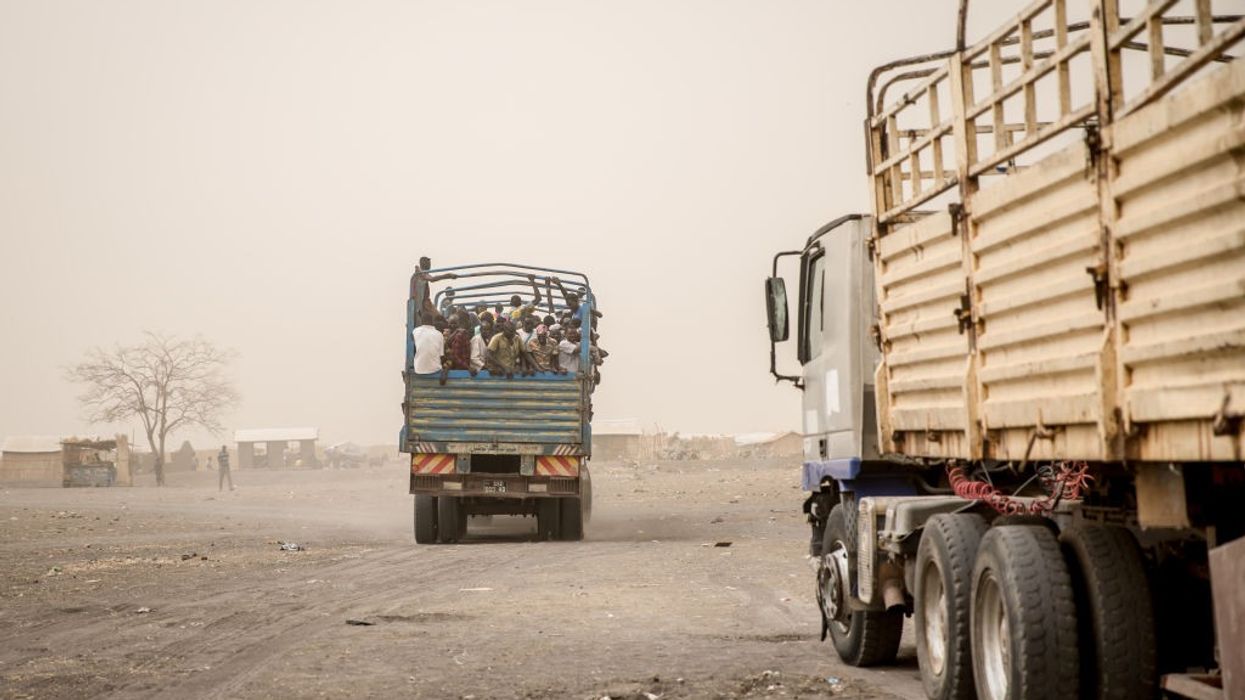
"If implemented, the plans would amount to transferring people from one war-ravaged land at risk of famine to another," the Associated Press said.
Israel has reportedly discussed pushing the Palestinian population of Gaza to another war zone in South Sudan.
The Associated Press reported Tuesday that Israeli leaders had been engaged in talks with the African nation and that an Israeli delegation would soon visit the country to look into the possibility of setting up "makeshift camps" for Palestinians to be herded into.
"It's unclear how far the talks have advanced, but if implemented, the plans would amount to transferring people from one war-ravaged land at risk of famine to another," the AP said.
Like Gaza, South Sudan is in the midst of a massive humanitarian crisis caused by an ongoing violence and instability. In June, Human Rights Watch reported that more than half of South Sudan's population, 7.7 million people, faced acute food insecurity. The nation is also home to one of the world's largest refugee crises, with more than 2 million people internally displaced.
On Wednesday, the South Sudanese foreign ministry said it "firmly refutes" the reports that it discussed the transfer of Palestinians with Israel, adding that they are "baseless and do not reflect the official position or policy."
However, six sources that spoke to the AP—including the founder of a U.S.-based lobbying firm and the leader of a South Sudanese civil society group, as well as four who maintained anonymity—said the government briefed them on the talks.
Sharren Haskel, Israel's deputy foreign minister, also arrived in South Sudan on Tuesday to hold a series of talks with the president and other government officials.
While the content of these talks is unclear for the moment, the Israeli government is quite open about its goal of seeking the permanent transfer of Palestinians from the Gaza Strip to other countries.
In addition to South Sudan, it has been reported that Israeli officials have also approached Sudan, Somalia, and the breakaway state of Somaliland, all of which have suffered from chronic war, poverty, and instability.
On Tuesday, Prime Minister Benjamin Netanyahu said in an interview with the Israeli TV station i24 that "the right thing to do, even according to the laws of war as I know them, is to allow the population to leave, and then you go in with all your might against the enemy who remains there."
Though Netanyahu has described this as "voluntary migration," Israeli officials have in the past indicated that their goal is to make conditions in Gaza so intolerable that its people see no choice but to leave.
Finance minister and war cabinet member Bezalel Smotrich, who has openly discussed the objective of forcing 2 million Palestinians out to make way for Israeli settlers, said in May: "Within a few months, we will be able to declare that we have won. Gaza will be totally destroyed."
Speaking of its people, he said: "They will be totally despairing, understanding that there is no hope and nothing to look for in Gaza, and will be looking for relocation to begin a new life in other places."
Contrary to Netanyahu's assertion, international bodies, governments, and human rights groups have denounced the so-called "voluntary migration" plan as a policy of forcible transfer that is illegal under international law.
"To impose inhumane conditions of life to push Palestinians out of Gaza would amount to the war crime of unlawful transfer or deportation," said Amnesty International in May.
Israeli human rights organizations, led by the group Gisha, explained in June in a letter to Israel's Defense Minister, Israel Katz, that there is no such thing as "voluntary migration" under the circumstances that the Israeli war campaign has imposed.
"Genuine 'consent' under these conditions simply does not exist," the groups said. "Therefore, the decision in question constitutes explicit planning for mass transfer of civilians and ethnic cleansing, while violating international law, amounting to war crimes and crimes against humanity."
The plan to permanently remove Palestinians from the Gaza Strip has received the backing of U.S. President Donald Trump, who has said he wants to turn the strip into the "Riviera of the Middle East."
The U.S. State Department currently advises travelers not to visit Sudan or Somaliland due to the risk of armed conflict, civil unrest, crime, terrorism, and kidnapping. However, the United States has reportedly been involved in talks pushing these countries to take in the Palestinians forced out by Israel.
After Israel announced its plans to fully "conquer" Gaza, U.N. official Miroslav Jenča said during an emergency Security Council session on Sunday that the occupation push is "yet another dangerous escalation of the conflict."
"If these plans are implemented," he said, "they will likely trigger another calamity in Gaza, reverberating across the region and causing further forced displacement, killings, and destruction—compounding the unbearable suffering of the population."
Justice Sonia Sotomayor warned in a dissent to a previous ruling on the case that the decision exposes "thousands to the risk of torture or death."
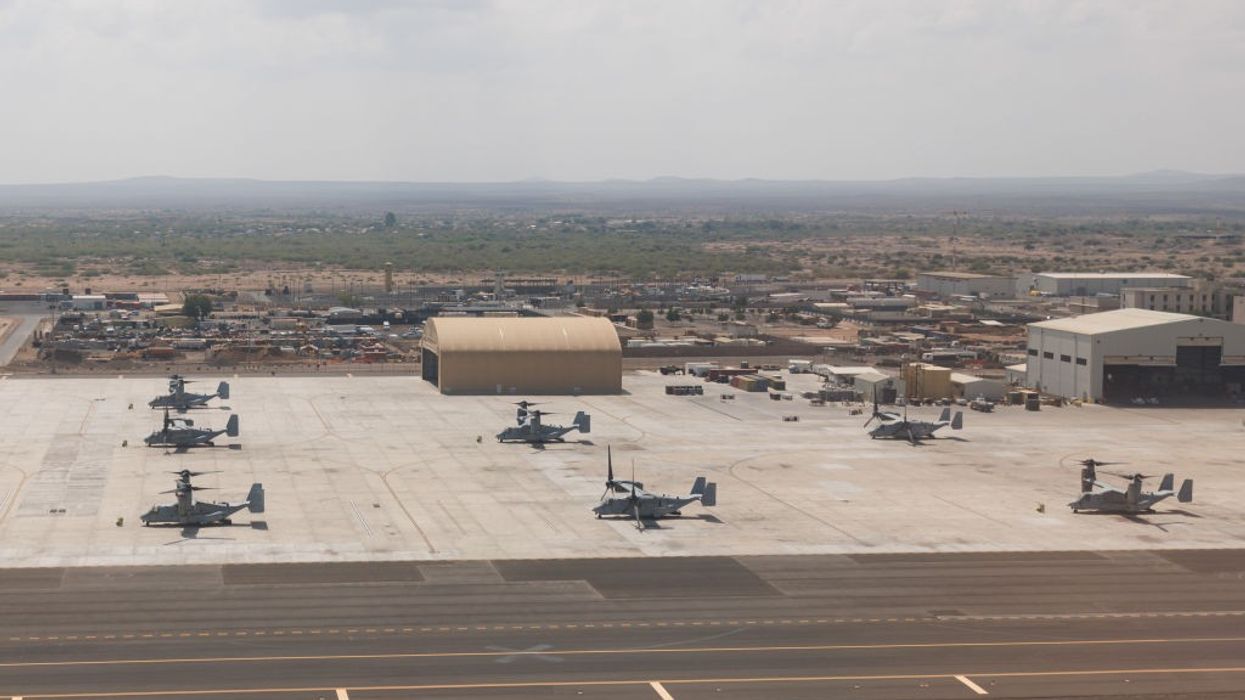
The Supreme Court on Thursday cleared the way for the Trump administration to send eight men deported from the United States and currently in limbo on a U.S. military base in Djibouti to South Sudan, where only one of the deportees is from, under a policy of fast-tracking deportations to third countries.
In an apparent 7-2 unsigned decision, with liberal Justices Sonia Sotomayor and Ketanji Brown Jackson dissenting, the high court lifted an order from U.S. District Judge Brian Murphy blocking the deportation of the men—who are originally from Cuba, Laos, Mexico, Myanmar, South Korea, South Sudan, and Vietnam—to war-torn South Sudan, one of the world's most dangerous countries.
NEW: The U.S. Supreme Court allows the Trump administration to send people subject to deportation to countries they have no connection with that are so dangerous the Trump administration advises Americans not to travel there. The case involves eight men the Trump regime wants to send to South Sudan.
[image or embed]
— Chris Geidner (@chrisgeidner.bsky.social) July 3, 2025 at 2:29 PM
The men, who have all been convicted of serious crimes in the United States, have been detained for six weeks at Camp Lemonnier, a U.S. base in the Horn of Africa nation of Djibouti. They have been nearly constantly shackled and are under constant guard in a shipping container. The container reportedly is equipped with air conditioning.
Neither the United States nor South Sudan has explained what will happen to the men upon their arrival in the East African nation.
Last month, the Supreme Court temporarily lifted Murphy's preliminary injunction, which had enabled migrants to file claims of persecution before their deportation to counties where they have no ties in a highly controversial process called third-country removal.
Dissenting in that ruling, Sotomayor wrote that the ruling exposes "thousands to the risk of torture or death."
The administration then accused Murphy of defying the high court's ruling by insisting that the eight men still could not be sent to South Sudan and asked the justices for the clarification that came with Thursday's decision.
"They're now subject to imminent deportation to war torn South Sudan, a place where they have no ties and where it is possible, if not probable, that they will be arrested and detained upon arrival," Trina Realmuto, an attorney for the men, told Politico Thursday. "This ruling is condoning lawlessness."
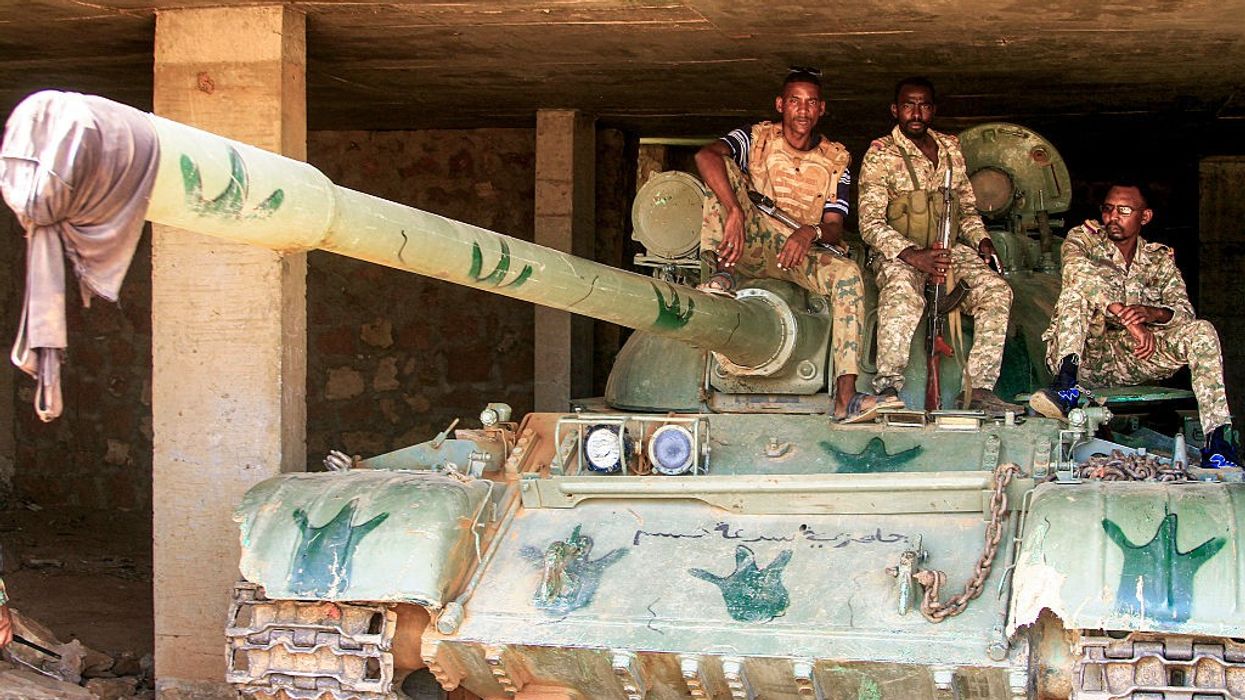
The world is watching. So are the people of Sudan. The question is whether the United States will choose complicity—or conscience. We must act now.
In a world deluged with crises—each vying for our limited attention—the catastrophe unfolding in Sudan has remained largely invisible to the American public. Yet, by almost any measure, it is among the most severe humanitarian emergencies of our time. Over 30 million people—two-thirds of Sudan’s population—now require humanitarian support. More than 12 million have been displaced, and famine threatens to claim countless lives. This is not a distant tragedy; it is a crisis in which American policy and the interests of American capitalists are deeply entangled.
Now, Congress is poised to vote on a set of resolutions that could finally interrupt the United States’ role in fueling this disaster. You can call your Senator and ask them to support S.J.Res.51, S.J.Res.52, S.J.Res.53, and S.J.Res.54—the Joint Resolutions of Disapproval by Senator Chris Murphy et. al. that would block more than $3.5 billion in proposed arms sales to the United Arab Emirates (UAE) and Qatar. The Congressional Switchboard is at 202-224-3121.
This legislation is likely to come up this week and that makes this a rare moment of real leverage for American activists and concerned citizens. The urgency is clear: unless Congress acts, the U.S. risks deepening its complicity in Sudan’s suffering.
At the epicenter of Sudan’s unraveling is the Rapid Support Forces (RSF), a paramilitary group whose origins trace back to the notorious Janjaweed militias involved in the Darfur genocide in the early 2000s. The RSF has been implicated in a series of systematic atrocities: targeted ethnic violence, mass killings, forced displacement, and widespread sexual violence. Investigations by the United Nations, Human Rights Watch, and Amnesty International have all pointed to the same grim conclusion: the RSF’s actions constitute war crimes, ethnic cleansing, and, in the assessment of the U.S. State Department, genocide.
The mechanics of how these atrocities are sustained have already come into focus. According to Amnesty International, recently manufactured Emirati armored personnel carriers are now in the hands of the RSF. Flight data and satellite imagery have revealed a pattern: cargo planes departing from the UAE, landing at remote airstrips in Chad, and then offloading weapons and equipment that would soon appear on the front lines in Sudan. A New York Times investigation concluded that the UAE was “expanding its covert campaign to back a winner in Sudan, funneling money, weapons and, now, powerful drones” to the RSF.
What makes this all the more alarming is that the UAE is one of America’s closest military partners—and a major recipient of U.S. arms. Despite repeated assurances to Washington that it would not arm Sudan’s belligerents, the UAE has continued these transfers, as confirmed by the Biden Administration in one of its last acts as well as by members of Congress.
There is, however, another angle to this story—an angle that speaks to the corrosion of U.S. foreign policy by incredibly narrow financial interests. President Donald Trump and his family have cultivated deep financial ties with both the UAE and Qatar. The UAE has invested $2 billion in a Trump family crypto venture; Qatar has bestowed a $400 million on that luxury aircraft everyone’s heard about, intended for the U.S. presidential fleet, in a gesture that blurs the line between diplomacy and personal favor. These transactions are not just unseemly; they are emblematic of this new era in which U.S. foreign policy is increasingly shaped by the private interests of a handful of oligarchs.
To call this “kleptocracy” is not hyperbole. The intertwining of arms sales, foreign influence, and personal enrichment undermines both U.S. standing and the interests of the average American. Each weapon sold, each deal brokered, risks making the United States more complicit in the suffering of Sudan’s civilians.
To call this “kleptocracy” is not hyperbole. The intertwining of arms sales, foreign influence, and personal enrichment undermines both U.S. standing and the interests of the average American.
The Sudan crisis is a reminder that America’s actions abroad are neither abstract nor inconsequential—and all the uniqueness of the Trump 2.0 administration hasn’t changed that. U.S. policies still reverberate in the lives of millions. As citizens, we have a responsibility to demand that our leaders act not out of expedience or self-interest, but out of a sense of justice and human dignity. With a congressional vote imminent, the window for meaningful action is open—but it is closing fast.
The world is watching. So are the people of Sudan. The question is whether the United States will choose complicity—or conscience. Please call your Senators today at 202-224-3121.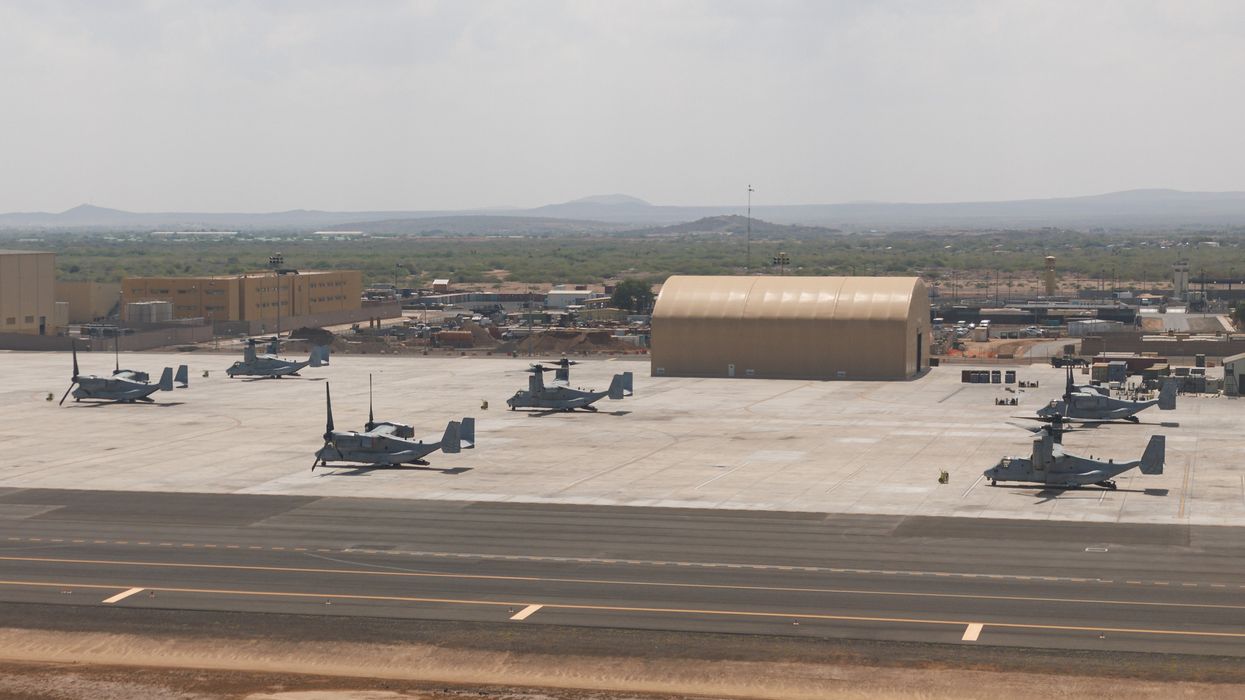
"This is a situation the government both created and can remedy if it so chooses," said a lawyer for the migrants.
The Trump administration could have sent eight migrants with deportation orders and the immigration agents who were escorting them to a facility in the U.S. after a federal judge recently barred officials from deporting them to war-torn South Sudan, where they could face persecution or torture.
Instead the administration sent them to U.S. Naval Base Camp Lemonnier in the East African country of Djibouti, where a court filing on Thursday said they face illness, the threat of rocket fire from nearby Yemen, temperatures that soar past 100°F daily, and rancid smoke from nearby burn pits where human waste and trash are incinerated.
Tricia McLaughlin, a spokesperson for the U.S. Department of Homeland Security, blamed U.S. District Judge Brian Murphy for "stranding" the 13 Immigration and Customs Enforcement (ICE) agents and eight detainees at the naval base, where they have been housed since late May in a metal shipping container converted into a conference room with just six bunk beds.
The administration has frequently attacked judges for issuing rulings that have interfered with President Donald Trump's ability to carry out his anti-immigration agenda.
But Aaron Reichlin-Melnick, senior fellow at the American Immigration Council, pointed to court transcripts that showed the Trump administration had requested the migrants and agents be sent to Camp Lemonnier.
"No one asked them to do and no court order forces them to do it," said Reichlin-Melnick Thursday.
In a court transcript, Deputy Assistant Attorney General Drew Ensign told Murphy that "bringing them back would be a much broader remedy than necessary" and suggested the detainees could have a "reasonable fear interview where they are" in Djibouti to determine if they had a credible fear of persecution or torture if they were deported. Murphy had instructed officials to arrange reasonable fear interviews when he ruled in May that they could not be sent to South Sudan.
"The judge did NOT require that anyone be 'stranded' anywhere," said Reichlin-Melnick. "In fact, it was the Trump administration that asked the judge for permission to hold the men in Djibouti! ICE could literally bring the men to any other U.S. base (or back to the U.S.) at any time!"
Murphy's ruling in May interrupted a deportation flight carrying the migrants—who have been convicted of crimes and are from Cuba, Laos, Mexico, Myanmar, South Sudan, and Vietnam—to South Sudan.
The judge said the flight violated his previous order from April 18, which prohibited the administration from sending immigrants to third countries without providing them a chance to request humanitarian protections. That ruling was underpinned by the Convention Against Torture, which bars governments from deporting people to countries where they could be face torture.
"The judge gave the government a choice as to how to remedy the government's violation of the court's order—either return them and comply with the order in the United States or comply with the order overseas," Trina Realmuto, a lawyer for the immigrants, told The Intercept. "The government opted to comply overseas after telling the court that they had the ability to do so. This is a situation the government both created and can remedy if it so chooses."
The court filing on Thursday by Mellissa Harper of the Office of Refugee Resettlement described how within 72 hours of arriving at the makeshift detention facility in Djibouti, the agents and migrants began to suffer from symptoms for bacterial respiratory infections, including "coughing, difficulty breathing, fever, and achy joints."
The filing explained that they are unable to get tested to determine what the illness is, and there is only a small supply of inhalers, Tylenol, eye drops, and nasal spray to treat the symptoms.
Based on what was described, Politico's Kyle Cheney asked: "Why is the Trump administration forcing them to stay there?"
"ICE's claims of difficulties here are ENTIRELY self-inflicted," said Reichlin-Melnick. "THEY asked the judge for permission to hold the men in Djibouti. The plaintiffs wanted the men brought back here. I have sympathy for the low-level officers stuck there, but it's ALL their bosses' fault."
The administration has asked the U.S. Supreme Court to stay Murphy's order requiring screenings for the migrants, claiming that ruling violated officials' authority to deport immigrants to third countries if their home countries won't take them back.
But in the case of at least one of the migrants, Jesus Munoz Gutierrez, the government of his home country of Mexico was not informed that he had been sent to Djibouti.
Mexican President Claudia Sheinbaum suggested last month that Gutierrez could be repatriated if U.S. followed protocols to send him back to Mexico.
Setareh Ghandehari, advocacy director for Detention Watch Network, told Newsweek that the administration's insistence on detaining the migrants in a shipping container at Camp Lemonniere is "the latest move in Trump's shocking expansion of third country deportations."
"By expelling people out of sight and out of mind to remote prisons and war-torn, unstable countries," said Ghandehari, "the Trump regime is attempting to normalize the offshoring of immigration detention and third country deportations as a new and expanded model of incarceration and deportation."
Ghandehari added that "the use of shipping containers to detain people is heinous and enraging—and coupled with the extreme heat, disease, and threats of rocket attacks in Djibouti, can be deadly."
"It was impossible for these people to have a meaningful opportunity to object to their transfer to South Sudan," the judge said.
At a court hearing on Wednesday, U.S. District Judge Brian Murphy said that the Trump administration "unquestionably" violated a court order he issued last month when it deported seven men to South Sudan earlier this week.
In April, Murphy ordered that before the government deports someone to a country other than their country of origin, that person must be given a "meaningful opportunity" to contest their removal on grounds they fear torture or death if deported.
Murphy, who was appointed by former President Joe Biden, said that the Trump administration had notified the seven men the day before they were to be sent to South Sudan, where the U.S. government advises against Americans traveling due to "crime, kidnapping, and armed conflict."
The seven immigrants are from Mexico, Cuba, Myanmar, Laos, and Vietnam, according the U.S. Department of Homeland Security (DHS). An eighth deportee is a citizen of South Sudan.
"It was impossible for these people to have a meaningful opportunity to object to their transfer to South Sudan," said Murphy, per Politico.
Lawyers for the deported men requested that Murphy order the plane returned to the U.S., which the judge did not immediately assent to. Murphy said he was considering how to "ensure that the men could be properly advised of their right to object to being turned over to South Sudan," Politico reported.
The rebuke from Murphy on Wednesday comes after lawyers for two of the immigrants accused the Trump administration in court on Tuesday of deporting their clients in violation of the previous court order. On Tuesday, Murphy ordered that those deported remain in U.S. custody, to ensure they could be returned if the court required it.
Also Tuesday, Sen. Richard Blumenthal (D-Conn.) said the judge in the case should consider holding Trump administration officials in contempt over the episode.
Murphy left that possibility open on Wednesday. According to Politico, he said he would consider whether the administration's actions were "criminally contemptuous" but would push off that determination.
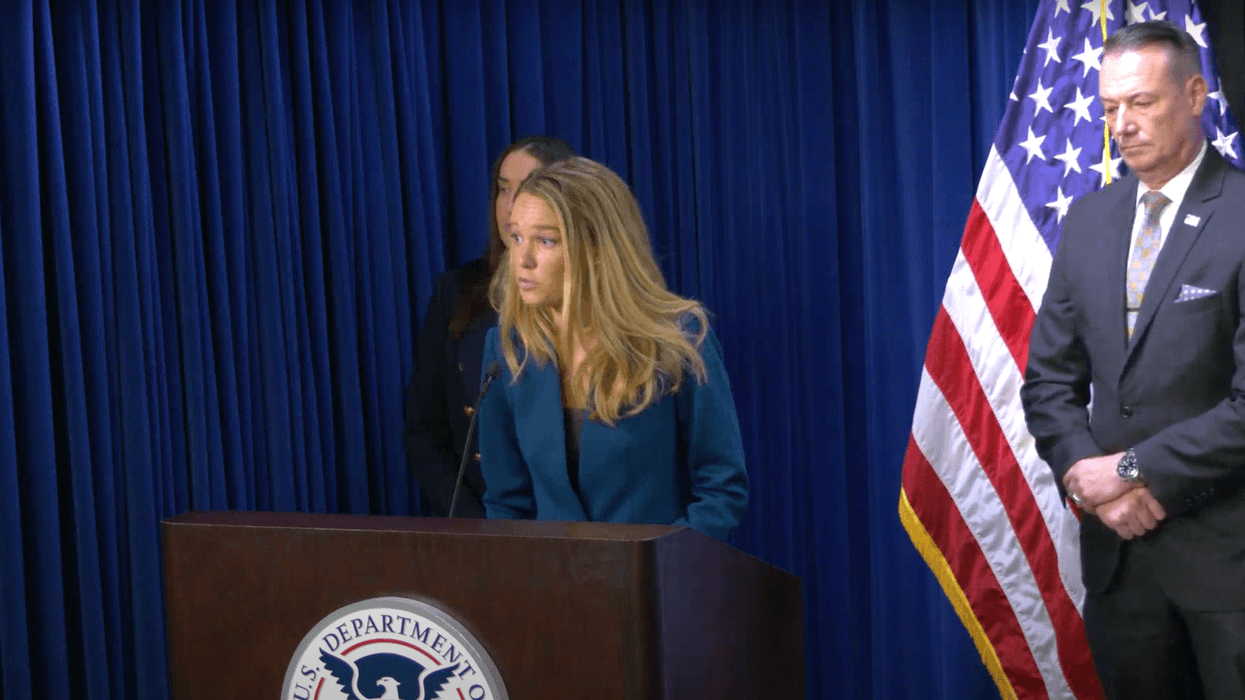
DHS spokesperson Tricia McLaughlin spoke at a press conference on Wednesday where she called the men who had been deported "barbaric monsters" and "convicted criminals," according to a statement posted online.
"A federal judge is wise to Trump's ploy of illegally deporting immigrants and then claiming there is nothing he can do to get them back," said the former executive director of Human Rights Watch.
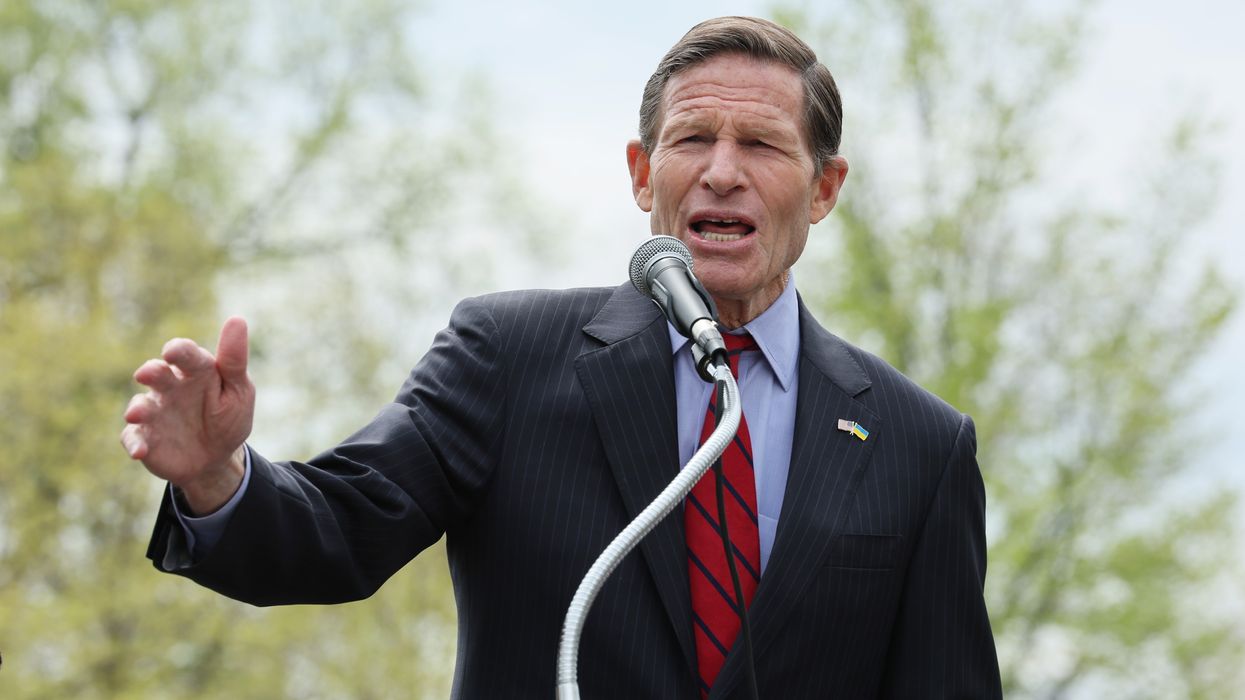
Democratic U.S. Sen. Richard Blumenthal of Connecticut on Tuesday urged a federal judge to consider holding U.S. officials in contempt of court following the Trump administration's alleged deportation of multiple immigrants from Southeast Asia to South Sudan, possibly in violation of an order handed down by that same judge earlier this spring.
On Tuesday, lawyers for the immigrants accused the Trump administration of deporting nationals from Myanmar and Vietnam to South Sudan in violation of a court order. In court filings, the lawyers also said they received "information" that there were likely at least 10 others also on the same plane to South Sudan.
In April, U.S. District Judge Brian Murphy of Massachusetts directed the Trump administration to give immigrants a chance to challenge their deportations to a third country. Murphy ruled that the Trump administration must give them 15 days' notice to raise concerns about danger they may face if deported.
"If those individuals were on a plane sent to South Sudan, it seems a violation of the court order. Judge Murphy ought to be really angry, his order has been violated, and he ought to consider a contempt of court motion, and no doubt the plaintiffs are considering it now," said Blumenthal on CNN on Tuesday evening.
"Violation of court orders ought to be treated with the utmost of sanctions, because otherwise the law is dead letter," Blumenthal continued.
Murphy hastily called a hearing on Tuesday evening and issued a ruling that the Trump administration must "maintain custody and control of class members currently being removed to South Sudan or to any other third country, to ensure the practical feasibility of return if the Court finds that such removals were unlawful," according to The Associated Press.
During the hearing, Murphy warned criminal sanctions could be invoked against those involved in the deportations who were aware of his order. "Based on what I have been told," he said according to The New York Times, "this seems like it may be contempt."
In addition to not being the country of origin of the individuals feared deported, South Sudan has faced continued instability and political violence between government forces and opposition factions.
Murphy has ordered U.S. officials back to court on Wednesday so they can provide more information, such as who exactly was removed and what opportunity they were given to raise concerns about dangers they may face upon deportation, according to the AP. Officials must also give information about the whereabouts of the migrants who have apparently already been deported.
In March, the Trump administration sent Venezuelan immigrants to a megaprison in El Salvdor after invoking a little-used wartime statute. As those deportations were taking place, a federal judge ordered that any planes carrying them either not take off or turn around, but the Trump administration did not turn the planes around.
A federal judge has ordered the U.S. government to facilitate the release of a Salvadoran man who was on one of the planes to El Salvador. The man, Kilmar Abrego Garcia, is still in El Salvador and the Trump administration has said that it is up to El Salvador whether to release him.
Commenting on reporting of the judge's order to keep the immigrants apparently sent to South Sudan in U.S. custody, human rights advocate and former executive director of Human Rights Watch Kenneth Roth wrote: "A federal judge is wise to Trump's ploy of illegally deporting immigrants and then claiming there is nothing he can do to get them back."

"South Sudan is about to blow up into potentially another country-wide civil war, putting civilians at risk. But yea let's force people to go back now," wrote one professor.
U.S. Secretary of State Marco Rubio on Saturday announced that the United States is revoking visas for all South Sudanese passport holders, "effective immediately"—sparking criticism from several observers, including those who pointed out that the country could soon tip into another civil war.
Rubio announced on X that the move, which includes restricting any "further issuance" of visas, comes in response to the South Sudanese government's failure to return "its repatriated citizens in a timely manner."
"This is wrongheaded cruelty," wrote Rebecca Hamilton, a professor at American University Washington College of Law and executive editor at the digital law and policy journal Just Security, on X on Saturday. "The vast majority of South Sudanese in this country (or, frankly inside South Sudan, right now) have no say in what their government does. They are here working, studying, building skills essential for their nascent country."
Mike Brand, an adjunct professor at the University of Connecticut and Georgetown University who focuses on human rights and atrocities prevention, wrote on Saturday: "South Sudan is about to blow up into potentially another country-wide civil war, putting civilians at risk. But yea let's force people to go back now."
South Sudan is the world's youngest country, having only declared independence from Sudan in 2011 following two lengthy civil wars.
The young nation was once again plunged into civil war in 2013 due to violence between warring factions backing President Salva Kiir and his deputy, Riek Machar. A peace deal was brokered in 2018, though the country has still not held a long-delayed presidential election and Kiir remains in power today, according to Time.
Fears of full-on civil war returned when, last month, Machar was arrested and his allies in government were also detained. Machar's opposition political party declared the country's peace deal effectively over, per Time.
Shortly after Rubio's announcement on Saturday, Deputy Secretary of State Christopher Landau wrote on X that the government of South Sudan had refused to accept a South Sudanese national who was "certified by their own embassy in Washington" and then repatriated. "Our efforts to engage diplomatically with the South Sudanese government have been rebuffed," Landau wrote.
On Monday, the government of South Sudan released a statement saying that the deportee who was not permitted entry is a citizen of the Democratic Republic of the Congo, not South Sudan. The government also said it has maintained consistent communication and cooperation with the U.S. government regarding "immigration and deportation matters."
In the early 2000s, thousands of "lost boys" stemming from a civil war in Sudan that began in the 1980s and eventually led to South Sudan's independence were resettled in the United States.
John Skiles Skinner, a software engineer based in California, reacted to Rubio's announcement by writing on Bluesky: "I taught a U.S. citizenship class to South Sudanese refugees in Nebraska, 2006-2007. Fleeing civil war, they worked arduous jobs at a meat packing plant. Many had no literacy in any language. But they studied hard for a citizenship exam which many native-born Americans would not be able to pass."
In 2011, the Obama administration granted South Sudan nationals in the United States "temporary protected status" (TPS)—a designation that shields foreign-born people from deportation because they cannot return home safely due to war, natural disasters, or other "extraordinary" circumstances. The Biden administration extended it, but the designation is set to expire early next month.
As of September 2024, the U.S. provides TPS protections to 155 people from South Sudan.
In a Monday post for Just Security, Hamilton of American University and a co-author wrote that "while there has been no public determination by the secretary of homeland security regarding an extension of TPS for South Sudanese, Rubio's announcement presumably means [U.S. Department of Homeland Security] Secretary Kristi Noem is planning to terminate their TPS."
Observers online also highlighted that Duke University star basketball player Khaman Maluach, whose family left South Sudan for Uganda when he was a child, could be impacted by the State Department's ruling.

As the humanitarian response continues, it is clear that sustained assistance will be needed to help the people of Aweil recover from this latest disaster.
The northern parts of South Sudan, particularly Aweil in Northern Bahr el Ghazal State, has been hit hard by relentless flooding, leaving a trail of destruction in its wake. The floods have had a particularly devastating impact on returnees, many of whom had recently resettled in Aweil after months of displacement due to the ongoing crisis in neighboring Sudan. These returnees, who had begun the slow process of rebuilding their lives, now find themselves displaced once more, their hopes for stability washed away with the floodwaters.
As the water levels rose, entire villages were submerged, and families were forced to flee their homes, taking only what they could carry. Makeshift camps have sprung up in higher areas that remain above water, but these temporary shelters are overcrowded, with inadequate access to clean water, food, and sanitation facilities. The conditions in these areas are dire, and diseases such as malaria and cholera may be easy to spread, exacerbated by stagnant floodwaters and a lack of medical supplies. Many children and elderly are falling ill, compounding the community’s sense of despair.
For the returnees, this disaster is particularly heartbreaking. Having already endured years of displacement and conflict, they had returned to Aweil in search of peace and the chance to rebuild their homes and livelihoods. Many had invested their savings into small farms, hoping to cultivate crops that would sustain them. Now, their fields are underwater, and the crops they were counting on for food and income have been destroyed. Families who had started to find their footing are once again plunged into uncertainty, unsure of where they will sleep or how they will feed their children in the days to come as they continually depend on fish from the flood waters.
For the returnees in particular, the flooding represents a tragic reversal of the fragile progress they had made since returning home. Their resilience and determination, however, remain a source of hope.
Beyond the direct impact on homes and farms, the flooding has also severely damaged infrastructure. Roads, which are critical for accessing essential services, have become impassable, isolating entire communities. Health centers, already under-resourced, are now cut off from those who need them most. Expectant mothers, children suffering from malnutrition, and the elderly are particularly vulnerable, as they can no longer reach health facilities for vital care. In some cases, patients have had to be transported by boat or carried on makeshift stretchers over long distances just to receive basic medical attention.
The road between Malualkon and the rural communities, which serves as the lifeline for delivering food, medical supplies, and other essential goods, is completely submerged in many areas. Vehicles attempting to navigate these roads are frequently stuck or washed away by the strong currents, making it impossible for humanitarian organizations to deliver aid to those in need. This has further compounded the crisis, as displaced families in remote areas are left without access to the relief supplies that could provide some measure of comfort.
The community’s resilience is being tested like never before. Local leaders have been appealing for assistance, but the scale of the disaster is overwhelming. In response, humanitarian organizations have ramped up efforts to provide emergency relief, setting up temporary shelters and delivering food aid. However, the needs far exceed the resources available. Many families remain without adequate shelter, exposed to the elements as they wait for aid to reach them. The long-term impacts of this flooding disaster are likely to be severe. With much of the farmland destroyed, food insecurity looms large over the region. Even as the rains begin to subside, the floodwaters are expected to take months to recede, delaying any attempts at recovery. As a result, displaced families will likely remain in temporary camps for an extended period, facing an uncertain future.
For the returnees in particular, the flooding represents a tragic reversal of the fragile progress they had made since returning home. Their resilience and determination, however, remain a source of hope. With the right support, they may yet find a way to rebuild once more, but the road to recovery will be long and challenging. As the humanitarian response continues, it is clear that sustained assistance will be needed to help the people of Aweil recover from this latest disaster, rebuild their lives, and prepare for the next challenge, as climate-related events like these floods become an ever-more frequent threat to their survival.
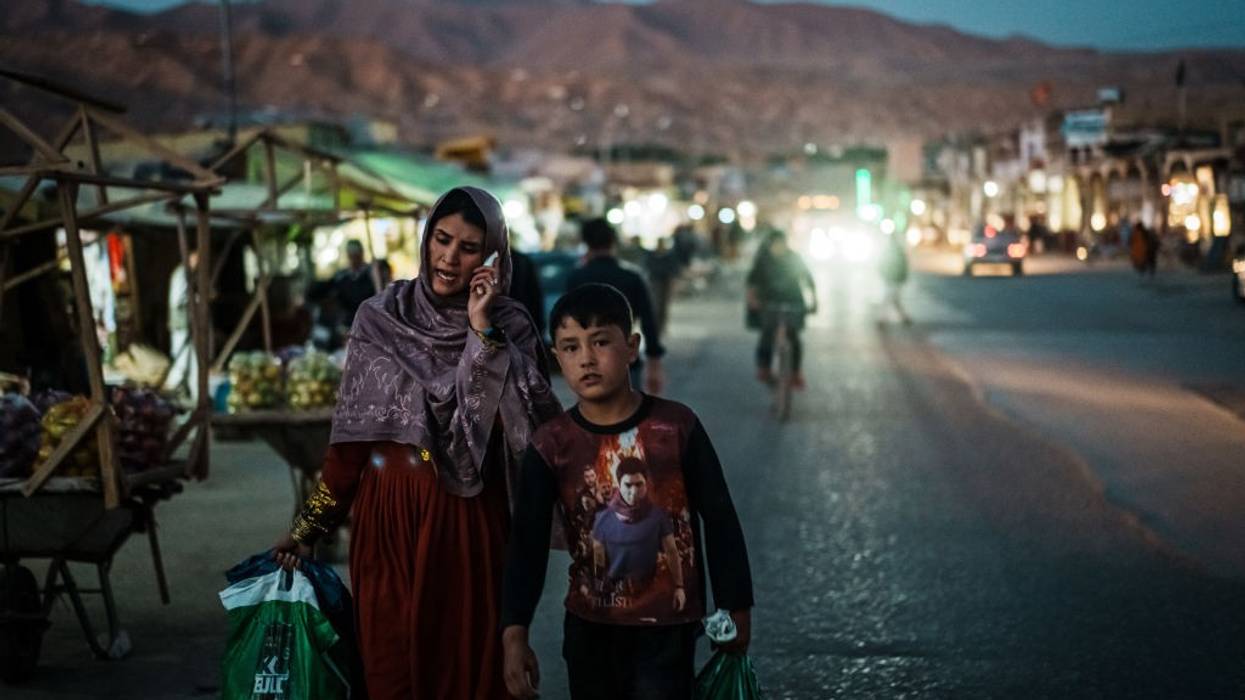
Ask a Sudanese or a Syrian or an Egyptian or an Afghan what it’s like to live under autocracy. Then ask marginalized Americans what it’s like to live on the outskirts of democracy.
Various versions of the aphorism “War is God’s way of teaching Americans geography” have been making the rounds ever since the rise of U.S. imperialism in the late 1800s. The quip (which, despite legend, appears not to be attributable to Mark Twain, Ambrose Bierce, or any other famous person) has proven all too accurate when the war in question directly involves American troops. When, however, non-U.S. combatants and civilians suffer and die from conflicts relatively unrelated to Washington’s “strategic interests,” our media outlets tend to avert their eyes, aid agencies get stingy, and Americans learn no geography whatsoever. Oh, and given this country’s power and position on this planet, millions suffer the consequences of that neglect.
Terror Days in Khartoum
Let’s start with Sudan. A civil war between the Sudanese Armed Forces and a paramilitary group called the Rapid Support Force (RSF) is now dragging into its seventh month with no end in sight. Since the conflict erupted, Washington has issued only a few token calls for the fighting there to end, while providing insufficient aid to desperate millions of Sudanese. The assistance that did go out has proven microscopic compared to the vast quantities of humanitarian, economic, and military aid our government has poured into similarly war-torn Ukraine.
In the first five months of brutal fighting in Sudan, 5,000 civilian deaths and injuries to at least 12,000 more were reported — and those were both considered significant underestimates. Meanwhile, more than a million people have fled that country, while a staggering 7.1 million have been displaced in their own land. According to the International Office of Migration, that represents “the highest [number] of any internally displaced population in the world, including Syria, Ukraine, and the Democratic Republic of Congo.” Human Rights Watch reports that “over 20 million people, 42% of Sudan’s population, face acute food insecurity and 6 million are just a step away from famine.”
Every house in their neighborhood, she’s heard, has been looted by combatants. In the process, her friends and neighbors say that they’ve experienced “terror days when their houses were being invaded or even re-invaded to see if there’s anything left.”
“When it starts to get dark outside,” she told us, “that’s scariest, because you never know who’s going to come in and attack.” If female household members are there, what grim fates are they likely to suffer? And she adds, “If you have males in the house, are they going to be abducted and what’s going to happen to them?”
We asked whether atrocities were being committed by both the Sudanese Army and the RSF? “Yeah, both sides,” she responded. “Listen, I’m not validating any side, but when you’re in war, you really don’t know who’s coming at you or who’s a threat to you. So, everyone is seen as a threat.” And that, she adds, leads the combatants to act violently toward the civilians who’ve stayed behind.
Food is especially scarce in Khartoum, because travel in and out of the city is so dangerous for the usual suppliers and, as Hadeel points out, “Most of the stores have been looted, but in certain areas, some bread and other food is available for a few hours per day per week. There’s no fixed schedule, though.” Worse yet, wherever there’s active fighting, electricity and water supplies are normally cut off. “Some people can have electricity for weeks, while others will not have it for weeks.” Some engineers have bravely remained in Khartoum trying to keep power and water supplies flowing, but it’s often a hopeless task.
“People are on such unstable ground,” Hadeel concludes. “They really don’t know when their next food supplies are going to come in or when they’re going to be able to refill their water.” They have to watch for opportunities to slip outside in relative safety to “find something to keep them and their neighbors going.”
And what exactly has been Washington’s response to this ongoing horror? Well, the State Department issued a toothless admonishment that the army and RSF “must comply with their obligations under international humanitarian law, including obligations related to the protection of civilians.” And that was about it, other than ineffective sanctions applied to the leader of the RSF. Meanwhile, international efforts to negotiate an end to the fighting have collapsed, and humanitarian aid efforts have been hopelessly bogged down. Anyway, who has time for Sudan when arming and backing the Ukrainians has the attention of everyone who matters in the United States?
“Severe, Extreme, or Catastrophic Conditions”
Mind you, that paucity of interest is anything but unique to the crisis in Sudan. For example, U.N. World Food Program (WFP) Director Cindy McCain recently told ABC’s This Week that there isn’t enough food-assistance money for desperate Afghanistan, filled with starving people, to “even get through October.” In addition, the WFP has had to cut food aid to other countries in desperate need, including Bangladesh, the Democratic Republic of Congo, Haiti, Jordan, Palestine, South Sudan, Somalia, and Syria. As for explaining that shortfall, McCain was blunt, blaming the rush of rich nations of the Global North to support Ukraine which, she says, “has sucked the oxygen out of the room.”
Typically, the U.N. Office for the Coordination of Humanitarian Affairs (OCHA) reports that its famine-prevention program for war-ravaged Yemen is now receiving just 30% of the funds it needs, putting millions of Yemenis at risk. OCHA points to the peril facing Fatima, a 60-year-old woman living in the village of Al-Juranah. The program supplies her family with wheat, peas, and oil, but delivery is sporadic, a reality about which Fatima is all too matter-of-fact. “We receive a sack of wheat,” she says, “and sometimes we get only half a sack. They also give us roasted peas and oil. If this support stops, we will starve to death.” And sadly enough, that support is now anything but guaranteed.
Two years after a ceasefire in that brutal civil war fed by Saudi Arabia (with U.S. support), a conflict that received only the scantiest media coverage in this country, more than half of Yemenis — 17 million people — are food insecure. U.N. forecasters predict that without massive intervention, a quarter of those people will experience “acute food insecurity” by year’s end, with three-quarters of them reaching “crisis levels of hunger.” Such massive intervention is decidedly not in the cards, however, and the continuing neglect is having horrific consequences. National Public Radio’s Fatma Tanis did, in fact, report on this from a Yemeni hospital in August:
“We head next to the intensive care unit for newborns, often born with complications because of malnutrition. As we enter, a nurse pulls a sheet over a baby who just died. The parents aren’t here. Often, families use all their resources to bring their child to the hospital but can’t afford to return again. So the hospital has to take care of burials too, without them.”
The people of Syria are similarly striving to recover from the civil war that erupted in 2011 and was finally put on hold with a 2020 ceasefire, but only after a full decade of ferocious warfare and terrible suffering. Like the Sudanese and Yemenis, they remain largely unnoticed and uncovered these days in the American media. In addition to extreme water shortages, a catastrophic 55% of Syrians are officially in the crisis phase of acute food insecurity. In late 2022, OCHA reported that “severe, extreme, or catastrophic conditions” were affecting 69% — yes, you read that right! — of the country’s population. Furthermore,
“Basic services and other critical infrastructure are on the brink of collapse… Over 58 percent of households interviewed reported accessing only between three to eight hours of electricity per day, while almost seven million people only had access to their primary water source between two and seven days per month in June.”
Is the world paying attention? In one respect, Syria is more fortunate than Sudan or Yemen, enjoying its very own annual conference of donor nations. At this June’s conference, hosted by the European Union, donors pledged an increase in total aid, but the amount still fell $800 million short of what the U.N. was seeking for that country. Worse yet, just before the conference kicked off, the World Food Program announced that it would cut food aid to almost half of Syria’s 5.5 million current recipients just when they’re most in need.
The Democratic Republic of Congo, another country in deep distress, finds itself in the global spotlight, but not for the suffering its people are experiencing. Its huge deposits of cobalt, copper, and other mineral elements essential to future renewable-energy economies have finally brought it some attention. However, the Global North, transfixed by those priceless minerals, has remained remarkably blind to the wave of human misery now sweeping the Congo.
Last month, Jan Egeland, Secretary General of the Norwegian Refugee Council, just back from a trip there, told Democracy Now, “It’s the worst hunger catastrophe on Earth. Nowhere else in the world is there more than 25 million people experiencing violence, hunger, disease, neglect. And nowhere in the world is there such a small international response to help, to aid, to end all of this suffering.”
As in Sudan, Syria, and Yemen, hunger and war have gone hand-in-hand in the Congo. Today, Egelend said, an almost unbelievable 150 or so armed groups vie for power in the cobalt-rich eastern part of the country. In the early 2000s, cobalt was valued for its role in mobile phones and laptops. The stakes are far higher now, with vastly larger quantities required to produce the lithium-ion batteries essential to the development of sprawling new power grids and a vast global fleet of electric vehicles.
Collateral damage radiating from the Congo’s ongoing violence includes a hunger crisis, an epidemic of sexual assault by combatants on tens of thousands of civilian women, and so much more. The U.N. sought $2.3 billion in humanitarian assistance for the Congo in 2023. It has, however, only received a measly one-third of that sum, enough to help just one of every 18 people now in desperate need.
On Democracy Now!, Egeland put his finger on the terrible calculations of global economics and diplomacy: “Congo is not ignored by those who want to extract the riches of that place. It is ignored by the rest of the world… As humanity, we’re really, really failing Congo now, because it’s not Ukraine, it’s not the Middle East.”
As a refugee from Sudan, Hadeel Mohamed worries every day about these kinds of terrible calculations being made in the North. As she puts it,
“This war has really opened our eyes to a lot of things. Although we saw the news of what’s happening in Yemen and Syria, and all these countries where wars erupted, we never really understood the depth of it. A worry of ours is that what’s happening to Syrian refugees is going to happen to Sudanese refugees… where your prospects are not going to mean anything… where you’re limited in your work transactions, you’re limited in your educational abilities.”
Because organizations like the U.N. and the International Red Cross were activated “quite late” in Sudan, she points out, some who fled the country, especially youth, “started forming groups to help people cross borders to get out, to find jobs, and to raise funds for food and water aid for those still in Sudan.” Hadeel herself is involved in such efforts. “But progress is a bit slow, because we’re still trying to rebuild our own lives in parallel.”
“If the war is not contained in Khartoum,” she adds, “the chances of it spreading are very high and we’ve seen a lot of spreading recently, whether it’s in Port Sudan or Madani or surrounding cities.” Violence has been raging for months in the Darfur region of western Sudan as well. The conflict could also be significantly prolonged by the desire of both sides to control northeastern Sudan’s vast gold deposits, which play a role analogous to that of cobalt in the Congo.
With no relief in sight, says Hadeel, the people of Khartoum, understand that lacking true humanitarian aid, “you really come back to more of community-based aid. With our limited resources, with our limited abilities, we still find people rising up to take care of each other.” Nevertheless, for refugees, “there are only two possible outcomes here: either you go back and fight for your country and potentially die or you go on living and establishing yourself outside of Sudan.”
Meanwhile, on the Outskirts of Democracy…
Tyranny, civil war, systemic breakdown — it can’t happen here, right? Or can it? We privileged folk in the United States may still think we live in a democracy, but so many of us don’t. In truth, the 140 million poor and low-wage folks, Black, Latino, Asian, Pacific Islander, and Indigenous, along with about one-third of White people, live on the outskirts of our “democracy.” Like the people of Sudan, Syria, and Yemen, they dream of being in a country where there’s equality and justice, and where democracy, while not complete, is at least not dying.
The United States never was, and by the looks of it, now has little chance of becoming a truly pluralistic, multiracial democratic system. If we were, we’d be spending every free hour raising hell to make sure the possibility of democracy doesn’t die in next year’s election. The media are replete with dystopian scenarios of its end and the rise of Trumpistan. We’re scared shirtless about that, too, and it’s a gut punch to realize that, if we had a truly functioning democracy, there’d be no way it could be toppled by a single guy like Donald Trump.
Ask a Sudanese or a Syrian or an Egyptian or an Afghan what it’s like to live under autocracy. Then ask marginalized Americans what it’s like to live on the outskirts of democracy. For the latter, democracy is like Sudan’s gold and the Congo’s cobalt. There may be a lot of it, but very few get any.