

SUBSCRIBE TO OUR FREE NEWSLETTER
Daily news & progressive opinion—funded by the people, not the corporations—delivered straight to your inbox.
5
#000000
#FFFFFF
To donate by check, phone, or other method, see our More Ways to Give page.
Daily news & progressive opinion—funded by the people, not the corporations—delivered straight to your inbox.
Courtney Williams, Resist AIM
(609) 468-7080
resistAIM@gmail.com
Today, hundreds of people stood together to protect the community from the harmful impacts of Spectra's AIM Pipeline, which if completed will carry high-pressure methane gas through residential communities and within 105 feet of critical Indian Point Nuclear Power Plant safety structures. Neighbors, elected officials including Peekskill Mayor Frank Catalina and Councilwoman Kathy Talbot, families, environmental advocates, and concerned New Yorkers marched from Blue Mountain Reservation to a metering and regulating station where Spectra Energy is currently drilling under Route 9; they peacefully shut down construction activities by standing together and preventing Spectra vehicles from entering or leaving the site. Police arrested 21 people.
"We are stopping the Spectra AIM pipeline construction today, to make everyone aware of our environmental and safety concerns about this project, and to show that our voices and opinions matter," said Tina Volz-Bongar, local Peekskill resident who rallied today against the pipeline. "Our community's interests must take priority over the financial gain of fossil fuel companies. Peekskill is an environmental justice city, and nowhere has Spectra or the Federal Energy Regulatory Commission properly addressed the environmental impacts of the pipeline."
This action comes after years of residents and grassroots groups actively engaging in the regulatory process, only to be ignored by FERC. The City of Boston and several grassroots groups have filed a lawsuit in Federal Court challenging the Federal Energy Regulatory Commission (FERC) approval of the project. In February, Governor Andrew Cuomo wrote to FERC asking for an immediate halt to construction while New York State conducted an independent risk assessment of siting the massive, high-pressure pipeline next to Indian Point Nuclear Power Plant. FERC denied the Governor's request, and claimed that a risk assessment by the Nuclear Regulatory Commission (NRC) showed that the plant was safe. That risk assessment was the topic of a line of questioning by Congresswoman Nita Lowey at a congressional subcommittee meeting where she presented evidence that the assessment was faulty. There is now an internal investigation happening at the NRC regarding the approval. Despite the legal challenges and concerns of numerous high-ranking elected officials, construction has continued on the pipeline for months. Just yesterday, May 20th, Senators Charles Schumer and Kirsten Gillibrand called for an immediate halt to construction. Spectra's Director of Stakeholder Outreach, Marylee Hanley, responded that "Algonquin Gas Transmission resumed construction on the Algonquin Incremental Market (AIM) project in April and will continue with its construction."
The AIM pipeline poses risks at the local, state, and global levels. At the local level, it poses a serious risk to public health from air pollution, and because of its proximity to Indian Point nuclear plant, a rupture could trigger a nuclear accident. Just three weeks ago, a 24.5-foot section of Spectra's "Texas Eastern" 30-inch gas pipeline exploded in Salem Township, PA, blowing open a 12-foot-deep, 1500-square-foot hole; it scorched 40 acres and critically injured a nearby resident. At the global level, the AIM Pipeline will also worsen climate change as it will involve transporting and releasing methane, a greenhouse gas 86 times more potent than carbon dioxide over a 20-year period. Furthermore, the pipeline is unnecessary - while Spectra Energy claims that the project will solve a supply shortage in New England, Massachusetts Attorney General Maura Healey found through a study conducted by her office that Massachusetts could meet all of its reliability needs through increased efficiency and demand response technology.
Now that Governor Andrew Cuomo, New York Senator Charles Schumer, and New York Senator Kirsten Gillibrand have all called for an immediate halt to construction activities the pressure is on FERC to respond to the will of the people and their elected officials. On Monday, concerned New Yorkers will gather at Schumer's Manhattan office and call on him to build broad Senate opposition, especially from Senators representing other states along the pipeline route, and to continue to pressure FERC to halt construction of the dangerous AIM Pipeline.
Online: www.resistaim.com
On Facebook: www.facebook.com/resistaim
On Twitter: https://twitter.com/ResistAIM
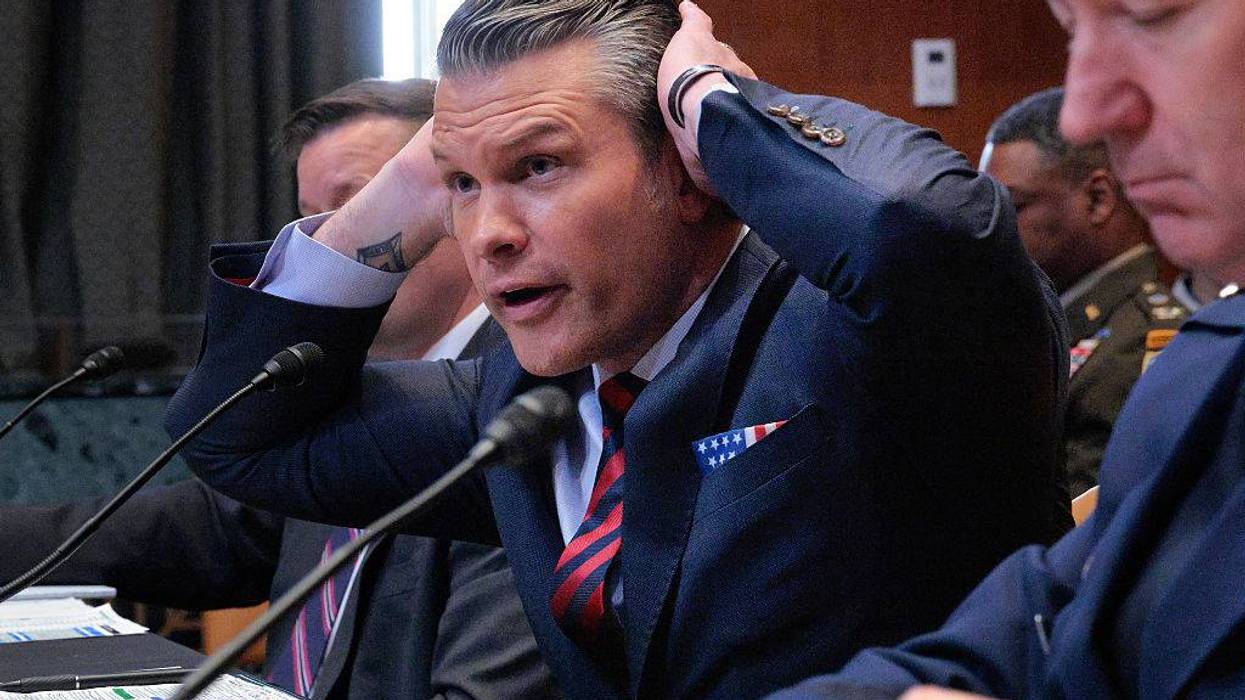
"What we're seeing is the public experience how more spending does not actually keep them safe," said a researcher at Brown University's Costs of War Project.
US Defense Secretary Pete Hegseth on Thursday released yet another ad pitching President Donald Trump's proposed $1.5 trillion Pentagon budget, as new polling showed major skepticism over the idea.
In his latest pitch for the record-breaking defense budget, the former Fox News host insists that "America is not in decline," even though the US has been unable to compel Iran to reopen the Strait of Hormuz despite having spent nearly $1 trillion on defense in 2025.
"We remain the strongest military power on Earth," Hegseth continued. "But that power requires renewal. And with global threats that are constantly evolving, it's time to make a $1.5 trillion investment."
The $1.5 trillion investment is a GENERATIONAL DOWN PAYMENT on America’s national defense.
This investment guarantees the United States maintains overwhelming strength and unmatched deterrence against any adversary for generations to come. pic.twitter.com/2zOSlZkzNr
— Secretary of War Pete Hegseth (@SecWar) May 14, 2026
A $1.5 trillion military budget would be over 50% more than the 2025 US defense budget and more than four times the money spent on defense by China, the world’s second-biggest defense spender.
Among other things, Hegseth said that the budget would invest $18 billion into Trump's proposed "Golden Dome" missile defense shield, which the Congressional Budget Office on Tuesday estimated would cost $1.2 trillion to create, deploy, and operate over the first 20 years of its existence.
Hegseth also said that the Pentagon would be increasing its investment in artificial intelligence by "800%," although it's not at the moment clear how well AI helps militaries effectively fight wars.
The defense secretary concluded his video by insisting that "we are expanding our strength, we are restoring our deterrence, and we are putting America first."
USA Today reported on Thursday that a new poll conducted by ReThink Media and the Costs of War Project at Brown University finds that nearly 60% of Americans think the proposed Trump Pentagon budget is too large, including 40% who say $1.5 trillion is "much too high" to spend on defense.
Breaking the figures down by party, 87% of Democrats said the defense budget was too high, along with 54% of independents, and even 30% of Republicans.
Jennifer Greenburg, a researcher with Brown's Costs of War Project, told USA Today that Americans were broadly skeptical that plunging more taxpayer money into the Pentagon is really necessary given that the US already doles out more for defense than the next four biggest spenders—China, Russia, Germany, and India—combined.
"In real time, I think what we're seeing," said Greenberg, "is the public experience how more spending does not actually keep them safe."
In a column published by The New York Times on Wednesday, longtime national security reporter Noah Shachtman argued that Hegseth's $1.5 trillion proposal was "less like a budget and more like a trip to an endless casino buffet" in which the Pentagon spends money in "gut-busting proportions."
Shachtman also noted that the proposed $1.5 trillion defense budget comes at a time when the Trump administration has wrecked traditional oversight mechanisms, thus making waste and fraud far more likely at a Pentagon that's never passed an audit.
"One of their early actions was to fire and replace the Pentagon’s inspector general, whose office looks into claims of fraud and abuse in military contracting," Shachtman explained. "The independent office that tests whether our weapons actually work has been gutted."
Ben Freeman, director of the Democratizing Foreign Policy program at the Quincy Institute for Responsible Statecraft, argued in an analysis published on Tuesday that Hegseth's budget pitch at congressional hearings this week was particularly baffling because there is really no imperative behind it on par with the Cold War or the post-9/11 defense buildup.
"Despite presenting no strategic necessity for the largest year-over-year Pentagon spending increase since World War II," Freeman wrote, "Hegseth repeatedly claimed the $1.5 trillion Pentagon budget was a sound financial decision, arguing in the Senate hearing that 'at every level we have made it a fiscally responsible budget.' Yet, the fact is that the entirety of this proposed increase in Pentagon spending would be deficit financed, effectively going on Uncle Sam’s credit card."
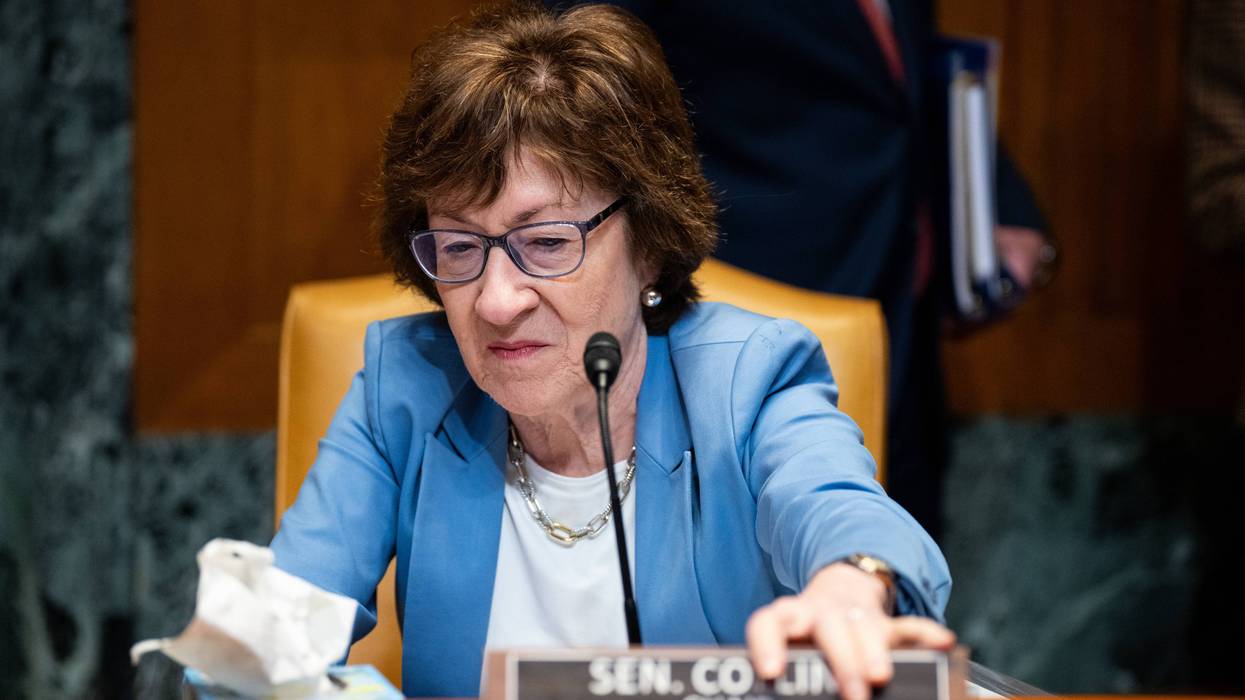
"Susan Collins cares far more about protecting bank executives’ millions than protecting the rest of us from BS overdraft fees," said Platner's campaign manager.
Graham Platner's campaign is accusing Sen. Susan Collins of siding with banking interests after she joined Senate Republicans in blocking a Democratic measure to protect consumers from unexpected overdraft fees.
On Wednesday, the GOP voted largely along party lines against a set of Democratic resolutions aiming to restore Consumer Financial Protection Bureau (CFPB) policies killed by the Trump administration.
In what its acting director, Russell Vought, has described as an effort to effectively dismantle the bureau, which has been credited with delivering more than $21 billion in consumer relief since its creation, he has rescinded 67 policies that protected Americans from junk fees, medical debt, lending discrimination, and other financial abuses.
One resolution voted down Wednesday would have restored a scrapped CFPB guidance against debt collectors hounding consumers over false or inflated medical debts. Another would have reaffirmed that the bureau can scrutinize financial companies for predatory credit practices aimed at military families.
These Democratic resolutions were not expected to pass in a Republican-controlled Senate, but were instead meant to force Republicans to put themselves on the record as standing against consumer interests.
As President Donald Trump takes a beating from voters on the economy, the votes will serve as ammunition as Democrats run with the message that the GOP has "abandoned consumers and is making life more expensive for them," as the CFPB's architect, Sen. Elizabeth Warren (D-Mass), said on Wednesday.
Platner is already deploying that ammunition in one of November's marquee races, hammering Collins (R-Maine) for voting with the GOP against restoring a guidance enacted by the Biden administration that required banks to obtain customers' consent before charging overdraft fees for ATM and one-time debit card transactions.
"Last night, Susan Collins voted once again to make it easier for big banks to hit Maine families with predatory overdraft fees," his campaign said in an email on Thursday. "Her vote to block even a debate on restoring basic consumer protections was just the latest reminder of where Collins' real loyalties lie."
"There is no legitimate policy rationale for voting against basic consumer protections on overdraft fees,” said Platner's campaign manager, Ben Chin. “But Susan Collins cares far more about protecting bank executives’ millions than protecting the rest of us from BS overdraft fees. This vote is yet another example of this deeply unfortunate reality.”
According to data from OpenSecrets, Collins has received nearly $1.8 million this cycle in contributions from the financial sector, including more than $570,000 from private equity and investment firms, which the Platner campaign said were "among the most predatory actors in the American economy."
She's also received more than $44,000 from commercial banks and holding companies that have a particular interest in her stance on overdraft fees.
The Pine Tree Results PAC, which has thrown about $12.7 million behind Collins, likewise got nearly a third of its funding from figures in the financial sector, particularly in private equity and hedge funds with a broader interest in neutering the CFPB.

Peasants' unions and other groups are protesting a law that they say would allow corporate control of small farmers' land, as well as fuel shortages and a low minimum wage.
An economic crisis and the repeal of a crucial gas subsidy, fuel shortages, and a law that opponents say will allow the encroachment of corporate interests on Indigenous and peasant lands are among the central concerns of thousands of miners and other workers who have joined a march from Bolivia's northern Amazon territories to La Paz, with a major miners union in the capital joining the protest on Wednesday.
The Federation of Mining Cooperatives of La Paz and an influential peasant union met land workers and Indigenous representatives this week as they arrived in the capital after having marched 1,100 kilometers (683 miles) "for over 20 days from the tropics into freezing high-altitude terrain, many wearing nothing more substantial on their feet than plastic sandals," as Olivia Arigho-Stiles reported at Jacobin.
At least 50 marchers required medical treatment last week for exhaustion, dehydration, and other ailments, but the unions are showing no sign of ending the general strike that was begun by Bolivian Workers’ Central (COB), with the mass mobilization also including at least 70 road blockades around the country, according to the Bolivia Highway Association.
TeleSUR reported that the entry of the miners union signified "a substantial increase in pressure" on right-wing President Rodrigo Paz, whose resignation some workers' organizations are calling for.
The Federation of Mining Cooperatives joined the ongoing marches and protests after Paz failed to attend a scheduled dialogue. Miners have been alarmed by the scarcity of fuel, "a dire shortage of essential explosive material, and significant delays in the liberation of new areas designated for mining exploitation," reported TeleSUR.
The broader protests began in response to stagnant, low wages as well as Law 1720, which the government has claimed will benefit small-scale farmers by allowing them to obtain mortgages after converting their smallholdings into "medium-size" businesses.
But Roger Adan Chambi, an Aymara lawyer and specialist in Indigenous land law, told Jacobin that the measure was passed "without consulting the sectors it was supposed to benefit (peasants and small producers), jeopardizing legal security and constitutional guarantees regarding land ownership."
“Far from being an opportunity for small producers to access credit, this law weakens the property rights of peasants and Indigenous communities, especially those resisting on the agricultural frontier,” Chambi said. “Structural insecurity and the lack of basic services will, in the future, force them to mortgage or sell their plots, facilitating dispossession and the transfer of land to corporations.”
Oscar Cardoza, a peasant union leader and a representative of the marchers, declared at a public gathering in La Paz this week: “Our life is collective, not individual. The land must be respected; it’s not for sale.”
Al Jazeera reported that the end of a fuel subsidy, which was cut after Paz took office last year during what he called an "economic, financial, energy, and social emergency," also pushed COB to issue the call for a general strike.
The subsidy had been crucial for working Bolivians, and the cut has made quality fuel increasingly inaccessible.
"Starting today, a general, indefinite, and active strike is declared, until the government understands the people’s demands,” COB secretary-general Mario Argollo told a group of 1,000 supporters on May 1.
The union is also calling for a 20% increase to the nation’s minimum wage, which currently sits at 3,300 bolivianos ($477.71) per month.