SUBSCRIBE TO OUR FREE NEWSLETTER
Daily news & progressive opinion—funded by the people, not the corporations—delivered straight to your inbox.
5
#000000
#FFFFFF
To donate by check, phone, or other method, see our More Ways to Give page.
Daily news & progressive opinion—funded by the people, not the corporations—delivered straight to your inbox.
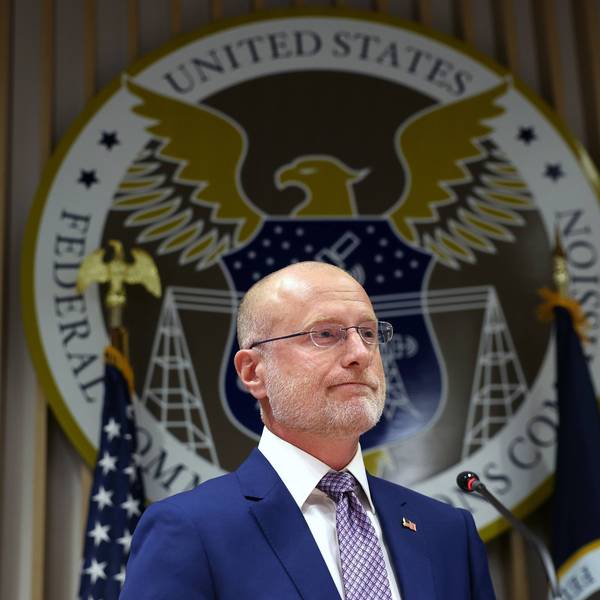
The Federal Communications Commission received so many comments on net neutrality Tuesday that its site crashed, making it necessary to extend the public comment period until midnight on Friday.
Open Internet advocates were not surprised that the FCC's controversial proposal, which would allow Internet service providers to create so-called "fast lanes" for companies that can afford the extra fees, garnered so much feedback. And grassroots organizations believe the unprecedented public response--more than 780,000 comments filed as of Tuesday afternoon--bolsters their cause.
"In close to a decade of fighting for the open Internet, I've never seen more awareness and enthusiasm about this issue," said Free Press president and CEO Craig Aaron in a statement. "Millions of Internet users have flooded the agency with support for real net neutrality. And almost no one outside FCC Chairman Tom Wheeler's office is advocating for his pay-to-play proposal."
"Wheeler claims he supports the open Internet, but the rules he's proposing would allow rampant discrimination and fast lanes for the fortunate few. That's totally unacceptable, and it's why so many everyday Internet users are so upset. The best and only path forward for Wheeler is to reclassify Internet providers as common carriers," Aaron stated.
In response to the website malfunction, more than a dozen advocacy groups and Internet companies including the ACLU, Common Cause, the Electronic Frontier Foundation, Mozilla, and reddit, hand-delivered more than 1,000 comments to FCC headquarters Tuesday afternoon.
Also on Tuesday, 13 U.S. senators sent a letter to the FCC that read, in part:
At issue today is how the FCC should use its authority to keep the Internet open for business. We remain concerned that the Commission's recent notice of proposed rulemaking suggests approaches that could undermine the openness of the Internet. Because the item tentatively concludes that Internet service providers would be allowed to offer faster delivery times for websites, applications or services that pay for it, the Commission's proposal could fundamentally alter the Internet as we know it.
File comments here or email them to openinternet@fcc.gov.
_____________________
This country and this world are at a monumental crossroads. US voters have an opportunity to beat back the forces of fascism and confront the billionaires who are rigging the economy, our media system, and our democracy, making it increasingly impossible for ordinary people to get by. We’re not just talking about the election. We’re talking about what must be done once these fascist elements are vanquished from power. We need a bolder set of solutions than what either major party has so far been willing to offer and a working-class movement ready to fight like hell for it. Trump didn't emerge from nowhere. The conditions that fueled MAGA authoritarianism were created by decades of radical neoliberal economic policies and a corrupt political system dominated by corporate interests. They slashed taxes on the super-rich, promising that the benefits would trickle down. They said giveaways to the corporate titans would make life more affordable for the rest of us. It was all bullshit. And when a bitter, betrayed populace searches for someone to blame, right-wing demagogues have little trouble finding scapegoats. People know when they're being lied to, but you won't hear any of this from the corporate media. Only independent journalism—powered and funded by people who believe in building a better world—can deliver truly trustworthy daily news. If you share our vision, please contribute whatever you can to sustain our work. |
The Federal Communications Commission received so many comments on net neutrality Tuesday that its site crashed, making it necessary to extend the public comment period until midnight on Friday.
Open Internet advocates were not surprised that the FCC's controversial proposal, which would allow Internet service providers to create so-called "fast lanes" for companies that can afford the extra fees, garnered so much feedback. And grassroots organizations believe the unprecedented public response--more than 780,000 comments filed as of Tuesday afternoon--bolsters their cause.
"In close to a decade of fighting for the open Internet, I've never seen more awareness and enthusiasm about this issue," said Free Press president and CEO Craig Aaron in a statement. "Millions of Internet users have flooded the agency with support for real net neutrality. And almost no one outside FCC Chairman Tom Wheeler's office is advocating for his pay-to-play proposal."
"Wheeler claims he supports the open Internet, but the rules he's proposing would allow rampant discrimination and fast lanes for the fortunate few. That's totally unacceptable, and it's why so many everyday Internet users are so upset. The best and only path forward for Wheeler is to reclassify Internet providers as common carriers," Aaron stated.
In response to the website malfunction, more than a dozen advocacy groups and Internet companies including the ACLU, Common Cause, the Electronic Frontier Foundation, Mozilla, and reddit, hand-delivered more than 1,000 comments to FCC headquarters Tuesday afternoon.
Also on Tuesday, 13 U.S. senators sent a letter to the FCC that read, in part:
At issue today is how the FCC should use its authority to keep the Internet open for business. We remain concerned that the Commission's recent notice of proposed rulemaking suggests approaches that could undermine the openness of the Internet. Because the item tentatively concludes that Internet service providers would be allowed to offer faster delivery times for websites, applications or services that pay for it, the Commission's proposal could fundamentally alter the Internet as we know it.
File comments here or email them to openinternet@fcc.gov.
_____________________