SUBSCRIBE TO OUR FREE NEWSLETTER
Daily news & progressive opinion—funded by the people, not the corporations—delivered straight to your inbox.
5
#000000
#FFFFFF
To donate by check, phone, or other method, see our More Ways to Give page.
What does a space for free speech look and feel and sound like?"
This is the question that artists, performers, and architects are taking on in an ongoing design competition and exhibition, organized by Theatrum Mundi and the American Institute of Architects--New York, in which participants "propose architectural or performative designs (temporary or permanent) that transform spaces in New York City into places for public 'demonstration'" and free speech.
This concept, while not new in a city with a vibrant history of protest and organizing, has unearthed a trove of proposals that are sure to add to New York's struggle over what constitutes free speech and who gets to participate.
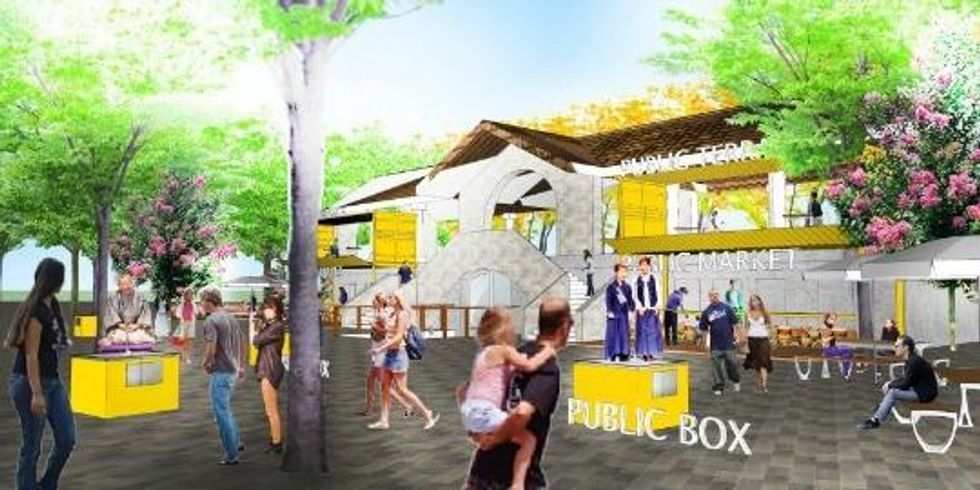
In one proposal, participants plan to design a "public terrace" for recent immigrants, located in Columbus Park, which has historically been a gathering place for new arrivals to the country. The design would include a "History Box," which designers Gentaro Matsubara, Shingo Sekiya, and Jeon Young-mi describe as a "communication tool to learn about the history of the site about immigrants that used to live and work near around Columbus Park."
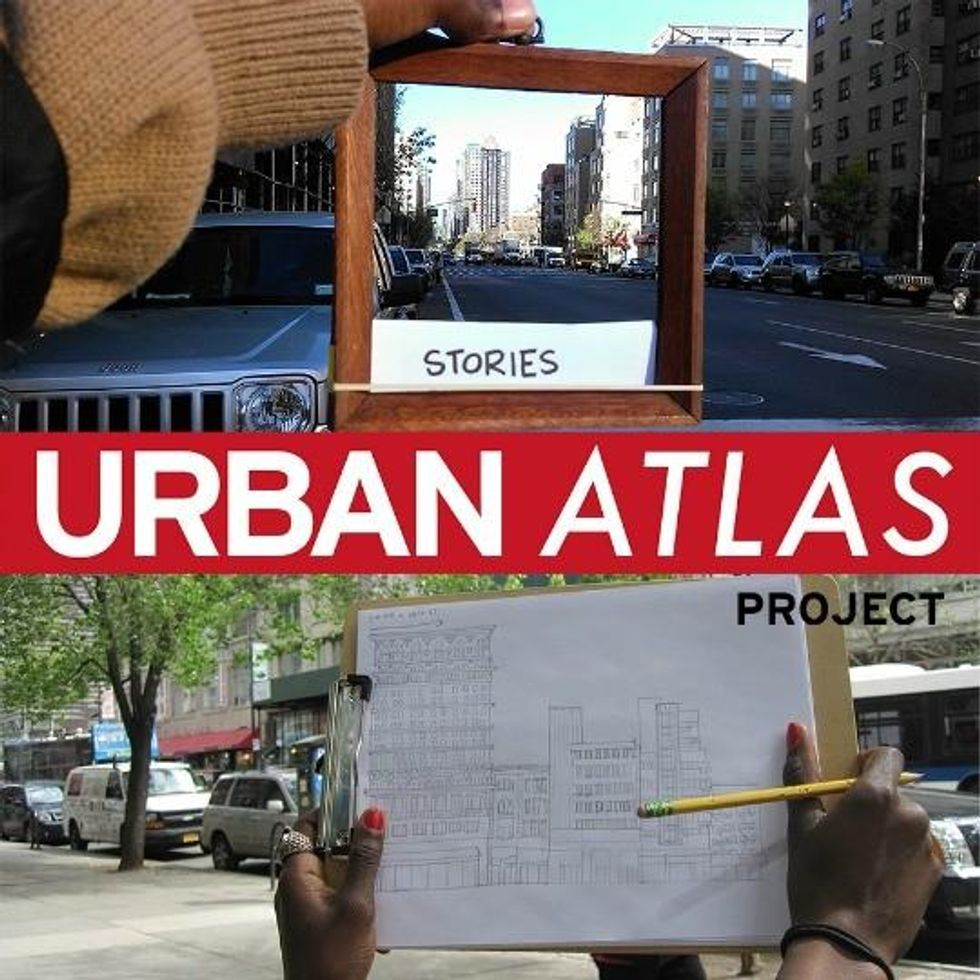
The "Urban Atlas Project" in Harlem aims to provide residents with "a forum to recognize neighbors with similar interests, voice concerns about how things are changing, develop ideas around how to make things better and start a movement of awareness that can lead toward a movement of action," according to designers Sabrina Dorsainvil and Luisa Munera.
The 40 proposals include a mobile "speech bubble" as well as a pop-up "sound garden" and take on topics of gentrification, displacement, state repression, and more. The full list of proposals can be perused on the competition's website.
Designers Raquel de Anda, Gan Golan, and Ron Morrison, who proposed an imaginary "Floating Agora" for free speech, write, "For free speech to return to the city, a journey is required."
_____________________
What does a space for free speech look and feel and sound like?"
This is the question that artists, performers, and architects are taking on in an ongoing design competition and exhibition, organized by Theatrum Mundi and the American Institute of Architects--New York, in which participants "propose architectural or performative designs (temporary or permanent) that transform spaces in New York City into places for public 'demonstration'" and free speech.
This concept, while not new in a city with a vibrant history of protest and organizing, has unearthed a trove of proposals that are sure to add to New York's struggle over what constitutes free speech and who gets to participate.
In one proposal, participants plan to design a "public terrace" for recent immigrants, located in Columbus Park, which has historically been a gathering place for new arrivals to the country. The design would include a "History Box," which designers Gentaro Matsubara, Shingo Sekiya, and Jeon Young-mi describe as a "communication tool to learn about the history of the site about immigrants that used to live and work near around Columbus Park."
The "Urban Atlas Project" in Harlem aims to provide residents with "a forum to recognize neighbors with similar interests, voice concerns about how things are changing, develop ideas around how to make things better and start a movement of awareness that can lead toward a movement of action," according to designers Sabrina Dorsainvil and Luisa Munera.
The 40 proposals include a mobile "speech bubble" as well as a pop-up "sound garden" and take on topics of gentrification, displacement, state repression, and more. The full list of proposals can be perused on the competition's website.
Designers Raquel de Anda, Gan Golan, and Ron Morrison, who proposed an imaginary "Floating Agora" for free speech, write, "For free speech to return to the city, a journey is required."
_____________________
What does a space for free speech look and feel and sound like?"
This is the question that artists, performers, and architects are taking on in an ongoing design competition and exhibition, organized by Theatrum Mundi and the American Institute of Architects--New York, in which participants "propose architectural or performative designs (temporary or permanent) that transform spaces in New York City into places for public 'demonstration'" and free speech.
This concept, while not new in a city with a vibrant history of protest and organizing, has unearthed a trove of proposals that are sure to add to New York's struggle over what constitutes free speech and who gets to participate.
In one proposal, participants plan to design a "public terrace" for recent immigrants, located in Columbus Park, which has historically been a gathering place for new arrivals to the country. The design would include a "History Box," which designers Gentaro Matsubara, Shingo Sekiya, and Jeon Young-mi describe as a "communication tool to learn about the history of the site about immigrants that used to live and work near around Columbus Park."
The "Urban Atlas Project" in Harlem aims to provide residents with "a forum to recognize neighbors with similar interests, voice concerns about how things are changing, develop ideas around how to make things better and start a movement of awareness that can lead toward a movement of action," according to designers Sabrina Dorsainvil and Luisa Munera.
The 40 proposals include a mobile "speech bubble" as well as a pop-up "sound garden" and take on topics of gentrification, displacement, state repression, and more. The full list of proposals can be perused on the competition's website.
Designers Raquel de Anda, Gan Golan, and Ron Morrison, who proposed an imaginary "Floating Agora" for free speech, write, "For free speech to return to the city, a journey is required."
_____________________