SUBSCRIBE TO OUR FREE NEWSLETTER
Daily news & progressive opinion—funded by the people, not the corporations—delivered straight to your inbox.
5
#000000
#FFFFFF
To donate by check, phone, or other method, see our More Ways to Give page.
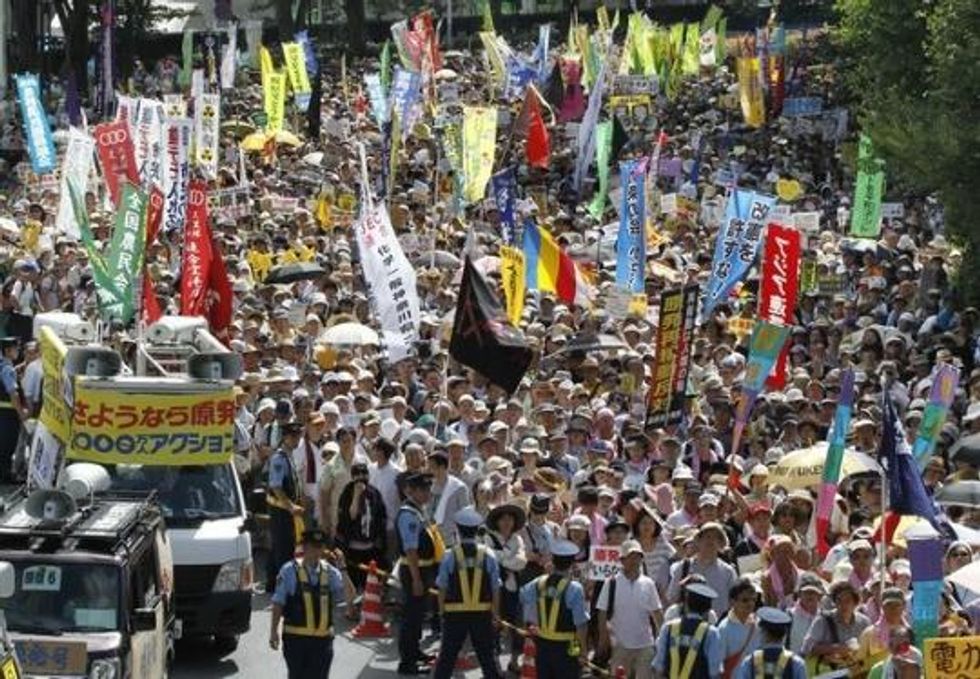
Over 100,000 protesters took to the streets in central Tokyo on Monday to protest the country's return to nuclear power. The demonstration was one of the largest of its kind since Prime Minister Yoshihiko Noda announced that the country would restart its nuclear reactors last month.
Protest organizers estimated the crowd at 170,000 people. Demonstrators marched through the streets in Tokyo's record setting heat chanting: "Don't resume nuclear power operation. Prime Minister (Yoshihiko) Noda should quit."
"We are so angry because no progress has been made in terms of compensation and decontamination," said Noboru Shikatani, a 71-year-old man who evacuated Fukushima after the disaster.
Public anger over the handling of last year's Fukushima disaster has continued to swell. Earlier this month a damning report released by a parliamentary panel investigating the government's handling of the disaster found that plant owner TEPCO and government regulators intentionally ignored key warnings and preparations that should have been implemented before the tsunami. The subsequent nuclear disaster to follow was "clearly man-made," according to the panel.
"We can't accept any resumption of nuclear power operation as the Fukushima case has not been resolved at all," Shikatani added. "We want to bring our voice to many people by joining this kind of demonstration."
The last of the country's nuclear reactors had been shut down in May, following public pressure; however, the first reactor at the Oi plant in Fukui prefecture was restarted July 1, 2012 despite widespread criticism.
Noda now plans to eventually restart all 50 of Japan's reactors, a campaign that has seen large scale protests since its announcement.
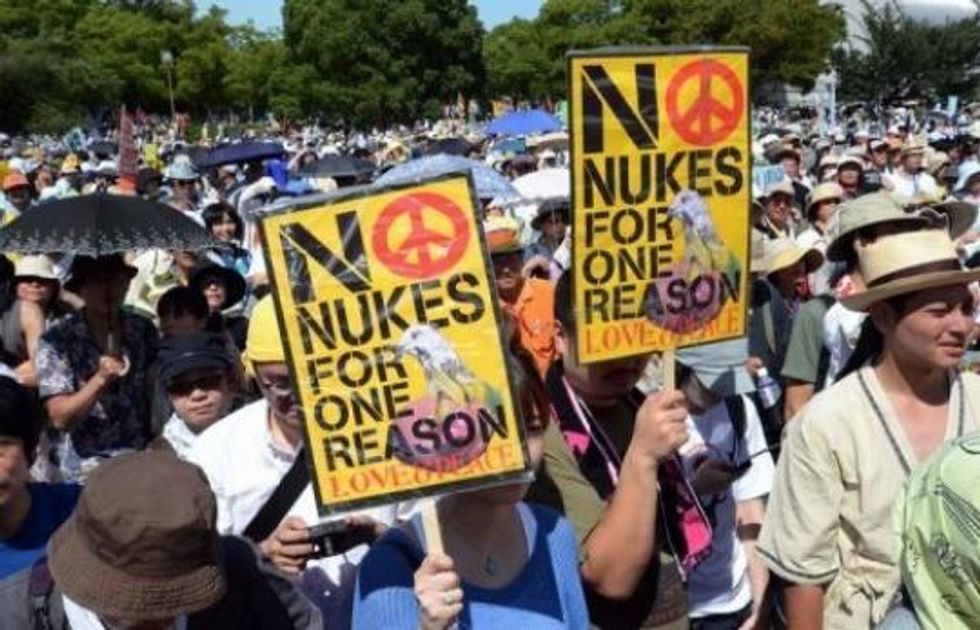
Over 100,000 protesters took to the streets in central Tokyo on Monday to protest the country's return to nuclear power. The demonstration was one of the largest of its kind since Prime Minister Yoshihiko Noda announced that the country would restart its nuclear reactors last month.
Protest organizers estimated the crowd at 170,000 people. Demonstrators marched through the streets in Tokyo's record setting heat chanting: "Don't resume nuclear power operation. Prime Minister (Yoshihiko) Noda should quit."
"We are so angry because no progress has been made in terms of compensation and decontamination," said Noboru Shikatani, a 71-year-old man who evacuated Fukushima after the disaster.
Public anger over the handling of last year's Fukushima disaster has continued to swell. Earlier this month a damning report released by a parliamentary panel investigating the government's handling of the disaster found that plant owner TEPCO and government regulators intentionally ignored key warnings and preparations that should have been implemented before the tsunami. The subsequent nuclear disaster to follow was "clearly man-made," according to the panel.
"We can't accept any resumption of nuclear power operation as the Fukushima case has not been resolved at all," Shikatani added. "We want to bring our voice to many people by joining this kind of demonstration."
The last of the country's nuclear reactors had been shut down in May, following public pressure; however, the first reactor at the Oi plant in Fukui prefecture was restarted July 1, 2012 despite widespread criticism.
Noda now plans to eventually restart all 50 of Japan's reactors, a campaign that has seen large scale protests since its announcement.
Over 100,000 protesters took to the streets in central Tokyo on Monday to protest the country's return to nuclear power. The demonstration was one of the largest of its kind since Prime Minister Yoshihiko Noda announced that the country would restart its nuclear reactors last month.
Protest organizers estimated the crowd at 170,000 people. Demonstrators marched through the streets in Tokyo's record setting heat chanting: "Don't resume nuclear power operation. Prime Minister (Yoshihiko) Noda should quit."
"We are so angry because no progress has been made in terms of compensation and decontamination," said Noboru Shikatani, a 71-year-old man who evacuated Fukushima after the disaster.
Public anger over the handling of last year's Fukushima disaster has continued to swell. Earlier this month a damning report released by a parliamentary panel investigating the government's handling of the disaster found that plant owner TEPCO and government regulators intentionally ignored key warnings and preparations that should have been implemented before the tsunami. The subsequent nuclear disaster to follow was "clearly man-made," according to the panel.
"We can't accept any resumption of nuclear power operation as the Fukushima case has not been resolved at all," Shikatani added. "We want to bring our voice to many people by joining this kind of demonstration."
The last of the country's nuclear reactors had been shut down in May, following public pressure; however, the first reactor at the Oi plant in Fukui prefecture was restarted July 1, 2012 despite widespread criticism.
Noda now plans to eventually restart all 50 of Japan's reactors, a campaign that has seen large scale protests since its announcement.