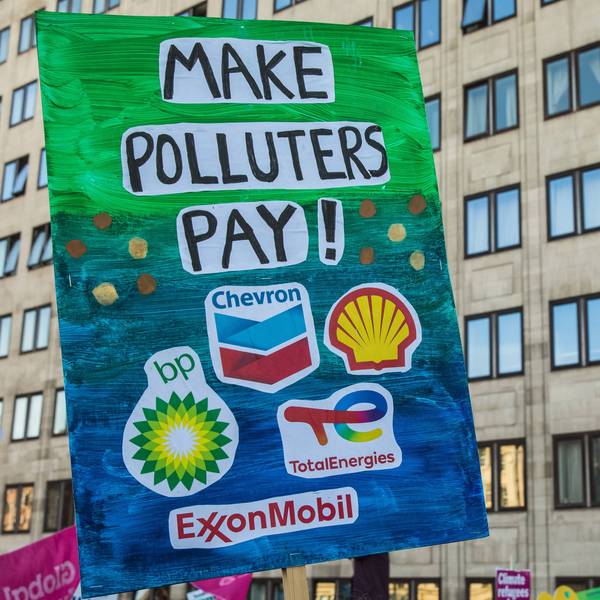
Executives from US oil company Chevron and the drilling company Transocean are facing criminal charges in Brazil following a large offshore oil spill in November of 2011.
The prosecutors said in a statement that it was charging "Chevron, oil drilling contractor Transocean and 17 executives with environmental crime and damage in connection with the oil spill."
If found guilty, the executives could face up to 31 years in prison.
"Everything indicates that Chevron was imprudent and that area should not have been developed,'' Carlos Minc, the environment minister for Rio de Janeiro state, told Al-Jazeera.
Eduardo Santos de Oliveira, the lead prosecutor for the case, told Reuters he was tired of oil companies escaping accountability, including large fines and jail time, for environmental crimes. "We need to change the parameters," he said. "If companies don't listen to millions, we have to ask for billions."
Oliveira accused the oilmen of creating a "contamination time bomb." While the spill was not enormous compared to very large spills like Deepwater Horizon in the Gulf of Mexico, Oliveira says Chevron's subsea oil reservoir was damaged by reckless drilling, raising the specter of future catastrophic leaks.
Brazilian authorities estimate that 2,400 barrels of crude were spilled, which led authorities to suspend all of Chevron's drilling operations and to deny the company access to huge new offshore fields. Evidence shows that oil seapage continues near the drill site, furthering fears that the damage is much worse than first thought, and certainly more negatively impactful than Chevron and Transocean have argued.
* * *
Agence France-Presse: Chevron accused of 'environmental crime' in Brazil
The prosecutors said in a statement that it was charging "Chevron, oil drilling contractor Transocean and 17 executives with environmental crime and damage in connection with the oil spill."
George Buck, the president of Chevron's Brazil unit, and three other company officials "sought to frustrate the work of the prosecution by presenting a misleading emergency plan," and by "altering documents shown to the authorities," it is alleged.
Prosecutors called for a "freeze on all assets of the accused, including 11 senior officials and employees from Chevron and five from Transocean," and an environmental expert. A judge will decide if the executives are to face trial.
"The charges are based on conclusions of the police investigation into the November 7 2011 accident which occurred because the accused did not respect safety procedures," state prosecutor Eduardo Santos de Oliveira told reporters.
The oil spill "affected the entire maritime ecosystem, which could lead to the extinction of species, as well as the region's economic activities, in addition to damage caused to the state," he added.
The prosecutors called for payment of bail of $550,000 for each person accused and $5.5 million for each company.
"These measures aim to ensure that the accused, most of them foreigners, do not leave the country. The sum for the fines will not be returned and will be used to pay for the damage caused," said de Oliveira.
The prosecutor said the sentences sought "include up to 31 years and 10 months" for five of the 17 accused, including Buck.
* * *
From Al-Jazeera:
The well drilled by Transocean has since been sealed, but a small amount of seepage has re-appeared in recent days, raising concerns that the damage is not yet over.
Chevron were initially fined $27 million for the oil spill by the Brazilian government in December 2011.
The charges come as Brazil works to develop massive offshore oil fields discovered in recent years that hold upward of 50 billion barrels of oil.
* * *
Reuters profiles the Brazilian prosecutor, Eduardo Santos de Oliveira:
From his base in the hot, tropical interior of Rio de Janeiro state, he pursued hundreds of millions of dollars in damages for a deadly 2001 oil spill by Petrobras, the state-run oil giant, and in 2003, against a paper industry firm that fouled a nearby river, leaving millions without drinking water. In 2008, he prosecuted the man who was then the most powerful politician in Rio de Janeiro -- former state governor Antony Garotinho -- on corruption and armed racketeering charges, eventually winning convictions. To this day, Petrobras and the paper industry firm are still appealing Oliveira's suits. Despite court rulings in the prosecutor's favor, he says few damages have yet been paid. Garotinho remains free and may soon run for governor again. The Chevron spill "is not an isolated incident, it's the third serious environmental accident in my area that I've handled in a decade," Oliveira said from behind a desk piled high with Chevron drilling diagrams and hundreds of pages of evidence he has received from environmental investigators. "I'm tired of companies looking at my efforts as just another cost of doing business." In Brazil's constitution, drafted in 1988, federal prosecutors were granted near total autonomy to file suit against alleged polluters. But Oliveira says the charges rarely lead to big damage awards or prison sentences, and that the appeals process usually whittles down penalties to irrelevance. "We need to change the parameters," he said. "If companies don't listen to millions, we have to ask for billions."
Biggest Environmental Lawsuit Ever
The civil case Oliveira filed against Chevron and Transocean is the largest environmental lawsuit in Brazil's history. It has since been shifted by a judge to state capital Rio de Janeiro, where it will be taken up by another prosecutor.
If Oliveira's charges are accepted by a judge, the criminal case could be in federal courts for years. Guilty verdicts could bring prison sentences of up to 31 years for some of those charged, Oliveira said in a statement on Wednesday, vowing to seek the firmest sentences allowed by law.
That marked an escalation in his tone. He told reporters in his office early this year that jail terms are a "last resort".
"These people don't have criminal records and courts are generally lenient to first time offenders," he said then. Critics have accused Oliveira of overreach because Chevron's November spill was less than 0.1 percent of the massive 4.9-million-barrel 2010 BP disaster in the Gulf of Mexico. A congressional leader of Brazilian President Dilma Rousseff's Workers' Party called the lawsuits over-aggressive.
"If Chevron failed to comply with their licenses or drilling plans, they should be punished," said Adriano Pires, a former board member at government oil regulator ANP who now heads Brazil Infrastructure Institute, an energy think-tank. "But the prosecutor is moving far too fast ... He has little or no technical experience." Oliveira says he has evidence that reckless drilling by Chevron caused the November spill and a subsequent oil seep at Frade, discovered this month.
###
Executives from US oil company Chevron and the drilling company Transocean are facing criminal charges in Brazil following a large offshore oil spill in November of 2011.
The prosecutors said in a statement that it was charging "Chevron, oil drilling contractor Transocean and 17 executives with environmental crime and damage in connection with the oil spill."
If found guilty, the executives could face up to 31 years in prison.
"Everything indicates that Chevron was imprudent and that area should not have been developed,'' Carlos Minc, the environment minister for Rio de Janeiro state, told Al-Jazeera.
Eduardo Santos de Oliveira, the lead prosecutor for the case, told Reuters he was tired of oil companies escaping accountability, including large fines and jail time, for environmental crimes. "We need to change the parameters," he said. "If companies don't listen to millions, we have to ask for billions."
Oliveira accused the oilmen of creating a "contamination time bomb." While the spill was not enormous compared to very large spills like Deepwater Horizon in the Gulf of Mexico, Oliveira says Chevron's subsea oil reservoir was damaged by reckless drilling, raising the specter of future catastrophic leaks.
Brazilian authorities estimate that 2,400 barrels of crude were spilled, which led authorities to suspend all of Chevron's drilling operations and to deny the company access to huge new offshore fields. Evidence shows that oil seapage continues near the drill site, furthering fears that the damage is much worse than first thought, and certainly more negatively impactful than Chevron and Transocean have argued.
* * *
Agence France-Presse: Chevron accused of 'environmental crime' in Brazil
The prosecutors said in a statement that it was charging "Chevron, oil drilling contractor Transocean and 17 executives with environmental crime and damage in connection with the oil spill."
George Buck, the president of Chevron's Brazil unit, and three other company officials "sought to frustrate the work of the prosecution by presenting a misleading emergency plan," and by "altering documents shown to the authorities," it is alleged.
Prosecutors called for a "freeze on all assets of the accused, including 11 senior officials and employees from Chevron and five from Transocean," and an environmental expert. A judge will decide if the executives are to face trial.
"The charges are based on conclusions of the police investigation into the November 7 2011 accident which occurred because the accused did not respect safety procedures," state prosecutor Eduardo Santos de Oliveira told reporters.
The oil spill "affected the entire maritime ecosystem, which could lead to the extinction of species, as well as the region's economic activities, in addition to damage caused to the state," he added.
The prosecutors called for payment of bail of $550,000 for each person accused and $5.5 million for each company.
"These measures aim to ensure that the accused, most of them foreigners, do not leave the country. The sum for the fines will not be returned and will be used to pay for the damage caused," said de Oliveira.
The prosecutor said the sentences sought "include up to 31 years and 10 months" for five of the 17 accused, including Buck.
* * *
From Al-Jazeera:
The well drilled by Transocean has since been sealed, but a small amount of seepage has re-appeared in recent days, raising concerns that the damage is not yet over.
Chevron were initially fined $27 million for the oil spill by the Brazilian government in December 2011.
The charges come as Brazil works to develop massive offshore oil fields discovered in recent years that hold upward of 50 billion barrels of oil.
* * *
Reuters profiles the Brazilian prosecutor, Eduardo Santos de Oliveira:
From his base in the hot, tropical interior of Rio de Janeiro state, he pursued hundreds of millions of dollars in damages for a deadly 2001 oil spill by Petrobras, the state-run oil giant, and in 2003, against a paper industry firm that fouled a nearby river, leaving millions without drinking water. In 2008, he prosecuted the man who was then the most powerful politician in Rio de Janeiro -- former state governor Antony Garotinho -- on corruption and armed racketeering charges, eventually winning convictions. To this day, Petrobras and the paper industry firm are still appealing Oliveira's suits. Despite court rulings in the prosecutor's favor, he says few damages have yet been paid. Garotinho remains free and may soon run for governor again. The Chevron spill "is not an isolated incident, it's the third serious environmental accident in my area that I've handled in a decade," Oliveira said from behind a desk piled high with Chevron drilling diagrams and hundreds of pages of evidence he has received from environmental investigators. "I'm tired of companies looking at my efforts as just another cost of doing business." In Brazil's constitution, drafted in 1988, federal prosecutors were granted near total autonomy to file suit against alleged polluters. But Oliveira says the charges rarely lead to big damage awards or prison sentences, and that the appeals process usually whittles down penalties to irrelevance. "We need to change the parameters," he said. "If companies don't listen to millions, we have to ask for billions."
Biggest Environmental Lawsuit Ever
The civil case Oliveira filed against Chevron and Transocean is the largest environmental lawsuit in Brazil's history. It has since been shifted by a judge to state capital Rio de Janeiro, where it will be taken up by another prosecutor.
If Oliveira's charges are accepted by a judge, the criminal case could be in federal courts for years. Guilty verdicts could bring prison sentences of up to 31 years for some of those charged, Oliveira said in a statement on Wednesday, vowing to seek the firmest sentences allowed by law.
That marked an escalation in his tone. He told reporters in his office early this year that jail terms are a "last resort".
"These people don't have criminal records and courts are generally lenient to first time offenders," he said then. Critics have accused Oliveira of overreach because Chevron's November spill was less than 0.1 percent of the massive 4.9-million-barrel 2010 BP disaster in the Gulf of Mexico. A congressional leader of Brazilian President Dilma Rousseff's Workers' Party called the lawsuits over-aggressive.
"If Chevron failed to comply with their licenses or drilling plans, they should be punished," said Adriano Pires, a former board member at government oil regulator ANP who now heads Brazil Infrastructure Institute, an energy think-tank. "But the prosecutor is moving far too fast ... He has little or no technical experience." Oliveira says he has evidence that reckless drilling by Chevron caused the November spill and a subsequent oil seep at Frade, discovered this month.
###
Executives from US oil company Chevron and the drilling company Transocean are facing criminal charges in Brazil following a large offshore oil spill in November of 2011.
The prosecutors said in a statement that it was charging "Chevron, oil drilling contractor Transocean and 17 executives with environmental crime and damage in connection with the oil spill."
If found guilty, the executives could face up to 31 years in prison.
"Everything indicates that Chevron was imprudent and that area should not have been developed,'' Carlos Minc, the environment minister for Rio de Janeiro state, told Al-Jazeera.
Eduardo Santos de Oliveira, the lead prosecutor for the case, told Reuters he was tired of oil companies escaping accountability, including large fines and jail time, for environmental crimes. "We need to change the parameters," he said. "If companies don't listen to millions, we have to ask for billions."
Oliveira accused the oilmen of creating a "contamination time bomb." While the spill was not enormous compared to very large spills like Deepwater Horizon in the Gulf of Mexico, Oliveira says Chevron's subsea oil reservoir was damaged by reckless drilling, raising the specter of future catastrophic leaks.
Brazilian authorities estimate that 2,400 barrels of crude were spilled, which led authorities to suspend all of Chevron's drilling operations and to deny the company access to huge new offshore fields. Evidence shows that oil seapage continues near the drill site, furthering fears that the damage is much worse than first thought, and certainly more negatively impactful than Chevron and Transocean have argued.
* * *
Agence France-Presse: Chevron accused of 'environmental crime' in Brazil
The prosecutors said in a statement that it was charging "Chevron, oil drilling contractor Transocean and 17 executives with environmental crime and damage in connection with the oil spill."
George Buck, the president of Chevron's Brazil unit, and three other company officials "sought to frustrate the work of the prosecution by presenting a misleading emergency plan," and by "altering documents shown to the authorities," it is alleged.
Prosecutors called for a "freeze on all assets of the accused, including 11 senior officials and employees from Chevron and five from Transocean," and an environmental expert. A judge will decide if the executives are to face trial.
"The charges are based on conclusions of the police investigation into the November 7 2011 accident which occurred because the accused did not respect safety procedures," state prosecutor Eduardo Santos de Oliveira told reporters.
The oil spill "affected the entire maritime ecosystem, which could lead to the extinction of species, as well as the region's economic activities, in addition to damage caused to the state," he added.
The prosecutors called for payment of bail of $550,000 for each person accused and $5.5 million for each company.
"These measures aim to ensure that the accused, most of them foreigners, do not leave the country. The sum for the fines will not be returned and will be used to pay for the damage caused," said de Oliveira.
The prosecutor said the sentences sought "include up to 31 years and 10 months" for five of the 17 accused, including Buck.
* * *
From Al-Jazeera:
The well drilled by Transocean has since been sealed, but a small amount of seepage has re-appeared in recent days, raising concerns that the damage is not yet over.
Chevron were initially fined $27 million for the oil spill by the Brazilian government in December 2011.
The charges come as Brazil works to develop massive offshore oil fields discovered in recent years that hold upward of 50 billion barrels of oil.
* * *
Reuters profiles the Brazilian prosecutor, Eduardo Santos de Oliveira:
From his base in the hot, tropical interior of Rio de Janeiro state, he pursued hundreds of millions of dollars in damages for a deadly 2001 oil spill by Petrobras, the state-run oil giant, and in 2003, against a paper industry firm that fouled a nearby river, leaving millions without drinking water. In 2008, he prosecuted the man who was then the most powerful politician in Rio de Janeiro -- former state governor Antony Garotinho -- on corruption and armed racketeering charges, eventually winning convictions. To this day, Petrobras and the paper industry firm are still appealing Oliveira's suits. Despite court rulings in the prosecutor's favor, he says few damages have yet been paid. Garotinho remains free and may soon run for governor again. The Chevron spill "is not an isolated incident, it's the third serious environmental accident in my area that I've handled in a decade," Oliveira said from behind a desk piled high with Chevron drilling diagrams and hundreds of pages of evidence he has received from environmental investigators. "I'm tired of companies looking at my efforts as just another cost of doing business." In Brazil's constitution, drafted in 1988, federal prosecutors were granted near total autonomy to file suit against alleged polluters. But Oliveira says the charges rarely lead to big damage awards or prison sentences, and that the appeals process usually whittles down penalties to irrelevance. "We need to change the parameters," he said. "If companies don't listen to millions, we have to ask for billions."
Biggest Environmental Lawsuit Ever
The civil case Oliveira filed against Chevron and Transocean is the largest environmental lawsuit in Brazil's history. It has since been shifted by a judge to state capital Rio de Janeiro, where it will be taken up by another prosecutor.
If Oliveira's charges are accepted by a judge, the criminal case could be in federal courts for years. Guilty verdicts could bring prison sentences of up to 31 years for some of those charged, Oliveira said in a statement on Wednesday, vowing to seek the firmest sentences allowed by law.
That marked an escalation in his tone. He told reporters in his office early this year that jail terms are a "last resort".
"These people don't have criminal records and courts are generally lenient to first time offenders," he said then. Critics have accused Oliveira of overreach because Chevron's November spill was less than 0.1 percent of the massive 4.9-million-barrel 2010 BP disaster in the Gulf of Mexico. A congressional leader of Brazilian President Dilma Rousseff's Workers' Party called the lawsuits over-aggressive.
"If Chevron failed to comply with their licenses or drilling plans, they should be punished," said Adriano Pires, a former board member at government oil regulator ANP who now heads Brazil Infrastructure Institute, an energy think-tank. "But the prosecutor is moving far too fast ... He has little or no technical experience." Oliveira says he has evidence that reckless drilling by Chevron caused the November spill and a subsequent oil seep at Frade, discovered this month.
###