SUBSCRIBE TO OUR FREE NEWSLETTER
Daily news & progressive opinion—funded by the people, not the corporations—delivered straight to your inbox.
5
#000000
#FFFFFF
To donate by check, phone, or other method, see our More Ways to Give page.
Daily news & progressive opinion—funded by the people, not the corporations—delivered straight to your inbox.
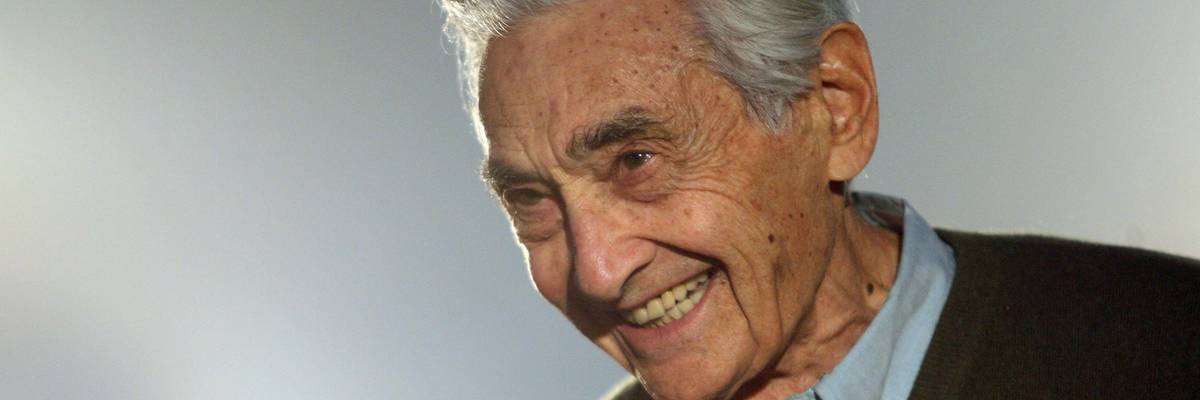
Author Howard Zinn speaks during the People Speak ASCAP Music Cafe performance held during the 2009 Sundance Music Festival on January 22, 2009 in Park City, Utah. (Photo by Bryan Bedder/Getty Images)
August 24th marked six months since Russia launched its war on Ukraine, with millions displaced and tens of thousands of civilians and soldiers killed. That same day, August 24th, marked the centennial of the late historian Howard Zinn's birth. Zinn was an author, professor, and anti-war activist. His seminal book, A People's History of the United States, revealed a different, dissident perspective on the historical arc of the Western hemisphere, from Christopher Columbus' arrival in 1492 to the so-called "War on Terror." First published in 1980, A People's History has become a standard text, with over 2 million copies in print. Howard Zinn died in 2010, at the age of 87. His words, more than a decade after his death, are still worth hearing in a world wracked by war, racism and inequality.
"War poisons everybody who engages in it."
"War poisons everybody who engages in it," Howard Zinn said in a 2006 address in Madison, Wisconsin. The United States was waging two major wars at the time, in Iraq and Afghanistan, and supporting ongoing conflicts elsewhere. Howard Zinn continued, "We've had a history of war after war after war after war. What have they solved? What have they done?"
Howard Zinn volunteered to serve in World War II, becoming a bombardier. He participated in the bombing of Royan, a small town along the coast of France, in April, 1945:
"This was a few weeks before the war was going to be over, and everybody knew it was going to be over," Zinn said on the Democracy Now! news hour in 2005. "There was a little pocket of German soldiers hanging around this little town of Royan on the Atlantic coast of France, and the Air Force decided to bomb them--1,200 heavy bombers, and I was in one of them, flew over this little town of Royan and dropped napalm--first use of napalm in the European theater. We don't know how many people we killed, how many people were terribly burned as a result of what we did. But I did it, like most soldiers do, unthinkingly, mechanically, thinking we're on the right side, they're on the wrong side, and therefore we can do whatever we want, and it's OK."
Howard Zinn visited the French seaside resort in 1966 to speak with survivors. He wrote a detailed history of the raid and its consequences. "It was...a very great sobering lesson about so-called good wars."
In Zinn's 2006 Wisconsin speech, he described "the different ratio of civilian-to-military deaths in war... in World War I, 10 military dead for one civilian dead; in World War II, it was 50-50, half military, half civilian; in Vietnam, it was 70% civilian and 30% military; and in the wars since then, it's 80% and 85% civilian."
Howard Zinn taught at Spelman, a historically Black women's college in Atlanta, during the height of the civil rights movement. Among his students were author Alice Walker and Children's Defense Fund founder Marian Wright Edelman. Zinn explained on Democracy Now!, "At Spelman, I got involved with my students in the actions that were going on in the South, the sit-ins, the demonstrations, the picket lines." His solidarity got him fired. In 2005, Professor Zinn was invited back to Spelman to deliver the commencement address.
Howard Zinn became a prominent opponent of the war in Vietnam. In 1968, he and activist priest Father Daniel Berrigan flew to North Vietnam, coordinating the first release of U.S. prisoners of war held there. When renowned whistleblower Dan Ellsberg released the Pentagon Papers, the U.S. government's secret history of its involvement in Vietnam, Howard Zinn and his late wife Roz hid a copy of the documents in their home. His dedication to peace and anti-war activism continued unabated throughout his life.
August 24th, in addition to the anniversary of Zinn's birth, is also the day that Ukraine marks its independence from the Soviet Union. This year, independence celebrations were banned across Ukraine for fear of Russian attacks. Russia did attack a rail station on that day, in the eastern Ukrainian village of Chaplyne, killing at least 25 people, including children. On the same day, President Joe Biden announced an additional $3 billion in military aid to Ukraine, bringing the total in U.S. military aid to Ukraine since Biden took office to $13.5 billion.
Howard Zinn is not here to condemn this war, or any of the others now being fought. But through his example, his activism, and the enduring relevance of his writings, we can commit, on the centennial of his birth, to reiterate one of his central messages: war is not the answer to conflict in the 21st century.
Dear Common Dreams reader, It’s been nearly 30 years since I co-founded Common Dreams with my late wife, Lina Newhouser. We had the radical notion that journalism should serve the public good, not corporate profits. It was clear to us from the outset what it would take to build such a project. No paid advertisements. No corporate sponsors. No millionaire publisher telling us what to think or do. Many people said we wouldn't last a year, but we proved those doubters wrong. Together with a tremendous team of journalists and dedicated staff, we built an independent media outlet free from the constraints of profits and corporate control. Our mission has always been simple: To inform. To inspire. To ignite change for the common good. Building Common Dreams was not easy. Our survival was never guaranteed. When you take on the most powerful forces—Wall Street greed, fossil fuel industry destruction, Big Tech lobbyists, and uber-rich oligarchs who have spent billions upon billions rigging the economy and democracy in their favor—the only bulwark you have is supporters who believe in your work. But here’s the urgent message from me today. It's never been this bad out there. And it's never been this hard to keep us going. At the very moment Common Dreams is most needed, the threats we face are intensifying. We need your support now more than ever. We don't accept corporate advertising and never will. We don't have a paywall because we don't think people should be blocked from critical news based on their ability to pay. Everything we do is funded by the donations of readers like you. When everyone does the little they can afford, we are strong. But if that support retreats or dries up, so do we. Will you donate now to make sure Common Dreams not only survives but thrives? —Craig Brown, Co-founder |
August 24th marked six months since Russia launched its war on Ukraine, with millions displaced and tens of thousands of civilians and soldiers killed. That same day, August 24th, marked the centennial of the late historian Howard Zinn's birth. Zinn was an author, professor, and anti-war activist. His seminal book, A People's History of the United States, revealed a different, dissident perspective on the historical arc of the Western hemisphere, from Christopher Columbus' arrival in 1492 to the so-called "War on Terror." First published in 1980, A People's History has become a standard text, with over 2 million copies in print. Howard Zinn died in 2010, at the age of 87. His words, more than a decade after his death, are still worth hearing in a world wracked by war, racism and inequality.
"War poisons everybody who engages in it."
"War poisons everybody who engages in it," Howard Zinn said in a 2006 address in Madison, Wisconsin. The United States was waging two major wars at the time, in Iraq and Afghanistan, and supporting ongoing conflicts elsewhere. Howard Zinn continued, "We've had a history of war after war after war after war. What have they solved? What have they done?"
Howard Zinn volunteered to serve in World War II, becoming a bombardier. He participated in the bombing of Royan, a small town along the coast of France, in April, 1945:
"This was a few weeks before the war was going to be over, and everybody knew it was going to be over," Zinn said on the Democracy Now! news hour in 2005. "There was a little pocket of German soldiers hanging around this little town of Royan on the Atlantic coast of France, and the Air Force decided to bomb them--1,200 heavy bombers, and I was in one of them, flew over this little town of Royan and dropped napalm--first use of napalm in the European theater. We don't know how many people we killed, how many people were terribly burned as a result of what we did. But I did it, like most soldiers do, unthinkingly, mechanically, thinking we're on the right side, they're on the wrong side, and therefore we can do whatever we want, and it's OK."
Howard Zinn visited the French seaside resort in 1966 to speak with survivors. He wrote a detailed history of the raid and its consequences. "It was...a very great sobering lesson about so-called good wars."
In Zinn's 2006 Wisconsin speech, he described "the different ratio of civilian-to-military deaths in war... in World War I, 10 military dead for one civilian dead; in World War II, it was 50-50, half military, half civilian; in Vietnam, it was 70% civilian and 30% military; and in the wars since then, it's 80% and 85% civilian."
Howard Zinn taught at Spelman, a historically Black women's college in Atlanta, during the height of the civil rights movement. Among his students were author Alice Walker and Children's Defense Fund founder Marian Wright Edelman. Zinn explained on Democracy Now!, "At Spelman, I got involved with my students in the actions that were going on in the South, the sit-ins, the demonstrations, the picket lines." His solidarity got him fired. In 2005, Professor Zinn was invited back to Spelman to deliver the commencement address.
Howard Zinn became a prominent opponent of the war in Vietnam. In 1968, he and activist priest Father Daniel Berrigan flew to North Vietnam, coordinating the first release of U.S. prisoners of war held there. When renowned whistleblower Dan Ellsberg released the Pentagon Papers, the U.S. government's secret history of its involvement in Vietnam, Howard Zinn and his late wife Roz hid a copy of the documents in their home. His dedication to peace and anti-war activism continued unabated throughout his life.
August 24th, in addition to the anniversary of Zinn's birth, is also the day that Ukraine marks its independence from the Soviet Union. This year, independence celebrations were banned across Ukraine for fear of Russian attacks. Russia did attack a rail station on that day, in the eastern Ukrainian village of Chaplyne, killing at least 25 people, including children. On the same day, President Joe Biden announced an additional $3 billion in military aid to Ukraine, bringing the total in U.S. military aid to Ukraine since Biden took office to $13.5 billion.
Howard Zinn is not here to condemn this war, or any of the others now being fought. But through his example, his activism, and the enduring relevance of his writings, we can commit, on the centennial of his birth, to reiterate one of his central messages: war is not the answer to conflict in the 21st century.
August 24th marked six months since Russia launched its war on Ukraine, with millions displaced and tens of thousands of civilians and soldiers killed. That same day, August 24th, marked the centennial of the late historian Howard Zinn's birth. Zinn was an author, professor, and anti-war activist. His seminal book, A People's History of the United States, revealed a different, dissident perspective on the historical arc of the Western hemisphere, from Christopher Columbus' arrival in 1492 to the so-called "War on Terror." First published in 1980, A People's History has become a standard text, with over 2 million copies in print. Howard Zinn died in 2010, at the age of 87. His words, more than a decade after his death, are still worth hearing in a world wracked by war, racism and inequality.
"War poisons everybody who engages in it."
"War poisons everybody who engages in it," Howard Zinn said in a 2006 address in Madison, Wisconsin. The United States was waging two major wars at the time, in Iraq and Afghanistan, and supporting ongoing conflicts elsewhere. Howard Zinn continued, "We've had a history of war after war after war after war. What have they solved? What have they done?"
Howard Zinn volunteered to serve in World War II, becoming a bombardier. He participated in the bombing of Royan, a small town along the coast of France, in April, 1945:
"This was a few weeks before the war was going to be over, and everybody knew it was going to be over," Zinn said on the Democracy Now! news hour in 2005. "There was a little pocket of German soldiers hanging around this little town of Royan on the Atlantic coast of France, and the Air Force decided to bomb them--1,200 heavy bombers, and I was in one of them, flew over this little town of Royan and dropped napalm--first use of napalm in the European theater. We don't know how many people we killed, how many people were terribly burned as a result of what we did. But I did it, like most soldiers do, unthinkingly, mechanically, thinking we're on the right side, they're on the wrong side, and therefore we can do whatever we want, and it's OK."
Howard Zinn visited the French seaside resort in 1966 to speak with survivors. He wrote a detailed history of the raid and its consequences. "It was...a very great sobering lesson about so-called good wars."
In Zinn's 2006 Wisconsin speech, he described "the different ratio of civilian-to-military deaths in war... in World War I, 10 military dead for one civilian dead; in World War II, it was 50-50, half military, half civilian; in Vietnam, it was 70% civilian and 30% military; and in the wars since then, it's 80% and 85% civilian."
Howard Zinn taught at Spelman, a historically Black women's college in Atlanta, during the height of the civil rights movement. Among his students were author Alice Walker and Children's Defense Fund founder Marian Wright Edelman. Zinn explained on Democracy Now!, "At Spelman, I got involved with my students in the actions that were going on in the South, the sit-ins, the demonstrations, the picket lines." His solidarity got him fired. In 2005, Professor Zinn was invited back to Spelman to deliver the commencement address.
Howard Zinn became a prominent opponent of the war in Vietnam. In 1968, he and activist priest Father Daniel Berrigan flew to North Vietnam, coordinating the first release of U.S. prisoners of war held there. When renowned whistleblower Dan Ellsberg released the Pentagon Papers, the U.S. government's secret history of its involvement in Vietnam, Howard Zinn and his late wife Roz hid a copy of the documents in their home. His dedication to peace and anti-war activism continued unabated throughout his life.
August 24th, in addition to the anniversary of Zinn's birth, is also the day that Ukraine marks its independence from the Soviet Union. This year, independence celebrations were banned across Ukraine for fear of Russian attacks. Russia did attack a rail station on that day, in the eastern Ukrainian village of Chaplyne, killing at least 25 people, including children. On the same day, President Joe Biden announced an additional $3 billion in military aid to Ukraine, bringing the total in U.S. military aid to Ukraine since Biden took office to $13.5 billion.
Howard Zinn is not here to condemn this war, or any of the others now being fought. But through his example, his activism, and the enduring relevance of his writings, we can commit, on the centennial of his birth, to reiterate one of his central messages: war is not the answer to conflict in the 21st century.