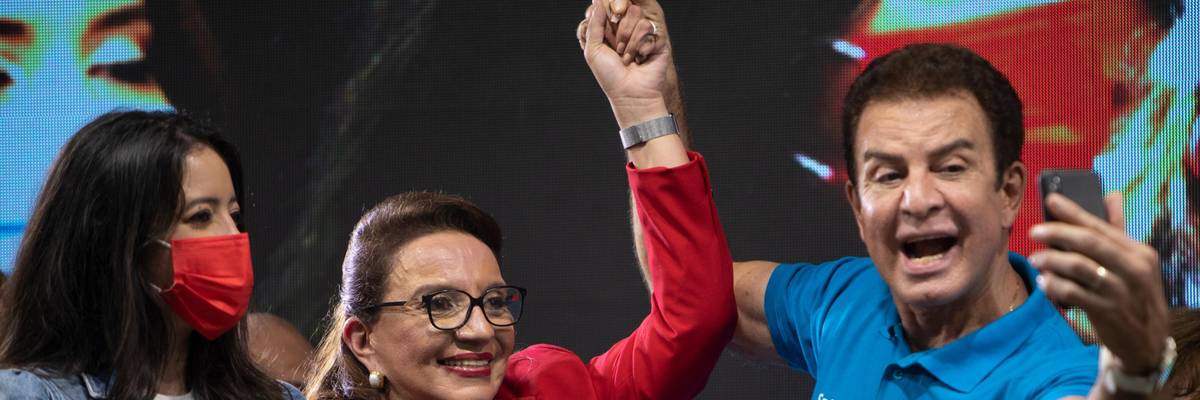
Following the Honduran election on November 28, leftist opposition candidate Xiomara Castro, is currently in the lead, according to the preliminary results from the Honduran Supreme Electoral Council.
"We win! We win!" said Castro, sixty-two, addressing supporters on Sunday. "Today the people have obtained justice. We have reversed authoritarianism."
The former first lady ran as the candidate of the opposition Liberty and Refoundation Party, or LIBRE. She faced Tegucigalpa Mayor Nasry Asfura of the ruling National Party, which has held power since the 2009 coup against Castro's husband Manuel Zelaya.
"We are hoping there is no theft as there was in 2017. We are still preparing ourselves for it to happen again, but there is a lot of excitement, especially since she will be the first woman president."
Castro is likely to become the first woman to be elected president in Honduras, in an election viewed as a referendum on whether Honduras would continue to tilt toward authoritarianism. A trend that has been manifest recently in the neighboring countries of Nicaragua and El Salvador.
"This was historic," Gustavo Irias, the director of the Center for Democracy Studies, known as CESPAD, in Honduras, tells The Progressive. "It is probably the most important popular democratic achievement in the country in the last fifty years."
As of Monday morning, Castro had received more than 50 percent of the more than 1.8 million votes counted. At least 68 percent of Hondurans turned out to vote, including a large number of young people. The large turnout of youth is historic in Honduras.
"Historically, young people have been quite apathetic in politics and they do not tend to accompany the electoral processes," Julio Raudales, an economist and vice-rector for international relations at the National Autonomous University of Honduras, tells The Progressive. "But this time the situation was reversed precisely because of him, because of the anger [with the administration of two-term president Juan Orlando Hernandez]."
After twelve years of the governance of the National Party, which has been accused of grave human rights violations, corruption, and ties to drug trafficking, Castro's lead in the election comes as a relief for many Hondurans. It has brought excitement to streets across Honduras.
"The people made their decision," says Ivania Lasso, a twenty-nine-year-old from Tegucigalpa, Honduras. "We have suffered for twelve years. We are happy."
In June 2009, the democratically elected president Manuel Zelaya was overthrown in a coup d'etat, which ushered the far-right National Party into power.
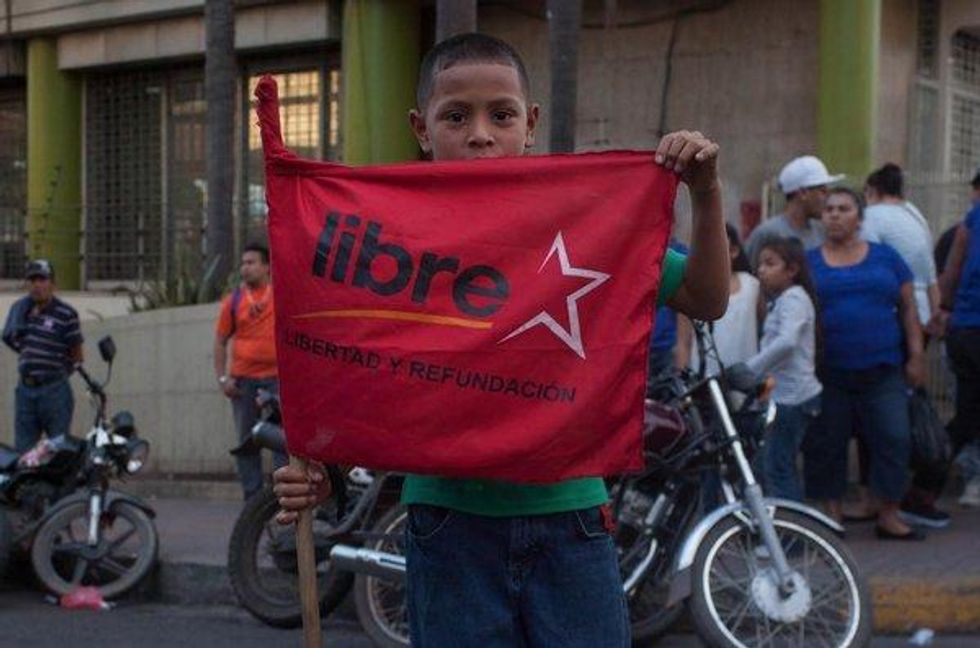
A boy holds a LIBRE flag outside of the Honduran Congress in a February 2018 protest against Juan Orlando Hernandez. (Photo: Jeff Abbott)
The November 2017 election was plagued by accusations of fraud, leading to the re-election of President Juan Orlando Hernandez despite a constitutional ban against serving a second term. This was widely viewed as solidifying the post-coup regime, especially as the United States and others in the international community legitimized the election. Hernandez's administration continued the National Party's neoliberal policies, strengthening the clout of criminal groups and corrupt government officials.
At least twenty-three people were killed by the Military Police during protests following the 2017 election. Hernandez also carried out a campaign to criminalize critics of his administration. At least twenty-two people remain in prison, according to human rights activists.
President Hernandez has also been accused of being tied to drug trafficking. His brother, Tony Hernandez, was sentenced to life in prison in New York City on drug trafficking charges in 2019. The Honduran president has denied these accusations.
While Castro maintains a powerful lead over Asfura, voters remain anxious that this election, like the one in 2017, could be invalidated. "We are hoping there is no theft as there was in 2017," Lasso says. "We are still preparing ourselves for it to happen again, but there is a lot of excitement, especially since she will be the first woman president."
Irias thinks it's unlikely that an attempt will be made to steal the election. Yet fear has remained among the populace, as the lead up to the election was marked by violence and a misinformation campaign by the ruling National Party.
As of mid-November, at least twenty-eight people died in election-related political violence. The United Nations High Commissioner for Human Rights in Honduras condemned this violence.
Irias says Castro's election to the presidency owes in part to the coalition of the left and democratic right that emerged to support her candidacy. Many voters saw the election as a way to save the country's fragile democracy.
"We didn't vote for a party, we came together for the country," Lasso says.
Raudales agrees, saying the election breaks the long history of two parties ruling Honduras. He sees that as a hopeful sign: "It is the first time that one of those two parties is not going to be in the government either of the two, but it is a new party."
"Democracy won," he adds. "Honduras is an example for the world."
Following the Honduran election on November 28, leftist opposition candidate Xiomara Castro, is currently in the lead, according to the preliminary results from the Honduran Supreme Electoral Council.
"We win! We win!" said Castro, sixty-two, addressing supporters on Sunday. "Today the people have obtained justice. We have reversed authoritarianism."
The former first lady ran as the candidate of the opposition Liberty and Refoundation Party, or LIBRE. She faced Tegucigalpa Mayor Nasry Asfura of the ruling National Party, which has held power since the 2009 coup against Castro's husband Manuel Zelaya.
"We are hoping there is no theft as there was in 2017. We are still preparing ourselves for it to happen again, but there is a lot of excitement, especially since she will be the first woman president."
Castro is likely to become the first woman to be elected president in Honduras, in an election viewed as a referendum on whether Honduras would continue to tilt toward authoritarianism. A trend that has been manifest recently in the neighboring countries of Nicaragua and El Salvador.
"This was historic," Gustavo Irias, the director of the Center for Democracy Studies, known as CESPAD, in Honduras, tells The Progressive. "It is probably the most important popular democratic achievement in the country in the last fifty years."
As of Monday morning, Castro had received more than 50 percent of the more than 1.8 million votes counted. At least 68 percent of Hondurans turned out to vote, including a large number of young people. The large turnout of youth is historic in Honduras.
"Historically, young people have been quite apathetic in politics and they do not tend to accompany the electoral processes," Julio Raudales, an economist and vice-rector for international relations at the National Autonomous University of Honduras, tells The Progressive. "But this time the situation was reversed precisely because of him, because of the anger [with the administration of two-term president Juan Orlando Hernandez]."
After twelve years of the governance of the National Party, which has been accused of grave human rights violations, corruption, and ties to drug trafficking, Castro's lead in the election comes as a relief for many Hondurans. It has brought excitement to streets across Honduras.
"The people made their decision," says Ivania Lasso, a twenty-nine-year-old from Tegucigalpa, Honduras. "We have suffered for twelve years. We are happy."
In June 2009, the democratically elected president Manuel Zelaya was overthrown in a coup d'etat, which ushered the far-right National Party into power.
A boy holds a LIBRE flag outside of the Honduran Congress in a February 2018 protest against Juan Orlando Hernandez. (Photo: Jeff Abbott)
The November 2017 election was plagued by accusations of fraud, leading to the re-election of President Juan Orlando Hernandez despite a constitutional ban against serving a second term. This was widely viewed as solidifying the post-coup regime, especially as the United States and others in the international community legitimized the election. Hernandez's administration continued the National Party's neoliberal policies, strengthening the clout of criminal groups and corrupt government officials.
At least twenty-three people were killed by the Military Police during protests following the 2017 election. Hernandez also carried out a campaign to criminalize critics of his administration. At least twenty-two people remain in prison, according to human rights activists.
President Hernandez has also been accused of being tied to drug trafficking. His brother, Tony Hernandez, was sentenced to life in prison in New York City on drug trafficking charges in 2019. The Honduran president has denied these accusations.
While Castro maintains a powerful lead over Asfura, voters remain anxious that this election, like the one in 2017, could be invalidated. "We are hoping there is no theft as there was in 2017," Lasso says. "We are still preparing ourselves for it to happen again, but there is a lot of excitement, especially since she will be the first woman president."
Irias thinks it's unlikely that an attempt will be made to steal the election. Yet fear has remained among the populace, as the lead up to the election was marked by violence and a misinformation campaign by the ruling National Party.
As of mid-November, at least twenty-eight people died in election-related political violence. The United Nations High Commissioner for Human Rights in Honduras condemned this violence.
Irias says Castro's election to the presidency owes in part to the coalition of the left and democratic right that emerged to support her candidacy. Many voters saw the election as a way to save the country's fragile democracy.
"We didn't vote for a party, we came together for the country," Lasso says.
Raudales agrees, saying the election breaks the long history of two parties ruling Honduras. He sees that as a hopeful sign: "It is the first time that one of those two parties is not going to be in the government either of the two, but it is a new party."
"Democracy won," he adds. "Honduras is an example for the world."
Following the Honduran election on November 28, leftist opposition candidate Xiomara Castro, is currently in the lead, according to the preliminary results from the Honduran Supreme Electoral Council.
"We win! We win!" said Castro, sixty-two, addressing supporters on Sunday. "Today the people have obtained justice. We have reversed authoritarianism."
The former first lady ran as the candidate of the opposition Liberty and Refoundation Party, or LIBRE. She faced Tegucigalpa Mayor Nasry Asfura of the ruling National Party, which has held power since the 2009 coup against Castro's husband Manuel Zelaya.
"We are hoping there is no theft as there was in 2017. We are still preparing ourselves for it to happen again, but there is a lot of excitement, especially since she will be the first woman president."
Castro is likely to become the first woman to be elected president in Honduras, in an election viewed as a referendum on whether Honduras would continue to tilt toward authoritarianism. A trend that has been manifest recently in the neighboring countries of Nicaragua and El Salvador.
"This was historic," Gustavo Irias, the director of the Center for Democracy Studies, known as CESPAD, in Honduras, tells The Progressive. "It is probably the most important popular democratic achievement in the country in the last fifty years."
As of Monday morning, Castro had received more than 50 percent of the more than 1.8 million votes counted. At least 68 percent of Hondurans turned out to vote, including a large number of young people. The large turnout of youth is historic in Honduras.
"Historically, young people have been quite apathetic in politics and they do not tend to accompany the electoral processes," Julio Raudales, an economist and vice-rector for international relations at the National Autonomous University of Honduras, tells The Progressive. "But this time the situation was reversed precisely because of him, because of the anger [with the administration of two-term president Juan Orlando Hernandez]."
After twelve years of the governance of the National Party, which has been accused of grave human rights violations, corruption, and ties to drug trafficking, Castro's lead in the election comes as a relief for many Hondurans. It has brought excitement to streets across Honduras.
"The people made their decision," says Ivania Lasso, a twenty-nine-year-old from Tegucigalpa, Honduras. "We have suffered for twelve years. We are happy."
In June 2009, the democratically elected president Manuel Zelaya was overthrown in a coup d'etat, which ushered the far-right National Party into power.
A boy holds a LIBRE flag outside of the Honduran Congress in a February 2018 protest against Juan Orlando Hernandez. (Photo: Jeff Abbott)
The November 2017 election was plagued by accusations of fraud, leading to the re-election of President Juan Orlando Hernandez despite a constitutional ban against serving a second term. This was widely viewed as solidifying the post-coup regime, especially as the United States and others in the international community legitimized the election. Hernandez's administration continued the National Party's neoliberal policies, strengthening the clout of criminal groups and corrupt government officials.
At least twenty-three people were killed by the Military Police during protests following the 2017 election. Hernandez also carried out a campaign to criminalize critics of his administration. At least twenty-two people remain in prison, according to human rights activists.
President Hernandez has also been accused of being tied to drug trafficking. His brother, Tony Hernandez, was sentenced to life in prison in New York City on drug trafficking charges in 2019. The Honduran president has denied these accusations.
While Castro maintains a powerful lead over Asfura, voters remain anxious that this election, like the one in 2017, could be invalidated. "We are hoping there is no theft as there was in 2017," Lasso says. "We are still preparing ourselves for it to happen again, but there is a lot of excitement, especially since she will be the first woman president."
Irias thinks it's unlikely that an attempt will be made to steal the election. Yet fear has remained among the populace, as the lead up to the election was marked by violence and a misinformation campaign by the ruling National Party.
As of mid-November, at least twenty-eight people died in election-related political violence. The United Nations High Commissioner for Human Rights in Honduras condemned this violence.
Irias says Castro's election to the presidency owes in part to the coalition of the left and democratic right that emerged to support her candidacy. Many voters saw the election as a way to save the country's fragile democracy.
"We didn't vote for a party, we came together for the country," Lasso says.
Raudales agrees, saying the election breaks the long history of two parties ruling Honduras. He sees that as a hopeful sign: "It is the first time that one of those two parties is not going to be in the government either of the two, but it is a new party."
"Democracy won," he adds. "Honduras is an example for the world."