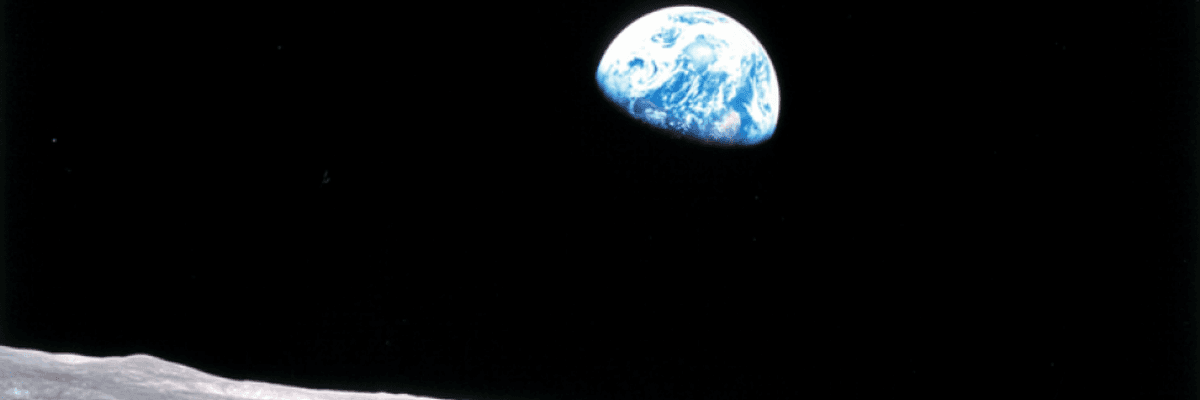
"Let us do what is un-American and value the collective over our individual egos." (1968 Photo: Apollo 8 Commander Mark Borman/NASA)
Bridging the Chasm That Divides Us
Unity is the only way we can keep our country from splintering. Reaching it is the challenge.
17 years ago I made the decision to leave religion. Although I was raised in it, it took getting outside of the institution to see more clearly how others experienced it - rigid thinking that was unable to understand or accept other points of views, excessive moralizing in the absence of love, and a need to convert those outside of the tribe.
Unity is the only way we can keep our country from splintering. Reaching it is the challenge.
17 years ago I made the decision to leave religion. Although I was raised in it, it took getting outside of the institution to see more clearly how others experienced it - rigid thinking that was unable to understand or accept other points of views, excessive moralizing in the absence of love, and a need to convert those outside of the tribe.
As I've watched the deepening polarization of our country, I see the same "religion" cropping up in atheists, secular-leaning folks, and those on the far left - the same self-righteousness and hyper-judgment of people who don't fall in line with a particular set of beliefs.
This worldview is not the sole domain of religious fundamentalism. It is a part of humanity that surfaces across all ideologies and disciplines, and, if unchecked, becomes a rigid block to understanding any perspective but your own.
I recently reached out to an old friend on the other side of the aisle. We hadn't caught up in over a year, having moved to different geographic locations. I knew she didn't agree with many of my views ~ she'd felt the need to write me an email saying so after a blog post I'd written concerning the proposed wall with Mexico and advocating compassion for immigrants.
But, I had seen via social media that she'd recently launched a business and I wanted to send her a congratulatory message. I was happy for her success. Her email back was short and abrupt, almost curt. And no effort was made to reconnect or re-establish a sense of camaraderie.
I was saddened by this because I knew that it wasn't just physical distance obstructing our connection. It was the radical division of our country into left and right, and the inability, or unwillingness, to find common ground. And this dynamic was now rearing its head in what had once been a close friendship.
Exactly when did believing different things become an insurmountable barrier? And when did holding the same viewpoint become a prerequisite to a relationship?
Plenty has been said about this. I recently watched the Social Dilemma on Netflix, followed by a PBS special examining the tribalization effects of social media and Russia's utilization of it to skew our nation's responses towards divisive issues. Unfortunately, intellectual understanding of this dynamic is not keeping the chasm from widening.
What will?
We can pontificate upon the underlying causes of our separation ad nauseam, but at the end of the day, the most fundamental thing we can exert control over is our own behavior. A mundane reality, yes, but surely an untapped one.
In this polarizing day and age it's worth asking, repeatedly, how well we truly accept someone who believes the exact opposite of what we hold dear. Are we willing to entertain the idea that our particular views are not true for all people in all situations? And can we understand it is possible for someone who holds beliefs diametrically opposed to our own to be just as well-meaning, earnest, and desirous of good for the world as we are?
The only way forward is to put down the surety of our "rightness." We must lay down our arms and declare unity more valuable than conquering others with the validity of our viewpoint. We would be well served to consider humility as an asset and practice loosening our own thinking whenever it drives a wedge between us and a fellow human.
Understanding and empathy are not signs of weakness. On the contrary, they are the only signs of true strength. They indicate our willingness to value "the other" above our need to assert our convictions. To elevate someone else's worth to match our own, regardless of ideology.
This is no easy feat. Perhaps it is why no one appears to be doing it. But it is the only option to keep us from fracturing. An "us over them" mentality may win in the short-term. But never in the long-term.
Let us do what is un-American and value the collective over our individual egos. It is the only way to take a step towards the dividing line that is tearing us apart.
We are at a crossroads
This country and this world are at a monumental crossroads. In a few short weeks, US voters will have an opportunity to beat back the forces of fascism and confront the billionaires who are rigging the economy, our media system, and our democracy, making it increasingly impossible for ordinary people to get by. We’re not just talking about the election. We’re talking about what must be done once these fascist elements are vanquished from power. We need a bolder set of solutions than what either major party has so far been willing to offer and a working-class movement ready to fight like hell for it. Trump didn't emerge from nowhere. The conditions that fueled MAGA authoritarianism were created by decades of radical neoliberal economic policies and a corrupt political system dominated by corporate interests. They slashed taxes on the super-rich, promising that the benefits would trickle down. They said giveaways to the corporate titans would make life more affordable for the rest of us. It was all bullshit. And when a bitter, betrayed populace searches for someone to blame, right-wing demagogues have little trouble finding scapegoats. People know when they're being lied to, but you won't hear any of this from the corporate media. Only independent journalism—powered and funded by people who believe in building a better world—can deliver truly trustworthy daily news. Our Fall Campaign is underway, and we need your help. To power our newsroom through the rest of the year, we need to raise $125,000 by midnight on October 31. So if you share our vision, please contribute whatever you can to sustain our work. |
Unity is the only way we can keep our country from splintering. Reaching it is the challenge.
17 years ago I made the decision to leave religion. Although I was raised in it, it took getting outside of the institution to see more clearly how others experienced it - rigid thinking that was unable to understand or accept other points of views, excessive moralizing in the absence of love, and a need to convert those outside of the tribe.
As I've watched the deepening polarization of our country, I see the same "religion" cropping up in atheists, secular-leaning folks, and those on the far left - the same self-righteousness and hyper-judgment of people who don't fall in line with a particular set of beliefs.
This worldview is not the sole domain of religious fundamentalism. It is a part of humanity that surfaces across all ideologies and disciplines, and, if unchecked, becomes a rigid block to understanding any perspective but your own.
I recently reached out to an old friend on the other side of the aisle. We hadn't caught up in over a year, having moved to different geographic locations. I knew she didn't agree with many of my views ~ she'd felt the need to write me an email saying so after a blog post I'd written concerning the proposed wall with Mexico and advocating compassion for immigrants.
But, I had seen via social media that she'd recently launched a business and I wanted to send her a congratulatory message. I was happy for her success. Her email back was short and abrupt, almost curt. And no effort was made to reconnect or re-establish a sense of camaraderie.
I was saddened by this because I knew that it wasn't just physical distance obstructing our connection. It was the radical division of our country into left and right, and the inability, or unwillingness, to find common ground. And this dynamic was now rearing its head in what had once been a close friendship.
Exactly when did believing different things become an insurmountable barrier? And when did holding the same viewpoint become a prerequisite to a relationship?
Plenty has been said about this. I recently watched the Social Dilemma on Netflix, followed by a PBS special examining the tribalization effects of social media and Russia's utilization of it to skew our nation's responses towards divisive issues. Unfortunately, intellectual understanding of this dynamic is not keeping the chasm from widening.
What will?
We can pontificate upon the underlying causes of our separation ad nauseam, but at the end of the day, the most fundamental thing we can exert control over is our own behavior. A mundane reality, yes, but surely an untapped one.
In this polarizing day and age it's worth asking, repeatedly, how well we truly accept someone who believes the exact opposite of what we hold dear. Are we willing to entertain the idea that our particular views are not true for all people in all situations? And can we understand it is possible for someone who holds beliefs diametrically opposed to our own to be just as well-meaning, earnest, and desirous of good for the world as we are?
The only way forward is to put down the surety of our "rightness." We must lay down our arms and declare unity more valuable than conquering others with the validity of our viewpoint. We would be well served to consider humility as an asset and practice loosening our own thinking whenever it drives a wedge between us and a fellow human.
Understanding and empathy are not signs of weakness. On the contrary, they are the only signs of true strength. They indicate our willingness to value "the other" above our need to assert our convictions. To elevate someone else's worth to match our own, regardless of ideology.
This is no easy feat. Perhaps it is why no one appears to be doing it. But it is the only option to keep us from fracturing. An "us over them" mentality may win in the short-term. But never in the long-term.
Let us do what is un-American and value the collective over our individual egos. It is the only way to take a step towards the dividing line that is tearing us apart.
Unity is the only way we can keep our country from splintering. Reaching it is the challenge.
17 years ago I made the decision to leave religion. Although I was raised in it, it took getting outside of the institution to see more clearly how others experienced it - rigid thinking that was unable to understand or accept other points of views, excessive moralizing in the absence of love, and a need to convert those outside of the tribe.
As I've watched the deepening polarization of our country, I see the same "religion" cropping up in atheists, secular-leaning folks, and those on the far left - the same self-righteousness and hyper-judgment of people who don't fall in line with a particular set of beliefs.
This worldview is not the sole domain of religious fundamentalism. It is a part of humanity that surfaces across all ideologies and disciplines, and, if unchecked, becomes a rigid block to understanding any perspective but your own.
I recently reached out to an old friend on the other side of the aisle. We hadn't caught up in over a year, having moved to different geographic locations. I knew she didn't agree with many of my views ~ she'd felt the need to write me an email saying so after a blog post I'd written concerning the proposed wall with Mexico and advocating compassion for immigrants.
But, I had seen via social media that she'd recently launched a business and I wanted to send her a congratulatory message. I was happy for her success. Her email back was short and abrupt, almost curt. And no effort was made to reconnect or re-establish a sense of camaraderie.
I was saddened by this because I knew that it wasn't just physical distance obstructing our connection. It was the radical division of our country into left and right, and the inability, or unwillingness, to find common ground. And this dynamic was now rearing its head in what had once been a close friendship.
Exactly when did believing different things become an insurmountable barrier? And when did holding the same viewpoint become a prerequisite to a relationship?
Plenty has been said about this. I recently watched the Social Dilemma on Netflix, followed by a PBS special examining the tribalization effects of social media and Russia's utilization of it to skew our nation's responses towards divisive issues. Unfortunately, intellectual understanding of this dynamic is not keeping the chasm from widening.
What will?
We can pontificate upon the underlying causes of our separation ad nauseam, but at the end of the day, the most fundamental thing we can exert control over is our own behavior. A mundane reality, yes, but surely an untapped one.
In this polarizing day and age it's worth asking, repeatedly, how well we truly accept someone who believes the exact opposite of what we hold dear. Are we willing to entertain the idea that our particular views are not true for all people in all situations? And can we understand it is possible for someone who holds beliefs diametrically opposed to our own to be just as well-meaning, earnest, and desirous of good for the world as we are?
The only way forward is to put down the surety of our "rightness." We must lay down our arms and declare unity more valuable than conquering others with the validity of our viewpoint. We would be well served to consider humility as an asset and practice loosening our own thinking whenever it drives a wedge between us and a fellow human.
Understanding and empathy are not signs of weakness. On the contrary, they are the only signs of true strength. They indicate our willingness to value "the other" above our need to assert our convictions. To elevate someone else's worth to match our own, regardless of ideology.
This is no easy feat. Perhaps it is why no one appears to be doing it. But it is the only option to keep us from fracturing. An "us over them" mentality may win in the short-term. But never in the long-term.
Let us do what is un-American and value the collective over our individual egos. It is the only way to take a step towards the dividing line that is tearing us apart.