SUBSCRIBE TO OUR FREE NEWSLETTER
Daily news & progressive opinion—funded by the people, not the corporations—delivered straight to your inbox.
5
#000000
#FFFFFF
To donate by check, phone, or other method, see our More Ways to Give page.
Daily news & progressive opinion—funded by the people, not the corporations—delivered straight to your inbox.
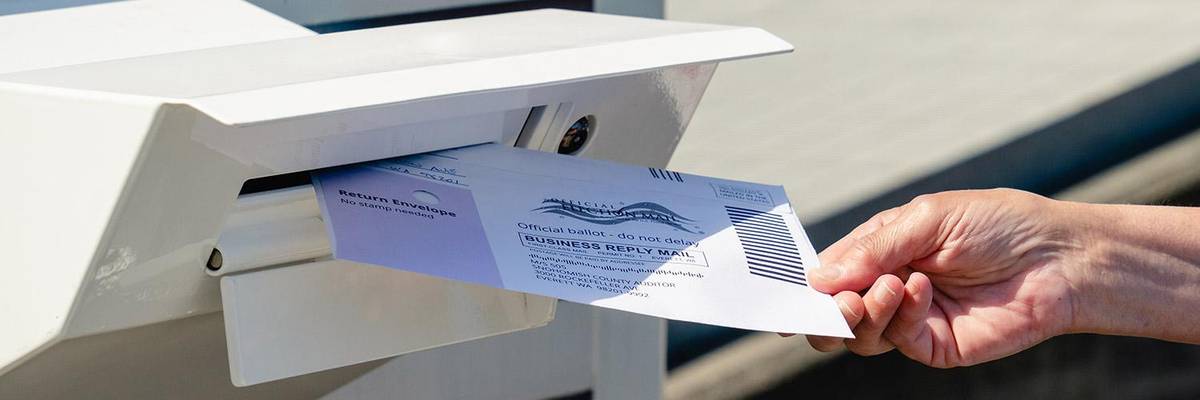
Together we can help our neighbors understand how to vote safely and securely, and hold our election officials accountable. (Photo: Cindy Shebley/Flickr)
For a variety of reasons, ballots can be or rejected or "spoiled" if they are not filled out correctly or if verification protocols are not followed. This year, there is a great deal of concern over the surge of mail ballots that have been requested as a result of the COVID-19 pandemic. We are observing key counties in the United States as the election unfolds, as reported in a previous analysis.
Here we evaluate patterns of mail ballot use and observed 2016 ballot rejection rates across these counties. Our goal is to identify particular counties to watch as Election Night nears. We also examine ballot returns in North Carolina, where voters have already begun voting by mail. We then review and summarize best practices that election officials and voters can use to make sure that every ballot counts this November.
According to research from the MIT Election Lab, the most common reasons that local election officials reject mail ballots are due to arrival after official deadlines or problems with signature verification on return envelopes.
Most states have expanded vote-by-mail options for November. State election law largely determines the use of vote-by-mail across selected counties, with every active eligible voter being sent a ballot in California and Colorado this year, and most Arizona voters being included on the state's Permanent Early Voter List. Alternatively, states like North Carolina may have more experience with early in-person voting and traditionally place more restrictions on vote-by-mail. In the case of Pennsylvania, the state just recently expanded voting options beyond Election Day voting. As a result, we see a lot of variation in expected vote-by-mail usage across states and counties this November.
Historically, statewide rejection rates have been highly correlated across elections, but November will test the capacity of many systems. Over half a million ballots, a 40% increase over 2016, were rejected in this year's primaries in 30 states, according to a study by NPR. In Pennsylvania and Wisconsin, 37,119 and 23,196 ballots were rejected, respectively, which is close to the number of votes that President Trump won those states by in 2016.
The cost of ballot rejection is not born equally by all voters in all states. As Daniel Smith and colleagues have shown, younger, Black, and Latino voters in Florida have ballots rejected at higher rates, and those disparities increased during the 2020 primaries. Overall, our selection of key 2020 election counties also exhibits less ballot rejection in counties with more white voters. Some of this bias is likely attributable to inferior and arbitrary state ballot verification practices.
Inferior practices include not providing equitably located voting places and machines, ill-equipped polling workers, and lack of quality control in processing materials, including mail ballots. For example, in Ohio, voters were required to fill out applications to vote by mail, yet another hurdle that many states imposed on voters. In Cuyahoga County, OH, tens of thousands of those applications are not valid because voters didn't enter their birthday as required, or some other error, requiring county officials to try to correct them in time to send out a ballot. To overcome these and other barriers, Battle for Democracy Fund is on the ground in Ohio and Wisconsin, with over 1000 volunteers to make sure that everyone who wants to vote gets to vote, and that every ballot cast gets counted. As Executive Director/Lead Organizer of Greater Cleveland Congregations Keisha Krumm explains, "Tracking every vote with detailed care is the only way we'll know if this is happening." Similar groups are working across multiple swing states.
Over a million votes have already been cast in the 2020 election, including a quarter million in North Carolina, where voters began receiving mail ballots in early September. While there are still many counties where no ballots have been rejected and reporting is incomplete, ballots are already being rejected at a higher rate in counties with a larger proportion of Black residents, similar to the 2016 pattern.
As Alejandra Tres of Battle for Democracy Fund explains, "Democracy shouldn't be a labyrinth, but we are doing everything we can, engaging in intensive support efforts for voters to make sure they understand and follow steps to protect their right to vote." We clearly need more democratic accountability in the electoral process, and the public can play an important role. You can help provide that accountability by encouraging officials to support established best practices, and in every state, voters, organizers, and officials can take the following actions to protect more equitable democracy:
Millions of people will be voting by mail for the first time in the next few weeks. Many will not know that they need to sign their envelope, or that the consistency of their signature is critical. Together we can help our neighbors understand how to vote safely and securely, and hold our election officials accountable.
Dear Common Dreams reader, It’s been nearly 30 years since I co-founded Common Dreams with my late wife, Lina Newhouser. We had the radical notion that journalism should serve the public good, not corporate profits. It was clear to us from the outset what it would take to build such a project. No paid advertisements. No corporate sponsors. No millionaire publisher telling us what to think or do. Many people said we wouldn't last a year, but we proved those doubters wrong. Together with a tremendous team of journalists and dedicated staff, we built an independent media outlet free from the constraints of profits and corporate control. Our mission has always been simple: To inform. To inspire. To ignite change for the common good. Building Common Dreams was not easy. Our survival was never guaranteed. When you take on the most powerful forces—Wall Street greed, fossil fuel industry destruction, Big Tech lobbyists, and uber-rich oligarchs who have spent billions upon billions rigging the economy and democracy in their favor—the only bulwark you have is supporters who believe in your work. But here’s the urgent message from me today. It's never been this bad out there. And it's never been this hard to keep us going. At the very moment Common Dreams is most needed, the threats we face are intensifying. We need your support now more than ever. We don't accept corporate advertising and never will. We don't have a paywall because we don't think people should be blocked from critical news based on their ability to pay. Everything we do is funded by the donations of readers like you. When everyone does the little they can afford, we are strong. But if that support retreats or dries up, so do we. Will you donate now to make sure Common Dreams not only survives but thrives? —Craig Brown, Co-founder |
For a variety of reasons, ballots can be or rejected or "spoiled" if they are not filled out correctly or if verification protocols are not followed. This year, there is a great deal of concern over the surge of mail ballots that have been requested as a result of the COVID-19 pandemic. We are observing key counties in the United States as the election unfolds, as reported in a previous analysis.
Here we evaluate patterns of mail ballot use and observed 2016 ballot rejection rates across these counties. Our goal is to identify particular counties to watch as Election Night nears. We also examine ballot returns in North Carolina, where voters have already begun voting by mail. We then review and summarize best practices that election officials and voters can use to make sure that every ballot counts this November.
According to research from the MIT Election Lab, the most common reasons that local election officials reject mail ballots are due to arrival after official deadlines or problems with signature verification on return envelopes.
Most states have expanded vote-by-mail options for November. State election law largely determines the use of vote-by-mail across selected counties, with every active eligible voter being sent a ballot in California and Colorado this year, and most Arizona voters being included on the state's Permanent Early Voter List. Alternatively, states like North Carolina may have more experience with early in-person voting and traditionally place more restrictions on vote-by-mail. In the case of Pennsylvania, the state just recently expanded voting options beyond Election Day voting. As a result, we see a lot of variation in expected vote-by-mail usage across states and counties this November.
Historically, statewide rejection rates have been highly correlated across elections, but November will test the capacity of many systems. Over half a million ballots, a 40% increase over 2016, were rejected in this year's primaries in 30 states, according to a study by NPR. In Pennsylvania and Wisconsin, 37,119 and 23,196 ballots were rejected, respectively, which is close to the number of votes that President Trump won those states by in 2016.
The cost of ballot rejection is not born equally by all voters in all states. As Daniel Smith and colleagues have shown, younger, Black, and Latino voters in Florida have ballots rejected at higher rates, and those disparities increased during the 2020 primaries. Overall, our selection of key 2020 election counties also exhibits less ballot rejection in counties with more white voters. Some of this bias is likely attributable to inferior and arbitrary state ballot verification practices.
Inferior practices include not providing equitably located voting places and machines, ill-equipped polling workers, and lack of quality control in processing materials, including mail ballots. For example, in Ohio, voters were required to fill out applications to vote by mail, yet another hurdle that many states imposed on voters. In Cuyahoga County, OH, tens of thousands of those applications are not valid because voters didn't enter their birthday as required, or some other error, requiring county officials to try to correct them in time to send out a ballot. To overcome these and other barriers, Battle for Democracy Fund is on the ground in Ohio and Wisconsin, with over 1000 volunteers to make sure that everyone who wants to vote gets to vote, and that every ballot cast gets counted. As Executive Director/Lead Organizer of Greater Cleveland Congregations Keisha Krumm explains, "Tracking every vote with detailed care is the only way we'll know if this is happening." Similar groups are working across multiple swing states.
Over a million votes have already been cast in the 2020 election, including a quarter million in North Carolina, where voters began receiving mail ballots in early September. While there are still many counties where no ballots have been rejected and reporting is incomplete, ballots are already being rejected at a higher rate in counties with a larger proportion of Black residents, similar to the 2016 pattern.
As Alejandra Tres of Battle for Democracy Fund explains, "Democracy shouldn't be a labyrinth, but we are doing everything we can, engaging in intensive support efforts for voters to make sure they understand and follow steps to protect their right to vote." We clearly need more democratic accountability in the electoral process, and the public can play an important role. You can help provide that accountability by encouraging officials to support established best practices, and in every state, voters, organizers, and officials can take the following actions to protect more equitable democracy:
Millions of people will be voting by mail for the first time in the next few weeks. Many will not know that they need to sign their envelope, or that the consistency of their signature is critical. Together we can help our neighbors understand how to vote safely and securely, and hold our election officials accountable.
For a variety of reasons, ballots can be or rejected or "spoiled" if they are not filled out correctly or if verification protocols are not followed. This year, there is a great deal of concern over the surge of mail ballots that have been requested as a result of the COVID-19 pandemic. We are observing key counties in the United States as the election unfolds, as reported in a previous analysis.
Here we evaluate patterns of mail ballot use and observed 2016 ballot rejection rates across these counties. Our goal is to identify particular counties to watch as Election Night nears. We also examine ballot returns in North Carolina, where voters have already begun voting by mail. We then review and summarize best practices that election officials and voters can use to make sure that every ballot counts this November.
According to research from the MIT Election Lab, the most common reasons that local election officials reject mail ballots are due to arrival after official deadlines or problems with signature verification on return envelopes.
Most states have expanded vote-by-mail options for November. State election law largely determines the use of vote-by-mail across selected counties, with every active eligible voter being sent a ballot in California and Colorado this year, and most Arizona voters being included on the state's Permanent Early Voter List. Alternatively, states like North Carolina may have more experience with early in-person voting and traditionally place more restrictions on vote-by-mail. In the case of Pennsylvania, the state just recently expanded voting options beyond Election Day voting. As a result, we see a lot of variation in expected vote-by-mail usage across states and counties this November.
Historically, statewide rejection rates have been highly correlated across elections, but November will test the capacity of many systems. Over half a million ballots, a 40% increase over 2016, were rejected in this year's primaries in 30 states, according to a study by NPR. In Pennsylvania and Wisconsin, 37,119 and 23,196 ballots were rejected, respectively, which is close to the number of votes that President Trump won those states by in 2016.
The cost of ballot rejection is not born equally by all voters in all states. As Daniel Smith and colleagues have shown, younger, Black, and Latino voters in Florida have ballots rejected at higher rates, and those disparities increased during the 2020 primaries. Overall, our selection of key 2020 election counties also exhibits less ballot rejection in counties with more white voters. Some of this bias is likely attributable to inferior and arbitrary state ballot verification practices.
Inferior practices include not providing equitably located voting places and machines, ill-equipped polling workers, and lack of quality control in processing materials, including mail ballots. For example, in Ohio, voters were required to fill out applications to vote by mail, yet another hurdle that many states imposed on voters. In Cuyahoga County, OH, tens of thousands of those applications are not valid because voters didn't enter their birthday as required, or some other error, requiring county officials to try to correct them in time to send out a ballot. To overcome these and other barriers, Battle for Democracy Fund is on the ground in Ohio and Wisconsin, with over 1000 volunteers to make sure that everyone who wants to vote gets to vote, and that every ballot cast gets counted. As Executive Director/Lead Organizer of Greater Cleveland Congregations Keisha Krumm explains, "Tracking every vote with detailed care is the only way we'll know if this is happening." Similar groups are working across multiple swing states.
Over a million votes have already been cast in the 2020 election, including a quarter million in North Carolina, where voters began receiving mail ballots in early September. While there are still many counties where no ballots have been rejected and reporting is incomplete, ballots are already being rejected at a higher rate in counties with a larger proportion of Black residents, similar to the 2016 pattern.
As Alejandra Tres of Battle for Democracy Fund explains, "Democracy shouldn't be a labyrinth, but we are doing everything we can, engaging in intensive support efforts for voters to make sure they understand and follow steps to protect their right to vote." We clearly need more democratic accountability in the electoral process, and the public can play an important role. You can help provide that accountability by encouraging officials to support established best practices, and in every state, voters, organizers, and officials can take the following actions to protect more equitable democracy:
Millions of people will be voting by mail for the first time in the next few weeks. Many will not know that they need to sign their envelope, or that the consistency of their signature is critical. Together we can help our neighbors understand how to vote safely and securely, and hold our election officials accountable.