SUBSCRIBE TO OUR FREE NEWSLETTER
Daily news & progressive opinion—funded by the people, not the corporations—delivered straight to your inbox.
5
#000000
#FFFFFF
To donate by check, phone, or other method, see our More Ways to Give page.
Daily news & progressive opinion—funded by the people, not the corporations—delivered straight to your inbox.
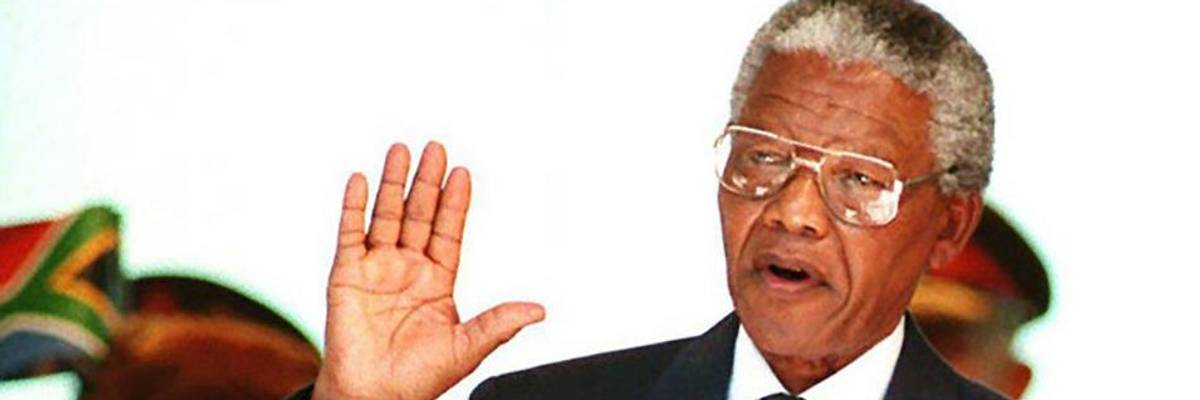
Former President Nelson Mandela takes the oath on May 10, 1994, during his inauguration at the Union Building in Pretoria, South Africa.
Twenty-five years after South Africa's miraculous first democratic elections, it's easy to forget just how close the county came to civil war.
I was working for the ANC (Western Cape) from 1992-4 and there were times - right up to Election Day itself - that, as Mandela said, it "seemed impossible until it was done."
With weeks to go, violence in KwaZulu-Natal was escalating with the Inkartha Freedom Party (IFP) boycotting the elections.
Tensions were mounting in the so-called "homelands" of Ciskei, QwaQwa & Bophuthatswana.
Twenty-five years after South Africa's miraculous first democratic elections, it's easy to forget just how close the county came to civil war.
I was working for the ANC (Western Cape) from 1992-4 and there were times - right up to Election Day itself - that, as Mandela said, it "seemed impossible until it was done."
With weeks to go, violence in KwaZulu-Natal was escalating with the Inkartha Freedom Party (IFP) boycotting the elections.
Tensions were mounting in the so-called "homelands" of Ciskei, QwaQwa & Bophuthatswana.
Well-armed conservative Afrikaner militias were mobilizing with Freedom Front leader, General Viljoen, admitting in 2001 up to 60,000 armed men had been mobilized. "My own followers started pushing hard: they wanted an end to all talks, they wanted the war to start," he told a newspaper.
Two days before the elections, a massive car bomb in Jo'burg killed 9 people including ANC candidate, Susan Keane, & injured 92. The next day, 12 people were killed by bombs targeting black people in Germiston & Pretoria.
All attacks bore the hallmarks of white separatist groups.
On 28 March, 55 people were killed & hundreds injured as violence erupted in Jo'burg as IFP supporters protested against the elections. 19 were killed as they marched on the ANCs HQ in what was called the Shell House Massacre.
With Inkatha boycotting the elections, more violence would be inevitable, but incredibly, after intense negotiations & with just a week to go, the IFP agreed to contest elections.
A year earlier, Mandela had pulled the country from the brink of civil war after the assassination of Chris Hani.
Ironically, his murder had the opposite effect of that intended, demonstrating that only the ANC could hold the country together.
On 10 March, another key moment occurred with the failed attempt by some 4,000 Afrikaner Resistance Movement (AWB) members to prop up the puppet govt of Bophutatswana, whose leader was refusing to participate in the election.
Front page photos of the extrajudicial shooting at point blank range of three AWB members had a massive impact, helping to burst the myth of Afrikaner power.
At midnight on election eve, I watched as the new flag was raised above parliament in Cape Town, then slept for a few hours before heading back to the office.
After polls closed Mandela reportedly told a friend: "I should be jumping for joy but I just feel a stillness. There such a huge responsibility. So much to do."
Whilst a massive ANC majority was never in doubt, the declaration of the results was nevertheless eye-watering & emotional.
Thousands gathered on Grand Parade on the night of 1st May, our jubilation overshadowing any disappointment at the ANC's emphatic loss to the National Party in Western Cape.
On 10 May I was part of the crowd at Union Buildings as Mandela took the Oath of Office.
In his inaugural address, Madiba said. "We succeeded to take our last steps to freedom in conditions of relative peace. We commit ourselves to the construction of a complete, just and lasting peace...The time for the healing of the wounds had come."
Just after Mandela was sworn in came a moment that still gives me goosebumps. Three jets flew low over the crowd followed by four helicopters, each towing the new flag.
Instinctively we flinched. But then it dawned...The military - and the State - were no longer enemies of the people: they now belonged to the people.
I came back home soon after that, but feel deeply privileged to have been in South Africa at this remarkable time and to have worked alongside so many courageous people who sacrificed so much so that their country could be free. As Wordsworth put it: "Bliss it was in that dawn to be alive. But to be a part of it was very heaven."
Dear Common Dreams reader, It’s been nearly 30 years since I co-founded Common Dreams with my late wife, Lina Newhouser. We had the radical notion that journalism should serve the public good, not corporate profits. It was clear to us from the outset what it would take to build such a project. No paid advertisements. No corporate sponsors. No millionaire publisher telling us what to think or do. Many people said we wouldn't last a year, but we proved those doubters wrong. Together with a tremendous team of journalists and dedicated staff, we built an independent media outlet free from the constraints of profits and corporate control. Our mission has always been simple: To inform. To inspire. To ignite change for the common good. Building Common Dreams was not easy. Our survival was never guaranteed. When you take on the most powerful forces—Wall Street greed, fossil fuel industry destruction, Big Tech lobbyists, and uber-rich oligarchs who have spent billions upon billions rigging the economy and democracy in their favor—the only bulwark you have is supporters who believe in your work. But here’s the urgent message from me today. It's never been this bad out there. And it's never been this hard to keep us going. At the very moment Common Dreams is most needed, the threats we face are intensifying. We need your support now more than ever. We don't accept corporate advertising and never will. We don't have a paywall because we don't think people should be blocked from critical news based on their ability to pay. Everything we do is funded by the donations of readers like you. When everyone does the little they can afford, we are strong. But if that support retreats or dries up, so do we. Will you donate now to make sure Common Dreams not only survives but thrives? —Craig Brown, Co-founder |
Twenty-five years after South Africa's miraculous first democratic elections, it's easy to forget just how close the county came to civil war.
I was working for the ANC (Western Cape) from 1992-4 and there were times - right up to Election Day itself - that, as Mandela said, it "seemed impossible until it was done."
With weeks to go, violence in KwaZulu-Natal was escalating with the Inkartha Freedom Party (IFP) boycotting the elections.
Tensions were mounting in the so-called "homelands" of Ciskei, QwaQwa & Bophuthatswana.
Well-armed conservative Afrikaner militias were mobilizing with Freedom Front leader, General Viljoen, admitting in 2001 up to 60,000 armed men had been mobilized. "My own followers started pushing hard: they wanted an end to all talks, they wanted the war to start," he told a newspaper.
Two days before the elections, a massive car bomb in Jo'burg killed 9 people including ANC candidate, Susan Keane, & injured 92. The next day, 12 people were killed by bombs targeting black people in Germiston & Pretoria.
All attacks bore the hallmarks of white separatist groups.
On 28 March, 55 people were killed & hundreds injured as violence erupted in Jo'burg as IFP supporters protested against the elections. 19 were killed as they marched on the ANCs HQ in what was called the Shell House Massacre.
With Inkatha boycotting the elections, more violence would be inevitable, but incredibly, after intense negotiations & with just a week to go, the IFP agreed to contest elections.
A year earlier, Mandela had pulled the country from the brink of civil war after the assassination of Chris Hani.
Ironically, his murder had the opposite effect of that intended, demonstrating that only the ANC could hold the country together.
On 10 March, another key moment occurred with the failed attempt by some 4,000 Afrikaner Resistance Movement (AWB) members to prop up the puppet govt of Bophutatswana, whose leader was refusing to participate in the election.
Front page photos of the extrajudicial shooting at point blank range of three AWB members had a massive impact, helping to burst the myth of Afrikaner power.
At midnight on election eve, I watched as the new flag was raised above parliament in Cape Town, then slept for a few hours before heading back to the office.
After polls closed Mandela reportedly told a friend: "I should be jumping for joy but I just feel a stillness. There such a huge responsibility. So much to do."
Whilst a massive ANC majority was never in doubt, the declaration of the results was nevertheless eye-watering & emotional.
Thousands gathered on Grand Parade on the night of 1st May, our jubilation overshadowing any disappointment at the ANC's emphatic loss to the National Party in Western Cape.
On 10 May I was part of the crowd at Union Buildings as Mandela took the Oath of Office.
In his inaugural address, Madiba said. "We succeeded to take our last steps to freedom in conditions of relative peace. We commit ourselves to the construction of a complete, just and lasting peace...The time for the healing of the wounds had come."
Just after Mandela was sworn in came a moment that still gives me goosebumps. Three jets flew low over the crowd followed by four helicopters, each towing the new flag.
Instinctively we flinched. But then it dawned...The military - and the State - were no longer enemies of the people: they now belonged to the people.
I came back home soon after that, but feel deeply privileged to have been in South Africa at this remarkable time and to have worked alongside so many courageous people who sacrificed so much so that their country could be free. As Wordsworth put it: "Bliss it was in that dawn to be alive. But to be a part of it was very heaven."
Twenty-five years after South Africa's miraculous first democratic elections, it's easy to forget just how close the county came to civil war.
I was working for the ANC (Western Cape) from 1992-4 and there were times - right up to Election Day itself - that, as Mandela said, it "seemed impossible until it was done."
With weeks to go, violence in KwaZulu-Natal was escalating with the Inkartha Freedom Party (IFP) boycotting the elections.
Tensions were mounting in the so-called "homelands" of Ciskei, QwaQwa & Bophuthatswana.
Well-armed conservative Afrikaner militias were mobilizing with Freedom Front leader, General Viljoen, admitting in 2001 up to 60,000 armed men had been mobilized. "My own followers started pushing hard: they wanted an end to all talks, they wanted the war to start," he told a newspaper.
Two days before the elections, a massive car bomb in Jo'burg killed 9 people including ANC candidate, Susan Keane, & injured 92. The next day, 12 people were killed by bombs targeting black people in Germiston & Pretoria.
All attacks bore the hallmarks of white separatist groups.
On 28 March, 55 people were killed & hundreds injured as violence erupted in Jo'burg as IFP supporters protested against the elections. 19 were killed as they marched on the ANCs HQ in what was called the Shell House Massacre.
With Inkatha boycotting the elections, more violence would be inevitable, but incredibly, after intense negotiations & with just a week to go, the IFP agreed to contest elections.
A year earlier, Mandela had pulled the country from the brink of civil war after the assassination of Chris Hani.
Ironically, his murder had the opposite effect of that intended, demonstrating that only the ANC could hold the country together.
On 10 March, another key moment occurred with the failed attempt by some 4,000 Afrikaner Resistance Movement (AWB) members to prop up the puppet govt of Bophutatswana, whose leader was refusing to participate in the election.
Front page photos of the extrajudicial shooting at point blank range of three AWB members had a massive impact, helping to burst the myth of Afrikaner power.
At midnight on election eve, I watched as the new flag was raised above parliament in Cape Town, then slept for a few hours before heading back to the office.
After polls closed Mandela reportedly told a friend: "I should be jumping for joy but I just feel a stillness. There such a huge responsibility. So much to do."
Whilst a massive ANC majority was never in doubt, the declaration of the results was nevertheless eye-watering & emotional.
Thousands gathered on Grand Parade on the night of 1st May, our jubilation overshadowing any disappointment at the ANC's emphatic loss to the National Party in Western Cape.
On 10 May I was part of the crowd at Union Buildings as Mandela took the Oath of Office.
In his inaugural address, Madiba said. "We succeeded to take our last steps to freedom in conditions of relative peace. We commit ourselves to the construction of a complete, just and lasting peace...The time for the healing of the wounds had come."
Just after Mandela was sworn in came a moment that still gives me goosebumps. Three jets flew low over the crowd followed by four helicopters, each towing the new flag.
Instinctively we flinched. But then it dawned...The military - and the State - were no longer enemies of the people: they now belonged to the people.
I came back home soon after that, but feel deeply privileged to have been in South Africa at this remarkable time and to have worked alongside so many courageous people who sacrificed so much so that their country could be free. As Wordsworth put it: "Bliss it was in that dawn to be alive. But to be a part of it was very heaven."