SUBSCRIBE TO OUR FREE NEWSLETTER
Daily news & progressive opinion—funded by the people, not the corporations—delivered straight to your inbox.
5
#000000
#FFFFFF
To donate by check, phone, or other method, see our More Ways to Give page.
Daily news & progressive opinion—funded by the people, not the corporations—delivered straight to your inbox.
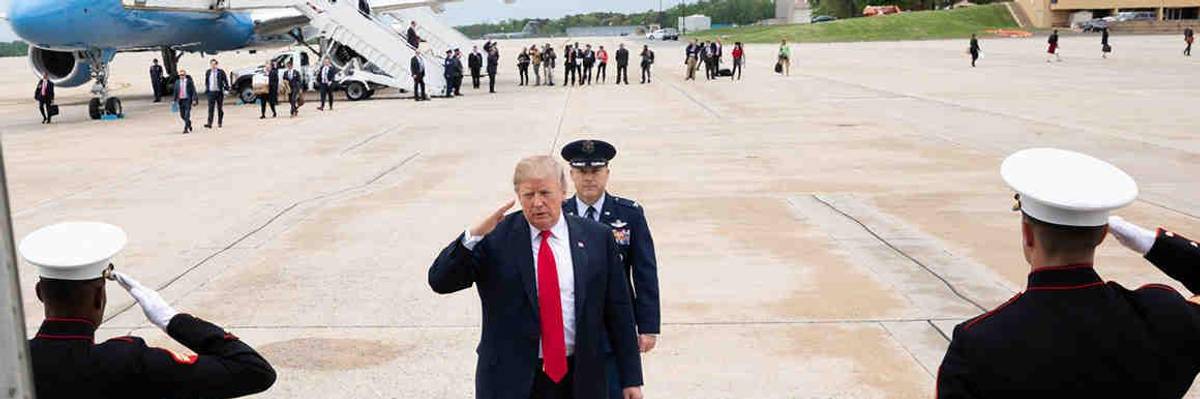
As President Trump visits the United Kingdom, the focus has been on strained trans-Atlantic relations, his intervention in domestic politics, and massive public protests.
A different, diplomatically-couched protest has received less attention but sends a consequential signal about the so-called "special relationship" between the two countries: U.K. parliamentarians are concerned that under Trump, America could return to a policy of torture -- and they are warning British intelligence agencies to guard against it.
Parliament's Intelligence and Security Committee released a pair of reports at the end of June providing extensive detail about U.K. complicity in torture, rendition, and other abuses of detainees by the U.S. military and the CIA during the George W. Bush administration. The reports by the committee, which oversees the U.K.'s intelligence agencies, also focus on policy changes needed to avoid a repeat of such abuses.
The committee uncovered at least 166 instances in which British officials either directly witnessed or had credible information suggesting that torture and abuse were carried out by Americans. It also found 232 cases in which U.K. personnel continued to interrogate or provide intelligence about a U.S.-held detainee even after they knew or suspected that the detainee had been abused. And there were 192 cases in which the U.K. accepted intelligence information obtained by the U.S. from detainees the U.K. knew or should have suspected had been tortured or abused.
The committee found dozens of instances in which the U.K. provided intelligence or financial support to illegal U.S. "renditions" -- in which the U.S. essentially kidnapping people and transferring them to third countries where they were subjected to torture and degrading treatment.
The stories the committee tells are harrowing. It cites internal reports from U.K. intelligence officers who visited U.S. detention facilities and saw prisoners hooded and held in painful "stress" positions for hours on end. It describes the CIA's practice of forcing detainees into small wooden crates designed so that they could neither lie down nor stand up.
The committee describes U.K. intelligence officials documenting detainees' accounts of sleep deprivation and other forms of abuse -- and facing internal pressure from higher-ranking officials to remove those details from their reports. It tells of U.K. foreign service officers walking through the halls of the U.S. detention facility at Bagram Air Force base in Afghanistan, hearing "audible screams" coming from detainees. It describes how U.S. officials asked U.K. officers to leave an interrogation room so they would have "plausible deniability" when the U.S. interrogator "roughed up" the detainee.
How did the U.K. become the Best Supporting Actor in the U.S.'s shameful torture drama? The committee suggests that British intelligence agencies may have been "deliberately turning a blind eye so as not to damage the relationship [with the U.S.] and risk the flow of intelligence." It notes that the U.K. is the "junior partner" of American intelligence agencies, relying -- perhaps over-relying -- on the U.S. for intelligence. The committee also says that the U.K. let pressure to share intelligence distract from its obligations to uphold fundamental human rights.
The U.K. intelligence agencies' own explanation to the parliamentary committee is that they were taken unaware by America's rapid abandonment, in the aftermath of 9/11, of what the U.K. assumed was a shared set of basic values.
The chief of the U.K.'s Secret Intelligence Service noted that "there was an assumption prevailing that the U.S. would be behaving lawfully. Nothing in our previous experience before 2001 had led us to doubt that." As a result, he said, the U.K. failed for too long to "join the dots" and fully comprehend its complicity in torture and abuse by its closest ally.
Whatever you think of this explanation from U.K. agencies mired in complicity with torture, we live now in less innocent times. The committee repeatedly refers to a current risk that the U.K. will once again be pressured to choose between complicity in torture and continued cooperation with America. It calls for further tightening of rules to prevent U.K. intelligence agencies from participating in interrogations and exchanging intelligence when there is a serious risk of involvement in torture or mistreatment.
Ominously, the committee specifically refer to "the clear shift in focus signaled by the present US administration," and asserts that reliance on past U.S. assurances that U.K. territory will not be used for rendition "is completely unsatisfactory."
Diplomacy may have stopped the committee from naming the sources of its renewed concern, but there can be no doubt that President Trump and CIA Director Gina Haspel are those sources. After all, Trump has repeatedly advocated for a return to torture. And although he has not carried out that promise -- or threat -- he did succeed in getting the Senate to confirm a CIA director who oversaw torture, and participated in covering up and destroying torture evidence.
Now, Prime Minister Theresa May is welcoming Trump. In advance of his arrival, the U.S. ambassador went on the BBC to extoll the "special relationship" between the two nations and laud the "unprecedented interoperability" of the American and British intelligence and security apparatus.
But the looming fear of future complicity in rights violations threatens that relationship. When the U.K. parliamentarians released their reports, they warned, "We are unconvinced that the Government recognizes the seriousness of rendition and the potential for the UK to be complicit in actions which may lead to torture or CIDT" -- cruel, inhuman, and degrading treatment. Nevertheless, they noted that U.K. intelligence agencies "are monitoring the actions of their US liaison partners in order to identify at an early stage any shift in policy on detainees."
Trump is now straining America's traditional alliances in unprecedented ways. Even in these dark and turbulent times there is some good news -- he should not count on America's Western allies to go along with any return to torture.
Dear Common Dreams reader, It’s been nearly 30 years since I co-founded Common Dreams with my late wife, Lina Newhouser. We had the radical notion that journalism should serve the public good, not corporate profits. It was clear to us from the outset what it would take to build such a project. No paid advertisements. No corporate sponsors. No millionaire publisher telling us what to think or do. Many people said we wouldn't last a year, but we proved those doubters wrong. Together with a tremendous team of journalists and dedicated staff, we built an independent media outlet free from the constraints of profits and corporate control. Our mission has always been simple: To inform. To inspire. To ignite change for the common good. Building Common Dreams was not easy. Our survival was never guaranteed. When you take on the most powerful forces—Wall Street greed, fossil fuel industry destruction, Big Tech lobbyists, and uber-rich oligarchs who have spent billions upon billions rigging the economy and democracy in their favor—the only bulwark you have is supporters who believe in your work. But here’s the urgent message from me today. It's never been this bad out there. And it's never been this hard to keep us going. At the very moment Common Dreams is most needed, the threats we face are intensifying. We need your support now more than ever. We don't accept corporate advertising and never will. We don't have a paywall because we don't think people should be blocked from critical news based on their ability to pay. Everything we do is funded by the donations of readers like you. When everyone does the little they can afford, we are strong. But if that support retreats or dries up, so do we. Will you donate now to make sure Common Dreams not only survives but thrives? —Craig Brown, Co-founder |
As President Trump visits the United Kingdom, the focus has been on strained trans-Atlantic relations, his intervention in domestic politics, and massive public protests.
A different, diplomatically-couched protest has received less attention but sends a consequential signal about the so-called "special relationship" between the two countries: U.K. parliamentarians are concerned that under Trump, America could return to a policy of torture -- and they are warning British intelligence agencies to guard against it.
Parliament's Intelligence and Security Committee released a pair of reports at the end of June providing extensive detail about U.K. complicity in torture, rendition, and other abuses of detainees by the U.S. military and the CIA during the George W. Bush administration. The reports by the committee, which oversees the U.K.'s intelligence agencies, also focus on policy changes needed to avoid a repeat of such abuses.
The committee uncovered at least 166 instances in which British officials either directly witnessed or had credible information suggesting that torture and abuse were carried out by Americans. It also found 232 cases in which U.K. personnel continued to interrogate or provide intelligence about a U.S.-held detainee even after they knew or suspected that the detainee had been abused. And there were 192 cases in which the U.K. accepted intelligence information obtained by the U.S. from detainees the U.K. knew or should have suspected had been tortured or abused.
The committee found dozens of instances in which the U.K. provided intelligence or financial support to illegal U.S. "renditions" -- in which the U.S. essentially kidnapping people and transferring them to third countries where they were subjected to torture and degrading treatment.
The stories the committee tells are harrowing. It cites internal reports from U.K. intelligence officers who visited U.S. detention facilities and saw prisoners hooded and held in painful "stress" positions for hours on end. It describes the CIA's practice of forcing detainees into small wooden crates designed so that they could neither lie down nor stand up.
The committee describes U.K. intelligence officials documenting detainees' accounts of sleep deprivation and other forms of abuse -- and facing internal pressure from higher-ranking officials to remove those details from their reports. It tells of U.K. foreign service officers walking through the halls of the U.S. detention facility at Bagram Air Force base in Afghanistan, hearing "audible screams" coming from detainees. It describes how U.S. officials asked U.K. officers to leave an interrogation room so they would have "plausible deniability" when the U.S. interrogator "roughed up" the detainee.
How did the U.K. become the Best Supporting Actor in the U.S.'s shameful torture drama? The committee suggests that British intelligence agencies may have been "deliberately turning a blind eye so as not to damage the relationship [with the U.S.] and risk the flow of intelligence." It notes that the U.K. is the "junior partner" of American intelligence agencies, relying -- perhaps over-relying -- on the U.S. for intelligence. The committee also says that the U.K. let pressure to share intelligence distract from its obligations to uphold fundamental human rights.
The U.K. intelligence agencies' own explanation to the parliamentary committee is that they were taken unaware by America's rapid abandonment, in the aftermath of 9/11, of what the U.K. assumed was a shared set of basic values.
The chief of the U.K.'s Secret Intelligence Service noted that "there was an assumption prevailing that the U.S. would be behaving lawfully. Nothing in our previous experience before 2001 had led us to doubt that." As a result, he said, the U.K. failed for too long to "join the dots" and fully comprehend its complicity in torture and abuse by its closest ally.
Whatever you think of this explanation from U.K. agencies mired in complicity with torture, we live now in less innocent times. The committee repeatedly refers to a current risk that the U.K. will once again be pressured to choose between complicity in torture and continued cooperation with America. It calls for further tightening of rules to prevent U.K. intelligence agencies from participating in interrogations and exchanging intelligence when there is a serious risk of involvement in torture or mistreatment.
Ominously, the committee specifically refer to "the clear shift in focus signaled by the present US administration," and asserts that reliance on past U.S. assurances that U.K. territory will not be used for rendition "is completely unsatisfactory."
Diplomacy may have stopped the committee from naming the sources of its renewed concern, but there can be no doubt that President Trump and CIA Director Gina Haspel are those sources. After all, Trump has repeatedly advocated for a return to torture. And although he has not carried out that promise -- or threat -- he did succeed in getting the Senate to confirm a CIA director who oversaw torture, and participated in covering up and destroying torture evidence.
Now, Prime Minister Theresa May is welcoming Trump. In advance of his arrival, the U.S. ambassador went on the BBC to extoll the "special relationship" between the two nations and laud the "unprecedented interoperability" of the American and British intelligence and security apparatus.
But the looming fear of future complicity in rights violations threatens that relationship. When the U.K. parliamentarians released their reports, they warned, "We are unconvinced that the Government recognizes the seriousness of rendition and the potential for the UK to be complicit in actions which may lead to torture or CIDT" -- cruel, inhuman, and degrading treatment. Nevertheless, they noted that U.K. intelligence agencies "are monitoring the actions of their US liaison partners in order to identify at an early stage any shift in policy on detainees."
Trump is now straining America's traditional alliances in unprecedented ways. Even in these dark and turbulent times there is some good news -- he should not count on America's Western allies to go along with any return to torture.
As President Trump visits the United Kingdom, the focus has been on strained trans-Atlantic relations, his intervention in domestic politics, and massive public protests.
A different, diplomatically-couched protest has received less attention but sends a consequential signal about the so-called "special relationship" between the two countries: U.K. parliamentarians are concerned that under Trump, America could return to a policy of torture -- and they are warning British intelligence agencies to guard against it.
Parliament's Intelligence and Security Committee released a pair of reports at the end of June providing extensive detail about U.K. complicity in torture, rendition, and other abuses of detainees by the U.S. military and the CIA during the George W. Bush administration. The reports by the committee, which oversees the U.K.'s intelligence agencies, also focus on policy changes needed to avoid a repeat of such abuses.
The committee uncovered at least 166 instances in which British officials either directly witnessed or had credible information suggesting that torture and abuse were carried out by Americans. It also found 232 cases in which U.K. personnel continued to interrogate or provide intelligence about a U.S.-held detainee even after they knew or suspected that the detainee had been abused. And there were 192 cases in which the U.K. accepted intelligence information obtained by the U.S. from detainees the U.K. knew or should have suspected had been tortured or abused.
The committee found dozens of instances in which the U.K. provided intelligence or financial support to illegal U.S. "renditions" -- in which the U.S. essentially kidnapping people and transferring them to third countries where they were subjected to torture and degrading treatment.
The stories the committee tells are harrowing. It cites internal reports from U.K. intelligence officers who visited U.S. detention facilities and saw prisoners hooded and held in painful "stress" positions for hours on end. It describes the CIA's practice of forcing detainees into small wooden crates designed so that they could neither lie down nor stand up.
The committee describes U.K. intelligence officials documenting detainees' accounts of sleep deprivation and other forms of abuse -- and facing internal pressure from higher-ranking officials to remove those details from their reports. It tells of U.K. foreign service officers walking through the halls of the U.S. detention facility at Bagram Air Force base in Afghanistan, hearing "audible screams" coming from detainees. It describes how U.S. officials asked U.K. officers to leave an interrogation room so they would have "plausible deniability" when the U.S. interrogator "roughed up" the detainee.
How did the U.K. become the Best Supporting Actor in the U.S.'s shameful torture drama? The committee suggests that British intelligence agencies may have been "deliberately turning a blind eye so as not to damage the relationship [with the U.S.] and risk the flow of intelligence." It notes that the U.K. is the "junior partner" of American intelligence agencies, relying -- perhaps over-relying -- on the U.S. for intelligence. The committee also says that the U.K. let pressure to share intelligence distract from its obligations to uphold fundamental human rights.
The U.K. intelligence agencies' own explanation to the parliamentary committee is that they were taken unaware by America's rapid abandonment, in the aftermath of 9/11, of what the U.K. assumed was a shared set of basic values.
The chief of the U.K.'s Secret Intelligence Service noted that "there was an assumption prevailing that the U.S. would be behaving lawfully. Nothing in our previous experience before 2001 had led us to doubt that." As a result, he said, the U.K. failed for too long to "join the dots" and fully comprehend its complicity in torture and abuse by its closest ally.
Whatever you think of this explanation from U.K. agencies mired in complicity with torture, we live now in less innocent times. The committee repeatedly refers to a current risk that the U.K. will once again be pressured to choose between complicity in torture and continued cooperation with America. It calls for further tightening of rules to prevent U.K. intelligence agencies from participating in interrogations and exchanging intelligence when there is a serious risk of involvement in torture or mistreatment.
Ominously, the committee specifically refer to "the clear shift in focus signaled by the present US administration," and asserts that reliance on past U.S. assurances that U.K. territory will not be used for rendition "is completely unsatisfactory."
Diplomacy may have stopped the committee from naming the sources of its renewed concern, but there can be no doubt that President Trump and CIA Director Gina Haspel are those sources. After all, Trump has repeatedly advocated for a return to torture. And although he has not carried out that promise -- or threat -- he did succeed in getting the Senate to confirm a CIA director who oversaw torture, and participated in covering up and destroying torture evidence.
Now, Prime Minister Theresa May is welcoming Trump. In advance of his arrival, the U.S. ambassador went on the BBC to extoll the "special relationship" between the two nations and laud the "unprecedented interoperability" of the American and British intelligence and security apparatus.
But the looming fear of future complicity in rights violations threatens that relationship. When the U.K. parliamentarians released their reports, they warned, "We are unconvinced that the Government recognizes the seriousness of rendition and the potential for the UK to be complicit in actions which may lead to torture or CIDT" -- cruel, inhuman, and degrading treatment. Nevertheless, they noted that U.K. intelligence agencies "are monitoring the actions of their US liaison partners in order to identify at an early stage any shift in policy on detainees."
Trump is now straining America's traditional alliances in unprecedented ways. Even in these dark and turbulent times there is some good news -- he should not count on America's Western allies to go along with any return to torture.