SUBSCRIBE TO OUR FREE NEWSLETTER
Daily news & progressive opinion—funded by the people, not the corporations—delivered straight to your inbox.
5
#000000
#FFFFFF
To donate by check, phone, or other method, see our More Ways to Give page.
Daily news & progressive opinion—funded by the people, not the corporations—delivered straight to your inbox.
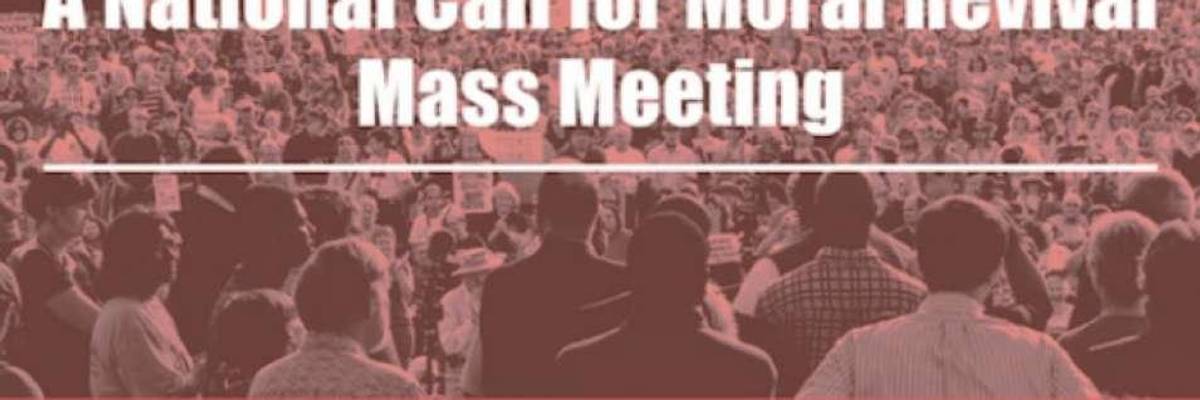
"A working class boy from Illinois sent halfway around the world to kill a young farmer. How did we get here? How did this crazy war economy come to be?" (Photo: Philip Lederer)
This piece is adapted from a speech given by Brock McIntosh at a mass meeting for the Poor People's Campaign.
I'm here to speak to you today about one of Dr. King's triple evils: militarism. As an Afghanistan War veteran, I'd like to highlight an aspect of his warning about militarism, when he said, "This way of... injecting poisonous drugs of hate into the veins of peoples normally humane... cannot be reconciled with wisdom, justice and love."
I'd like to tell you all about the precise moment I realized there was poison in me. I'm the child of a nurse and a factory worker in the heartland of Illinois, the family of blue-collar and service workers. At the height of the Iraq War, military recruiters at my high school attracted me with sign up bonuses and college assistance that some saw as their ticket out--for me, I hoped it was my ticket up, providing opportunities that once felt out of reach.
Two years later, when I was 20 years old, I was standing over the body of a 16-year-old Afghan boy. A roadside bomb he was building prematurely detonated. He was covered in shrapnel and burns, and now lay sedated after having one of his hands amputated by our medics. His other hand had the calloused roughness of a farmer or a shepherd.
As he lay there with a peaceful expression, I studied the details of his face and caught myself rooting for him. 'If this boy knew me,' I thought, 'he wouldn't want to kill me.' And here I am, supposed to want to kill him. And feeling bad that I wanted him to live. That is the poisoned mind. That is the militarized mind. And all the opportunities afforded me by the military can't repay the cost of war on my soul. It is poor folks who carry the burden of war for the elites who send them.
A working class boy from Illinois sent halfway around the world to kill a young farmer. How did we get here? How did this crazy war economy come to be?
"We need a Poor People's Campaign to amplify the voices of regular folks above the lobby of militarized industry, a poisoned economy, to demand jobs in industries other than war-making, to demand opportunities for working class folks that don't require killing other working class folks."
First, there is the demand. A society that feels perpetually threatened perpetually prepares for wars, even in times of peace. To do this requires a military-industrial complex, a vast war economy whose charters, profits, stocks, and jobs depend on permanent militarization and whose fortune prospers most in times of war. Corporations have political influence, and so do constituents who need the jobs.
Second, there is the supply. A nation that wants to attract volunteers to its military and care for veterans provides opportunities that allure recruits who are predominantly working class folks with limited opportunities.
We need a Poor People's Campaign to amplify the voices of regular folks above the lobby of militarized industry, a poisoned economy, to demand jobs in industries other than war-making, to demand opportunities for working class folks that don't require killing other working class folks.
We need a Poor People's Campaign to demand justice for people of color killed by a militarized police force, a poisoned law enforcement.
We need a Poor People's Campaign to transform a militarized politics, a poisoned Congress and a poisoned White House, that proves their toughness with chest beating and unites their base with war drumming.
The Poor People's Campaign offers an antidote to a poisoned and militarized culture. War always has a way of distracting our attention, and perverting our priorities. We need a Poor People's Campaign to organize for racial, economic, and ecological justice; to force these issues to the front; and rectify our nation's agenda.
Dear Common Dreams reader, It’s been nearly 30 years since I co-founded Common Dreams with my late wife, Lina Newhouser. We had the radical notion that journalism should serve the public good, not corporate profits. It was clear to us from the outset what it would take to build such a project. No paid advertisements. No corporate sponsors. No millionaire publisher telling us what to think or do. Many people said we wouldn't last a year, but we proved those doubters wrong. Together with a tremendous team of journalists and dedicated staff, we built an independent media outlet free from the constraints of profits and corporate control. Our mission has always been simple: To inform. To inspire. To ignite change for the common good. Building Common Dreams was not easy. Our survival was never guaranteed. When you take on the most powerful forces—Wall Street greed, fossil fuel industry destruction, Big Tech lobbyists, and uber-rich oligarchs who have spent billions upon billions rigging the economy and democracy in their favor—the only bulwark you have is supporters who believe in your work. But here’s the urgent message from me today. It's never been this bad out there. And it's never been this hard to keep us going. At the very moment Common Dreams is most needed, the threats we face are intensifying. We need your support now more than ever. We don't accept corporate advertising and never will. We don't have a paywall because we don't think people should be blocked from critical news based on their ability to pay. Everything we do is funded by the donations of readers like you. When everyone does the little they can afford, we are strong. But if that support retreats or dries up, so do we. Will you donate now to make sure Common Dreams not only survives but thrives? —Craig Brown, Co-founder |
This piece is adapted from a speech given by Brock McIntosh at a mass meeting for the Poor People's Campaign.
I'm here to speak to you today about one of Dr. King's triple evils: militarism. As an Afghanistan War veteran, I'd like to highlight an aspect of his warning about militarism, when he said, "This way of... injecting poisonous drugs of hate into the veins of peoples normally humane... cannot be reconciled with wisdom, justice and love."
I'd like to tell you all about the precise moment I realized there was poison in me. I'm the child of a nurse and a factory worker in the heartland of Illinois, the family of blue-collar and service workers. At the height of the Iraq War, military recruiters at my high school attracted me with sign up bonuses and college assistance that some saw as their ticket out--for me, I hoped it was my ticket up, providing opportunities that once felt out of reach.
Two years later, when I was 20 years old, I was standing over the body of a 16-year-old Afghan boy. A roadside bomb he was building prematurely detonated. He was covered in shrapnel and burns, and now lay sedated after having one of his hands amputated by our medics. His other hand had the calloused roughness of a farmer or a shepherd.
As he lay there with a peaceful expression, I studied the details of his face and caught myself rooting for him. 'If this boy knew me,' I thought, 'he wouldn't want to kill me.' And here I am, supposed to want to kill him. And feeling bad that I wanted him to live. That is the poisoned mind. That is the militarized mind. And all the opportunities afforded me by the military can't repay the cost of war on my soul. It is poor folks who carry the burden of war for the elites who send them.
A working class boy from Illinois sent halfway around the world to kill a young farmer. How did we get here? How did this crazy war economy come to be?
"We need a Poor People's Campaign to amplify the voices of regular folks above the lobby of militarized industry, a poisoned economy, to demand jobs in industries other than war-making, to demand opportunities for working class folks that don't require killing other working class folks."
First, there is the demand. A society that feels perpetually threatened perpetually prepares for wars, even in times of peace. To do this requires a military-industrial complex, a vast war economy whose charters, profits, stocks, and jobs depend on permanent militarization and whose fortune prospers most in times of war. Corporations have political influence, and so do constituents who need the jobs.
Second, there is the supply. A nation that wants to attract volunteers to its military and care for veterans provides opportunities that allure recruits who are predominantly working class folks with limited opportunities.
We need a Poor People's Campaign to amplify the voices of regular folks above the lobby of militarized industry, a poisoned economy, to demand jobs in industries other than war-making, to demand opportunities for working class folks that don't require killing other working class folks.
We need a Poor People's Campaign to demand justice for people of color killed by a militarized police force, a poisoned law enforcement.
We need a Poor People's Campaign to transform a militarized politics, a poisoned Congress and a poisoned White House, that proves their toughness with chest beating and unites their base with war drumming.
The Poor People's Campaign offers an antidote to a poisoned and militarized culture. War always has a way of distracting our attention, and perverting our priorities. We need a Poor People's Campaign to organize for racial, economic, and ecological justice; to force these issues to the front; and rectify our nation's agenda.
This piece is adapted from a speech given by Brock McIntosh at a mass meeting for the Poor People's Campaign.
I'm here to speak to you today about one of Dr. King's triple evils: militarism. As an Afghanistan War veteran, I'd like to highlight an aspect of his warning about militarism, when he said, "This way of... injecting poisonous drugs of hate into the veins of peoples normally humane... cannot be reconciled with wisdom, justice and love."
I'd like to tell you all about the precise moment I realized there was poison in me. I'm the child of a nurse and a factory worker in the heartland of Illinois, the family of blue-collar and service workers. At the height of the Iraq War, military recruiters at my high school attracted me with sign up bonuses and college assistance that some saw as their ticket out--for me, I hoped it was my ticket up, providing opportunities that once felt out of reach.
Two years later, when I was 20 years old, I was standing over the body of a 16-year-old Afghan boy. A roadside bomb he was building prematurely detonated. He was covered in shrapnel and burns, and now lay sedated after having one of his hands amputated by our medics. His other hand had the calloused roughness of a farmer or a shepherd.
As he lay there with a peaceful expression, I studied the details of his face and caught myself rooting for him. 'If this boy knew me,' I thought, 'he wouldn't want to kill me.' And here I am, supposed to want to kill him. And feeling bad that I wanted him to live. That is the poisoned mind. That is the militarized mind. And all the opportunities afforded me by the military can't repay the cost of war on my soul. It is poor folks who carry the burden of war for the elites who send them.
A working class boy from Illinois sent halfway around the world to kill a young farmer. How did we get here? How did this crazy war economy come to be?
"We need a Poor People's Campaign to amplify the voices of regular folks above the lobby of militarized industry, a poisoned economy, to demand jobs in industries other than war-making, to demand opportunities for working class folks that don't require killing other working class folks."
First, there is the demand. A society that feels perpetually threatened perpetually prepares for wars, even in times of peace. To do this requires a military-industrial complex, a vast war economy whose charters, profits, stocks, and jobs depend on permanent militarization and whose fortune prospers most in times of war. Corporations have political influence, and so do constituents who need the jobs.
Second, there is the supply. A nation that wants to attract volunteers to its military and care for veterans provides opportunities that allure recruits who are predominantly working class folks with limited opportunities.
We need a Poor People's Campaign to amplify the voices of regular folks above the lobby of militarized industry, a poisoned economy, to demand jobs in industries other than war-making, to demand opportunities for working class folks that don't require killing other working class folks.
We need a Poor People's Campaign to demand justice for people of color killed by a militarized police force, a poisoned law enforcement.
We need a Poor People's Campaign to transform a militarized politics, a poisoned Congress and a poisoned White House, that proves their toughness with chest beating and unites their base with war drumming.
The Poor People's Campaign offers an antidote to a poisoned and militarized culture. War always has a way of distracting our attention, and perverting our priorities. We need a Poor People's Campaign to organize for racial, economic, and ecological justice; to force these issues to the front; and rectify our nation's agenda.