
"Many of the CEOs on these councils had been under heavy pressure to disavow Trump's agenda of hate and racism even before Charlottesville. That pressure came from grassroots activists," Anderson writes. (Photo: Takver/Flickr/cc)
The Activists Who Helped Shut Down Trump's CEO Councils
The implosion of these high-level advisory bodies followed a months-long grassroots campaign calling on CEOs to reject the President’s hate-filled agenda.
The CEOs who made up two White House advisory councils have fled like rats on a sinking ship. Their exodus -- a dramatic rebuke of Donald Trump -- came within 48 hours of the incendiary August 15 press conference where the President praised some of the participants of last week's white supremacist rampage in Charlottesville, Virginia.
"I'm glad to hear they're gone. But they still need to stand up against his hateful agenda that targets people of color, immigrants, Muslims, and women. If they don't, they will remain backers of hate and they will continue to feel our outrage."
--Daniel Cortes, Make the Road New York
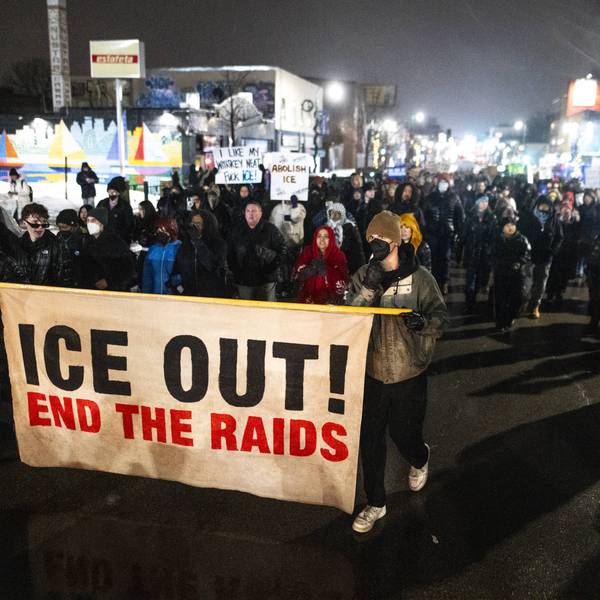
But many of the CEOs on these councils had been under heavy pressure to disavow Trump's agenda of hate and racism even before Charlottesville. That pressure came from grassroots activists.
The Center for Popular Democracy, Make The Road New York, New York Communities for Change, and several other immigrant and worker advocates had led that activist campaign, targeting the leaders of nine major corporations affiliated with the Trump administration. The campaign, working through a web site called Corporate Backers of Hate, detailed the connections between the nine companies and the Trump administration and encouraged people to send emails to both the CEOs involved and members of their corporate boards.
Throughout the spring and summer, the campaign also held protests against the companies, including a civil disobedience action at the JPMorgan Chase headquarters on May Day, where 12 were arrested, and a march to JPMorgan's annual shareholder meeting, where protestors confronted CEO Jamie Dimon for his company's financing of private immigrant detention and mass incarceration.
The campaign also worked with a broad network of groups, including CREDO, Color of Change, SumOfUs, and Ultraviolet, to gather petitions calling for CEOs to step down from the Business Council. On August 16, they delivered more than 400,000 petitions collected from across the country to New York City offices of JPMorgan and the Blackstone private equity group, demanding that their CEOs withdraw from Trump's advisory bodies.
Blackstone CEO Stephen Schwarzman chaired Trump's Strategic and Policy Forum and had personally recruited the group's 16 members, a cohort of execs that included current and past CEOs from some of the country's largest firms, among them Walmart, General Electric, IBM, and General Motors. Schwarzman's firm has become one of the country's largest owners of real estate, and Schwarzman himself has reportedly developed a very close personal relationship with President Trump, sometimes speaking to him several times a week.
The news earlier this week that the CEO councils had been disbanded brought a quick reaction from Ana Maria Archila, co-executive director of the Center for Popular Democracy. The choice that executives made to quit the Business Council, Archila noted, "should have been clear long ago - and because of the tireless and courageous advocacy of those who are affected most by Trump's agenda, they finally made that choice today."
JPMorgan CEO Jamie Dimon also issued a personal statement after the councils disbanded.
"There is no room for equivocation here: the evil on display by these perpetrators of hate should be condemned," Dimon noted, "and has no place in a country that draws strength from our diversity and humanity."
Archila and other activists are demanding that the CEOs like Dimon go further to reject Trump's agenda. These execs, she stresses, need "to make clear that white supremacy has no place in this country - and neither do the private prisons and immigrant detention centers that they help finance."
Daniel Cortes, a member of Make the Road New York who lives in Queens and was part of the group delivering the petitions, says he couldn't believe the leaders of JPMorgan Chase and Blackstone agreed to join Trump's business council in the first place.
"I'm glad to hear they're gone," adds Cortes. "But they still need to stand up against his hateful agenda that targets people of color, immigrants, Muslims, and women. If they don't, they will remain backers of hate and they will continue to feel our outrage."
An Urgent Message From Our Co-Founder
Dear Common Dreams reader, It’s been nearly 30 years since I co-founded Common Dreams with my late wife, Lina Newhouser. We had the radical notion that journalism should serve the public good, not corporate profits. It was clear to us from the outset what it would take to build such a project. No paid advertisements. No corporate sponsors. No millionaire publisher telling us what to think or do. Many people said we wouldn't last a year, but we proved those doubters wrong. Together with a tremendous team of journalists and dedicated staff, we built an independent media outlet free from the constraints of profits and corporate control. Our mission has always been simple: To inform. To inspire. To ignite change for the common good. Building Common Dreams was not easy. Our survival was never guaranteed. When you take on the most powerful forces—Wall Street greed, fossil fuel industry destruction, Big Tech lobbyists, and uber-rich oligarchs who have spent billions upon billions rigging the economy and democracy in their favor—the only bulwark you have is supporters who believe in your work. But here’s the urgent message from me today. It's never been this bad out there. And it's never been this hard to keep us going. At the very moment Common Dreams is most needed, the threats we face are intensifying. We need your support now more than ever. We don't accept corporate advertising and never will. We don't have a paywall because we don't think people should be blocked from critical news based on their ability to pay. Everything we do is funded by the donations of readers like you. When everyone does the little they can afford, we are strong. But if that support retreats or dries up, so do we. Will you donate now to make sure Common Dreams not only survives but thrives? —Craig Brown, Co-founder |
The CEOs who made up two White House advisory councils have fled like rats on a sinking ship. Their exodus -- a dramatic rebuke of Donald Trump -- came within 48 hours of the incendiary August 15 press conference where the President praised some of the participants of last week's white supremacist rampage in Charlottesville, Virginia.
"I'm glad to hear they're gone. But they still need to stand up against his hateful agenda that targets people of color, immigrants, Muslims, and women. If they don't, they will remain backers of hate and they will continue to feel our outrage."
--Daniel Cortes, Make the Road New York
But many of the CEOs on these councils had been under heavy pressure to disavow Trump's agenda of hate and racism even before Charlottesville. That pressure came from grassroots activists.
The Center for Popular Democracy, Make The Road New York, New York Communities for Change, and several other immigrant and worker advocates had led that activist campaign, targeting the leaders of nine major corporations affiliated with the Trump administration. The campaign, working through a web site called Corporate Backers of Hate, detailed the connections between the nine companies and the Trump administration and encouraged people to send emails to both the CEOs involved and members of their corporate boards.
Throughout the spring and summer, the campaign also held protests against the companies, including a civil disobedience action at the JPMorgan Chase headquarters on May Day, where 12 were arrested, and a march to JPMorgan's annual shareholder meeting, where protestors confronted CEO Jamie Dimon for his company's financing of private immigrant detention and mass incarceration.
The campaign also worked with a broad network of groups, including CREDO, Color of Change, SumOfUs, and Ultraviolet, to gather petitions calling for CEOs to step down from the Business Council. On August 16, they delivered more than 400,000 petitions collected from across the country to New York City offices of JPMorgan and the Blackstone private equity group, demanding that their CEOs withdraw from Trump's advisory bodies.
Blackstone CEO Stephen Schwarzman chaired Trump's Strategic and Policy Forum and had personally recruited the group's 16 members, a cohort of execs that included current and past CEOs from some of the country's largest firms, among them Walmart, General Electric, IBM, and General Motors. Schwarzman's firm has become one of the country's largest owners of real estate, and Schwarzman himself has reportedly developed a very close personal relationship with President Trump, sometimes speaking to him several times a week.
The news earlier this week that the CEO councils had been disbanded brought a quick reaction from Ana Maria Archila, co-executive director of the Center for Popular Democracy. The choice that executives made to quit the Business Council, Archila noted, "should have been clear long ago - and because of the tireless and courageous advocacy of those who are affected most by Trump's agenda, they finally made that choice today."
JPMorgan CEO Jamie Dimon also issued a personal statement after the councils disbanded.
"There is no room for equivocation here: the evil on display by these perpetrators of hate should be condemned," Dimon noted, "and has no place in a country that draws strength from our diversity and humanity."
Archila and other activists are demanding that the CEOs like Dimon go further to reject Trump's agenda. These execs, she stresses, need "to make clear that white supremacy has no place in this country - and neither do the private prisons and immigrant detention centers that they help finance."
Daniel Cortes, a member of Make the Road New York who lives in Queens and was part of the group delivering the petitions, says he couldn't believe the leaders of JPMorgan Chase and Blackstone agreed to join Trump's business council in the first place.
"I'm glad to hear they're gone," adds Cortes. "But they still need to stand up against his hateful agenda that targets people of color, immigrants, Muslims, and women. If they don't, they will remain backers of hate and they will continue to feel our outrage."
The CEOs who made up two White House advisory councils have fled like rats on a sinking ship. Their exodus -- a dramatic rebuke of Donald Trump -- came within 48 hours of the incendiary August 15 press conference where the President praised some of the participants of last week's white supremacist rampage in Charlottesville, Virginia.
"I'm glad to hear they're gone. But they still need to stand up against his hateful agenda that targets people of color, immigrants, Muslims, and women. If they don't, they will remain backers of hate and they will continue to feel our outrage."
--Daniel Cortes, Make the Road New York
But many of the CEOs on these councils had been under heavy pressure to disavow Trump's agenda of hate and racism even before Charlottesville. That pressure came from grassroots activists.
The Center for Popular Democracy, Make The Road New York, New York Communities for Change, and several other immigrant and worker advocates had led that activist campaign, targeting the leaders of nine major corporations affiliated with the Trump administration. The campaign, working through a web site called Corporate Backers of Hate, detailed the connections between the nine companies and the Trump administration and encouraged people to send emails to both the CEOs involved and members of their corporate boards.
Throughout the spring and summer, the campaign also held protests against the companies, including a civil disobedience action at the JPMorgan Chase headquarters on May Day, where 12 were arrested, and a march to JPMorgan's annual shareholder meeting, where protestors confronted CEO Jamie Dimon for his company's financing of private immigrant detention and mass incarceration.
The campaign also worked with a broad network of groups, including CREDO, Color of Change, SumOfUs, and Ultraviolet, to gather petitions calling for CEOs to step down from the Business Council. On August 16, they delivered more than 400,000 petitions collected from across the country to New York City offices of JPMorgan and the Blackstone private equity group, demanding that their CEOs withdraw from Trump's advisory bodies.
Blackstone CEO Stephen Schwarzman chaired Trump's Strategic and Policy Forum and had personally recruited the group's 16 members, a cohort of execs that included current and past CEOs from some of the country's largest firms, among them Walmart, General Electric, IBM, and General Motors. Schwarzman's firm has become one of the country's largest owners of real estate, and Schwarzman himself has reportedly developed a very close personal relationship with President Trump, sometimes speaking to him several times a week.
The news earlier this week that the CEO councils had been disbanded brought a quick reaction from Ana Maria Archila, co-executive director of the Center for Popular Democracy. The choice that executives made to quit the Business Council, Archila noted, "should have been clear long ago - and because of the tireless and courageous advocacy of those who are affected most by Trump's agenda, they finally made that choice today."
JPMorgan CEO Jamie Dimon also issued a personal statement after the councils disbanded.
"There is no room for equivocation here: the evil on display by these perpetrators of hate should be condemned," Dimon noted, "and has no place in a country that draws strength from our diversity and humanity."
Archila and other activists are demanding that the CEOs like Dimon go further to reject Trump's agenda. These execs, she stresses, need "to make clear that white supremacy has no place in this country - and neither do the private prisons and immigrant detention centers that they help finance."
Daniel Cortes, a member of Make the Road New York who lives in Queens and was part of the group delivering the petitions, says he couldn't believe the leaders of JPMorgan Chase and Blackstone agreed to join Trump's business council in the first place.
"I'm glad to hear they're gone," adds Cortes. "But they still need to stand up against his hateful agenda that targets people of color, immigrants, Muslims, and women. If they don't, they will remain backers of hate and they will continue to feel our outrage."