SUBSCRIBE TO OUR FREE NEWSLETTER
Daily news & progressive opinion—funded by the people, not the corporations—delivered straight to your inbox.
5
#000000
#FFFFFF
To donate by check, phone, or other method, see our More Ways to Give page.
Daily news & progressive opinion—funded by the people, not the corporations—delivered straight to your inbox.
Don't feel bad if you were busy and missed the buzz around the new book, Capital in the Twenty-First Century.
It's not every day that a 685-page book about wealth inequality written by a French economist lands on best-seller lists next to Danielle Steele's steamy new novel, First Sight.
The New York Times crowd is so excited that they put its author, Thomas Piketty, on the front page of the Sunday Style section alongside celebrity photos and spring fashion tips.
Don't feel bad if you were busy and missed the buzz around the new book, Capital in the Twenty-First Century.
It's not every day that a 685-page book about wealth inequality written by a French economist lands on best-seller lists next to Danielle Steele's steamy new novel, First Sight.
The New York Times crowd is so excited that they put its author, Thomas Piketty, on the front page of the Sunday Style section alongside celebrity photos and spring fashion tips.
Capital is a surprisingly readable tome. Realizing that 106 of the 685 pages are footnotes makes it easier to bear. In it, Piketty weaves the economic story of our times through history and literature. His decades of impeccable research make it indispensible to anyone concerned about growing economic inequality.
It might be hard to find a new copy. The book sold out on Amazon a couple weeks ago and the publisher is reprinting it. While you're waiting for another copy to appear at your local bookstore, here are some highlights to mull.
You've probably heard that the rich are growing richer. But Piketty reports that the concentration of wealth is more extreme than we imagined. The focus on the wealthiest 1 percent is distracting us from the dizzying concentration of wealth among the top one-tenth of 1 percent.
The largest wealth gains are flowing to the top one-in-a-thousand households. For example, the 400 richest Americans possess combined assets of over $2 trillion. They now have as much wealth as all 41 million African Americans.
Piketty warns us that growing wealth inequality will have a corrosive impact on our democratic institutions. A new generation of wealth dynasties is emerging, similar to what our nation witnessed a century ago during the first Gilded Age. Imagine what we could see 20 years from now: a country whose politics and culture is dominated by the offspring of families with familiar names.
The oligarchs of tomorrow are likely to have names like Walton, Zuckerberg, Soros, Adelson, Trump, and Koch, even if they never work a day in their lives.
Piketty has his critics, but most of them don't seem to have read his book at all or done more than skim its many pages. A Wall Street Journal review equated Piketty's work to the "evils of Stalinism." Most of his critics proffer the kinds of empty complaints that arise in any discussion about inequality and taxation, dismissing his observations as socialist, anti-business, or both.
The French economist is no proponent of Marxist-style state ownership. He admires the dynamism of the private sector in the United States and the entrepreneurial spirit. But he worries that unfettered capitalism, left to its own natural tendencies, will widen disparities in wealth and power.
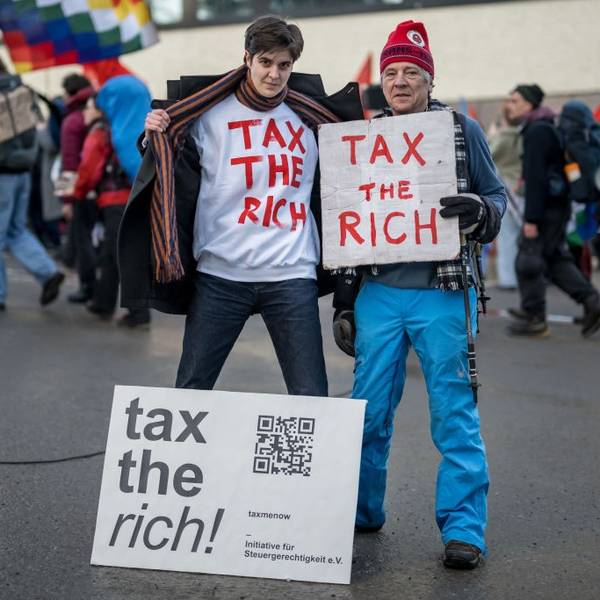
So, what's the best solution to growing inequality? Piketty calls for a global tax on wealth to put a brake on the build-up of wealth dynasties. Taxes, he explains, go to the heart of reducing extreme wealth inequality.
"Without taxes, society has no common destiny, and collective action is impossible," he writes.
Here in the United States, the federal estate tax is our only meaningful levy on the inherited wealth of multi-millionaires and billionaires. Only couples with over $10.5 million in wealth are technically required to pay it. Yet our estate tax is riddled with loopholes.
In 2013, casino mogul Sheldon Adelson engineered 30 complicated trusts to escape $2.8 billion in estate taxes and hand his heirs $8 billion of his fortune tax-free. The Walton family pioneered the use of these billionaire loopholes to place its treasure chests outside the reach of the IRS for generations to come.
The first implication here in the United States of Piketty's work is for us to demand that Congress plug the holes undermining America's estate tax. Without timely action, we'll see the rich become dynasties and everyone else robbed of any opportunity to rise above the social station to which we were born.
Dear Common Dreams reader, It’s been nearly 30 years since I co-founded Common Dreams with my late wife, Lina Newhouser. We had the radical notion that journalism should serve the public good, not corporate profits. It was clear to us from the outset what it would take to build such a project. No paid advertisements. No corporate sponsors. No millionaire publisher telling us what to think or do. Many people said we wouldn't last a year, but we proved those doubters wrong. Together with a tremendous team of journalists and dedicated staff, we built an independent media outlet free from the constraints of profits and corporate control. Our mission has always been simple: To inform. To inspire. To ignite change for the common good. Building Common Dreams was not easy. Our survival was never guaranteed. When you take on the most powerful forces—Wall Street greed, fossil fuel industry destruction, Big Tech lobbyists, and uber-rich oligarchs who have spent billions upon billions rigging the economy and democracy in their favor—the only bulwark you have is supporters who believe in your work. But here’s the urgent message from me today. It's never been this bad out there. And it's never been this hard to keep us going. At the very moment Common Dreams is most needed, the threats we face are intensifying. We need your support now more than ever. We don't accept corporate advertising and never will. We don't have a paywall because we don't think people should be blocked from critical news based on their ability to pay. Everything we do is funded by the donations of readers like you. When everyone does the little they can afford, we are strong. But if that support retreats or dries up, so do we. Will you donate now to make sure Common Dreams not only survives but thrives? —Craig Brown, Co-founder |
Don't feel bad if you were busy and missed the buzz around the new book, Capital in the Twenty-First Century.
It's not every day that a 685-page book about wealth inequality written by a French economist lands on best-seller lists next to Danielle Steele's steamy new novel, First Sight.
The New York Times crowd is so excited that they put its author, Thomas Piketty, on the front page of the Sunday Style section alongside celebrity photos and spring fashion tips.
Capital is a surprisingly readable tome. Realizing that 106 of the 685 pages are footnotes makes it easier to bear. In it, Piketty weaves the economic story of our times through history and literature. His decades of impeccable research make it indispensible to anyone concerned about growing economic inequality.
It might be hard to find a new copy. The book sold out on Amazon a couple weeks ago and the publisher is reprinting it. While you're waiting for another copy to appear at your local bookstore, here are some highlights to mull.
You've probably heard that the rich are growing richer. But Piketty reports that the concentration of wealth is more extreme than we imagined. The focus on the wealthiest 1 percent is distracting us from the dizzying concentration of wealth among the top one-tenth of 1 percent.
The largest wealth gains are flowing to the top one-in-a-thousand households. For example, the 400 richest Americans possess combined assets of over $2 trillion. They now have as much wealth as all 41 million African Americans.
Piketty warns us that growing wealth inequality will have a corrosive impact on our democratic institutions. A new generation of wealth dynasties is emerging, similar to what our nation witnessed a century ago during the first Gilded Age. Imagine what we could see 20 years from now: a country whose politics and culture is dominated by the offspring of families with familiar names.
The oligarchs of tomorrow are likely to have names like Walton, Zuckerberg, Soros, Adelson, Trump, and Koch, even if they never work a day in their lives.
Piketty has his critics, but most of them don't seem to have read his book at all or done more than skim its many pages. A Wall Street Journal review equated Piketty's work to the "evils of Stalinism." Most of his critics proffer the kinds of empty complaints that arise in any discussion about inequality and taxation, dismissing his observations as socialist, anti-business, or both.
The French economist is no proponent of Marxist-style state ownership. He admires the dynamism of the private sector in the United States and the entrepreneurial spirit. But he worries that unfettered capitalism, left to its own natural tendencies, will widen disparities in wealth and power.
So, what's the best solution to growing inequality? Piketty calls for a global tax on wealth to put a brake on the build-up of wealth dynasties. Taxes, he explains, go to the heart of reducing extreme wealth inequality.
"Without taxes, society has no common destiny, and collective action is impossible," he writes.
Here in the United States, the federal estate tax is our only meaningful levy on the inherited wealth of multi-millionaires and billionaires. Only couples with over $10.5 million in wealth are technically required to pay it. Yet our estate tax is riddled with loopholes.
In 2013, casino mogul Sheldon Adelson engineered 30 complicated trusts to escape $2.8 billion in estate taxes and hand his heirs $8 billion of his fortune tax-free. The Walton family pioneered the use of these billionaire loopholes to place its treasure chests outside the reach of the IRS for generations to come.
The first implication here in the United States of Piketty's work is for us to demand that Congress plug the holes undermining America's estate tax. Without timely action, we'll see the rich become dynasties and everyone else robbed of any opportunity to rise above the social station to which we were born.
Don't feel bad if you were busy and missed the buzz around the new book, Capital in the Twenty-First Century.
It's not every day that a 685-page book about wealth inequality written by a French economist lands on best-seller lists next to Danielle Steele's steamy new novel, First Sight.
The New York Times crowd is so excited that they put its author, Thomas Piketty, on the front page of the Sunday Style section alongside celebrity photos and spring fashion tips.
Capital is a surprisingly readable tome. Realizing that 106 of the 685 pages are footnotes makes it easier to bear. In it, Piketty weaves the economic story of our times through history and literature. His decades of impeccable research make it indispensible to anyone concerned about growing economic inequality.
It might be hard to find a new copy. The book sold out on Amazon a couple weeks ago and the publisher is reprinting it. While you're waiting for another copy to appear at your local bookstore, here are some highlights to mull.
You've probably heard that the rich are growing richer. But Piketty reports that the concentration of wealth is more extreme than we imagined. The focus on the wealthiest 1 percent is distracting us from the dizzying concentration of wealth among the top one-tenth of 1 percent.
The largest wealth gains are flowing to the top one-in-a-thousand households. For example, the 400 richest Americans possess combined assets of over $2 trillion. They now have as much wealth as all 41 million African Americans.
Piketty warns us that growing wealth inequality will have a corrosive impact on our democratic institutions. A new generation of wealth dynasties is emerging, similar to what our nation witnessed a century ago during the first Gilded Age. Imagine what we could see 20 years from now: a country whose politics and culture is dominated by the offspring of families with familiar names.
The oligarchs of tomorrow are likely to have names like Walton, Zuckerberg, Soros, Adelson, Trump, and Koch, even if they never work a day in their lives.
Piketty has his critics, but most of them don't seem to have read his book at all or done more than skim its many pages. A Wall Street Journal review equated Piketty's work to the "evils of Stalinism." Most of his critics proffer the kinds of empty complaints that arise in any discussion about inequality and taxation, dismissing his observations as socialist, anti-business, or both.
The French economist is no proponent of Marxist-style state ownership. He admires the dynamism of the private sector in the United States and the entrepreneurial spirit. But he worries that unfettered capitalism, left to its own natural tendencies, will widen disparities in wealth and power.
So, what's the best solution to growing inequality? Piketty calls for a global tax on wealth to put a brake on the build-up of wealth dynasties. Taxes, he explains, go to the heart of reducing extreme wealth inequality.
"Without taxes, society has no common destiny, and collective action is impossible," he writes.
Here in the United States, the federal estate tax is our only meaningful levy on the inherited wealth of multi-millionaires and billionaires. Only couples with over $10.5 million in wealth are technically required to pay it. Yet our estate tax is riddled with loopholes.
In 2013, casino mogul Sheldon Adelson engineered 30 complicated trusts to escape $2.8 billion in estate taxes and hand his heirs $8 billion of his fortune tax-free. The Walton family pioneered the use of these billionaire loopholes to place its treasure chests outside the reach of the IRS for generations to come.
The first implication here in the United States of Piketty's work is for us to demand that Congress plug the holes undermining America's estate tax. Without timely action, we'll see the rich become dynasties and everyone else robbed of any opportunity to rise above the social station to which we were born.