SUBSCRIBE TO OUR FREE NEWSLETTER
Daily news & progressive opinion—funded by the people, not the corporations—delivered straight to your inbox.
5
#000000
#FFFFFF
To donate by check, phone, or other method, see our More Ways to Give page.
"The territory of a State is inviolable; it may not be the object, even temporarily, of military occupation or of other measures of force taken by another State, directly or indirectly, on any grounds whatever."
- Article 21, Charter of the Organization of American States
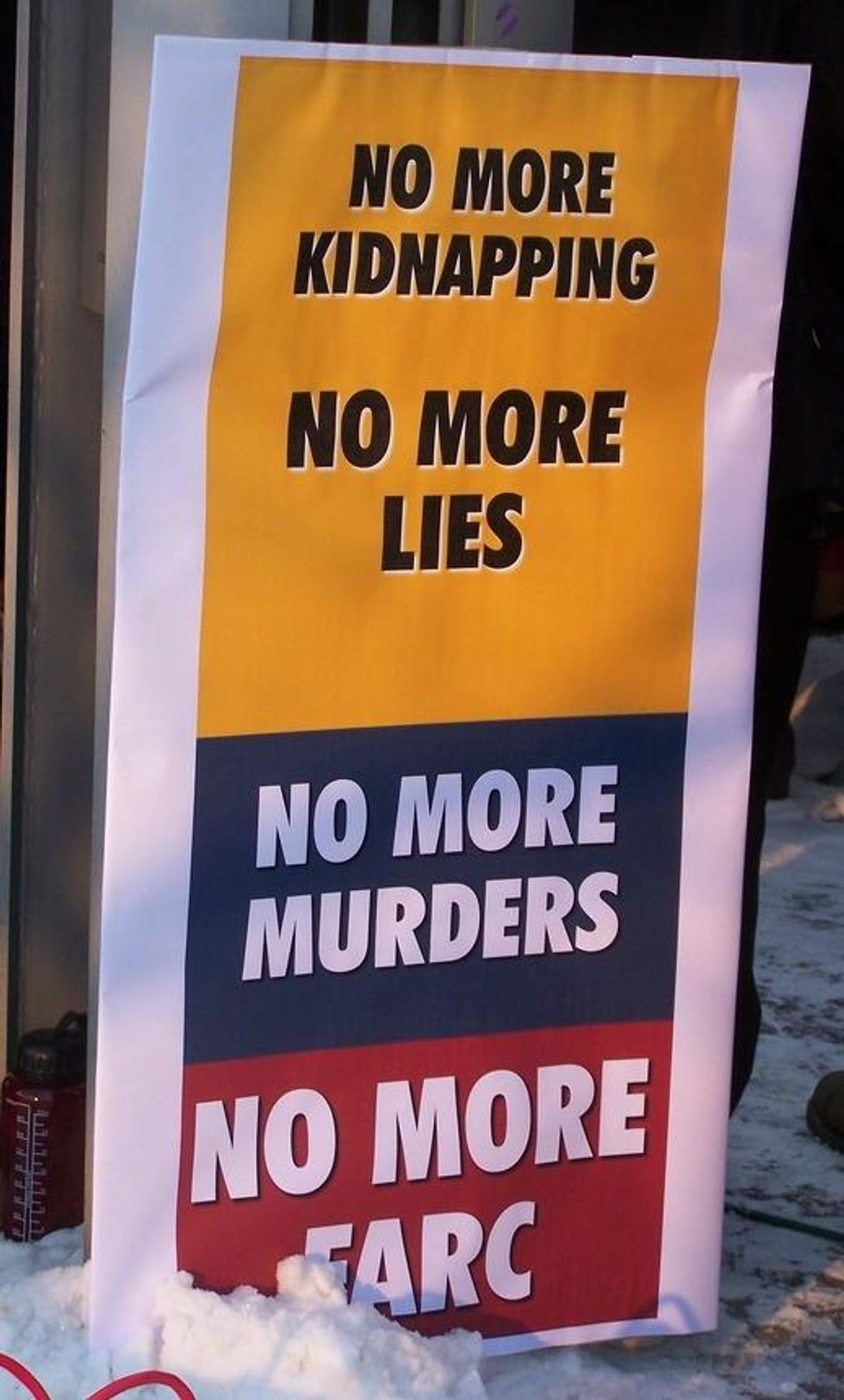
The Washington Post has now revealed, in an in-depth article on CIA covert action in Colombia, that U.S. support for Colombia's March 1 operation wasn't just rhetorical. The CIA - which maintained control over the "smart" GPS-guided bombs that were used in the operation - had given Colombia "tacit approval" to carry out the bombing. Prior to the operation, U.S. officials had unlocked the bombs' GPS system using a special "encryption key" they had designed to ensure that "the Colombians would not misuse the bomb." According to the Post's sources, which include current U.S. and Colombian officials, the discovery that Reyes, their main target, was located in Ecuadorean territory was "awkward" since:
to conduct an airstrike meant a Colombian pilot flying a Colombian plane would hit the camp using a U.S.-made bomb with a CIA-controlled brain.
The Air Force colonel had a succinct message for the Colombian air operations commander in charge of the mission. "I said, 'Look man, we all know where this guy is. Just don't f-- it up.'"
U.S. national security lawyers viewed the operation as an act of self-defense. In the wake of 9/11, they had come up with a new interpretation of the permissible use of force against non-state actors like al-Qaeda and the FARC. It went like this: If a terrorist group operated from a country that was unable or unwilling to stop it, then the country under attack -- in this case, Colombia -- had the right to defend itself with force, even if that meant crossing into another sovereign country.
The Post's revelations leave no doubt that the U.S. government not only knew about the March 1 operation beforehand, but actually vetted and supported it after having pondered its potential legal ramifications. However, statements made to the press by State Department spokesperson Tom Casey two days after the incident give a very different impression:
QUESTION: Was there any support from the U.S. Government either in terms of intelligence sharing or logistics for this operation?
MR. CASEY: Look, I'm not aware of any U.S. Government role in this particular military event. We, of course, have very strong cooperation with Colombia on a variety of fronts, most particularly through our efforts in Plan Colombia to cooperation in counter-narcotics areas.
QUESTION: Were you notified by Colombia before it happened?
MR. CASEY: No. I'm not aware that we found out about this, other than after the fact.
Clearly, the media and U.S. public were fed blatantly false information.
On March 17, a special commission appointed by the Organization of American States (OAS) determined that Colombia's military incursion into Ecuador "violates the principle established in Article 21 of the OAS Charter." This article states that "the territory of a State is inviolable; it may not be the object, even temporarily, of military occupation or of other measures of force taken by another State, directly or indirectly, on any grounds whatever."
Had Casey given accurate responses to the questions he was asked on March 3 the world might have known that the U.S. was complicit in a brazen violation of international law. The ire of Latin American nations would have undoubtedly focused more on the U.S. government and the U.S. military and intelligence role in Colombia would have come under heavy scrutiny from media and non-governmental actors in both the U.S. and Latin America.
The 2008 diplomatic crisis, which threatened to destabilize the Andean region, now seems like a distant event from another age: the lamentable "Bush years." But the U.S. covert action program in Colombia continues under the same cloak of secrecy under Obama. Moreover, there are similar programs - "small but growing," according to the Post - in many of the places where the U.S. is engaged in the "war on drugs", including Central America and Mexico, "where U.S. intelligence assistance is larger than anywhere outside Afghanistan." In light of the Post's revelations, real oversight and accountability around these programs are desperately needed.
____________________
"The territory of a State is inviolable; it may not be the object, even temporarily, of military occupation or of other measures of force taken by another State, directly or indirectly, on any grounds whatever."
- Article 21, Charter of the Organization of American States
The Washington Post has now revealed, in an in-depth article on CIA covert action in Colombia, that U.S. support for Colombia's March 1 operation wasn't just rhetorical. The CIA - which maintained control over the "smart" GPS-guided bombs that were used in the operation - had given Colombia "tacit approval" to carry out the bombing. Prior to the operation, U.S. officials had unlocked the bombs' GPS system using a special "encryption key" they had designed to ensure that "the Colombians would not misuse the bomb." According to the Post's sources, which include current U.S. and Colombian officials, the discovery that Reyes, their main target, was located in Ecuadorean territory was "awkward" since:
to conduct an airstrike meant a Colombian pilot flying a Colombian plane would hit the camp using a U.S.-made bomb with a CIA-controlled brain.
The Air Force colonel had a succinct message for the Colombian air operations commander in charge of the mission. "I said, 'Look man, we all know where this guy is. Just don't f-- it up.'"
U.S. national security lawyers viewed the operation as an act of self-defense. In the wake of 9/11, they had come up with a new interpretation of the permissible use of force against non-state actors like al-Qaeda and the FARC. It went like this: If a terrorist group operated from a country that was unable or unwilling to stop it, then the country under attack -- in this case, Colombia -- had the right to defend itself with force, even if that meant crossing into another sovereign country.
The Post's revelations leave no doubt that the U.S. government not only knew about the March 1 operation beforehand, but actually vetted and supported it after having pondered its potential legal ramifications. However, statements made to the press by State Department spokesperson Tom Casey two days after the incident give a very different impression:
QUESTION: Was there any support from the U.S. Government either in terms of intelligence sharing or logistics for this operation?
MR. CASEY: Look, I'm not aware of any U.S. Government role in this particular military event. We, of course, have very strong cooperation with Colombia on a variety of fronts, most particularly through our efforts in Plan Colombia to cooperation in counter-narcotics areas.
QUESTION: Were you notified by Colombia before it happened?
MR. CASEY: No. I'm not aware that we found out about this, other than after the fact.
Clearly, the media and U.S. public were fed blatantly false information.
On March 17, a special commission appointed by the Organization of American States (OAS) determined that Colombia's military incursion into Ecuador "violates the principle established in Article 21 of the OAS Charter." This article states that "the territory of a State is inviolable; it may not be the object, even temporarily, of military occupation or of other measures of force taken by another State, directly or indirectly, on any grounds whatever."
Had Casey given accurate responses to the questions he was asked on March 3 the world might have known that the U.S. was complicit in a brazen violation of international law. The ire of Latin American nations would have undoubtedly focused more on the U.S. government and the U.S. military and intelligence role in Colombia would have come under heavy scrutiny from media and non-governmental actors in both the U.S. and Latin America.
The 2008 diplomatic crisis, which threatened to destabilize the Andean region, now seems like a distant event from another age: the lamentable "Bush years." But the U.S. covert action program in Colombia continues under the same cloak of secrecy under Obama. Moreover, there are similar programs - "small but growing," according to the Post - in many of the places where the U.S. is engaged in the "war on drugs", including Central America and Mexico, "where U.S. intelligence assistance is larger than anywhere outside Afghanistan." In light of the Post's revelations, real oversight and accountability around these programs are desperately needed.
____________________
"The territory of a State is inviolable; it may not be the object, even temporarily, of military occupation or of other measures of force taken by another State, directly or indirectly, on any grounds whatever."
- Article 21, Charter of the Organization of American States
The Washington Post has now revealed, in an in-depth article on CIA covert action in Colombia, that U.S. support for Colombia's March 1 operation wasn't just rhetorical. The CIA - which maintained control over the "smart" GPS-guided bombs that were used in the operation - had given Colombia "tacit approval" to carry out the bombing. Prior to the operation, U.S. officials had unlocked the bombs' GPS system using a special "encryption key" they had designed to ensure that "the Colombians would not misuse the bomb." According to the Post's sources, which include current U.S. and Colombian officials, the discovery that Reyes, their main target, was located in Ecuadorean territory was "awkward" since:
to conduct an airstrike meant a Colombian pilot flying a Colombian plane would hit the camp using a U.S.-made bomb with a CIA-controlled brain.
The Air Force colonel had a succinct message for the Colombian air operations commander in charge of the mission. "I said, 'Look man, we all know where this guy is. Just don't f-- it up.'"
U.S. national security lawyers viewed the operation as an act of self-defense. In the wake of 9/11, they had come up with a new interpretation of the permissible use of force against non-state actors like al-Qaeda and the FARC. It went like this: If a terrorist group operated from a country that was unable or unwilling to stop it, then the country under attack -- in this case, Colombia -- had the right to defend itself with force, even if that meant crossing into another sovereign country.
The Post's revelations leave no doubt that the U.S. government not only knew about the March 1 operation beforehand, but actually vetted and supported it after having pondered its potential legal ramifications. However, statements made to the press by State Department spokesperson Tom Casey two days after the incident give a very different impression:
QUESTION: Was there any support from the U.S. Government either in terms of intelligence sharing or logistics for this operation?
MR. CASEY: Look, I'm not aware of any U.S. Government role in this particular military event. We, of course, have very strong cooperation with Colombia on a variety of fronts, most particularly through our efforts in Plan Colombia to cooperation in counter-narcotics areas.
QUESTION: Were you notified by Colombia before it happened?
MR. CASEY: No. I'm not aware that we found out about this, other than after the fact.
Clearly, the media and U.S. public were fed blatantly false information.
On March 17, a special commission appointed by the Organization of American States (OAS) determined that Colombia's military incursion into Ecuador "violates the principle established in Article 21 of the OAS Charter." This article states that "the territory of a State is inviolable; it may not be the object, even temporarily, of military occupation or of other measures of force taken by another State, directly or indirectly, on any grounds whatever."
Had Casey given accurate responses to the questions he was asked on March 3 the world might have known that the U.S. was complicit in a brazen violation of international law. The ire of Latin American nations would have undoubtedly focused more on the U.S. government and the U.S. military and intelligence role in Colombia would have come under heavy scrutiny from media and non-governmental actors in both the U.S. and Latin America.
The 2008 diplomatic crisis, which threatened to destabilize the Andean region, now seems like a distant event from another age: the lamentable "Bush years." But the U.S. covert action program in Colombia continues under the same cloak of secrecy under Obama. Moreover, there are similar programs - "small but growing," according to the Post - in many of the places where the U.S. is engaged in the "war on drugs", including Central America and Mexico, "where U.S. intelligence assistance is larger than anywhere outside Afghanistan." In light of the Post's revelations, real oversight and accountability around these programs are desperately needed.
____________________