

SUBSCRIBE TO OUR FREE NEWSLETTER
Daily news & progressive opinion—funded by the people, not the corporations—delivered straight to your inbox.
5
#000000
#FFFFFF
To donate by check, phone, or other method, see our More Ways to Give page.
With Uruguay about to potentially legalize marijuana President Jose Mujica is asking for international support for his plan. From Folha De Sao Paulo:
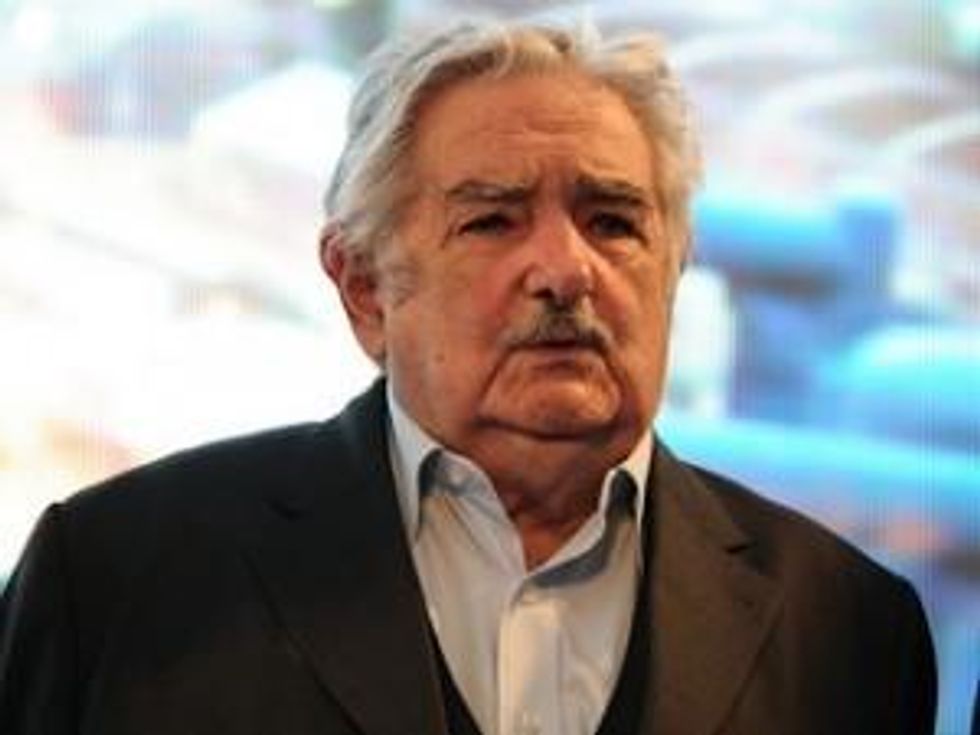
He says he has never smoked marijuana. "I don't defend it, I wish it didn't exist. No addiction is good. We are regulating a market that already exists. We can't close our eyes to it. Repression has failed."
Jokingly imitating someone under the effect of marijuana, he guarantees the country will not become the land of "free marijuana."
"We are asking the world to help us with this experience, which will allow the adoption of a social and political experiment to face a serious problem - drug trafficking," he says. "The effects of drug trafficking are worse than those of the drugs themselves."
Uruguay did sign the 1961 UN Single Convention on Drug Control, so it is possible other countries could try to could put real pressure on Uruguay if they do go through with legalizing marijuana. The UN has publicly asked Uruguay to reconsider this plan.
The United States has traditionally been a driving force behind most international drug treaties but it has recently lost much of its moral authority and political clout on the issue. Uruguay is after all simply following the example set by Colorado and Washington state when it comes to legalizing marijuana.
Hopefully, the rest of the world will not try to prevent Uruguay from moving forward with their plan so it can become a laboratory of reform for the region.
With Uruguay about to potentially legalize marijuana President Jose Mujica is asking for international support for his plan. From Folha De Sao Paulo:
He says he has never smoked marijuana. "I don't defend it, I wish it didn't exist. No addiction is good. We are regulating a market that already exists. We can't close our eyes to it. Repression has failed."
Jokingly imitating someone under the effect of marijuana, he guarantees the country will not become the land of "free marijuana."
"We are asking the world to help us with this experience, which will allow the adoption of a social and political experiment to face a serious problem - drug trafficking," he says. "The effects of drug trafficking are worse than those of the drugs themselves."
Uruguay did sign the 1961 UN Single Convention on Drug Control, so it is possible other countries could try to could put real pressure on Uruguay if they do go through with legalizing marijuana. The UN has publicly asked Uruguay to reconsider this plan.
The United States has traditionally been a driving force behind most international drug treaties but it has recently lost much of its moral authority and political clout on the issue. Uruguay is after all simply following the example set by Colorado and Washington state when it comes to legalizing marijuana.
Hopefully, the rest of the world will not try to prevent Uruguay from moving forward with their plan so it can become a laboratory of reform for the region.
With Uruguay about to potentially legalize marijuana President Jose Mujica is asking for international support for his plan. From Folha De Sao Paulo:
He says he has never smoked marijuana. "I don't defend it, I wish it didn't exist. No addiction is good. We are regulating a market that already exists. We can't close our eyes to it. Repression has failed."
Jokingly imitating someone under the effect of marijuana, he guarantees the country will not become the land of "free marijuana."
"We are asking the world to help us with this experience, which will allow the adoption of a social and political experiment to face a serious problem - drug trafficking," he says. "The effects of drug trafficking are worse than those of the drugs themselves."
Uruguay did sign the 1961 UN Single Convention on Drug Control, so it is possible other countries could try to could put real pressure on Uruguay if they do go through with legalizing marijuana. The UN has publicly asked Uruguay to reconsider this plan.
The United States has traditionally been a driving force behind most international drug treaties but it has recently lost much of its moral authority and political clout on the issue. Uruguay is after all simply following the example set by Colorado and Washington state when it comes to legalizing marijuana.
Hopefully, the rest of the world will not try to prevent Uruguay from moving forward with their plan so it can become a laboratory of reform for the region.

