

SUBSCRIBE TO OUR FREE NEWSLETTER
Daily news & progressive opinion—funded by the people, not the corporations—delivered straight to your inbox.
5
#000000
#FFFFFF
To donate by check, phone, or other method, see our More Ways to Give page.


"Wheel about and turn about and do just so. Every time I turn about I jump Jim Crow."
-- chorus of an 1828 minstrel song
"We have not ended racial caste in America, we have merely redesigned it."
-- Michelle Alexander, The New Jim Crow
Yeah, it's called mass incarceration. Our jails are filled with black and brown men and women. The number of inmates, primarily people of color, has soared sevenfold in the last three decades, according to Alexander, from 300,000 to more than 2 million, the largest number, by far, in the developed world. Many millions more are on probation or parole. And no matter what their crime, the inmates never get their citizenship back. The stigma of being an ex-felon brands someone for life as a second-class human being.
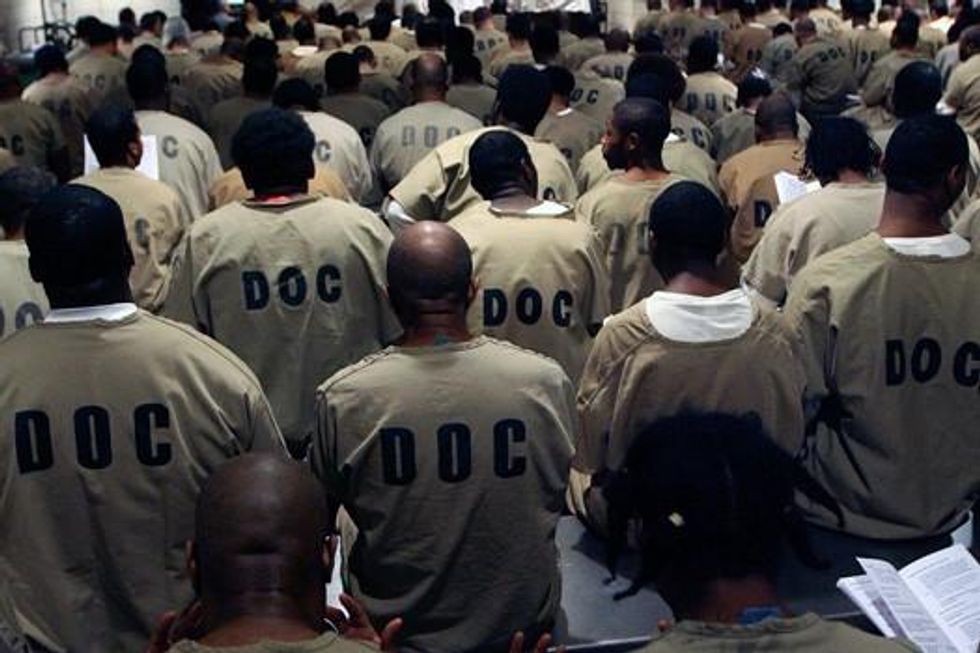
But even before the ex-felon label is attached, certain people -- young men of color, in particular -- are targeted as society's losers by the police, judicial bureaucracy and prison system. They face the possibility of police harassment, invasion of privacy and arrest, often on the smallest pretext possible, pretty much any time they step outside.
I live in a vital, racially and ethnically diverse Chicago neighborhood and I watch it happen -- racial profiling, the stop-and-frisk game. This is not making my neighborhood safer. It's wrecking lives at enormous public expense and, of course, like the insane war on terror, creating enemies. We don't need a justice system based on stereotypes and armed bullying.
"His hearing's at 1? OK," I said, "I'll try to make it."
This was three days ago. Oh God. It was pretty much the last thing I wanted to do. I knew what had happened. A few days earlier, a young man, Jerry, who is part of a local discussion and support group I've gotten involved with called Circles and Ciphers, had gotten arrested . . . for riding his bicycle on the sidewalk.
That's how it started. Two plainclothes officers stopped him for what legally is known as a petty offense, the equivalent of jaywalking or letting your parking meter expire -- and a "crime" committed every day by happy families, children, all sorts of people who want to avoid dangerous street traffic. Jerry, who is a black man, wasn't simply stopped. He was arrested. After all, he had committed a crime. He was handcuffed, put into the squad car, taken to the local police station.
No one I've talked to has any idea what happened to his bike. Was it confiscated? Left at the scene?
He may have been upset by the possibility of losing his bike. He may have been upset by the fact that he was supposed to be starting a new job the following day. In any case, he found himself sitting in handcuffs at the police station. When one of the arresting officers approached him, Jerry allegedly stood up and kicked at the officer, hitting him in the shin. And the petty offense suddenly turned into a felony. He was charged with aggravated assault.
Chicago, crime-ridden city! This is how the statistics swell.
Jerry's hearing was on Monday. The Circles and Ciphers organizers wanted to get supporters in the courtroom; apparently that can make a difference. I had never done anything quite like this before.
Indeed, the court building is alien territory: the state vs. everyone. I understand the point of metal detectors, airport-style security screenings, and try to have a sense of humor about emptying my pockets, taking off my belt. I tried to maintain the attitude of a citizen: This is my court system. I have a right to be here. But it wasn't easy. I felt at best warily tolerated and, in fact, unwelcome as a full citizen.
I sat down in the courtroom. When the hearing began, I took a pen and piece of paper out of my pocket and started scribbling notes. Uh-oh. Suddenly the security officer tasked with keeping order in the court gave me an angry stare, pointed at me and shook her head. No notes! I couldn't believe it, but stuck the Bic pen, dangerous tool, back in my pocket, vowing to check the legality of this restriction later. (There is none.)
The hearing itself lasted all of, maybe, six or seven minutes. A public defender asked the police officer what happened. He explained that the defendant had been arrested for the misdemeanor of riding his bike on the sidewalk, but the judge interrupted him. Riding a bike on the sidewalk is a petty offense, not a misdemeanor, she said. I wasn't aware there was a category of crime more trivial than a misdemeanor; now I knew. A few questions later -- the officer described the alleged assault, testified that he did not require medical attention -- and it was all over. Jerry was led from the courtroom. I got up and left.
There's more to come, of course. Jerry wasn't released. The case wasn't thrown out. What hangs in the balance for the young defendant is possible jail time and the lifelong scar of "ex-felon." To what end? Public safety wasn't served. No healing took place. Absolutely nothing was accomplished by this elaborate and costly drama except that a broken system perpetuated itself. And Jim Crow won again.
"Wheel about and turn about and do just so. Every time I turn about I jump Jim Crow."
-- chorus of an 1828 minstrel song
"We have not ended racial caste in America, we have merely redesigned it."
-- Michelle Alexander, The New Jim Crow
Yeah, it's called mass incarceration. Our jails are filled with black and brown men and women. The number of inmates, primarily people of color, has soared sevenfold in the last three decades, according to Alexander, from 300,000 to more than 2 million, the largest number, by far, in the developed world. Many millions more are on probation or parole. And no matter what their crime, the inmates never get their citizenship back. The stigma of being an ex-felon brands someone for life as a second-class human being.
But even before the ex-felon label is attached, certain people -- young men of color, in particular -- are targeted as society's losers by the police, judicial bureaucracy and prison system. They face the possibility of police harassment, invasion of privacy and arrest, often on the smallest pretext possible, pretty much any time they step outside.
I live in a vital, racially and ethnically diverse Chicago neighborhood and I watch it happen -- racial profiling, the stop-and-frisk game. This is not making my neighborhood safer. It's wrecking lives at enormous public expense and, of course, like the insane war on terror, creating enemies. We don't need a justice system based on stereotypes and armed bullying.
"His hearing's at 1? OK," I said, "I'll try to make it."
This was three days ago. Oh God. It was pretty much the last thing I wanted to do. I knew what had happened. A few days earlier, a young man, Jerry, who is part of a local discussion and support group I've gotten involved with called Circles and Ciphers, had gotten arrested . . . for riding his bicycle on the sidewalk.
That's how it started. Two plainclothes officers stopped him for what legally is known as a petty offense, the equivalent of jaywalking or letting your parking meter expire -- and a "crime" committed every day by happy families, children, all sorts of people who want to avoid dangerous street traffic. Jerry, who is a black man, wasn't simply stopped. He was arrested. After all, he had committed a crime. He was handcuffed, put into the squad car, taken to the local police station.
No one I've talked to has any idea what happened to his bike. Was it confiscated? Left at the scene?
He may have been upset by the possibility of losing his bike. He may have been upset by the fact that he was supposed to be starting a new job the following day. In any case, he found himself sitting in handcuffs at the police station. When one of the arresting officers approached him, Jerry allegedly stood up and kicked at the officer, hitting him in the shin. And the petty offense suddenly turned into a felony. He was charged with aggravated assault.
Chicago, crime-ridden city! This is how the statistics swell.
Jerry's hearing was on Monday. The Circles and Ciphers organizers wanted to get supporters in the courtroom; apparently that can make a difference. I had never done anything quite like this before.
Indeed, the court building is alien territory: the state vs. everyone. I understand the point of metal detectors, airport-style security screenings, and try to have a sense of humor about emptying my pockets, taking off my belt. I tried to maintain the attitude of a citizen: This is my court system. I have a right to be here. But it wasn't easy. I felt at best warily tolerated and, in fact, unwelcome as a full citizen.
I sat down in the courtroom. When the hearing began, I took a pen and piece of paper out of my pocket and started scribbling notes. Uh-oh. Suddenly the security officer tasked with keeping order in the court gave me an angry stare, pointed at me and shook her head. No notes! I couldn't believe it, but stuck the Bic pen, dangerous tool, back in my pocket, vowing to check the legality of this restriction later. (There is none.)
The hearing itself lasted all of, maybe, six or seven minutes. A public defender asked the police officer what happened. He explained that the defendant had been arrested for the misdemeanor of riding his bike on the sidewalk, but the judge interrupted him. Riding a bike on the sidewalk is a petty offense, not a misdemeanor, she said. I wasn't aware there was a category of crime more trivial than a misdemeanor; now I knew. A few questions later -- the officer described the alleged assault, testified that he did not require medical attention -- and it was all over. Jerry was led from the courtroom. I got up and left.
There's more to come, of course. Jerry wasn't released. The case wasn't thrown out. What hangs in the balance for the young defendant is possible jail time and the lifelong scar of "ex-felon." To what end? Public safety wasn't served. No healing took place. Absolutely nothing was accomplished by this elaborate and costly drama except that a broken system perpetuated itself. And Jim Crow won again.
"Wheel about and turn about and do just so. Every time I turn about I jump Jim Crow."
-- chorus of an 1828 minstrel song
"We have not ended racial caste in America, we have merely redesigned it."
-- Michelle Alexander, The New Jim Crow
Yeah, it's called mass incarceration. Our jails are filled with black and brown men and women. The number of inmates, primarily people of color, has soared sevenfold in the last three decades, according to Alexander, from 300,000 to more than 2 million, the largest number, by far, in the developed world. Many millions more are on probation or parole. And no matter what their crime, the inmates never get their citizenship back. The stigma of being an ex-felon brands someone for life as a second-class human being.
But even before the ex-felon label is attached, certain people -- young men of color, in particular -- are targeted as society's losers by the police, judicial bureaucracy and prison system. They face the possibility of police harassment, invasion of privacy and arrest, often on the smallest pretext possible, pretty much any time they step outside.
I live in a vital, racially and ethnically diverse Chicago neighborhood and I watch it happen -- racial profiling, the stop-and-frisk game. This is not making my neighborhood safer. It's wrecking lives at enormous public expense and, of course, like the insane war on terror, creating enemies. We don't need a justice system based on stereotypes and armed bullying.
"His hearing's at 1? OK," I said, "I'll try to make it."
This was three days ago. Oh God. It was pretty much the last thing I wanted to do. I knew what had happened. A few days earlier, a young man, Jerry, who is part of a local discussion and support group I've gotten involved with called Circles and Ciphers, had gotten arrested . . . for riding his bicycle on the sidewalk.
That's how it started. Two plainclothes officers stopped him for what legally is known as a petty offense, the equivalent of jaywalking or letting your parking meter expire -- and a "crime" committed every day by happy families, children, all sorts of people who want to avoid dangerous street traffic. Jerry, who is a black man, wasn't simply stopped. He was arrested. After all, he had committed a crime. He was handcuffed, put into the squad car, taken to the local police station.
No one I've talked to has any idea what happened to his bike. Was it confiscated? Left at the scene?
He may have been upset by the possibility of losing his bike. He may have been upset by the fact that he was supposed to be starting a new job the following day. In any case, he found himself sitting in handcuffs at the police station. When one of the arresting officers approached him, Jerry allegedly stood up and kicked at the officer, hitting him in the shin. And the petty offense suddenly turned into a felony. He was charged with aggravated assault.
Chicago, crime-ridden city! This is how the statistics swell.
Jerry's hearing was on Monday. The Circles and Ciphers organizers wanted to get supporters in the courtroom; apparently that can make a difference. I had never done anything quite like this before.
Indeed, the court building is alien territory: the state vs. everyone. I understand the point of metal detectors, airport-style security screenings, and try to have a sense of humor about emptying my pockets, taking off my belt. I tried to maintain the attitude of a citizen: This is my court system. I have a right to be here. But it wasn't easy. I felt at best warily tolerated and, in fact, unwelcome as a full citizen.
I sat down in the courtroom. When the hearing began, I took a pen and piece of paper out of my pocket and started scribbling notes. Uh-oh. Suddenly the security officer tasked with keeping order in the court gave me an angry stare, pointed at me and shook her head. No notes! I couldn't believe it, but stuck the Bic pen, dangerous tool, back in my pocket, vowing to check the legality of this restriction later. (There is none.)
The hearing itself lasted all of, maybe, six or seven minutes. A public defender asked the police officer what happened. He explained that the defendant had been arrested for the misdemeanor of riding his bike on the sidewalk, but the judge interrupted him. Riding a bike on the sidewalk is a petty offense, not a misdemeanor, she said. I wasn't aware there was a category of crime more trivial than a misdemeanor; now I knew. A few questions later -- the officer described the alleged assault, testified that he did not require medical attention -- and it was all over. Jerry was led from the courtroom. I got up and left.
There's more to come, of course. Jerry wasn't released. The case wasn't thrown out. What hangs in the balance for the young defendant is possible jail time and the lifelong scar of "ex-felon." To what end? Public safety wasn't served. No healing took place. Absolutely nothing was accomplished by this elaborate and costly drama except that a broken system perpetuated itself. And Jim Crow won again.