SUBSCRIBE TO OUR FREE NEWSLETTER
Daily news & progressive opinion—funded by the people, not the corporations—delivered straight to your inbox.
5
#000000
#FFFFFF
To donate by check, phone, or other method, see our More Ways to Give page.
When a woman is denied a legal abortion, her body is conscripted into the service of the government for the benefit of an embryo or fetus. Law is a use of force. Abortion bans use the coercive power of the state to make a woman do something with her body against her will. Unlike a war objector, she cannot choose to go to prison rather than have the government use her body for a cause she has not joined.
Because abortion is legal in the United States, jailing a woman to force her to carry a pregnancy to term for the state is rare and illegal. However, as Lynn Paltrow and Jeanne Flavin have documented, state actors regularly hijack the bodies of pregnant women for government purposes. When a woman is court-ordered to have a cesarean section or arrested for being pregnant and consuming alcohol, the government seizes her and violates her bodily integrity to further the state interest asserted in the fetus.
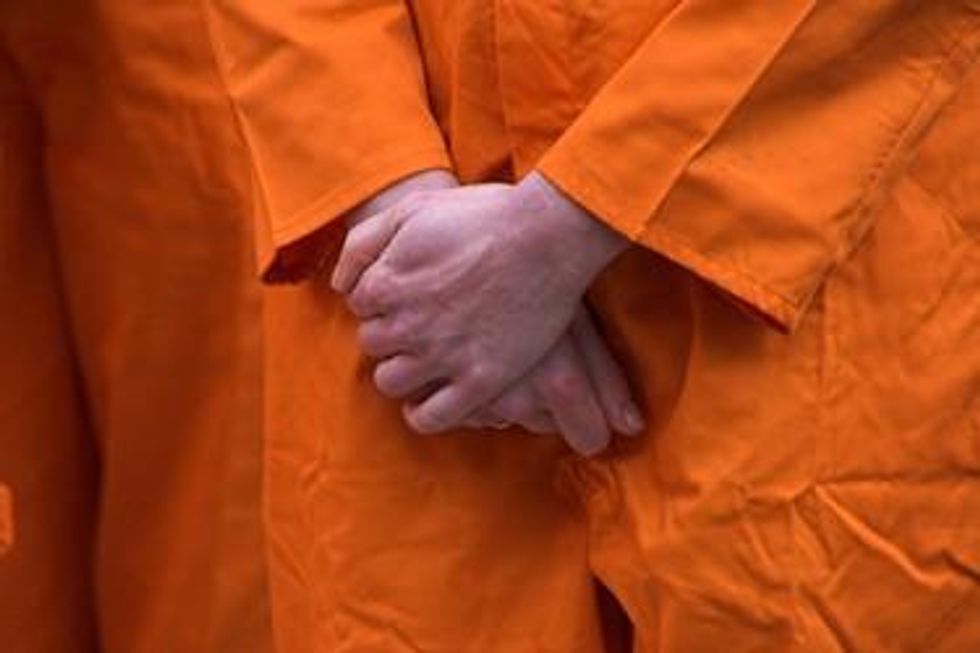
We see another use of force to violate bodily integrity in service of a government interest in the forced-feeding of detainees at Guantanamo. In our purportedly post-torture Guantanamo, hunger strikers continue to be fed against their will through tubes inserted in their noses and pushed down their throats. Those with the strength to physically resist are restrained in a "feeding chair." I can think of few greater violations of a person's human dignity than being strapped down and forcibly penetrated by government actors, depriving you of your meager means of protest and last shred of physical autonomy.
U.S. courts have recognized the right to make one's own medical decisions and refuse treatment, but as Ann Neumann explains in her important article on force-feeding for Guernica, "There are two places in the U.S. where you can be fed against your will: a Catholic hospital and a prison." Even a Catholic hospital, however, cannot override the will of a patient whose wishes are proven in court. Only in the cases of the most marginalized--convicted prisoners, pregnant women of color, Muslim detainees--is violating the bodily integrity of a competent person permitted.
No right is absolute, and sometimes civil confinement or forced treatment is justified to protect individuals who are a danger to themselves or not competent to make their own decisions. But that is not what is happening to the hunger strikers in Guantanamo. The more than 100 hunger strikers, more than half Guantanamo's detainees, have not all lost the capability to make decisions. They have made a dangerous but rational decision to engage in the only form of resistance available to them. The government cannot credibly argue they are being force-fed for their own benefit. Our government is commandeering the bodies of the dissenting detainees in what can only be an attempt to avoid the further condemnation and liability that will come with more deaths.
U.S. courts have recognized that force-feeding of prisoners implicates the right to privacy, citing Roe v. Wade, but, as is too often the case with the privacy rights of the marginalized, finding government interests outweighed them. Beyond being a privacy violation, it seems to me that being made to perform bodily functions so the government can keep you alive in service of the "war on terror" without having to address your demands is, like being forced to carry a pregnancy to term by the state, involuntary servitude prohibited by the 13th Amendment.
Not that our government has been eager to recognize such people have Constitutional rights. The first Guantanamo detainees were 300 Haitian refugees denied entrance to the United States because some of them were HIV-positive. The first Bush administration and then the Clinton administration argued the detainees did not enjoy any of the protections of the U.S. Constitution. Judge Sterling Johnson, Jr. of the Eastern District of New York did not agree. Nor does the Supreme Court. But rather than being treated as bearers of rights, even innocent detainees cleared for release have had their bodies violated and turned into instruments of the government.
The situation at Guantanamo is horrifying and demoralizing. It's a betrayal by a Democratic president who promised to end this, but won't do what is within his power. We have to fight the urge to look away.
Hunger strikes are a tool of the most powerless and voiceless. They are the last hope for some small bit of leverage that public awareness of one's pain and desperation can provide. Reproductive justice advocates in particular, given our commitment to recognizing and dismantling systems of oppression that deny individuals self-determination and bodily integrity, must demand an end to force-feeding and the closure of the camp with the full force of the movement.
When a woman is denied a legal abortion, her body is conscripted into the service of the government for the benefit of an embryo or fetus. Law is a use of force. Abortion bans use the coercive power of the state to make a woman do something with her body against her will. Unlike a war objector, she cannot choose to go to prison rather than have the government use her body for a cause she has not joined.
Because abortion is legal in the United States, jailing a woman to force her to carry a pregnancy to term for the state is rare and illegal. However, as Lynn Paltrow and Jeanne Flavin have documented, state actors regularly hijack the bodies of pregnant women for government purposes. When a woman is court-ordered to have a cesarean section or arrested for being pregnant and consuming alcohol, the government seizes her and violates her bodily integrity to further the state interest asserted in the fetus.
We see another use of force to violate bodily integrity in service of a government interest in the forced-feeding of detainees at Guantanamo. In our purportedly post-torture Guantanamo, hunger strikers continue to be fed against their will through tubes inserted in their noses and pushed down their throats. Those with the strength to physically resist are restrained in a "feeding chair." I can think of few greater violations of a person's human dignity than being strapped down and forcibly penetrated by government actors, depriving you of your meager means of protest and last shred of physical autonomy.
U.S. courts have recognized the right to make one's own medical decisions and refuse treatment, but as Ann Neumann explains in her important article on force-feeding for Guernica, "There are two places in the U.S. where you can be fed against your will: a Catholic hospital and a prison." Even a Catholic hospital, however, cannot override the will of a patient whose wishes are proven in court. Only in the cases of the most marginalized--convicted prisoners, pregnant women of color, Muslim detainees--is violating the bodily integrity of a competent person permitted.
No right is absolute, and sometimes civil confinement or forced treatment is justified to protect individuals who are a danger to themselves or not competent to make their own decisions. But that is not what is happening to the hunger strikers in Guantanamo. The more than 100 hunger strikers, more than half Guantanamo's detainees, have not all lost the capability to make decisions. They have made a dangerous but rational decision to engage in the only form of resistance available to them. The government cannot credibly argue they are being force-fed for their own benefit. Our government is commandeering the bodies of the dissenting detainees in what can only be an attempt to avoid the further condemnation and liability that will come with more deaths.
U.S. courts have recognized that force-feeding of prisoners implicates the right to privacy, citing Roe v. Wade, but, as is too often the case with the privacy rights of the marginalized, finding government interests outweighed them. Beyond being a privacy violation, it seems to me that being made to perform bodily functions so the government can keep you alive in service of the "war on terror" without having to address your demands is, like being forced to carry a pregnancy to term by the state, involuntary servitude prohibited by the 13th Amendment.
Not that our government has been eager to recognize such people have Constitutional rights. The first Guantanamo detainees were 300 Haitian refugees denied entrance to the United States because some of them were HIV-positive. The first Bush administration and then the Clinton administration argued the detainees did not enjoy any of the protections of the U.S. Constitution. Judge Sterling Johnson, Jr. of the Eastern District of New York did not agree. Nor does the Supreme Court. But rather than being treated as bearers of rights, even innocent detainees cleared for release have had their bodies violated and turned into instruments of the government.
The situation at Guantanamo is horrifying and demoralizing. It's a betrayal by a Democratic president who promised to end this, but won't do what is within his power. We have to fight the urge to look away.
Hunger strikes are a tool of the most powerless and voiceless. They are the last hope for some small bit of leverage that public awareness of one's pain and desperation can provide. Reproductive justice advocates in particular, given our commitment to recognizing and dismantling systems of oppression that deny individuals self-determination and bodily integrity, must demand an end to force-feeding and the closure of the camp with the full force of the movement.
When a woman is denied a legal abortion, her body is conscripted into the service of the government for the benefit of an embryo or fetus. Law is a use of force. Abortion bans use the coercive power of the state to make a woman do something with her body against her will. Unlike a war objector, she cannot choose to go to prison rather than have the government use her body for a cause she has not joined.
Because abortion is legal in the United States, jailing a woman to force her to carry a pregnancy to term for the state is rare and illegal. However, as Lynn Paltrow and Jeanne Flavin have documented, state actors regularly hijack the bodies of pregnant women for government purposes. When a woman is court-ordered to have a cesarean section or arrested for being pregnant and consuming alcohol, the government seizes her and violates her bodily integrity to further the state interest asserted in the fetus.
We see another use of force to violate bodily integrity in service of a government interest in the forced-feeding of detainees at Guantanamo. In our purportedly post-torture Guantanamo, hunger strikers continue to be fed against their will through tubes inserted in their noses and pushed down their throats. Those with the strength to physically resist are restrained in a "feeding chair." I can think of few greater violations of a person's human dignity than being strapped down and forcibly penetrated by government actors, depriving you of your meager means of protest and last shred of physical autonomy.
U.S. courts have recognized the right to make one's own medical decisions and refuse treatment, but as Ann Neumann explains in her important article on force-feeding for Guernica, "There are two places in the U.S. where you can be fed against your will: a Catholic hospital and a prison." Even a Catholic hospital, however, cannot override the will of a patient whose wishes are proven in court. Only in the cases of the most marginalized--convicted prisoners, pregnant women of color, Muslim detainees--is violating the bodily integrity of a competent person permitted.
No right is absolute, and sometimes civil confinement or forced treatment is justified to protect individuals who are a danger to themselves or not competent to make their own decisions. But that is not what is happening to the hunger strikers in Guantanamo. The more than 100 hunger strikers, more than half Guantanamo's detainees, have not all lost the capability to make decisions. They have made a dangerous but rational decision to engage in the only form of resistance available to them. The government cannot credibly argue they are being force-fed for their own benefit. Our government is commandeering the bodies of the dissenting detainees in what can only be an attempt to avoid the further condemnation and liability that will come with more deaths.
U.S. courts have recognized that force-feeding of prisoners implicates the right to privacy, citing Roe v. Wade, but, as is too often the case with the privacy rights of the marginalized, finding government interests outweighed them. Beyond being a privacy violation, it seems to me that being made to perform bodily functions so the government can keep you alive in service of the "war on terror" without having to address your demands is, like being forced to carry a pregnancy to term by the state, involuntary servitude prohibited by the 13th Amendment.
Not that our government has been eager to recognize such people have Constitutional rights. The first Guantanamo detainees were 300 Haitian refugees denied entrance to the United States because some of them were HIV-positive. The first Bush administration and then the Clinton administration argued the detainees did not enjoy any of the protections of the U.S. Constitution. Judge Sterling Johnson, Jr. of the Eastern District of New York did not agree. Nor does the Supreme Court. But rather than being treated as bearers of rights, even innocent detainees cleared for release have had their bodies violated and turned into instruments of the government.
The situation at Guantanamo is horrifying and demoralizing. It's a betrayal by a Democratic president who promised to end this, but won't do what is within his power. We have to fight the urge to look away.
Hunger strikes are a tool of the most powerless and voiceless. They are the last hope for some small bit of leverage that public awareness of one's pain and desperation can provide. Reproductive justice advocates in particular, given our commitment to recognizing and dismantling systems of oppression that deny individuals self-determination and bodily integrity, must demand an end to force-feeding and the closure of the camp with the full force of the movement.