SUBSCRIBE TO OUR FREE NEWSLETTER
Daily news & progressive opinion—funded by the people, not the corporations—delivered straight to your inbox.
5
#000000
#FFFFFF
To donate by check, phone, or other method, see our More Ways to Give page.
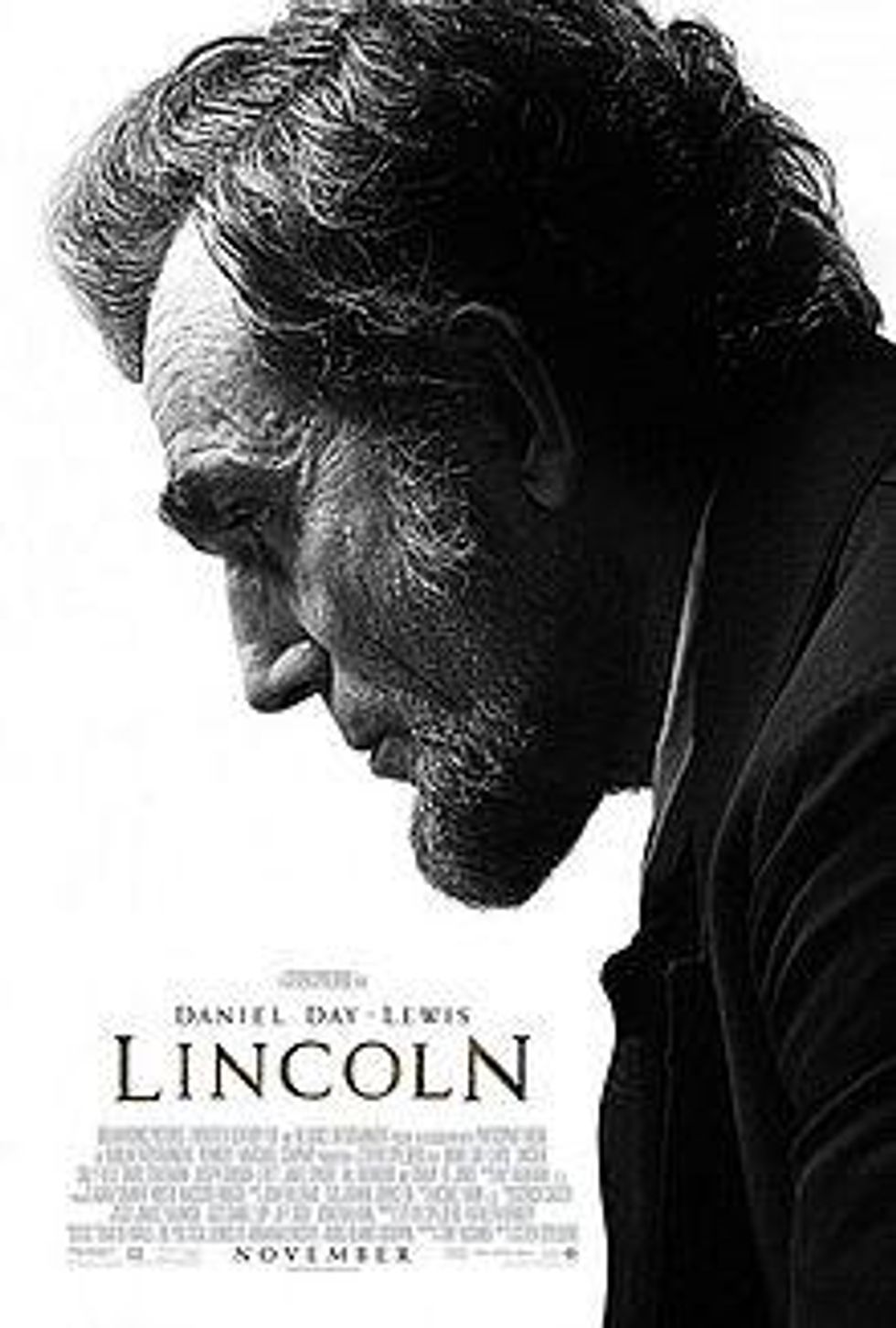
There is not a substantial character in the movie "Lincoln" who argues -- on moral grounds -- that African Americans are equal to whites.
The movie opens with President Lincoln listening to a soliloquy of a young black man who argues for how he wants to get ahead; which is fine I suppose, but hardly the same as a moral case against slavery.
The radical Republican congressman Thaddeus Stevens is depicted going through contortions to not argue that blacks are inherently equal to whites.
A pivotal scene is between him and Lincoln in which he pleads for Lincoln to follow his moral compass. Lincoln responds that one cannot go straight north when there is a swamp there. And there the matter was settled, as if there was no response to such an argument. Compromise was the higher calling, not actually standing for what is right, which is regarded as ineffectual or counterproductive.
Even if one were to concede that that might be what politics should be about, and I don't think that's the case, what sort of "art" exactly glorifies that while dismissing those standing boldly for what it true and just? What sort of "art" says it's the highest calling to be conniving in alleged pursuit of some higher goal? What sort of "artist" uses his talent and resources to convince the public of this message?
It's something "Lincoln" director and producer Steven Spielberg has depicted before, for example in "Schindler's List," Oskar Schindler chastises German soldiers who might exterminate Jewish children by going on about how he needs their small fingers for work in his factory. And that might be a poignant case. But does lying to Nazis really apply to the U.S. in 1863? Or today?
To some extent, this is a stance of alot of progressives since the beginning of the rise of the current president: "In Obama's Lies We Trust" has been their defacto motto. To another extent, it probably reflects the actual interests they hold while themselves pretending to want change while knowing that Obama will not actually deliver meaningful change. Most everyone is a triangulator now.
But all these games, played by Obama and supporters who glorify alleged "compromise" -- does Obama "compromise" or give away the store from the get go? -- not only betrays art's higher callings, but are also ahistoric.
For a tangible glimpse into the mindset behind "Lincoln," consider what Tony Kushner, who wrote the screen play, recently said to Bill Moyers:
"But at the same time that level of criticism has to allow for the possibility that during election cycles people who have maybe not done everything we wanted them to do can get reelected so that we can build a power base so that we can actually do things. And I think we have a balancing act. And I think we've gotten unused to that balance we've spent the entire years of the Reagan counterrevolution out of power. And so we've become critics.
"But it's nonsense. You can't pretend that Wall Street doesn't have horrendously strong and undue influence on the country. But if you want to get regulation of the financial sector you're going to have to unfortunately to some extent work with Wall Street. Because if you go in naively, you'll find out very quickly how much of what happens in this country Wall Street controls. And one thing I love about Obama is that he is absolutely not naive. And you know, you don't get elected president, when you're a black guy if you're naive. This man -- you know, I couldn't get elected, you know, dogcatcher in my building. He's managed this miracle, he's reelected American president."
Talk about nonsense. Tony Kushner here not only pretends that Clinton was not in office for eight years, he incredibly pretends in his depiction of the interaction between Wall Street and politics that Clinton and Bob Rubin and Larry Summers (who was also Obama's economic adviser) didn't pass the deregulation of Wall Street in the late 90s. Now, Moyers has done good shows on this, but he totally lets Kushner and all his nonsense off the hook on this.
So who's really naive here?
What's the responsibility of artists in depicting the moral course of history?
Where are the movies about Dietrich Bonhoeffer, who was executed by the Nazis? About Nat Turner who led a slave uprising? About John Brown, who, the the words of David S. Reynolds' biography: "Killed Slavery, Sparked the Civil War, and Seeded Civil Rights"?
No, Obama's not naive, nor is Kushner. Anyone who takes at face value what Hollywood represents is.
There is not a substantial character in the movie "Lincoln" who argues -- on moral grounds -- that African Americans are equal to whites.
The movie opens with President Lincoln listening to a soliloquy of a young black man who argues for how he wants to get ahead; which is fine I suppose, but hardly the same as a moral case against slavery.
The radical Republican congressman Thaddeus Stevens is depicted going through contortions to not argue that blacks are inherently equal to whites.
A pivotal scene is between him and Lincoln in which he pleads for Lincoln to follow his moral compass. Lincoln responds that one cannot go straight north when there is a swamp there. And there the matter was settled, as if there was no response to such an argument. Compromise was the higher calling, not actually standing for what is right, which is regarded as ineffectual or counterproductive.
Even if one were to concede that that might be what politics should be about, and I don't think that's the case, what sort of "art" exactly glorifies that while dismissing those standing boldly for what it true and just? What sort of "art" says it's the highest calling to be conniving in alleged pursuit of some higher goal? What sort of "artist" uses his talent and resources to convince the public of this message?
It's something "Lincoln" director and producer Steven Spielberg has depicted before, for example in "Schindler's List," Oskar Schindler chastises German soldiers who might exterminate Jewish children by going on about how he needs their small fingers for work in his factory. And that might be a poignant case. But does lying to Nazis really apply to the U.S. in 1863? Or today?
To some extent, this is a stance of alot of progressives since the beginning of the rise of the current president: "In Obama's Lies We Trust" has been their defacto motto. To another extent, it probably reflects the actual interests they hold while themselves pretending to want change while knowing that Obama will not actually deliver meaningful change. Most everyone is a triangulator now.
But all these games, played by Obama and supporters who glorify alleged "compromise" -- does Obama "compromise" or give away the store from the get go? -- not only betrays art's higher callings, but are also ahistoric.
For a tangible glimpse into the mindset behind "Lincoln," consider what Tony Kushner, who wrote the screen play, recently said to Bill Moyers:
"But at the same time that level of criticism has to allow for the possibility that during election cycles people who have maybe not done everything we wanted them to do can get reelected so that we can build a power base so that we can actually do things. And I think we have a balancing act. And I think we've gotten unused to that balance we've spent the entire years of the Reagan counterrevolution out of power. And so we've become critics.
"But it's nonsense. You can't pretend that Wall Street doesn't have horrendously strong and undue influence on the country. But if you want to get regulation of the financial sector you're going to have to unfortunately to some extent work with Wall Street. Because if you go in naively, you'll find out very quickly how much of what happens in this country Wall Street controls. And one thing I love about Obama is that he is absolutely not naive. And you know, you don't get elected president, when you're a black guy if you're naive. This man -- you know, I couldn't get elected, you know, dogcatcher in my building. He's managed this miracle, he's reelected American president."
Talk about nonsense. Tony Kushner here not only pretends that Clinton was not in office for eight years, he incredibly pretends in his depiction of the interaction between Wall Street and politics that Clinton and Bob Rubin and Larry Summers (who was also Obama's economic adviser) didn't pass the deregulation of Wall Street in the late 90s. Now, Moyers has done good shows on this, but he totally lets Kushner and all his nonsense off the hook on this.
So who's really naive here?
What's the responsibility of artists in depicting the moral course of history?
Where are the movies about Dietrich Bonhoeffer, who was executed by the Nazis? About Nat Turner who led a slave uprising? About John Brown, who, the the words of David S. Reynolds' biography: "Killed Slavery, Sparked the Civil War, and Seeded Civil Rights"?
No, Obama's not naive, nor is Kushner. Anyone who takes at face value what Hollywood represents is.
There is not a substantial character in the movie "Lincoln" who argues -- on moral grounds -- that African Americans are equal to whites.
The movie opens with President Lincoln listening to a soliloquy of a young black man who argues for how he wants to get ahead; which is fine I suppose, but hardly the same as a moral case against slavery.
The radical Republican congressman Thaddeus Stevens is depicted going through contortions to not argue that blacks are inherently equal to whites.
A pivotal scene is between him and Lincoln in which he pleads for Lincoln to follow his moral compass. Lincoln responds that one cannot go straight north when there is a swamp there. And there the matter was settled, as if there was no response to such an argument. Compromise was the higher calling, not actually standing for what is right, which is regarded as ineffectual or counterproductive.
Even if one were to concede that that might be what politics should be about, and I don't think that's the case, what sort of "art" exactly glorifies that while dismissing those standing boldly for what it true and just? What sort of "art" says it's the highest calling to be conniving in alleged pursuit of some higher goal? What sort of "artist" uses his talent and resources to convince the public of this message?
It's something "Lincoln" director and producer Steven Spielberg has depicted before, for example in "Schindler's List," Oskar Schindler chastises German soldiers who might exterminate Jewish children by going on about how he needs their small fingers for work in his factory. And that might be a poignant case. But does lying to Nazis really apply to the U.S. in 1863? Or today?
To some extent, this is a stance of alot of progressives since the beginning of the rise of the current president: "In Obama's Lies We Trust" has been their defacto motto. To another extent, it probably reflects the actual interests they hold while themselves pretending to want change while knowing that Obama will not actually deliver meaningful change. Most everyone is a triangulator now.
But all these games, played by Obama and supporters who glorify alleged "compromise" -- does Obama "compromise" or give away the store from the get go? -- not only betrays art's higher callings, but are also ahistoric.
For a tangible glimpse into the mindset behind "Lincoln," consider what Tony Kushner, who wrote the screen play, recently said to Bill Moyers:
"But at the same time that level of criticism has to allow for the possibility that during election cycles people who have maybe not done everything we wanted them to do can get reelected so that we can build a power base so that we can actually do things. And I think we have a balancing act. And I think we've gotten unused to that balance we've spent the entire years of the Reagan counterrevolution out of power. And so we've become critics.
"But it's nonsense. You can't pretend that Wall Street doesn't have horrendously strong and undue influence on the country. But if you want to get regulation of the financial sector you're going to have to unfortunately to some extent work with Wall Street. Because if you go in naively, you'll find out very quickly how much of what happens in this country Wall Street controls. And one thing I love about Obama is that he is absolutely not naive. And you know, you don't get elected president, when you're a black guy if you're naive. This man -- you know, I couldn't get elected, you know, dogcatcher in my building. He's managed this miracle, he's reelected American president."
Talk about nonsense. Tony Kushner here not only pretends that Clinton was not in office for eight years, he incredibly pretends in his depiction of the interaction between Wall Street and politics that Clinton and Bob Rubin and Larry Summers (who was also Obama's economic adviser) didn't pass the deregulation of Wall Street in the late 90s. Now, Moyers has done good shows on this, but he totally lets Kushner and all his nonsense off the hook on this.
So who's really naive here?
What's the responsibility of artists in depicting the moral course of history?
Where are the movies about Dietrich Bonhoeffer, who was executed by the Nazis? About Nat Turner who led a slave uprising? About John Brown, who, the the words of David S. Reynolds' biography: "Killed Slavery, Sparked the Civil War, and Seeded Civil Rights"?
No, Obama's not naive, nor is Kushner. Anyone who takes at face value what Hollywood represents is.