SUBSCRIBE TO OUR FREE NEWSLETTER
Daily news & progressive opinion—funded by the people, not the corporations—delivered straight to your inbox.
5
#000000
#FFFFFF
To donate by check, phone, or other method, see our More Ways to Give page.
Governments often interpret radical ideas that challenge the existing social and political orthodoxy as threatening, which is why they often attempt to suppress them. Our country's founders recognized that ideas considered radical - like their own ideas about self-governance - were necessary for social progress and essential to a vibrant democracy, so they sought to protect them with the First Amendment.
Unfortunately we haven't always lived up to this standard, particularly in times of real or perceived national crisis. During the First World War, for example, Congress banned anti-war speech and unleashed the FBI to conduct investigations of Americans' political beliefs. Congress and state legislatures held hearings to examine American radicals - who they defined as pacifists, socialists, labor organizers and the organizations that defended their rights, like the National Civil Liberties Bureau, the precursor organization to the American Civil Liberties Union. So we at the ACLU tend to get concerned when our government identifies "radicalization" as a threat that has to be countered, because we know that while promoted as an effort to protect security, such instances too often turn into efforts to suppress belief, speech and association.
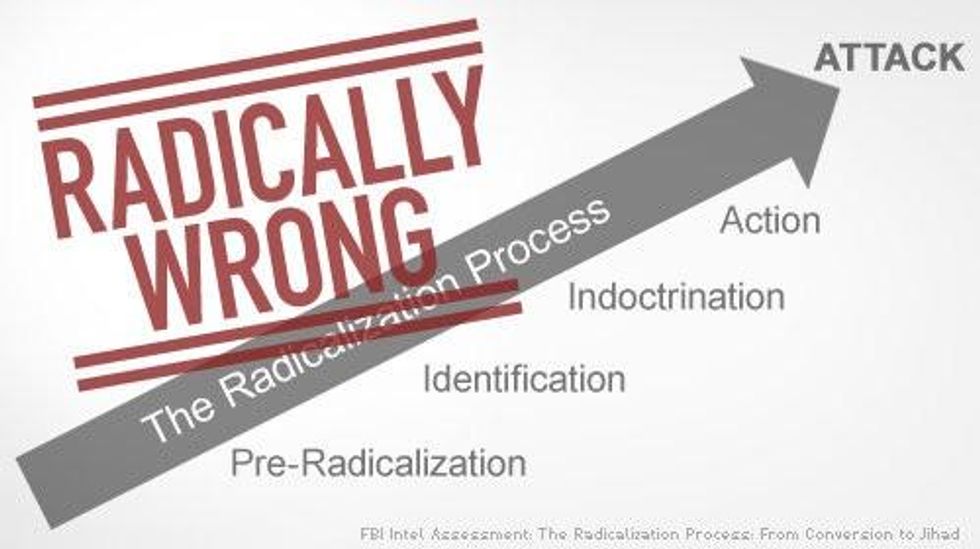
Unfortunately, after 9/11, our intelligence and law enforcement agencies have again identified "radicalization" as a problem that must be addressed, by promoting a flawed theory that adopting radical ideas is a dangerous first step toward committing terrorist acts. Countering terrorism, the thinking goes, begins with countering radicalization. Based on this discredited model, intelligence and law enforcement agencies implemented flawed and wasteful "preventive" policies that result in discrimination, suspicionless surveillance of entire communities, and selective law enforcement against belief communities and political activists.
Congress has sought to entrench the theory with a series of hearings and reports, and has demanded the government establish a "counter-radicalization policy." We raised concerns when Congress attempted to establish a commission to study radicalization in 2007, and again in 2011. We submitted statements to Congress in 2009, 2010, 2011, and 2012, and we worked with coalition partners to point out the factual and methodological flaws in reports that promote this dangerous theory, as have other allies. Rather than challenge the radicalization theory with the many studies that refute it, the Obama administration issued a plan for preventing violent extremism. While the White House deserves some credit for using more careful language and for emphasizing the need for community engagement, it perpetuates the notion that "radicalization to violence" is a discernible process that government can identify, predict and interdict, and establishes policies that again threaten civil liberties.
Now, policy makers are again raising radicalization as a hot topic that must be addressed, as we've written about here and here. Over the next several days we will publish a series of blogs that update our concerns with these renewed efforts to establish counter-radicalization as official U.S. policy - and lay out the civil liberties implications that follow. The blogs will examine the White House's new plan for countering "online radicalization to violence," the FBI's abuse of community outreach programs for intelligence gathering, and more. Stay tuned.
Governments often interpret radical ideas that challenge the existing social and political orthodoxy as threatening, which is why they often attempt to suppress them. Our country's founders recognized that ideas considered radical - like their own ideas about self-governance - were necessary for social progress and essential to a vibrant democracy, so they sought to protect them with the First Amendment.
Unfortunately we haven't always lived up to this standard, particularly in times of real or perceived national crisis. During the First World War, for example, Congress banned anti-war speech and unleashed the FBI to conduct investigations of Americans' political beliefs. Congress and state legislatures held hearings to examine American radicals - who they defined as pacifists, socialists, labor organizers and the organizations that defended their rights, like the National Civil Liberties Bureau, the precursor organization to the American Civil Liberties Union. So we at the ACLU tend to get concerned when our government identifies "radicalization" as a threat that has to be countered, because we know that while promoted as an effort to protect security, such instances too often turn into efforts to suppress belief, speech and association.
Unfortunately, after 9/11, our intelligence and law enforcement agencies have again identified "radicalization" as a problem that must be addressed, by promoting a flawed theory that adopting radical ideas is a dangerous first step toward committing terrorist acts. Countering terrorism, the thinking goes, begins with countering radicalization. Based on this discredited model, intelligence and law enforcement agencies implemented flawed and wasteful "preventive" policies that result in discrimination, suspicionless surveillance of entire communities, and selective law enforcement against belief communities and political activists.
Congress has sought to entrench the theory with a series of hearings and reports, and has demanded the government establish a "counter-radicalization policy." We raised concerns when Congress attempted to establish a commission to study radicalization in 2007, and again in 2011. We submitted statements to Congress in 2009, 2010, 2011, and 2012, and we worked with coalition partners to point out the factual and methodological flaws in reports that promote this dangerous theory, as have other allies. Rather than challenge the radicalization theory with the many studies that refute it, the Obama administration issued a plan for preventing violent extremism. While the White House deserves some credit for using more careful language and for emphasizing the need for community engagement, it perpetuates the notion that "radicalization to violence" is a discernible process that government can identify, predict and interdict, and establishes policies that again threaten civil liberties.
Now, policy makers are again raising radicalization as a hot topic that must be addressed, as we've written about here and here. Over the next several days we will publish a series of blogs that update our concerns with these renewed efforts to establish counter-radicalization as official U.S. policy - and lay out the civil liberties implications that follow. The blogs will examine the White House's new plan for countering "online radicalization to violence," the FBI's abuse of community outreach programs for intelligence gathering, and more. Stay tuned.
Governments often interpret radical ideas that challenge the existing social and political orthodoxy as threatening, which is why they often attempt to suppress them. Our country's founders recognized that ideas considered radical - like their own ideas about self-governance - were necessary for social progress and essential to a vibrant democracy, so they sought to protect them with the First Amendment.
Unfortunately we haven't always lived up to this standard, particularly in times of real or perceived national crisis. During the First World War, for example, Congress banned anti-war speech and unleashed the FBI to conduct investigations of Americans' political beliefs. Congress and state legislatures held hearings to examine American radicals - who they defined as pacifists, socialists, labor organizers and the organizations that defended their rights, like the National Civil Liberties Bureau, the precursor organization to the American Civil Liberties Union. So we at the ACLU tend to get concerned when our government identifies "radicalization" as a threat that has to be countered, because we know that while promoted as an effort to protect security, such instances too often turn into efforts to suppress belief, speech and association.
Unfortunately, after 9/11, our intelligence and law enforcement agencies have again identified "radicalization" as a problem that must be addressed, by promoting a flawed theory that adopting radical ideas is a dangerous first step toward committing terrorist acts. Countering terrorism, the thinking goes, begins with countering radicalization. Based on this discredited model, intelligence and law enforcement agencies implemented flawed and wasteful "preventive" policies that result in discrimination, suspicionless surveillance of entire communities, and selective law enforcement against belief communities and political activists.
Congress has sought to entrench the theory with a series of hearings and reports, and has demanded the government establish a "counter-radicalization policy." We raised concerns when Congress attempted to establish a commission to study radicalization in 2007, and again in 2011. We submitted statements to Congress in 2009, 2010, 2011, and 2012, and we worked with coalition partners to point out the factual and methodological flaws in reports that promote this dangerous theory, as have other allies. Rather than challenge the radicalization theory with the many studies that refute it, the Obama administration issued a plan for preventing violent extremism. While the White House deserves some credit for using more careful language and for emphasizing the need for community engagement, it perpetuates the notion that "radicalization to violence" is a discernible process that government can identify, predict and interdict, and establishes policies that again threaten civil liberties.
Now, policy makers are again raising radicalization as a hot topic that must be addressed, as we've written about here and here. Over the next several days we will publish a series of blogs that update our concerns with these renewed efforts to establish counter-radicalization as official U.S. policy - and lay out the civil liberties implications that follow. The blogs will examine the White House's new plan for countering "online radicalization to violence," the FBI's abuse of community outreach programs for intelligence gathering, and more. Stay tuned.