RECOMMENDED...
Everywhere, Forever: End Violence Against Girls
Feb 14, 2013
When a 23-year-old student in Delhi was beaten and gang raped as she rode a bus home, it shocked the world and sparked mass protests against violent attitudes toward women.

In India, the gruesome attack forced the nation to have an uncomfortable conversation about the deep-rooted discrimination against its women. But this is not an isolated case -- sadly, violence is a fact of life for many women and girls across the world.
This week, I'll be traveling to the Democratic Republic of the Congo where rape has been used as a weapon of war and a tool to terrorize girls and women. But this is not a "developing world" problem -- a United Nations report found that up to 70 percent of women experience physical or sexual violence from men in their lifetime -- the majority by husbands, intimate partners or someone they know. That equates to one billion women and girls who will be raped or beaten in their lifetime.
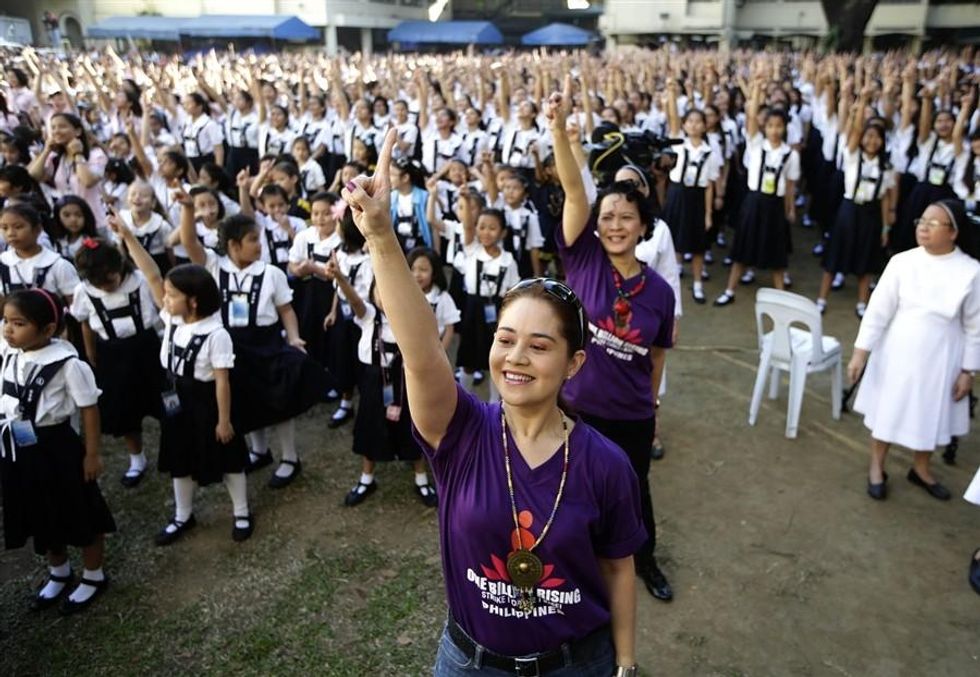
Today, Feb. 14, the One Billion Rising coalition is mobilizing men and women across the world to demand an end to this violence. I'm proud that Save the Children offices around the world will be supporting this day of action and saying enough is enough.
Violence against women begins with violence against girls. In many countries, this begins even before birth -- estimates suggest that there are over 100 million "missing women" as a result of gender-selective abortions.
For far too many girls this violence continues through childhood. In its most obvious forms that means millions of girls face being victims of sexual violence, female genital mutilation and forced into early marriages. In the next decade more than 100 million girls are expected to be married before they reach 18. Early marriage increases the likelihood of early pregnancy and that substantially increases a child's risk of ill-health and even death -- babies born to girls in their teens face a 50 percent higher risk of dying before age 1 than babies born to women in their 20s.
But violence comes in less obvious forms, too. Excess female childhood mortality is on the rise in several areas of the world. Globally, there are 107 female child deaths for every 100 deaths among male children. Often because of a lower value that is put on them; girls eat last (and least) in vulnerable households around the world and have less access to healthcare than boys.
What can we do about this? Awareness raising initiatives, such as One Billion Rising, are essential. They help to challenge a culture of impunity and social acceptance that too often means violence is accepted as a fact of life and perpetrators go unpunished. Protection, education and empowerment are also vital. We work in communities with both men and women to ensure the health and well-being of girls and pregnant women and to tackle this discrimination and violence.
I hope that millions of women, men, boys and girls will rise up and join the call against violence. But Feb. 14 must just be the beginning -- it is only through a truly global, concerted effort that we can hope to end this violence and discrimination and achieve the change needed to ensure no girl growing up has to live in fear.

An Urgent Message From Our Co-Founder
Dear Common Dreams reader, The U.S. is on a fast track to authoritarianism like nothing I've ever seen. Meanwhile, corporate news outlets are utterly capitulating to Trump, twisting their coverage to avoid drawing his ire while lining up to stuff cash in his pockets. That's why I believe that Common Dreams is doing the best and most consequential reporting that we've ever done. Our small but mighty team is a progressive reporting powerhouse, covering the news every day that the corporate media never will. Our mission has always been simple: To inform. To inspire. And to ignite change for the common good. Now here's the key piece that I want all our readers to understand: None of this would be possible without your financial support. That's not just some fundraising cliche. It's the absolute and literal truth. We don't accept corporate advertising and never will. We don't have a paywall because we don't think people should be blocked from critical news based on their ability to pay. Everything we do is funded by the donations of readers like you. Will you donate now to help power the nonprofit, independent reporting of Common Dreams? Thank you for being a vital member of our community. Together, we can keep independent journalism alive when it’s needed most. - Craig Brown, Co-founder |
Our work is licensed under Creative Commons (CC BY-NC-ND 3.0). Feel free to republish and share widely.
When a 23-year-old student in Delhi was beaten and gang raped as she rode a bus home, it shocked the world and sparked mass protests against violent attitudes toward women.

In India, the gruesome attack forced the nation to have an uncomfortable conversation about the deep-rooted discrimination against its women. But this is not an isolated case -- sadly, violence is a fact of life for many women and girls across the world.
This week, I'll be traveling to the Democratic Republic of the Congo where rape has been used as a weapon of war and a tool to terrorize girls and women. But this is not a "developing world" problem -- a United Nations report found that up to 70 percent of women experience physical or sexual violence from men in their lifetime -- the majority by husbands, intimate partners or someone they know. That equates to one billion women and girls who will be raped or beaten in their lifetime.
Today, Feb. 14, the One Billion Rising coalition is mobilizing men and women across the world to demand an end to this violence. I'm proud that Save the Children offices around the world will be supporting this day of action and saying enough is enough.
Violence against women begins with violence against girls. In many countries, this begins even before birth -- estimates suggest that there are over 100 million "missing women" as a result of gender-selective abortions.
For far too many girls this violence continues through childhood. In its most obvious forms that means millions of girls face being victims of sexual violence, female genital mutilation and forced into early marriages. In the next decade more than 100 million girls are expected to be married before they reach 18. Early marriage increases the likelihood of early pregnancy and that substantially increases a child's risk of ill-health and even death -- babies born to girls in their teens face a 50 percent higher risk of dying before age 1 than babies born to women in their 20s.
But violence comes in less obvious forms, too. Excess female childhood mortality is on the rise in several areas of the world. Globally, there are 107 female child deaths for every 100 deaths among male children. Often because of a lower value that is put on them; girls eat last (and least) in vulnerable households around the world and have less access to healthcare than boys.
What can we do about this? Awareness raising initiatives, such as One Billion Rising, are essential. They help to challenge a culture of impunity and social acceptance that too often means violence is accepted as a fact of life and perpetrators go unpunished. Protection, education and empowerment are also vital. We work in communities with both men and women to ensure the health and well-being of girls and pregnant women and to tackle this discrimination and violence.
I hope that millions of women, men, boys and girls will rise up and join the call against violence. But Feb. 14 must just be the beginning -- it is only through a truly global, concerted effort that we can hope to end this violence and discrimination and achieve the change needed to ensure no girl growing up has to live in fear.
When a 23-year-old student in Delhi was beaten and gang raped as she rode a bus home, it shocked the world and sparked mass protests against violent attitudes toward women.

In India, the gruesome attack forced the nation to have an uncomfortable conversation about the deep-rooted discrimination against its women. But this is not an isolated case -- sadly, violence is a fact of life for many women and girls across the world.
This week, I'll be traveling to the Democratic Republic of the Congo where rape has been used as a weapon of war and a tool to terrorize girls and women. But this is not a "developing world" problem -- a United Nations report found that up to 70 percent of women experience physical or sexual violence from men in their lifetime -- the majority by husbands, intimate partners or someone they know. That equates to one billion women and girls who will be raped or beaten in their lifetime.
Today, Feb. 14, the One Billion Rising coalition is mobilizing men and women across the world to demand an end to this violence. I'm proud that Save the Children offices around the world will be supporting this day of action and saying enough is enough.
Violence against women begins with violence against girls. In many countries, this begins even before birth -- estimates suggest that there are over 100 million "missing women" as a result of gender-selective abortions.
For far too many girls this violence continues through childhood. In its most obvious forms that means millions of girls face being victims of sexual violence, female genital mutilation and forced into early marriages. In the next decade more than 100 million girls are expected to be married before they reach 18. Early marriage increases the likelihood of early pregnancy and that substantially increases a child's risk of ill-health and even death -- babies born to girls in their teens face a 50 percent higher risk of dying before age 1 than babies born to women in their 20s.
But violence comes in less obvious forms, too. Excess female childhood mortality is on the rise in several areas of the world. Globally, there are 107 female child deaths for every 100 deaths among male children. Often because of a lower value that is put on them; girls eat last (and least) in vulnerable households around the world and have less access to healthcare than boys.
What can we do about this? Awareness raising initiatives, such as One Billion Rising, are essential. They help to challenge a culture of impunity and social acceptance that too often means violence is accepted as a fact of life and perpetrators go unpunished. Protection, education and empowerment are also vital. We work in communities with both men and women to ensure the health and well-being of girls and pregnant women and to tackle this discrimination and violence.
I hope that millions of women, men, boys and girls will rise up and join the call against violence. But Feb. 14 must just be the beginning -- it is only through a truly global, concerted effort that we can hope to end this violence and discrimination and achieve the change needed to ensure no girl growing up has to live in fear.
We've had enough. The 1% own and operate the corporate media. They are doing everything they can to defend the status quo, squash dissent and protect the wealthy and the powerful. The Common Dreams media model is different. We cover the news that matters to the 99%. Our mission? To inform. To inspire. To ignite change for the common good. How? Nonprofit. Independent. Reader-supported. Free to read. Free to republish. Free to share. With no advertising. No paywalls. No selling of your data. Thousands of small donations fund our newsroom and allow us to continue publishing. Can you chip in? We can't do it without you. Thank you.