SUBSCRIBE TO OUR FREE NEWSLETTER
Daily news & progressive opinion—funded by the people, not the corporations—delivered straight to your inbox.
5
#000000
#FFFFFF
To donate by check, phone, or other method, see our More Ways to Give page.
The growing progressive coalition that helped elect President Obama has emerged at the end of a failed and exhausted
But the central challenge to this progressive coalition is not dispatching the old but rather defining what comes next. Will it be able to address the central challenge facing America at this time and reclaim the American Dream from an extreme and corrosive economic inequality?
In his inaugural address, President Obama spoke powerfully to this rising American electorate -- single women, minorities, the young -- by summarizing the progressive contribution to building a more perfect union from "Seneca Falls to Selma to Stonewall." He reminded all that greater social equality in America has been driven by independent movements, willing to confront the lies and limits of the conventional consensus.
Over decades, those civilizing movements have helped to free the slaves and extend greater opportunity to minorities, to women, to immigrants and now to gays and lesbians. But today, the progressive coalition must address the challenge faced by the original progressive movement, at the dawn of the last century -- of extreme economic inequality, which is turning the American dream into a bygone memory.
Who can fail to see that this rising American electorate is sinking economically? More than 20 million people are in need of full-time work -- and single women, minorities and the young have fared the worst. Wages are sinking. The top 1 percent captured fully 93 percent of the nation's income growth coming out of the Great Recession in 2010. The young find good jobs scarce, even as they carry record student loan debts, now higher than credit card debt.
U.S. politics seems impervious to this reality. Republicans in Congress are intent on holding the economy hostage repeatedly through May to dismantle ever more public capacity. Right-wing governors in the states continue to rig the rules to crush unions and "fix" elections. Even liberal reformers like New York Gov. Andrew Cuomo (D) are comfortable espousing socially liberal but economically centrist politics that assume an economic recovery is underway.
In reality, the old economy is coming back. Corporate profits are up; wages are falling. Good jobs are being shipped abroad, with trade deficits back over $1 billion a day. The big banks, more concentrated than ever, are reopening the casino. Making this economy work once more for working people will require a new strategy for growth -- and a confrontation with the current complacency and its entrenched interests and exhausted ideas.
The president was right when he said this is the defining moment for the middle class, and for those who aspire to join it. But it will take bold citizen mobilization to challenge the current limits of the debate. This is the test of democracy.
We have witnessed extreme inequality and political corruption before, in the Gilded Age at the dawn of industrial America at the turn of the last century. But hundreds of thousands of farmers created a people's movement for a new monetary policy. Workers organized unions in the face of police billyclubs. Muckrakers exposed the tentacles of the trusts, the miseries inflicted on working people. It took years -- and a Great Depression and a world war -- but we built the first broad middle class the world had known.
A 21st-century movement for economic justice will find Americans receptive. It is striking how far ahead of Washington the majority of people is. Majorities support raising taxes on the wealthy while protecting Medicare, Medicaid and programs for the poor. They want to invest in America, not wage war in the far corners of the earth. They want to close corporate loopholes and shut down overseas tax dodges. They want the minimum wage lifted, and big banks broken up. They worry about deficits in part because they want Social Security protected, not put at risk. They want a trade strategy that ships goods, not jobs abroad.
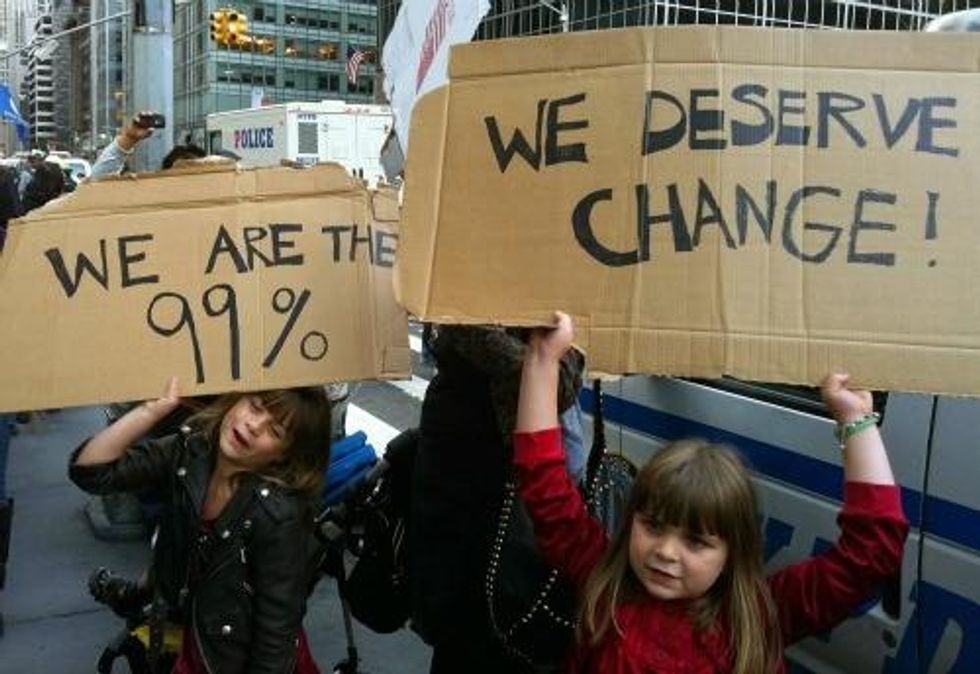
But just as at Seneca Falls and Selma and Stonewall, it will take people's movements to spark the change. We've already seen the potential when the Occupy movement challenged Wall Street and transformed the national debate. That independent mobilization contributed directly to Obama's victory, helping him to find his own voice to fend off the challenge of Mitt Romney, a champion of the 1 percent. As history has shown, the central question is whether citizens of conscience will mobilize and march and make business as usual impossible. Will the rising American electorate continue to sink together? Or will its members help fuel the movement that revives the American dream? We shall see.
The growing progressive coalition that helped elect President Obama has emerged at the end of a failed and exhausted
But the central challenge to this progressive coalition is not dispatching the old but rather defining what comes next. Will it be able to address the central challenge facing America at this time and reclaim the American Dream from an extreme and corrosive economic inequality?
In his inaugural address, President Obama spoke powerfully to this rising American electorate -- single women, minorities, the young -- by summarizing the progressive contribution to building a more perfect union from "Seneca Falls to Selma to Stonewall." He reminded all that greater social equality in America has been driven by independent movements, willing to confront the lies and limits of the conventional consensus.
Over decades, those civilizing movements have helped to free the slaves and extend greater opportunity to minorities, to women, to immigrants and now to gays and lesbians. But today, the progressive coalition must address the challenge faced by the original progressive movement, at the dawn of the last century -- of extreme economic inequality, which is turning the American dream into a bygone memory.
Who can fail to see that this rising American electorate is sinking economically? More than 20 million people are in need of full-time work -- and single women, minorities and the young have fared the worst. Wages are sinking. The top 1 percent captured fully 93 percent of the nation's income growth coming out of the Great Recession in 2010. The young find good jobs scarce, even as they carry record student loan debts, now higher than credit card debt.
U.S. politics seems impervious to this reality. Republicans in Congress are intent on holding the economy hostage repeatedly through May to dismantle ever more public capacity. Right-wing governors in the states continue to rig the rules to crush unions and "fix" elections. Even liberal reformers like New York Gov. Andrew Cuomo (D) are comfortable espousing socially liberal but economically centrist politics that assume an economic recovery is underway.
In reality, the old economy is coming back. Corporate profits are up; wages are falling. Good jobs are being shipped abroad, with trade deficits back over $1 billion a day. The big banks, more concentrated than ever, are reopening the casino. Making this economy work once more for working people will require a new strategy for growth -- and a confrontation with the current complacency and its entrenched interests and exhausted ideas.
The president was right when he said this is the defining moment for the middle class, and for those who aspire to join it. But it will take bold citizen mobilization to challenge the current limits of the debate. This is the test of democracy.
We have witnessed extreme inequality and political corruption before, in the Gilded Age at the dawn of industrial America at the turn of the last century. But hundreds of thousands of farmers created a people's movement for a new monetary policy. Workers organized unions in the face of police billyclubs. Muckrakers exposed the tentacles of the trusts, the miseries inflicted on working people. It took years -- and a Great Depression and a world war -- but we built the first broad middle class the world had known.
A 21st-century movement for economic justice will find Americans receptive. It is striking how far ahead of Washington the majority of people is. Majorities support raising taxes on the wealthy while protecting Medicare, Medicaid and programs for the poor. They want to invest in America, not wage war in the far corners of the earth. They want to close corporate loopholes and shut down overseas tax dodges. They want the minimum wage lifted, and big banks broken up. They worry about deficits in part because they want Social Security protected, not put at risk. They want a trade strategy that ships goods, not jobs abroad.
But just as at Seneca Falls and Selma and Stonewall, it will take people's movements to spark the change. We've already seen the potential when the Occupy movement challenged Wall Street and transformed the national debate. That independent mobilization contributed directly to Obama's victory, helping him to find his own voice to fend off the challenge of Mitt Romney, a champion of the 1 percent. As history has shown, the central question is whether citizens of conscience will mobilize and march and make business as usual impossible. Will the rising American electorate continue to sink together? Or will its members help fuel the movement that revives the American dream? We shall see.
The growing progressive coalition that helped elect President Obama has emerged at the end of a failed and exhausted
But the central challenge to this progressive coalition is not dispatching the old but rather defining what comes next. Will it be able to address the central challenge facing America at this time and reclaim the American Dream from an extreme and corrosive economic inequality?
In his inaugural address, President Obama spoke powerfully to this rising American electorate -- single women, minorities, the young -- by summarizing the progressive contribution to building a more perfect union from "Seneca Falls to Selma to Stonewall." He reminded all that greater social equality in America has been driven by independent movements, willing to confront the lies and limits of the conventional consensus.
Over decades, those civilizing movements have helped to free the slaves and extend greater opportunity to minorities, to women, to immigrants and now to gays and lesbians. But today, the progressive coalition must address the challenge faced by the original progressive movement, at the dawn of the last century -- of extreme economic inequality, which is turning the American dream into a bygone memory.
Who can fail to see that this rising American electorate is sinking economically? More than 20 million people are in need of full-time work -- and single women, minorities and the young have fared the worst. Wages are sinking. The top 1 percent captured fully 93 percent of the nation's income growth coming out of the Great Recession in 2010. The young find good jobs scarce, even as they carry record student loan debts, now higher than credit card debt.
U.S. politics seems impervious to this reality. Republicans in Congress are intent on holding the economy hostage repeatedly through May to dismantle ever more public capacity. Right-wing governors in the states continue to rig the rules to crush unions and "fix" elections. Even liberal reformers like New York Gov. Andrew Cuomo (D) are comfortable espousing socially liberal but economically centrist politics that assume an economic recovery is underway.
In reality, the old economy is coming back. Corporate profits are up; wages are falling. Good jobs are being shipped abroad, with trade deficits back over $1 billion a day. The big banks, more concentrated than ever, are reopening the casino. Making this economy work once more for working people will require a new strategy for growth -- and a confrontation with the current complacency and its entrenched interests and exhausted ideas.
The president was right when he said this is the defining moment for the middle class, and for those who aspire to join it. But it will take bold citizen mobilization to challenge the current limits of the debate. This is the test of democracy.
We have witnessed extreme inequality and political corruption before, in the Gilded Age at the dawn of industrial America at the turn of the last century. But hundreds of thousands of farmers created a people's movement for a new monetary policy. Workers organized unions in the face of police billyclubs. Muckrakers exposed the tentacles of the trusts, the miseries inflicted on working people. It took years -- and a Great Depression and a world war -- but we built the first broad middle class the world had known.
A 21st-century movement for economic justice will find Americans receptive. It is striking how far ahead of Washington the majority of people is. Majorities support raising taxes on the wealthy while protecting Medicare, Medicaid and programs for the poor. They want to invest in America, not wage war in the far corners of the earth. They want to close corporate loopholes and shut down overseas tax dodges. They want the minimum wage lifted, and big banks broken up. They worry about deficits in part because they want Social Security protected, not put at risk. They want a trade strategy that ships goods, not jobs abroad.
But just as at Seneca Falls and Selma and Stonewall, it will take people's movements to spark the change. We've already seen the potential when the Occupy movement challenged Wall Street and transformed the national debate. That independent mobilization contributed directly to Obama's victory, helping him to find his own voice to fend off the challenge of Mitt Romney, a champion of the 1 percent. As history has shown, the central question is whether citizens of conscience will mobilize and march and make business as usual impossible. Will the rising American electorate continue to sink together? Or will its members help fuel the movement that revives the American dream? We shall see.